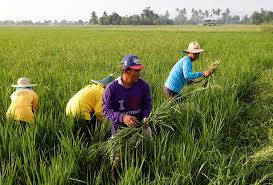
Philippines - PCIC seeking P1-b budget increase for farmers insurance

01.05.2025 499 views

The Philippine Crop Insurance Corporation (PCIC) is pushing for a P1 billion increase in its 2026 budget to expand insurance coverage for farmers.

PCIC president Jovy Bernabe said the proposed P5.5 billion budget, up from this year’s P4.5 billion, could enable PCIC to cover an additional 600,000 farmers.

“From around 4.2 million farmers last year, we may reach close to 4.8 or even 5 million farmers next year. That’s a big help to all of us,” he told reporters during the 2025 Sustainable Agriculture Forum organized by the European Chamber of Commerce of the Philippines (ECCP) on April 30, 2025.

Under the proposed allocation, 60 percent will go to rice farmers, 20 percent to corn, with the remainder distributed among high-value crops, livestock, aquaculture, and fisheries.

“It’s just slightly higher, but our target is really determined by the budget,” he said, adding that PCIC’s targets had remained largely unchanged in the past four years despite flat funding.

To stretch its reach, PCIC is also tapping local government units (LGUs) and commercial clients such as banana growers, livestock operators, and tobacco farms.

“LGUs sometimes shoulder the cost of insurance for their farmers. That’s a big support. We’re not relying solely on the General Appropriations Act (GAA),” Bernabe said.

He cited the growing interest in livestock insurance following outbreaks of African Swine Fever (ASF), although many hog farms remain ineligible due to disease restrictions.

PCIC is also piloting satellite mapping technology to improve efficiency and recompense farmers faster in as fast as 10 days.

The average claims processing period is 20 days, far quicker than the 60 days allowed under the law.


Source - https://manilastandard.net

01.10.2026

India - Kitchen budget in Mumbai takes a hit as veggie prices rise amid crop loss, low supply

Vegetable prices in Mumbai have risen sharply after Ganeshotsav and with the onset of Pitrupaksha, as erratic monsoon conditions, crop damage and lower arrivals tightened supplies, said traders. 

01.10.2026

Togo Plans Pilot Agricultural Insurance Scheme for Young Farmers and Entrepreneurs

Togo’s PAJEC entrepreneurship program plans to launch a pilot agricultural insurance scheme. The government has issued a call for expressions of interest to select a provider to design and roll out the scheme.

01.10.2026

India - Soybean prices recover as crop damage offsets pressure from rising arrivals

Indias soybean prices recovered sharply w-o-w on 30 September 2026 despite a rapid increase in new-crop arrivals, as concerns over crop damage and lower production estimates have offset pressure from increased supplies. 

01.10.2026

USA - Fruit growers face Nov. 20 crop insurance deadline

Northeast fruit growers have until Nov. 20 to purchase or update crop insurance for the 2027 crop year, according to Crop Growers, a crop insurance provider owned by Farm Credit East.

01.10.2026

IFPA releases statement on largest Cyclospora outbreak in U.S. history

The International Fresh Produce Association (IFPA) has called for greater collaboration between industry and public health authorities as the United States experiences what it describes as the largest Cyclospora outbreak on record.

01.10.2026

Ukraine introduces new rules for GM crops and produce

Ukraine's new law regulating genetically modified organisms (GMOs) and GMO products comes into force on September 16, introducing clearer requirements for the registration, cultivation, traceability, and labelling of GM crops.

30.09.2026

Spain - Fruit supplier targets 30-45% growth with year-round supply strategy

Senda Fruits is heading into another edition of Fruit Attraction with a clear objective: to expand its market presence and aim to meet the needs of its customers all year round. 

30.09.2026

Corn Stocks Shock U.S. Market as USDA Finds 2.1 Billion Bushels in Storage

USDA found 2.095 billion bushels of old-crop corn in storage, far above trade expectations and adding new pressure to U.S. grain markets.