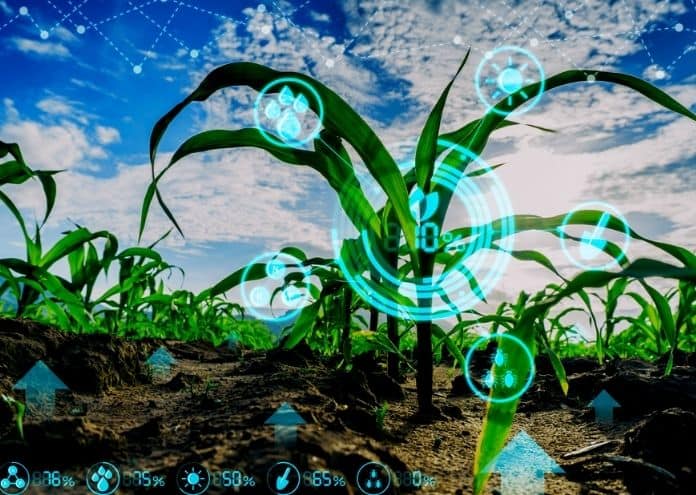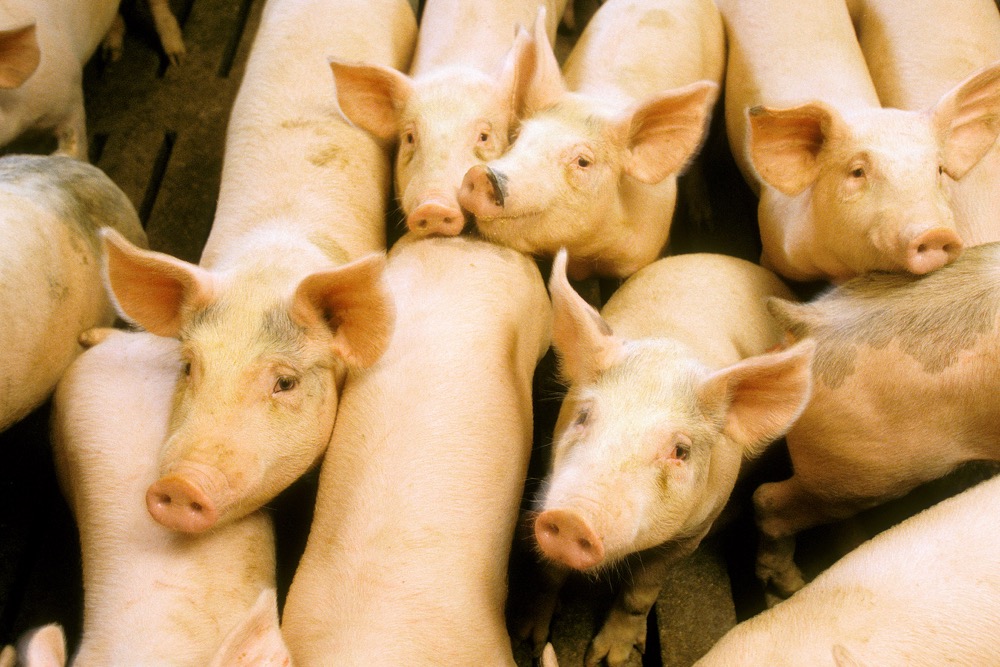
Artificial intelligence is already working on some hog farms and legislative and labour pressures will continue to drive new automated products in the sector.
But it’s going to be a while until they are commonplace, and there will be successes and failures along the way.
Why it matters: Labour pressure means remote monitoring and assisted decision making can help alleviate workload for current employees.
“We still can’t open up a catalog and order a lot of these systems, and that’s because it just takes a lot of time, and this is still a novel idea in the grand scheme of things,” says Dalton Obermier, of Jyga Technologies, a speaker at the recent Ontario Swine Conference in London.
He did his doctoral work on machine learning for computer vision systems and now works for Jyga, a Quebec-based company that supplies feeding systems and other equipment to hog farms.
Obermier listed perquisites for the success of artificial intelligence in swine operations, including:
- Efficiency must be improved, whether that’s in data handling, feeding, production or labour.
- It can’t create the need for larger numbers of employees. “The whole idea around artificial intelligence and swine farms, when it comes to labour efficiency, is to make life easier.”
- It must be cost effective
- Disease risk can’t be increased
- The technologies are easy to integrate into swine farms. “They’re going to have their own way of data sharing, own way of storing data in the cloud. How are we going to tie that all together in order for everything to work effectively?”
- They need to be user friendly and easy to learn
- The technology works with barn infrastructure. Some barn ceilings aren’t high enough for camera sensors to see whole pens.
- Internet connectivity can also be a limitation in some areas. Obermier is from Nebraska and, like Canada, has places where there are no cellular phone signals available.
There are numerous artificial intelligence products working on farms now, although there are few commercially available.
NUtrack from the University of Nebraska automates health monitoring and is being used on several farms in the U.S. Midwest. Boehringer Ingelheim has a product that detects changes in hog health through computer assessment of audio from hog barns, called Sound Talk.
He says that genetics company PIC uses a system that automatically assesses structural conformation in gilts and then associates that data with longevity in the herd.
Obermier says that other technologies in development include automatic body condition scoring, facial recognition for pig identification without ear tags and weight estimation.
Technologies will come together to monitor farms in real time, day and night on everything from health and disease status to aggression and tail biting. The computer systems will then send actionable alerts to farmers and workers.
Data could be shared up the hog production chain to make the system more efficient and to bring greater value to consumers of pork.
That’s all leading to less need for workers, although Obermier says he doesn’t see a point where managers and staff still won’t be on farms.
“The best systems will still hold value with well trained, experienced and caring managers and staff, no matter the technology they have on their farm and these types of production systems are always going to excel,” he says.
A system for evaluating swine technology funding
Farmers aren’t going to adopt technologies that don’t pay for themselves, and the Canadian Pork Council has a new tool to help farmers find programs that can help them adopt new technology.
René Roy, chair of the Canadian Pork Council, told the Ontario Swine Conference that innovation can be small changes on farms and anything that increases productivity also improve the sustainability of farms.
“Do not see innovation always as a new thing that is in the future. We do it on a daily basis when we improve on our farm,” he says.
The new tool helps producers evaluate all funding sources for innovation on farms.
“It gives you access to under one database of the various opportunities, funding opportunities in Canada, not only at the federal level, but also the provincial and the municipal level,” says Roy.
The tool is available in the Canadian Pork Council member portal.
Source - https://farmtario.com/