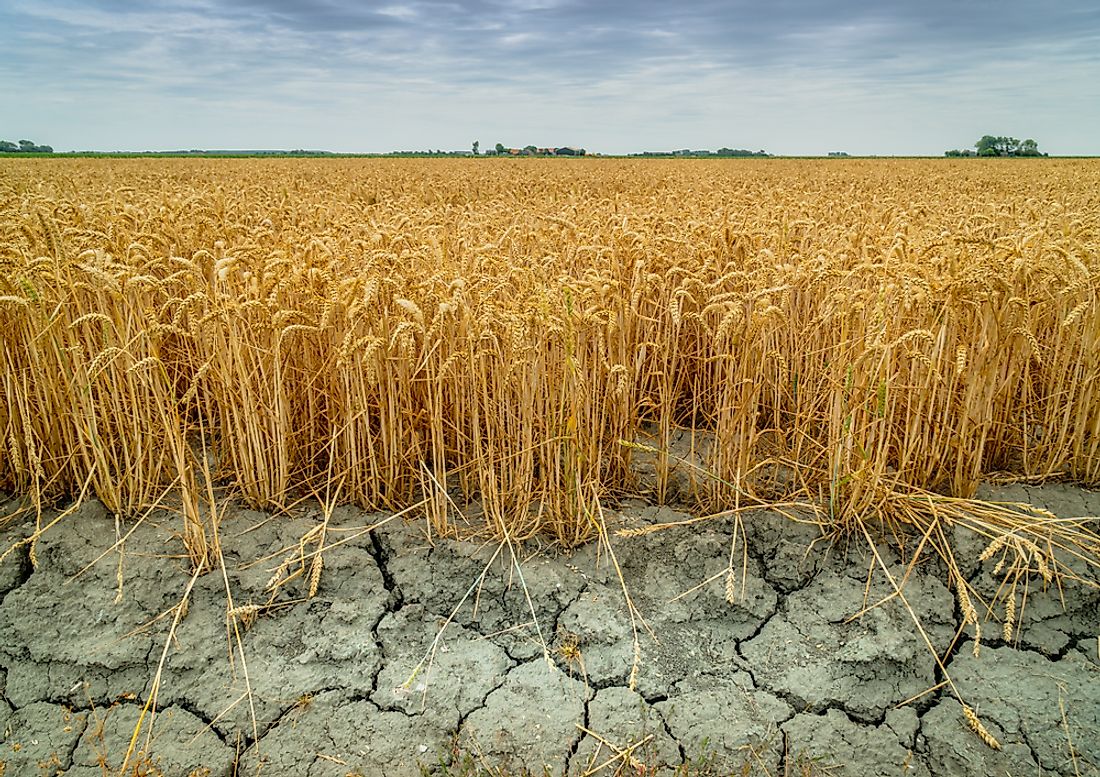
Smallholder farmers in west Africa’s Sahel face a harsh and worsening climate. Rainfall is erratic, temperatures are rising, soils are degrading, and droughts have become more frequent.
In Mali and Niger millions of rural households rely on rain-fed farming. These stresses pose a threat to food security and livelihoods.
As agricultural economists we conduct research on how climate-smart interventions affect farmers’ crop revenue and income. Our latest research focused on five staple crops widely grown across the Sahel – cowpea, groundnut, maize, millet and sorghum. We examined which technologies delivered the greatest benefits and what enabled or limited their adoption.
Data from 3,371 smallholder farm households across eight agricultural regions in Mali and Niger indicated that climate-smart technologies significantly enhanced farmers’ welfare. Climate-smart agricultural technologies include improved seed varieties, agrochemicals and sustainable land management. They are designed to increase crop productivity and strengthen resilience to climate stress.
Farmers using these technologies reported higher crop sales revenue and income than their counterparts who relied solely on traditional farming methods.
Climate-smart technologies increased yields, reduced climate-related losses and increased marketable output. For example, improved seed varieties boosted productivity and drought tolerance, agrochemicals strengthened soil fertility and crop health, and sustainable land management practices conserved moisture and soil quality. Together, they made farms more resilient to erratic rainfall and climate shocks.
However, a key insight emerged: substantial gains occurred only when technologies were used together. For example, combining improved seeds with agrochemicals maximised crop output potential. Combining sustainable land management with agrochemicals enhanced nutrient efficiency and long-term soil health.
Using full or partial combinations of these technologies yielded the largest welfare gains, raising crop revenue by over 181,000 CFA francs (US$307) per hectare. Relying on a single innovation offered far smaller benefits.
The evidence highlights a simple but powerful idea: climate-smart agriculture is most effective as a system, not as a set of stand-alone tools.
Climate-smart agricultural technologies used by the farmers
We studied three categories of climate-smart technologies commonly promoted across sub-Saharan Africa.
Improved seed varieties: drought-tolerant, early-maturing or disease-resistant varieties of staple crops.
Sustainable land management: soil and water conservation, intercropping, crop rotation, mulching, improved spacing and minimum tillage.
Agrochemicals: fertilisers and pesticides.
The research identified six usage pathways, ranging from non-users to farmers who used all three technologies at the same time.
Where the research took place
The study covered eight major agricultural regions across Mali (Kayes, Koulikoro, Sikasso, Ségou) and Niger (Tillabéry, Dosso, Maradi, Zinder).
These regions form the backbone of cereal and legume production in the Sahel but are also among the most climate-vulnerable areas in the world. Rainfall is low and erratic, soils are stressed, and most farmers rely entirely on rain-fed systems.
The farming households selected for the study cut across 32 communes and 320 villages, providing a strong representation of local farming conditions.
Our research showed that about 85.5% of the farmers adopted at least one climate-smart technology. The largest group – 25.1% (845 farmers) – used two technologies together, most commonly agrochemicals combined with sustainable land management. Only 14.86% (501 farmers) used all three simultaneously.
Adoption patterns differed across Mali and Niger, shaped by soil quality, rainfall, market access and extension services.
Combining technologies brought the biggest benefits
One clear finding emerged: technologies work better together. Farmers who used improved seeds, agrochemicals and sustainable land management jointly earned about 181,100 CFA francs (US$307) in crop sales revenue per hectare and 115,000 CFA francs (US$195) in crop income per hectare more than those using traditional methods.
Farmers who combined technologies earned significantly higher crop sales revenue and income than farmers who used the technologies in isolation.
Farmers who relied solely on agrochemicals earned approximately 112,260 CFA francs (US$190) more in crop sales revenue per hectare and 56,290 CFA francs (US$95) more in crop income per hectare than those using traditional methods.
Our research findings show a broadly similar effect in both Mali and Niger.
This means policy programmes should encourage bundled climate-smart packages.
Factors that help or hinder adoption
The research further revealed that farmers’ adoption decisions were shaped not only by agroecological conditions (like soil and rain) but also by household characteristics, resource endowment (household assets, off-farm income, total livestock units) and institutional support including formal credit, extension services, and farmer-based organisations.
These factors increased the likelihood of farmers using the technologies. They acted as “adoption enablers”. Without them, even effective technologies might remain out of reach.
However, we found that large household size, older farmers, and longer distances to fields discouraged adoption.
These demographic and infrastructural constraints were as influential as agronomic conditions, underscoring the need for broader investments in rural development.
Policy insights
The Sahel’s climate is becoming harsher, not milder. With temperatures rising 1.5 times faster than the global average, farming systems must adapt quickly. This study’s insights point policymakers towards interventions that will yield the strongest returns:
Promote technology packages, not single interventions: Programmes should encourage farmers to use technologies simultaneously, not one at a time.
Strengthen extension services: Training farmers on the correct application of technologies is crucial.
Improve access to credit: Low-interest loans could bolster simultaneous adoption.
Support farmer organisations: NGOs and government agencies can help establish farmer groups.
Invest in rural infrastructure: Revitalising rural road networks would reduce barriers caused by long distances to farm plots and improve access to inputs and markets.
Source - https://theconversation.com