Warm weather means some insect pests are on the move.
John Tooker, an Extension entomologist, said alfalfa weevil adults become active when temperatures hit 45 degrees, so they are out and about, particularly in the southern tier of counties and on warmer, south-facing slopes.
Tooker has already heard a few reports of larvae feeding.
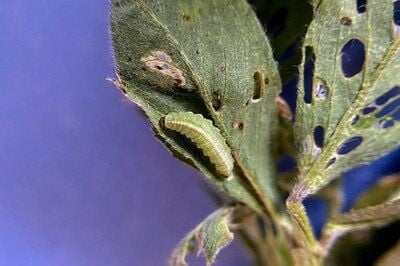
Young alfalfa weevil larvae cause pinhole-sized damage to leaves near the tips of plants, often on unfolded leaves.
Older larvae consume leaves that are more open, typically leaving jagged edges. Much of this early season feeding does not result in economic loss, but it is good to recognize the damage and be aware of which fields have greater activity.
Those fields with larger populations will, of course, be where economically significant populations are more likely to develop, but keep in mind that most fields will not require an insecticide application and you should scout to quantify your own populations, rather than just spraying blindly.
Economic thresholds for alfalfa weevil are determined from the size of the plants, the value of the hay, the cost of insecticidal treatment and the number of larvae per 30 stems of alfalfa.
To sample weevil larvae, systematically select 30 stems from across a field and shake them into a bucket.
Source - https://www.lancasterfarming.com