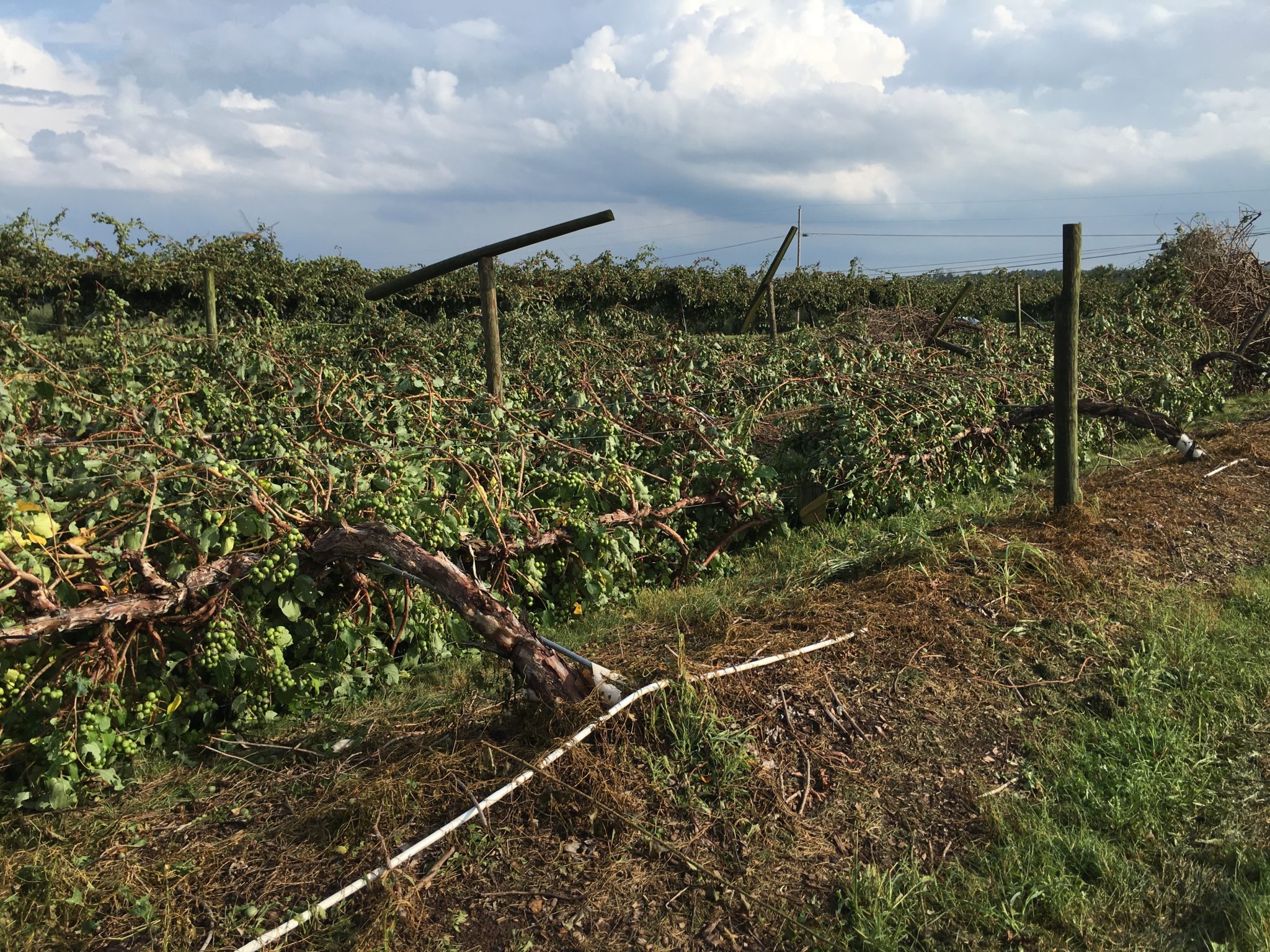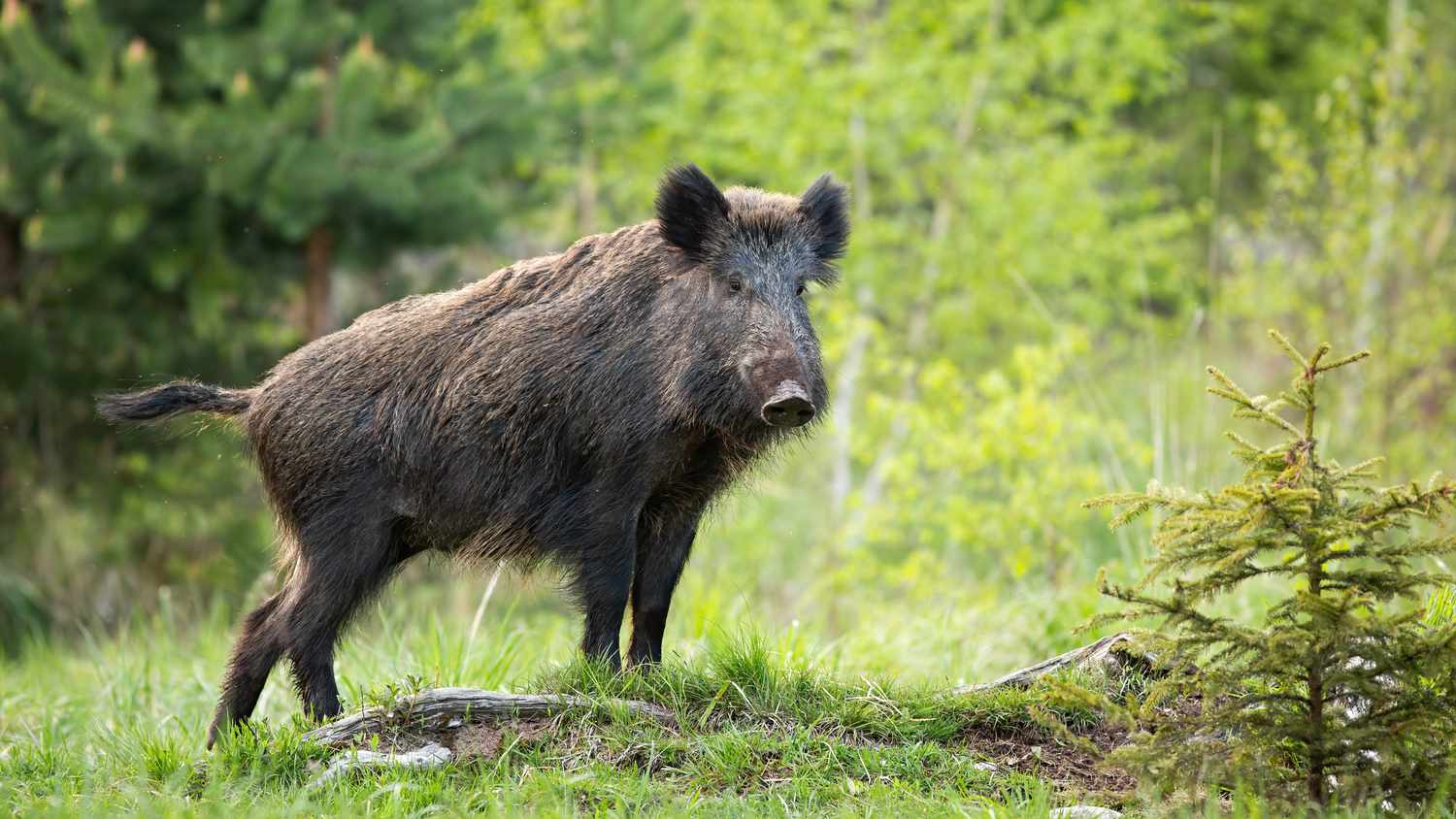
Farmers in the western countryside of Daraa suffer from the frequent encroachment of wild animals on their vegetable and fruit crops, as these animals eat the fruits and cause damage to agricultural produce.
These animals proliferate in grassy bushes, rocky areas, and valleys, with the most significant types being wild boars, jackals, hyenas, stray dogs, and foxes.
The farmers of the western Daraa countryside are among the most affected due to the geographical nature of the area. At the same time, the owners of these crops are helpless to take any effective measures to reduce their losses.
Poison as a means
Nabil al-Mohammad (35 years old) had no choice but to put poison around the pea field in the town of al-Muzayrib in the western countryside of Daraa to eliminate the wild animals that eat the crop and cause damage.
Al-Mohammad, a farmer in the western countryside of Daraa, said that he mixed the poison with chicken entrails and scattered it around and inside his field. According to al-Mohammad, this operation resulted in the death of about ten wild animals of various kinds, including dogs, hyenas, and jackals.
He added that he repeated its use until he was able to harvest his crop and sell it in the market at the beginning of April this year.
Al-Mohammad mentioned that these animals had decimated his lettuce crop, which spanned five dunams (5000 square meters), during the last season. He was unable to guard his crop due to heavy rainfall and chilly weather at night, so he found no alternative but to poison the peas’ surroundings for fear of another loss.
He further added that these animals cause damage to the plant through trampling, which leads to fungal diseases or even wilting of leaves or breaking of branches.
These animals consume fruits of peas, lettuce, corn, cucumber, pomegranates, and olives when ripe.
On the other hand, al-Mohammad realizes that using poison in this way poses risks, including the extinction of these wild animals’ species.
The veterinarian Iyad Theeb said that using poison in this manner would deprive nature of certain kinds of wild animals.
He added that these animals originally relied on partridges, rabbits, and the carcasses of dead animals for food, but with the decline in the presence of these food sources, they had resorted to agricultural crops, although it is not their usual food.
The doctor mentioned that these animals take refuge in castles, rugged areas, bushes, and valleys, where they hide during the day and appear at night.
Costly solutions
Adnan Kiwan, a farmer in the countryside of western Daraa, resorted to night guarding to protect his crop from the danger of these animals. Kiwan uses an empty container, striking it with a stick to create noise that drives the animals away, as they fear the presence of humans near them.
Kiwan (33 years old) stated that he has crops of lettuce, peas, and fava beans, which makes guarding these crops exhausting, especially during the cold winter nights.
He added that it would be possible to employ a guard for the crops. However, the cost of one night’s guarding reaches 50,000 Syrian pounds, which imposes a financial burden that could lead to certain loss, according to his expression.
Among the solutions some farmers resort to is surrounding the land with metal wires (fencing), but this method has become costly for most of them, as constructing a metal mesh fence for five dunams costs about 15 million Syrian pounds.
The suffering of farmers is often greater for the agricultural lands near the Yarmouk Valley, where wild pigs proliferate, take refuge among the reed sticks, and emerge to the crops of the neighboring villages at night.
Hussein (25 years old), a farmer in the village of Zeyzoun adjacent to the Yarmouk Valley in the western countryside of Daraa, uses multiple methods to hunt pigs, including setting traps or hunting them with hunting weapons.
Hussein, who awaits the harvest of pomegranates and olives from his agricultural land, said that herds of pigs ate about a ton of pomegranates from his crop last season, which prompted him to rent a nighttime guard for 30,000 Syrian pounds per night at the time.
He added that the guarding period starts from August and continues until the end of October, the time of the harvest.
The western countryside of Daraa is famous for cultivating green crops, including lettuce, cabbage, cauliflower, parsley, spinach, garlic, and more.
The area of lands planted with lettuce this season reached 155 hectares, according to the director of agriculture in Daraa, Bassam al-Hashish.
In another statement to the al-Thawra newspaper, al-Hashish said that the area planted with rainfed pea crops amounted to 1645 hectares and the area of fava bean crop reached 2754 hectares.
The Daraa Agriculture Directorate estimated the production of pomegranates to be about 21500 tons last season, covering an area planted with more than 600,000 trees.
Source - https://english.enabbaladi.net