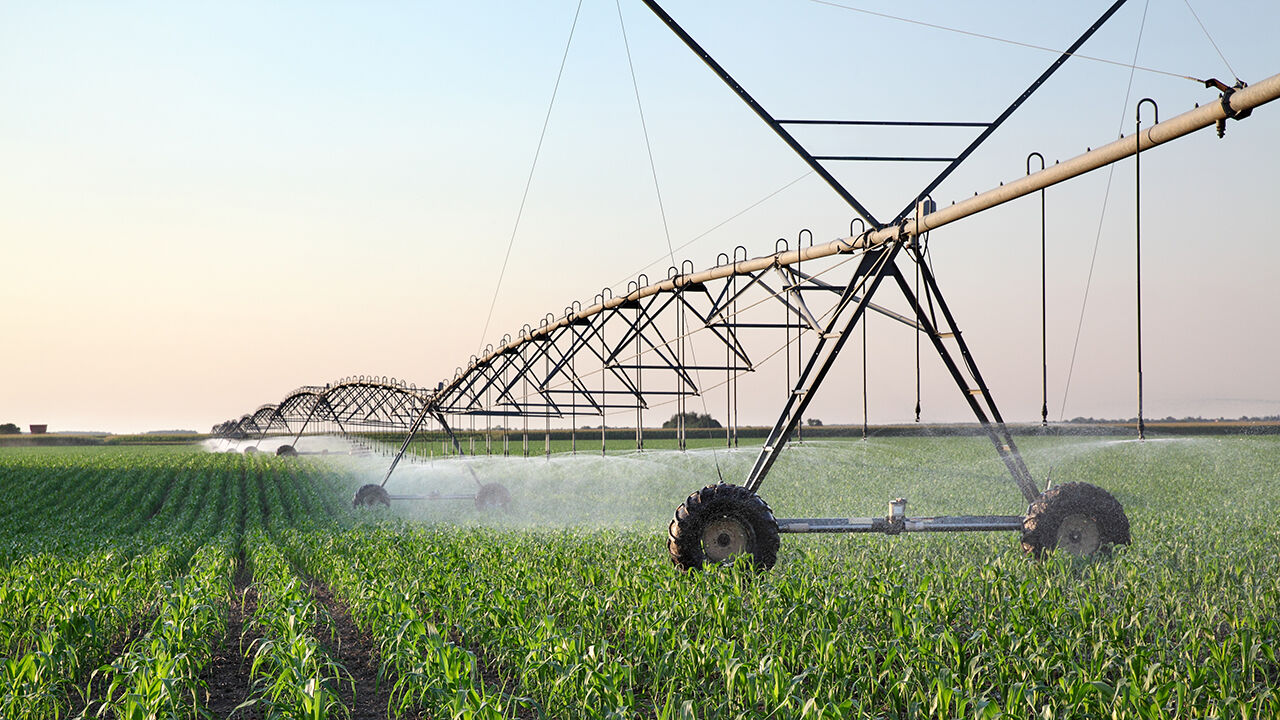
Alabama farmers considering investing in irrigation equipment will soon have a free, comprehensive online tool to help them decide. A new prediction model will combine weather and economic data to determine if the investment will pay dividends—or cost more than it’s worth.
Researchers in the Auburn University College of Agriculture and the Alabama Agricultural Experiment Station are in the early stages of an ambitious five-year research study combining different types of data to provide farmers with projections of yield and profitability, customizable down to the 2.5-square-mile parcel of cropland. The study is part of the long-running Alabama Irrigation Initiative (AII), a program formed in 2003 to help farmers boost their crop production through adoption of irrigation and improved irrigation practices. Auburn took on a leading role in the program in 2023.
“We want to be in a position in a few years where we can provide tailored agronomic and financial information on a farm-size scale,” said Thorsten Knappenberger, associate professor of soil physics at Auburn and a member of the project team.
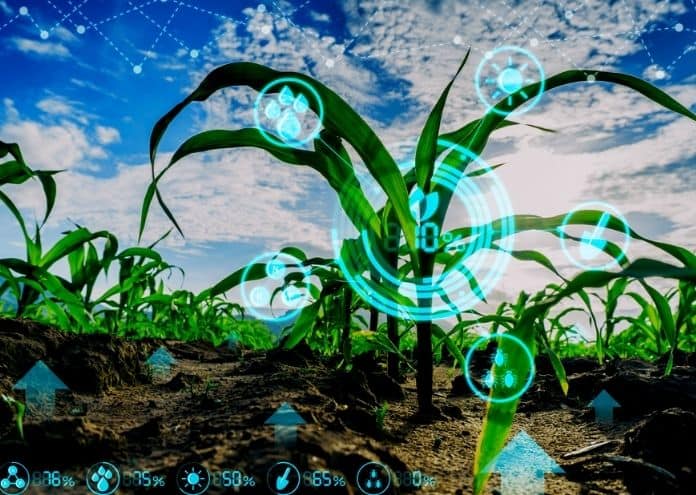
This sophisticated model will include many data types, such as rainfall, soil composition, crop, crop variety, costs of equipment and power, projected commodity prices, and more. The model combines these data to compare how productive a specific parcel of land growing a specific variety of crops would be with irrigation versus without. The results are given in a probabilistic model, saying, for example, in 15 out of 20 years, a farmer can expect to produce 25% more corn with irrigation than without.
“Then, the economists on the team put dollar figures on the yield predictions to determine if the yield advantage is likely enough to pay for the equipment installation and its operation,” said Josh Duke, professor of agricultural economics. The farmer is then left to decide if the added revenue offsets the cost of a particular irrigation method.
The model has the added benefit of helping farmers project their likely success growing crops they currently cannot grow without irrigation. This helps farmers plan to add additional crops to their rotation.
“If you’re a rainfed farm in southeast Alabama, you don’t grow corn,” said Knappenberger. “You grow cotton, peanuts, etc. Now, say you invest in an irrigation system. Well, now you can add corn into your crop rotation.”
This model will not only benefit individual farmers. Its benefits extend to the state level as well. The data and assessments that are collected by the AII will be provided to state officials to help make new policies for farmers and inform other regulatory decisions.
“We can say if we were to expand irrigation in a certain area, these are things we can predict beforehand. We can hand this over to the legislature,” Knappenberger said.
For example, the widespread adoption of irrigation in Alabama would benefit the food system. When farmers use irrigation, their yields are not only greater, but also more consistent. Irrigation means a more stable food supply and greater stability for supply chains and markets in Alabama and beyond.
Expanded irrigation in Alabama could also benefit the nation’s food supply. Agriculture in the arid West is under stress due to overcommitted water resources, said Richard McNider, professor of atmospheric science at Auburn University-Huntsville and research team member. Corn and soybean production for the nation is concentrated in a small area in the upper Midwest. By increasing food and, in particular, grain production in Alabama through irrigation, America’s food system would be more sustainable and distributed.
However, the goal of the AII is first to maximize Alabama farmers' profitable decision-making, resulting in greater wealth in rural communities.
In Alabama, agriculture is responsible for a substantial portion of the state’s economic output. Irrigation typically increases a farm’s gross output by as much as 70%, said Adam Rabinowitz, associate professor, Alabama Extension economist and grant team member. This means farmers would enjoy higher production and higher household income. Farmers would also purchase additional equipment and other inputs, such as fertilizer — all of which would strengthen the state’s economy.
The AII was originally created to boost irrigation use as a solution to short-term droughts that affect Alabama farmers' harvests. Alabama is not as productive as the Midwest due, in part, to the poor water retention capacity of the soil and the lack of cheap transportation via navigable waterways, which is common in the Midwest. In the last century, Alabama lost nearly 70% of its cotton and 90% of its corn acreage due to competition from Midwestern corn growers planting in deep, water-holding soils and Western farmers using irrigation. This devastated rural economies across Alabama, said Knappenberger. Alabama farmers also faced a series of short-term droughts in the 1950s, 1970s, and early 2000s. Many farmers simply ran short of cash or credit and went out of business.
Long-term studies have shown irrigation can reduce drought losses, increase production and, in most cases, is a good long-term investment. Members of the research team are optimistic that increased irrigation will make Alabama more competitive in certain crops, such as soybeans.
Researchers will launch the initiative by establishing two data model farms to simulate Alabama’s two major crop-producing areas: the Tennessee River Valley and Wiregrass regions. With these data models, researchers will simulate growing crops common to the regions, comparing irrigated performance to rainfed.
Meanwhile, on Alabama Agricultural Experiment Station’s actual research farms, the team will run experiments tracking the long-term effects of irrigation on levels of nitrogen, carbon, and organic matter in the soil. This is important because fertilizer costs are a major part of crop production, and the team doesn’t currently have data for all crop varieties, Knappenberger said. Researchers will later factor those costs into the model.
Extension will play a vital role in translating the research on irrigation into actual use on farms. During the final stages of the research, an Extension team will properly disperse the data analysis to farmers. The team will work alongside local farmers to discuss what form of irrigation is best for their situation. To ensure a positive change, the Extension team will help find the most profitable option for the farmer. For some farmers, a new well may be best, but for others, a pond might be cheaper and more effective. Further, the Extension team will inform farmers of federal cost-share programs, where farmers may receive federal payments for part of their irrigation investment costs.
The AII is a multifaceted project. In addition to Knappenberger, Duke, McNider, and Rabinowitz, William Bachelor of Biosystems Engineering is a member of the grant team. Additional partners include state organizations like the Alabama Farmers Federation and the Department of Agriculture and Industries. The University of Alabama in Huntsville and the Office of State Climatologist also contribute.
Source - https://www.montgomeryindependent.com