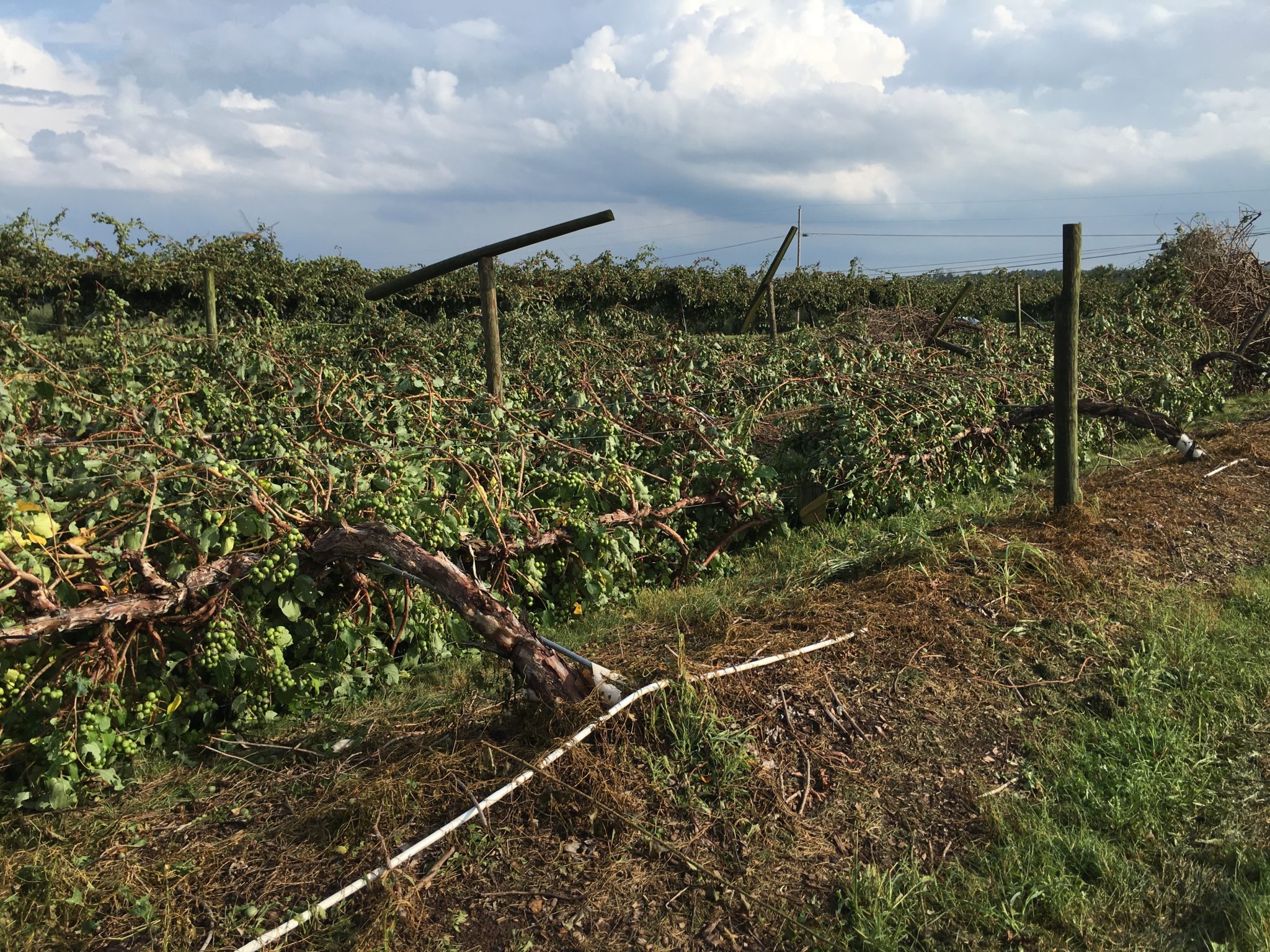
USA - Concord vineyards in New York's Lake Erie production region suffer massive crop loss

22.08.2024 370 views

The New York State Department of Agriculture issued a crop loss determination on Tuesday for grape farmers across the state.

A late frost event in April is being blamed for this year's Concord crop loss.

The disaster declaration was based on reporting conducted by the Cornell Lake Erie Research and Extension Lab at Cornell AgriTech, according to the NY DOA.

According to the report, Concord vineyards in the New York portion of the Lake Erie production region suffered a 60 percent loss, which makes up 46 to 51 percent of the state's total Concord crop loss.

The staff at the Cornell Lake Erie Research and Extension Laboratory have been working with the growers and processor representatives across the state to assess the crop damage since early this spring.

“This latest freeze event left our grape growers and farm wineries struggling with the potential of not having enough New York-grown grapes to maintain their farm winery license and thereby maintain their markets," State Agriculture Commissioner Richard A. Ball said.

"By issuing this declaration, we’re taking immediate action to help our farm wineries recover from the freezing temperatures experienced in April and allow them to focus on preparing for next year’s growing season. We encourage any impacted farms to take advantage of this respite and to continue to report losses to lessen the impacts of this damaging severe weather event.”

According to the New York Wine & Grape Foundation, these growers generate a $6.65 billion economic impact for New York State. There are 471 wineries in New York, growing a variety of grapes on 35,000 acres.

The State Department of Agriculture says that New York ranks as the third-largest grape producer and the third-largest wine producer in the country.

The Department will be hosting an industry-wide webinar on Tuesday, September 10, 2024, at 1:00 pm, to provide information on the application process and to answer any questions.

Farm wineries can apply for the exemption. The deadline to apply for the exemption is October 31, 2024.

Source - https://www.wgrz.com

11.01.2026

USA - USDA’s Agricultural Research Service (ARS) helping wheat farmers fight a devastating crop disease

Researchers released a new spring wheat germplasm line with resistance to Fusarium head blight.

11.01.2026

Kenya - Government Mobilises Food and Livestock Relief for Mandera Amid Drought

The Government of Kenya has mobilised food and non-food essentials for urgent delivery to areas affected by food and nutrition shortages caused by adverse weather and low rainfall during the recently ended short rains.

11.01.2026

Indonesia - Govt identifies 30,000 hectares of fish ponds damaged by Aceh flooding

The Ministry of Marine Affairs and Fisheries has identified around 30,000 hectares of aquaculture ponds damaged by floods that hit several regions in Aceh.

11.01.2026

India - Pests and climatic factors damage tomato crop in Haldwani

The Gaulapar area in Haldwani, known for tomato cultivation, has been hit hard by pests and climatic factors this season. 

11.01.2026

Ethiopia’s Agricultural Reforms Attract Global Partners as Food Sovereignty Gains Momentum

Ethiopia’s ongoing agricultural reforms are reinforcing national food self-reliance while attracting growing interest from international development partners, according to a senior official from the Canadian Food Grains Bank (CFGB).

11.01.2026

India - Delhi to digitise agriculture under federal support scheme

Delhi Chief Minister Rekha Gupta has announced plans to fully digitise the city’s agricultural system, introducing digital records for farmers and farmland. 

08.01.2026

Pakistan - Balochistan Agriculture Secretary inspects vegetable seed research farm

Balochistan Secretary of Agriculture, Noor Ahmed Parkani, inspected the Vegetable Seed Breeding Division on Mastung Road. 

08.01.2026

Vietnam pushes biopesticides to support green farming

Biological plant protection products have emerged as an important solution to gradually reduce dependence on chemical pesticides, support integrated pest management (IPM), and advance ecological and organic farming.