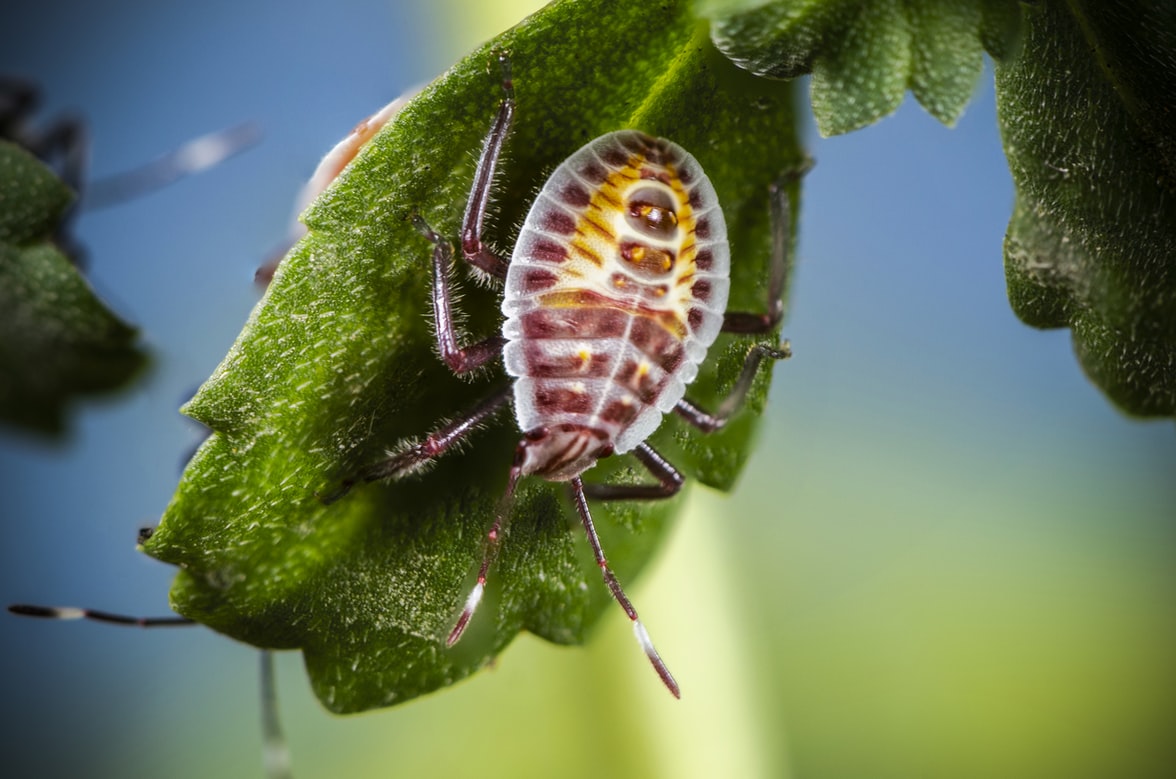
In 2003, Anne Nielsen became the first doctoral student in the U.S. to study the brown marmorated stink bug, which was beginning its ascendancy as an invasive species notoriously damaging to crops.
Working with her mentor, Rutgers entomologist George Hamilton, Nielsen traced the stink bug’s life cycle and origins. By the time the stink bug populations exploded in 2009-2010, Nielsen and Hamilton were in a unique position to advise farmers on countermeasures.
Now an associate professor in the Department of Entomology in the Rutgers School of Environmental and Biological Sciences (SEBS), Nielsen is also an Extension Specialist in tree fruit, with a special focus on invasive species like stink bugs and spotted lanternflies and their effects on fruit crops. Her goal is to protect the natural world by developing sustainable management practices.
After a morning spent with students in a peach orchard at the Rutgers Agriculture Research and Extension Center in Bridgeton, N.J., Nielsen discussed the threat of invasive species and the continuing effort to contain them.
What are invasive species?
An invasive species is a non-native species that is causing economic or ecological harm. They are more than just minor annoyances. They can cause major economic damage each year.
Invasive species are not going away. They are part of our lives because the world is so connected now. It’s something we need to continue to confront because it’s going to keep happening.
You just spent hours in a peach orchard with your students. What were you studying?
I’m out there looking at the whole system, the ecological environment. We look at the fruit trees, the grass underneath and the woods surrounding the orchard, and think about the natural enemies present. We take the whole picture into account and fit puzzle pieces together.
We study the biology of invasive insects so that we can figure out when they’re present and identify the correct timings for management. We also look at their behavior. We’ve done a lot of work looking at how they move across the surrounding landscape and within an orchard, and then we can exploit that behavior for management. We’ve found what we call border spray techniques, so we can reduce the amount of area in the orchard that is sprayed with pesticides. This is part of the strategy we are developing to incorporate biological techniques that are more environmentally friendly.
You are engaged in an ongoing battle against invasive species. What are the stakes?
New Jersey is the Garden State; agriculture is at the heart of who we are. These invasive species come in and they change our production practices, how we view agriculture and insects. Insects get vilified. We must balance our management of invasive insects with consumer demands for clean fruit and less pesticides.
Peach crops, and fruit crops in general, can be destroyed by invasive species. New Jersey is the number four growing region for peaches in the country. At the height of the marmorated stink bug infestation from 2010 to 2011, we lost 60 percent of our peach crops.
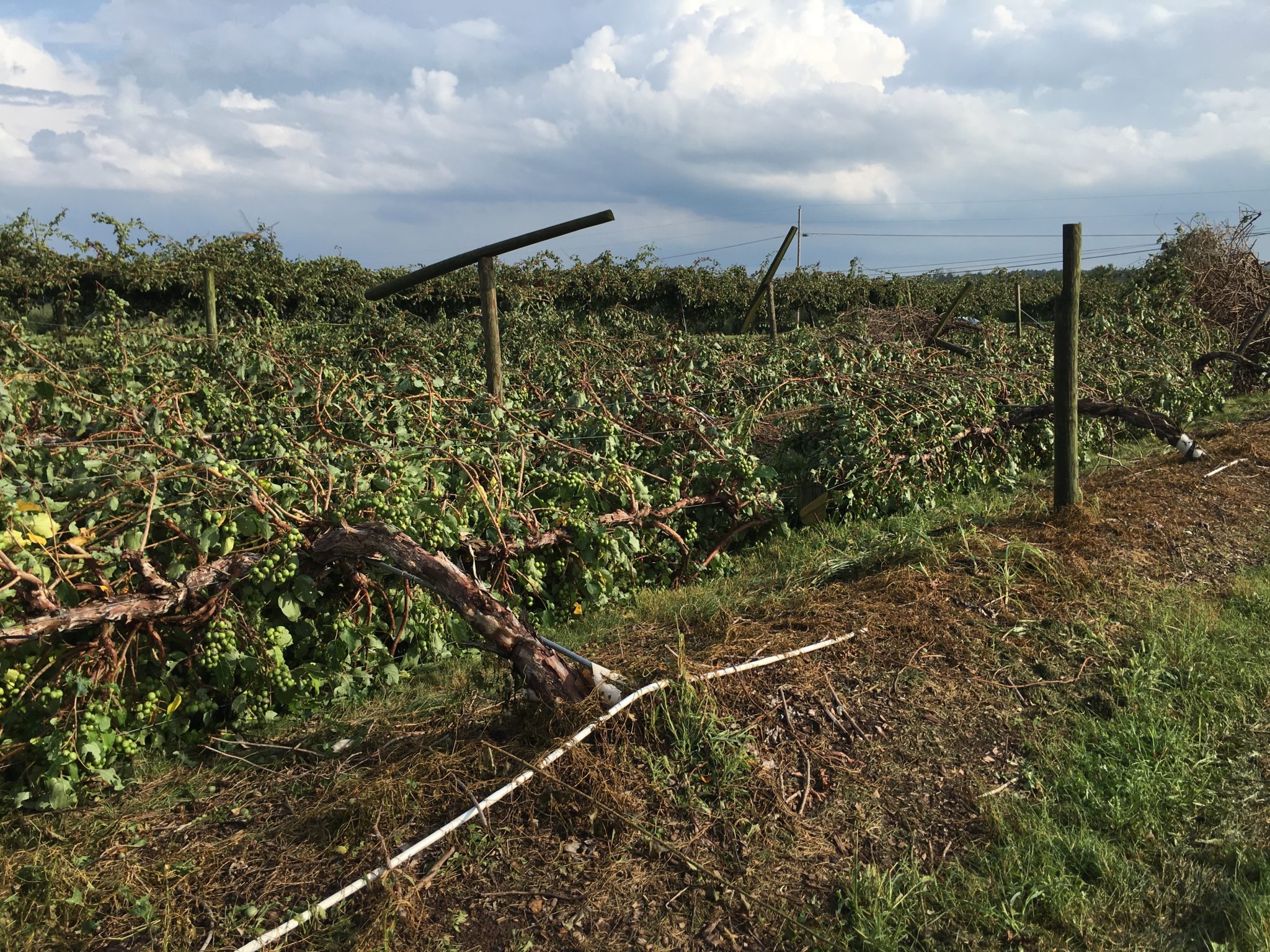
We also have a lot of apple orchards and wine vineyards that are vulnerable to these pests, as well as farms with equally imperiled small fruits like blueberries and raspberries. These crops are tied to a lot of people’s livelihoods and provide great economic value to the state.
When we think of economic loss from invasive insects, we see there are multiple factors driving that phenomenon, including some that incur hidden costs. There’s an invasive fruit fly called spotted wing drosophila that is a major pest of small fruit like blueberries and raspberries. I know growers who have pulled up all their raspberry plants. One wine grape grower handpicks stink bugs out of the grapes on the processing line before crushing the grapes to maintain high quality wines.
How do invasive species get here?
There are a lot of different routes of introduction for an invasive species. The most common one that we see is associated with shipping containers and global trade. We have a lot of ports of entry in this region. New Jersey and most of the mid-Atlantic are so densely populated that farms are often near urban areas, forming what we call the agro-urban interface, increasing the odds of invasive species reaching crop areas.
When you refer to achieving a balance in nature, what do you mean?
We had been looking at marmorated stink bugs for some time before they reached outbreak levels. We had a couple of bad years and then the populations naturally declined. A lot of invasive species exhibit these boom-and-bust cycles in their populations. Several factors come together – the environment starts pushing back, scientists develop new methods – and we’re able to reduce the population.
What sort of natural controls are evolving for the brown marmorated stink bug?
A lot of our focus now is on biological control of the stink bug using a parasitoid species – a tiny stingless wasp about the size of a poppy seed. They lay their eggs inside stink bug eggs. When those eggs hatch, they destroy the stink bug eggs. This has the potential to help control populations over time in a more sustainable manner.
We have done a few small releases of the wasps with farmers in New Jersey and at the Rutgers research station. We’re still working out the method’s biological impact.
How did you get involved in spotted lanternfly research?
The lanternfly was first detected in New Jersey in 2018 and in Pennsylvania a few years before that. Most of the explosive growth of the lanternfly coincided with the pandemic.
We studied it in Pennsylvania early on, learning how to identify it, and understand what trees it liked. In 2019, we started receiving significant reports from farmers in New Jersey about infestations in wine grapes.
In collaboration with Julie Lockwood, [a professor in the Department of Ecology, Evolution and Natural Resources at SEBS], we devised a method identifying lanternflies through genetic signatures. We were able to combine this detection method to inform our growers during the pandemic and reducing pesticide use by figuring out the best materials to use and the best times to spray. And we’re still battling them.
We are actively looking for biological control approaches to limit the lanternfly population and have found a few candidates. But we are still figuring this out.
Source - https://www.morningagclips.com