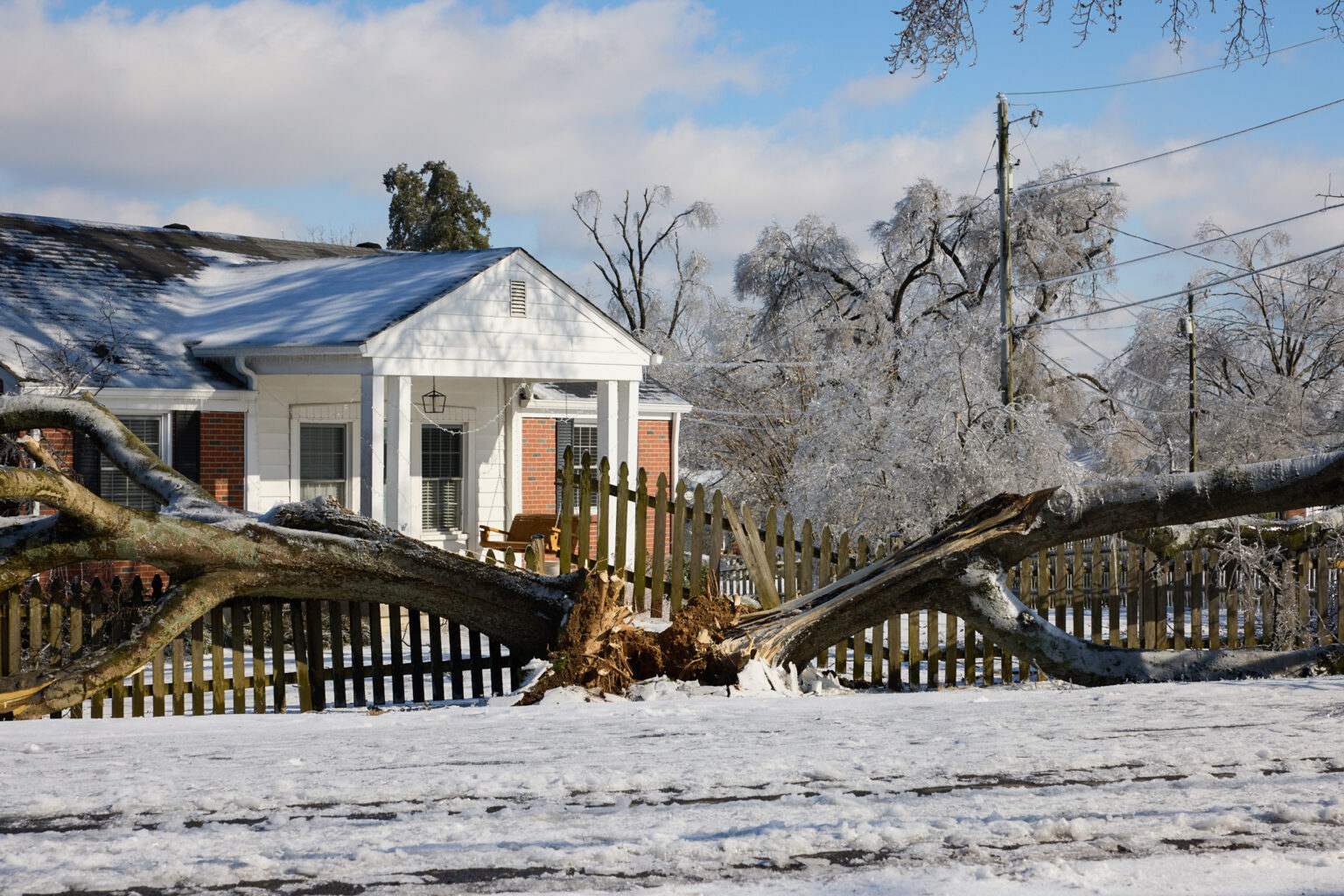
Record-breaking cold gripped the Southeast this weekend, bringing heavy snow to parts of Tennessee and North Carolina, canceling flights across the region and threatening citrus crops in Florida.
News outlets reported that at least 44 daily temperature records may be broken or tied across the South on Monday, most of them in Florida, according to the US Weather Prediction Center, Bloomberg News reported. Orlando is forecast to drop to 29F (16C); Lakeland, 27F; and Gainesville, 21F — all of which would break records for Feb. 2, the agency said.
“For Florida, this is a rare long-duration hard freeze,” said Richard Bann, a forecaster with the Weather Prediction Center. “The arctic air is now really entrenched.”
The cold temperatures struck a region where homes are less insulated against the cold, pipes can freeze and people, pets and livestock can be vulnerable, Bann said.
Duke Energy has asked customers in the Carolinas to reduce energy demand from 4 a.m. to 10 a.m. Monday and in Florida from 5 a.m. to 9 a.m., according to company statements. The goal is to keep electricity flowing through the grid and to avoid power outages.
Blizzardlike conditions stemming from the “bomb cyclone” hammered parts of the Carolinas on Saturday and ushered in frigid temperatures to much of the East Coast, the Associated Press reported. Charlotte saw one of its heaviest snowfalls in years, with roughly a foot (30 centimeters) or more in parts of the region.
That caused an hours-long mess on Interstate 85 northeast of the city, after a noninjury crash left dozens of semis and other vehicles backed up into the evening, according to the State Highway Patrol. The agency said it counted at least 750 traffic collisions. North Carolina Gov. Josh Stein said at a press conference that two fatalities were reported, according to CNN.
Officials also closed a nearly 13-mile stretch of a main road in North Carolina’s Outer Banks, citing deteriorating conditions and poor visibility. Through social media the state Department of Transportation warned of likely “ocean overwash” and urged people to stay home, AP reported. A house fire erupted in Nags Head, on the Outer Banks, a fire department reported on social media, CNN said.
Meanwhile, more than 194,000 homes and businesses were without power, mainly in Mississippi, Tennessee, Florida and Louisiana, according to PowerOutage.com. Many residents across the South have been without power since last weekend when a storm struck the eastern US.
The cold also threatens citrus growers, with most of Polk County in central Florida, the state’s biggest producing region, expected to face below-freezing temperatures. That county has produced nearly 30% of Florida’s total orange output in terms of boxes, according to the US Department of Agriculture, Bloomberg noted.
At the same time the cold grips the eastern US, the second winter storm in as many weeks left 10 inches across a wide area and as much as 16 inches near Lexington and High Rock, south of Winston-Salem, Bann told Bloomberg News.
The storm grounded 1,426 flights into and around the US Sunday, according to FlightAware, an airline tracking service.
Mississippi officials said it was the state’s worst winter storm since 1994. About 80 warming centers were opened, and National Guard troops delivered supplies by truck and helicopter, AP reported.
In Tennessee, Insurance Commissioner Carter Lawrence said in an email that property owners are still dealing damages from ice, snow and freezing rain left by last week’s storm, Winter Storm Fern. He reminded policyholders that the Department of Commerce and Insurance can mediate when an insurance company denies a claim.
More than 100 people have died from Texas to New Jersey, roughly half of them in Tennessee, Mississippi and Louisiana. Some deaths have been attributed to hypothermia, while others may be related to carbon monoxide exposure. Officials have not released specific details about some deaths.
The massive winter storm last weekend, which left more than a million people without power and heat for days in subfreezing temperatures, caused $105 billion to $115 billion in total damage and economic loss, according to an estimate from AccuWeather on Jan. 25.
The cold is expected to continue. Temperatures will moderate later this week but stay below normal, Bob Oravec, a senior branch forecaster at the US Weather Prediction Center, told Bloomberg News. And computer forecast models point to more winter storms across the East in the coming weeks.
“The one ingredient you need if you want a big winter storm is cold air, and it looks like the cold air will continue into the middle of February,” Oravec said.
Source - https://www.insurancejournal.com