As the fishmeal and fish oil industries continue to expand in tandem with the growth of aquaculture, pressure on wild-caught stocks that comprise the main ingredients of feed has intensified.
In an attempt to find ways to ease that pressure, researchers at the University of California Santa Cruz recently conducted a two-month study to determine whether changing the main ingredient in fishmeal affected fish growth.
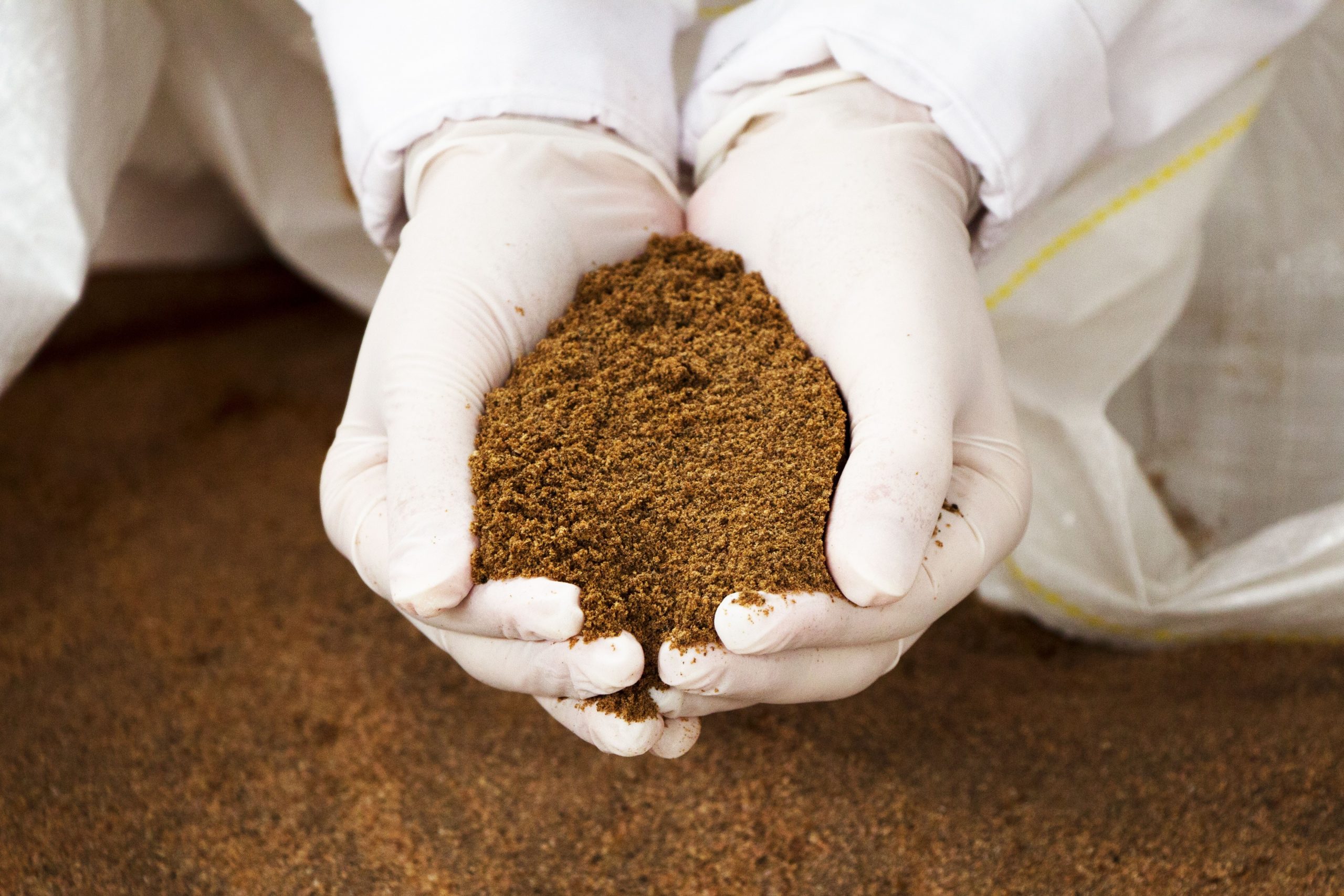
For the study, the researchers successfully developed an aquaculture feed that removes fishmeal entirely, substituting it with leftover marine microalgae sourced from the human dietary supplement industry. They found the fishmeal replacement ingredient maintained the same level of fish growth whether it comprised 33 percent, 66 percent, or 100 percent of fishmeal.
“The world depends on fish farms,” UC Santa Cruz Assistant Professor Pallab Sarker, who was the lead author on the study, said to UC Santa Cruz News. “Already, [half] of the fish we eat worldwide were raised on a farm. Aquaculture can help to feed our growing population, but right now, it too often comes at a surprising cost to wild fish. So, we and others across the industry have been working relentlessly to find solutions that don’t put further stress on ocean ecosystems.”
In the past, alternative feeds have largely not been viable options as they have rarely been able to produce farmed fish with the same levels of omega-3 fatty acids, such as DHA, that traditionally fed farmed fish have, especially at scale.
Marine microalgae, though, are single-celled organisms that are good sources of the omega-3 fatty acids DHA and EPA. The team at UC Santa Cruz made the discovery a few years ago by combining different types of microalgae into a cost-competitive feed for Nile tilapia. Though the feed outperformed conventional feed in several key metrics, tilapia can thrive better on vegetarian diets than other species.
Salmon and trout, by contrast, are natural predators that feed on smaller fish, making it more difficult to swap their feed to vegetarian or plant-based options.
“Trout and salmon eat other fish, so they really like fish smell and fish flavor,” Sarker said. “We learned that we could try adding taurine and lecithin as feeding stimulants, and that ended up being a breakthrough for the current study. Taurine is a chemical that fishmeal contains naturally, so when you exclude fishmeal, you also [typically] exclude taurine.”
According to Sarker, if marine microalgae is going to become a viable option to replace fishmeal as a sustainable alternative, the microalgae industry needs to grow. Currently, growing microalgae from scratch is too expensive.
“Microalgae is still a pricey ingredient due to production and processing costs, but we hope that this type of research, showing the promises of microalgae, can lend further motivation to help the industry solve that problem of cost,” Sarker said.
Source - https://www.seafoodsource.com