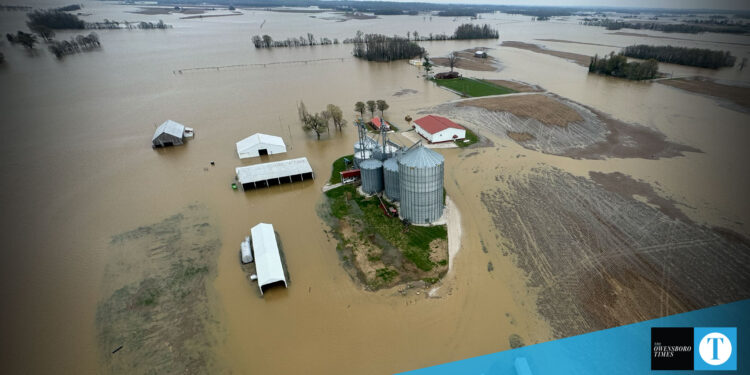
The U.S. Department of Agriculture is offering technical and financial assistance to Kentucky farmers and livestock producers impacted by recent severe weather and tornadoes. Producers who experienced crop, livestock, land, or infrastructure damage are encouraged to contact their local USDA Service Center as soon as possible to report losses and explore available recovery options.
“Impacted producers should timely report all crop, livestock and farm infrastructure damages and losses to their local FSA county office as soon as possible,” said Clark Sturgeon, Deputy State Executive Director for FSA in Kentucky. “As you evaluate your operation, take time to gather important documents you will need to get assistance, including farm records, herd inventory, receipts and pictures of damages or losses.”
Disaster Assistance Programs
Livestock producers who experienced excessive deaths due to tornadoes may be eligible for the Livestock Indemnity Program (LIP). Applications for 2025 losses must be submitted by March 2, 2026, with proper documentation of losses.
The Emergency Assistance for Livestock, Honeybees, and Farm-Raised Fish Program (ELAP) offers compensation for feed and grazing losses, with the same March 2, 2026, deadline.
Orchardists and nursery tree growers may qualify for cost-share assistance under the Tree Assistance Program (TAP) to replant or rehabilitate eligible trees, bushes, or vines. Applications must be submitted within 90 days of the disaster event or the date the loss becomes apparent.
Farm Loans and Storage Assistance
FSA also offers a variety of direct and guaranteed farm loans, including low-interest emergency loans to help them recover from production and physical losses. These loans can help replace essential property, purchase livestock and equipment, cover family expenses, or refinance farm-related debts.
The Farm Storage Facility Loan Program (FSFL) provides low-interest financing so producers can build, repair, replace or upgrade facilities to store commodities, with loan terms varying from 3-12 years. Producers in need of on-farm storage should also contact USDA.
Risk Management Support
Producers with Noninsured Crop Disaster Assistance Program (NAP) coverage should report crop damage to their local FSA office and must file a Notice of Loss (CCC-576) within 15 days of the loss becoming apparent — except for hand-harvested crops, which should be reported within 72 hours.
“Crop insurance and other USDA risk management options are offered to help producers manage risk because we never know what nature has in store for the future,” said Roddric Bell, Director of USDA’s Risk Management Agency (RMA) Regional Office that covers Kentucky. “The Approved Insurance Providers, loss adjusters, and agents are experienced and well-trained in handling these types of events.”
Conservation and Land Recovery
USDA’s Emergency Conservation Program (ECP) and Emergency Forest Restoration Program (EFRP) provide assistance to restore damaged farmland or forests, repair fencing, and clear debris from feed and water supplies.
The Natural Resources Conservation Service (NRCS) offers technical help through the Environmental Quality Incentives Program (EQIP) to implement conservation practices for long-term land resiliency.
“The Natural Resources Conservation Service can be a very valuable partner to help landowners with their recovery and resiliency efforts,” said Eric Allness, NRCS State Conservationist in Kentucky. “Our staff will work one-on-one with landowners to make assessments of the damages and develop approaches that focus on effective recovery of the land.”
Support for Communities
Additional NRCS programs include the Emergency Watershed Protection (EWP) program, which assists local government sponsors with the cost of addressing watershed impairments or hazards such as debris removal and streambank stabilization. Eligible sponsors must submit a request for assistance within 60 days of the disaster or gaining access to affected sites.
Source - https://www.owensborotimes.com