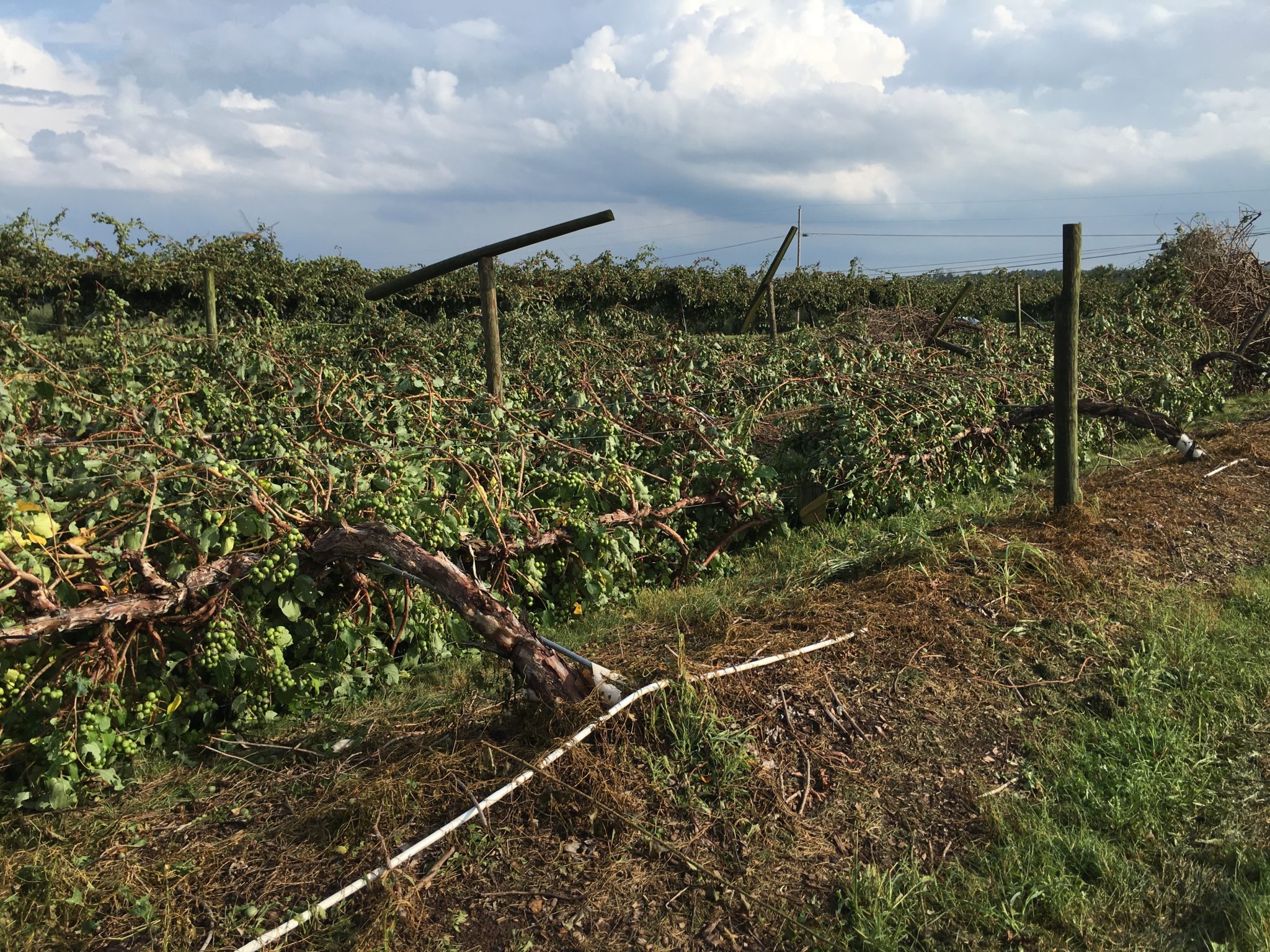
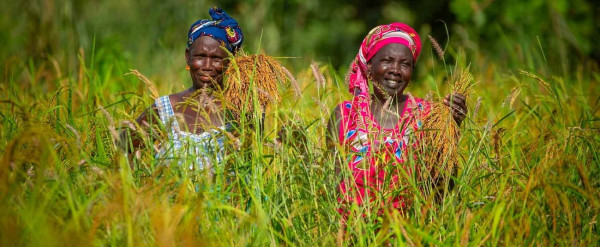
Considered one of the fastest-growing agricultural frontiers in Brazil, and the area with the highest greenhouse gas emissions in the Cerrado, Brazil's savanna-type biome, the region known as MATOPIBA, risks facing water shortages in the years ahead. Water overuse may mean that between 30% and 40% of demand for crop irrigation cannot be met in the period 2025-40. MATOPIBA is a portmanteau of the names of four states—Maranhão, Tocantins, Piauí, and Bahia (all but Tocantins are located in Brazil's Northeast region).
According to a new study by Brazilian researchers, water overuse and the impact of climate change are reducing groundwater flows from the Urucuia aquifer as well as the surface water bodies of the Grande River basin (the Grande is a tributary of the São Francisco, the largest river in Brazil's Northeast). The reduction in these flows may lead to water shortages for the towns and cities of the region, for river dwellers, and for farmers throughout the basin. Moreover, agricultural expansion will raise energy requirements for irrigation by up to 40%, posing a developmental challenge due to significant pressure on the water-energy nexus, as hydropower accounts for most of Brazil's energy mix.
The study was conducted by scientists at Brazil's National Space Research Institute (INPE) to assess the long-term sustainability of agricultural expansion in the region in the context of worsening water scarcity. An article about it is published in the journal Ambio. The last author is Ana Paula Aguiar, a researcher in INPE's Impacts, Adaptation and Vulnerability Division (DIIAV). Several of her co-authors are affiliated with Stockholm University's Stockholm Resilience Center in Sweden.
The MATOPIBA region is mostly in the Cerrado (91% or 665,000 km2), with comparatively minor portions belonging to the Amazon (7.3%) and Caatinga (1.7%) biomes. Its southeastern part is watered by the Grande River basin, which covers some 76,000 km2.
The main approach used in the paper is system dynamics, in which feedback control theory serves as a basis for modeling complex interactions between land use, energy and water, and for simulating different scenarios to predict responses over time, as a contribution to decision-making and more effective public policy formulation.
"System dynamics is holistic in the sense that it simulates correlations among demand variables that exist simultaneously in the region, such as irrigation, electricity and consumption. This isn't always considered in analyses performed by public bodies," said Celso von Randow, head of INPE-DIIAV and a co-author of the article.
The study was part of the project Nexus—Paths to Sustainability, led by Jean Ometto, a co-author of the article, a senior researcher at INPE, and a member of the steering committee for FAPESP's Research Program on Global Climate Change (RPGCC).
The purpose of the project was to propose strategies for the transition to a sustainable future in the Cerrado and Caatinga biomes via a participatory approach that integrates qualitative and quantitative methods.
A report on the Nexus project was issued in October with information on the research conducted by the group and other work done on the region. The report was presented to a seminar on "Contributions by the Brazilian scientific community to the discussion on combating desertification" held by SUDENE, a federal agency in charge of development in the Northeast region.
Members of the research group will take part in the Brazilian delegation to the 16th Conference of the Parties to the United Nations Convention to Combat Desertification (UNCCD COP16), which is due to be held in Saudi Arabia in December.
"The idea of the study arose during a Nexus workshop in Barreiras [Bahia state]. People had expressed concerns regarding the sustainability of the irrigation system. We developed a system dynamics model for the region, but it can be applied to other areas by adapting a few variables as needed," agricultural engineer Minella Alves Martins, first author of the article, told Agência FAPESP. She is a postdoctoral researcher at INPE supervised by Randow.
The workshop discussed the main challenges relating to water quality and quantity in the Grande River basin, as well as the social and environmental conflicts arising from water use and irregular land tenure. More than 90% of water withdrawals in the basin are for irrigation, according to the National Water and Basic Sanitation Agency (ANA).
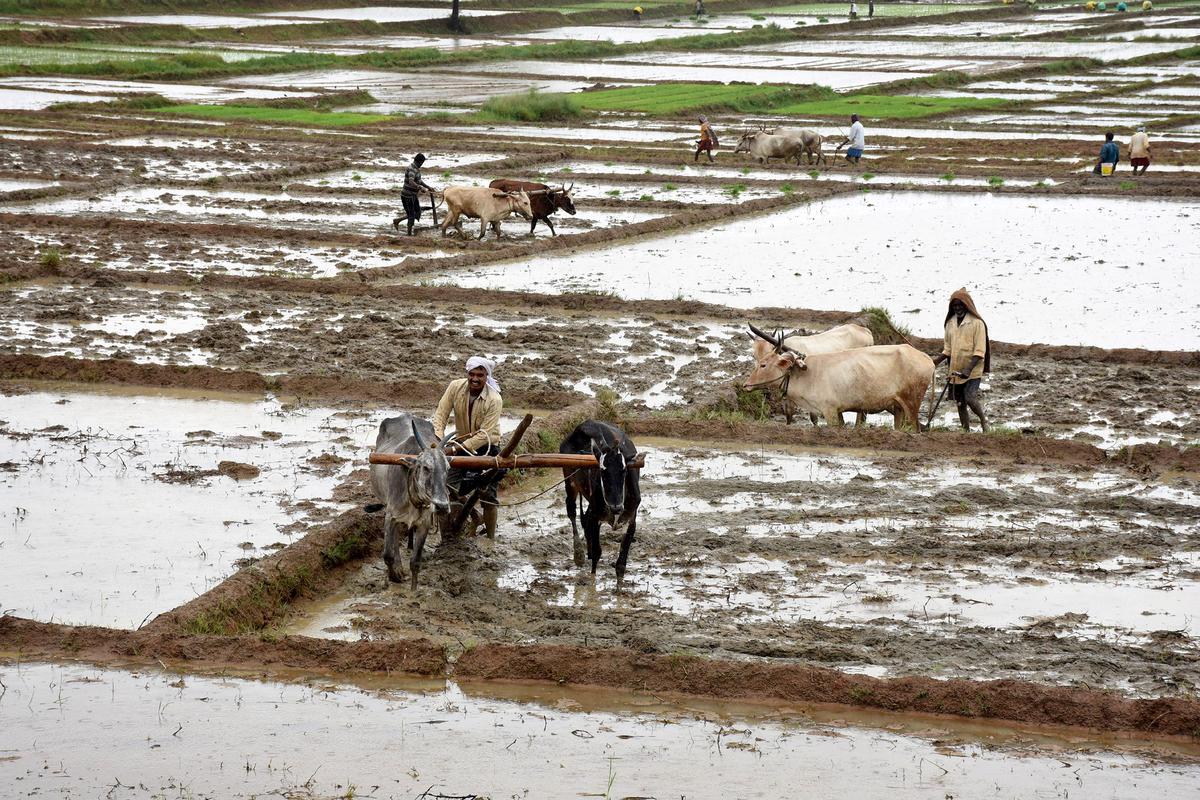
Production of grain crops in the MATOPIBA region (337 municipalities) has risen 92% in the last ten years, from 18 million metric tons in 2013-14 to about 35 million mt in the last crop year. In Bahia, the main crops are soybeans, corn and cotton, and the municipality of Barreiras is one of the leading producers in the state.
Production of grain crops in the region is projected to grow 37% in the next decade, reaching 48 million mt in a planted area of 110,000 km².
These numbers are from the study Projeções do Agronegócio, produced by the Ministry of Agriculture in partnership with the Brazilian Agricultural Research Corporation (EMBRAPA).
On the other hand, the severe drought in much of Brazil has lowered the 2023-24 grain crop forecast, especially for MATOPIBA. To make matters worse, the Cerrado has seen a record number of wildfires this year. The total in the first nine months reached 68,868, more than in any year since 2015.
According to the Amazon Environmental Research Institute (IPAM), 80% of the 135 million tons of CO2 released into the atmosphere by deforestation in the Cerrado between January 2023 and July 2024 came from MATOPIBA.
Destruction of native vegetation by fire and deforestation for land use change reduce evapotranspiration by plants, leading to a fall in the amount of rain. Moreover, without plant cover, rain hits the ground harder and faster, flowing away on the surface instead of forming underground channels.
Projections
The system dynamics model used by the researchers showed that surface runoff and groundwater flows will tend to diminish until 2040. They took into account current land uses, climate change and economic feedback. Meanwhile, demand for water will grow, mainly owing to the expansion of irrigation, rising from 1.53 m3/s in 2011-20 to 2.18 m3/s in 2031-2040.
As a result, they concluded, irrigated agriculture in the region is likely to stop expanding, and its long-term sustainability in the Grande River basin is uncertain.
"Many people in the region told us that water withdrawals are exceeding permitted levels. Our first recommendation is therefore that water use permits should be revised so that they can be aligned with the new climate normal we're experiencing. The statistics in the time series may be lagging behind, and this could be one reason why permitted levels are too high," Martins said.
"Our analysis of data from water well monitoring by CPRM [the Geological Survey of Brazil, an arm of the Ministry of Mines and Energy] showed that groundwater levels are falling, but this system is still used a great deal, and another recommendation is therefore that law enforcement should be stepped up so as to ban clandestine wells and ensure rational use of water resources when new wells are sunk," Martins added.
The group also recommends tighter control of changes in land use and land cover in order to prevent impairment of aquifer recharging and foster more efficient and rational strategies of water use in agriculture. For future studies, the scientists suggest exploration of other forms of adaptation to the new conditions, such as connecting the local electricity subsystem to the national grid and creating additional channels to ensure supply.
Source - https://phys.org