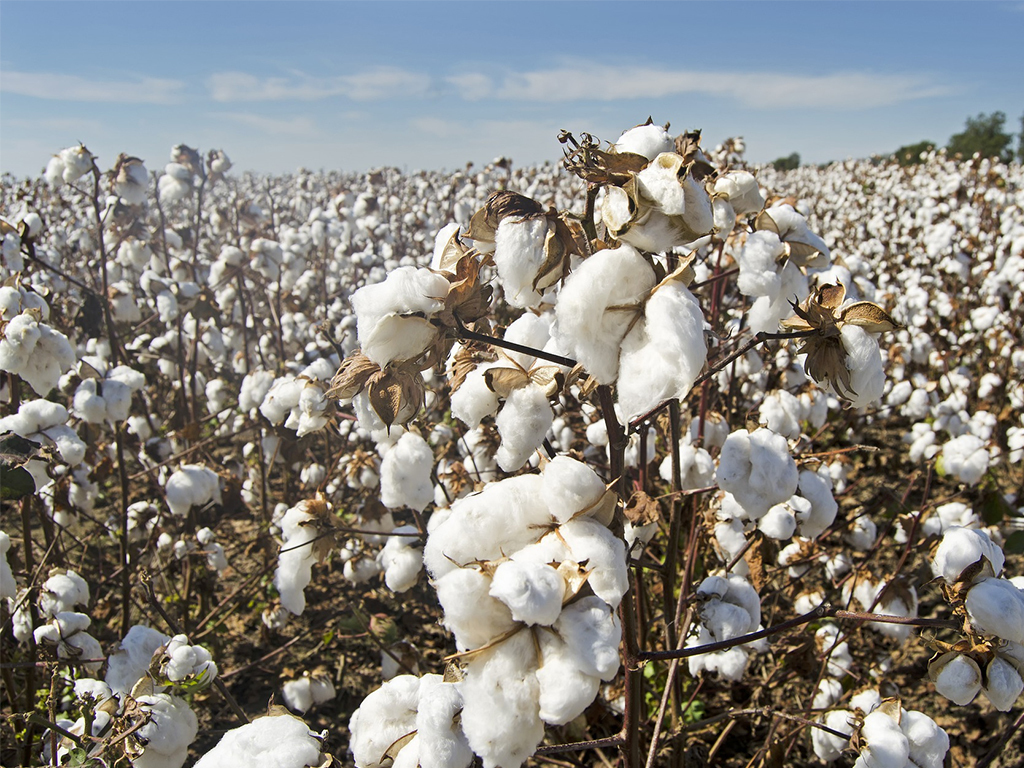
Zimbabwe's cotton season has ended with an estimated 13 000 tonnes delivered by farmers, the lowest known production record, primarily attributed to the devastating impact of the El Niño-induced drought.
This was significantly lower than the 82 000 tonnes delivered by farmers last year, and far below 42 000 tonnes the Government had projected.
Zimbabwe endured a devastating drought, believed to be the worst in four decades, which decimated crops.
While cotton is typically resilient to drought, many cotton-growing regions experienced insufficient rainfall to sustain the crop this year.
Moreover, the delayed delivery of inputs under the Presidential Inputs Scheme hindered production as farmers were unable to capitalise on early rains for planting.
Cotton is a crucial crop, particularly for marginalised communities.
"The impact of drought on cotton farming in Zimbabwe is severe, leading to reduced yields and poor-quality seed cotton and the need for adaptive strategies," Mr Tapiwa Mutonda, Agriculture and Marketing Authority (AMA) agricultural quality inspector and the columnist of its website, wrote recently.
"Addressing these challenges requires a concerted effort to promote sustainable agricultural practices, improve water management, and support the farming community in building resilience against climate variability."
Cotton farming is a major source of livelihood for over 1,3 million people in Zimbabwe.
Roughly, 75 percent of income in cotton-producing areas is derived from the crop, said Mr Mutonda.
The value chain employs approximately 60 000 individuals in ginneries, spinning, transportation and logistics services.
"Implied is that drought leads to crop failure, resulting in loss of income for thousands of farmers. This economic impact extends to reduced purchasing power and increased poverty levels in rural areas," he said.
The drought has left many households vulnerable, as they traditionally relied on cotton income to purchase food crops unsuitable for cultivation in drier regions.
The record-low cotton harvest raises concerns about a potential shortage of planting seeds for the next season. This could have far-reaching implications for cotton production and the livelihoods of farmers who depend on it.
The import bill for crude cooking oil is expected to rise as oil expressers will need to import more to compensate for the cotton seed deficit. This year, the Government aims to put 270 000 hectares under cotton, with 180 000 hectares funded through a State-assisted programme, also as the Presidential Inputs Scheme, and the remaining by the private sector.
This is expected to yield 190 000 tonnes of cotton. The total production cost is estimated at US$48,1 million, with the private sector expected to contribute 33 percent.
Under the Pfumvudza programme, 180 000 hectares will be planted, requiring two 0,25-hectare plots per grower to qualify for inputs by October. While the drought undoubtedly played a major role in the production decline, analysts have emphasised the need for structural reforms to ensure the cotton industry's future viability.
Analysts argue that the reforms should focus on creating a level playing field for private sector participation.
Currently, private players face uneven competition with Cottco.
Cottco farmers benefit from Government-free inputs, while private companies must purchase inputs for their contracted farmers.
Even if private companies were allowed to deduct the cost of inputs they provide to farmers, this could incentivise side marketing.
The prospect of selling their crop to Cottco for a higher price due to the input subsidy might tempt farmers to bypass their contracts with private companies.
The Zimbabwe Farmers Union executive director, Paul Zakariya, recently saic industry stakeholders needed to work together to "re-energise" the cotton industry.
He emphasised the importance of developing an attractive and fair financing model for all participants, including farmers and merchants.
Mr Zakariya also proposed a farm gate pricing model to ensure farmers receive a fair return for their crops while collaborative efforts are crucial to increase yields and restore industry viability.
"We need the landscape to change, we need a more sustainable cotton finar. _ing model for the country," said Mr Zakariya.
In 2014, the Government intervened to fund cotton production after yields plummeted to a record low of 28 000 tonnes, the lowest since the 1992 drought.
The Government claimed that ginners failed to finance cotton production and provided inadequate inputs, leading to declining yields.
The Government further alleged that ginners colluded to offer low producer prices while inflating input costs to maximise profits at the expense of farmers.
In addition, they are accused of neglecting to pay differential prices based on crop grading, buying all cotton at the same price regardless of quality.
However, merchants argued that financing cotton was no longer a viable investment due to low recovery rates caused by side marketing.
This situation led companies like Cargill to exit the country due to low profitability and recovery rates.
The decline in Zimbabwe's cotton industry, once a major export powerhouse, poses a serious threat to the country's nascent textile revival, particularly after the promising resurgence of David Whitehead Textiles.
Source - https://www.herald.co.zw