Through partnerships with Growcer, food banks, and community farms, the Royal Bank of Canada (RBC) is positioning vertical farming and controlled environment agriculture (CEA) as a strategic solution to climate, skills, and food access challenges.
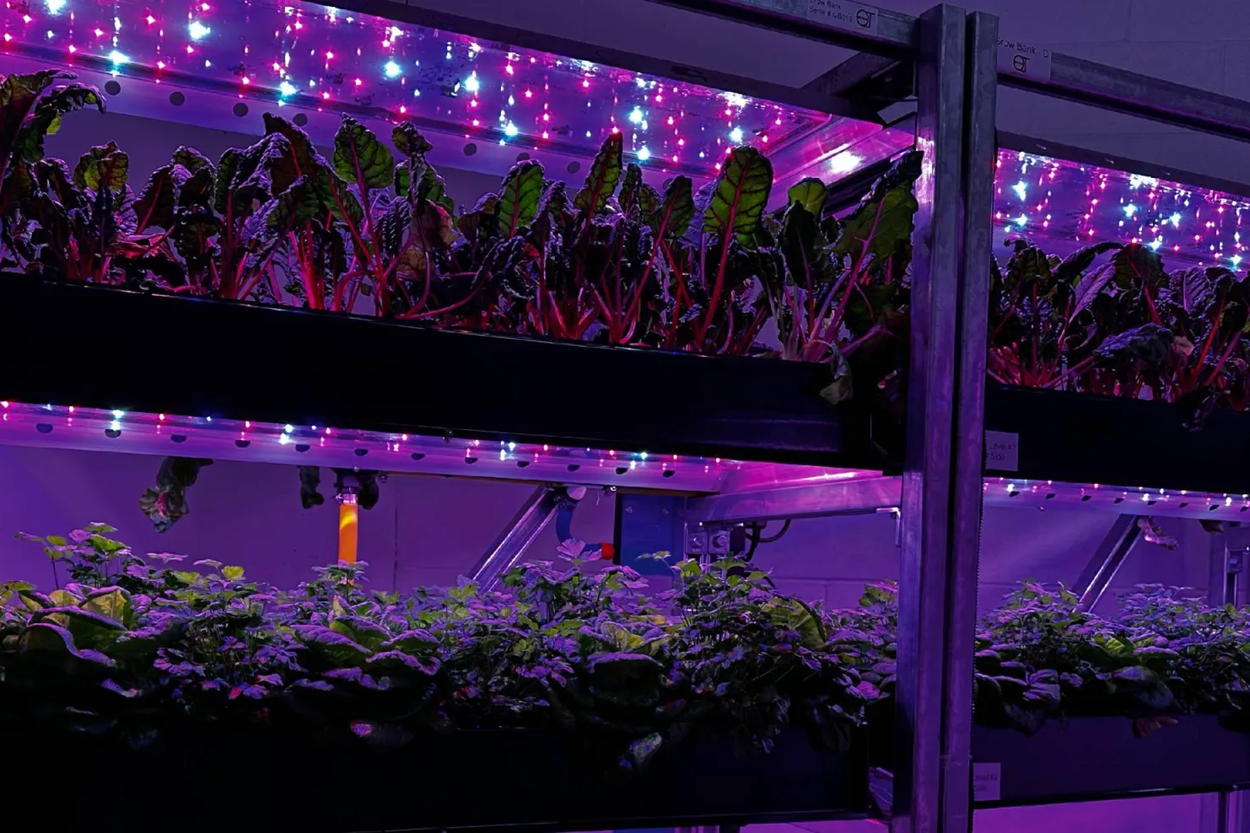
When The Ottawa Mission, the city's oldest homeless shelter, recently installed two modular vertical farms, it became more than a food relief effort. The project, a partnership between the shelter, agtech firm Growcer, and the Royal Bank of Canada, represented a collaboration that merges philanthropy with infrastructure building.
Funded through a $1.5 million donation from RBC to the Ottawa Community Foundation's Food Resiliency Foundation Fund, the farms can grow up to 20,000 pounds of leafy greens annually. These greens go directly into meals served by the shelter's kitchens and food trucks, and are also used to train participants in its Food Services Training Program.
"Growcer's farms will help enable the Ottawa Mission, an organization that served over one million meals last year, to grow their own fresh, nutritious food, and create training opportunities for students to build skills and experience," said Erika Whitmee, Senior Manager in Marketing and Communications at RBC.
RBC's broader bet on vertical farming
"As part of our commitment to helping our clients thrive and communities prosper, we've identified food security as a critical need", says Devinder Gill, RBC's Regional President for Ontario North and East. "RBC's recently announced global commitment of $10 million supports food-focused organizations that grow, store, and provide healthy food to people in our communities at a time they need it most. We are thrilled to help make this possible in Ottawa with Growcer and The Ottawa Mission, the first of many such community initiatives."
The Ottawa project is one part of a wider RBC strategy to strengthen food security infrastructure through targeted support for indoor agriculture. This includes a $50,000 grant to the Feed Durham Vertical Farming Project, which distributes leafy greens to food banks and community kitchens across the region, and $23,500 to Archway Urban Farm in Abbotsford, BC. At Archway, the funding helped launch a Harvest Wall system, chosen for its flexibility and low energy use, and support hands-on vertical farming training tied to the University of the Fraser Valley's agriculture program.
"We are proud to support modular vertical farming systems that not only increase year-round access to healthy food, but also give communities the tools and skills they need to become more resilient," RBC said in a statement.
Scaling vertical farming where it's needed most
RBC's investment in vertical farming is grounded in practical need. The bank is prioritizing projects in urban and underserved regions, areas where fresh food is expensive, supply chains are fragile, and nonprofit organizations face rising costs to meet growing demand. In this context, vertical farming is not positioned as a technological novelty, but as climate-resilient infrastructure.
More than 20 per cent of Canadian households now face some level of food insecurity, and fresh produce prices have surged over 21 per cent since 2021. In response, RBC is supporting systems that shorten supply chains, reduce spoilage, and localize food production where it's needed most.
Growcer's model reflects that mandate. Its modular, deep-water culture systems are designed for ease of deployment in community settings, particularly where nonprofits face rising costs and limited access to fresh produce. CEO Corey Ellis frames the approach as a shift away from reactive spending: "We're changing the script and swapping higher operating costs for a longer-term investment that will produce food for The Ottawa Mission at a lower cost," he said.
Community, climate, and skills
Asked how the bank measures success, RBC points to three pillars that guide its investment strategy:
- Supporting the transition to a net-zero economy
- Equipping people with the skills for a thriving future
- Driving more inclusive opportunities for prosperity
In the case of vertical farming, this translates into supporting systems that are climate-adaptive, skills-building, and community-anchored. In Abbotsford, for instance, the Archway farm serves as both a production site and an interactive education space for students, volunteers, and residents.
"Spinach is very difficult to grow, so these hyper-controlled environments allow us to efficiently grow one of the most imported vegetables in Canada," said Arlene David, Urban Farm Supervisor at Archway.
A sector ready to scale
According to RBC, indoor farming, including vertical farms and greenhouse operations, has reached an inflection point. The bank's own market analysis project suggests that Canada's indoor ag sector could double in the next decade if supported with the right mix of infrastructure, energy, and policy.
Greenhouse and vertical farm operations already produce more food per acre than any other production system in Canada, but this productivity comes with its own set of challenges, including rising energy costs, competition for land, and labor shortages that are putting pressure on operators. To meet these challenges, RBC is calling for greater coordination across the food system, from investments in renewable energy and waste recovery to modernized regulations and better support for skilled labor development.
In Windsor-Essex, for example, energy demand from greenhouses is projected to quadruple by 2035. Addressing those needs while reducing emissions will be critical to ensuring the sector's long-term viability. "We believe Canada's food producers can lead the world in sustainable, high-output agriculture," said RBC. "But doing so will require aligning climate goals with food production targets, and building systems that are both productive and resilient."
Source - https://www.freshplaza.com