NEWS
836
of 1225
News
13.10.2016

China - Flood damage to crops reduces by 70% over 20 years

Although in 2016 China experienced the worst flooding since the 1-in-100 flood event of 1998, the impact of the flood has decreased significantly, according to Aon Benfield. The company said that despite similar hazard patterns to the 1998 event flood damage to crops in 2016 was 70 percent lower than the earlier event. According to Aon Benfield’s ‘Natural Catastrophe Report for China in Summer 2016’ report, 68 percent fewer crops were damaged in this summer’s event despite the fact that the Yangtze River experienced 20 percent higher-than-average precipitation in both events. A major reason behind the reduced flood losses is the Chinese government, which has increased investment and capabilities in flood forecast and control, boosting defence systems since 1998. Since this summer’s Yangtze River and the north-eastern China floods, at least 130,000 claims related to storm and floods have been reported. Based on government statistics, economic losses will exceed CNY255.8 billion ($38.1 billion) while Aon Benfield estimates total insurance loss to reach over CNY4 billion. The total insurance loss is estimated to be approximately 1.5 percent of total economic loss, reflecting a low level of insurance penetration. Yifan Fu, head of Aon Benfield Analytics Greater China, commented: “As Chinese re/insurers begin to analyse their losses from the floods, the report provides a market overview to help prepare for the renewal season. While it is still early days to predict the full impact of the summer events, it is clear that the low insurance penetration will provide a potential for growth going forward.” Source - http://www.intelligentinsurer.com

13.10.2016

Spain - Hail causes severe damage in Castellon

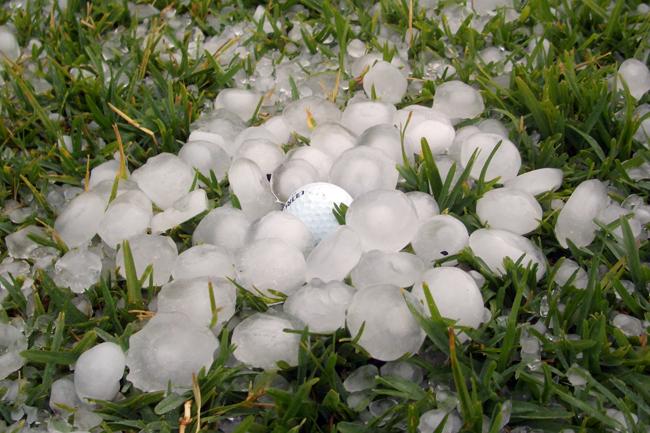
The Unió de Llauradors (Growers Association) has reported that the hailstorm recorded last Friday afternoon has caused severe damage to crops in the entire municipality of Torreblanca and to some more localised items in Cabanes and Alcalá de Xivert.   According to a statement from La Unió, Torreblanca suffered the impact of a violent hailstorm which has caused severe damage, especially to citrus crops.   "A lot of fruit has fallen to the ground. In other cases, marks have been left on the fruit's skin and damage has been observed even on the trees themselves," pointed out sources from the association.   Some vegetable crops have also been affected, especially open ground artichokes and tomatoes, as well as olives, which in some cases have fallen to the ground.   The Unió de Llauradors added that the losses are covered by the current system of agricultural insurance, as long as growers have a policy in force.   Those responsible have already got in contact with Agroseguro, requesting for the area to be visited immediately in order to speed up the process.   "It is important for the damage assessment to be carried as soon as possible, primarily for the earliest citrus varieties," they highlighted.   Source - http://www.freshplaza.com

13.10.2016

USA - Hurricane Matthew hit North Carolina's crops

Hurricane Matthew brought devastating wind gusts and flooding to North Carolina, leaving at least 10 dead in the state. The National Weather Service on Monday 10 Oct., issued flood warnings for parts of central and eastern North Carolina after as much as 15 inches (38 centimeters) of rain in some spots. The storm made landfall Saturday in South Carolina and has now dissipated in the Atlantic. Matthew appears to have spared Florida’s citrus belt, with “negligible” harm to oranges and about 10 percent of the grapefruit crop blown from trees, Florida Citrus Mutual spokesman Andrew Meadows said Monday by phone. Meanwhile, some farmers in North Carolina are reporting that their crops may not be salvageable. Wilson County farmer Gerald Tyner said right now his land is what can only be described as a big mess. During Hurricane Matthew’s heavy rainfall and strong winds Saturday, Tyner’s farm shop experienced extensive flooding, damaging a lot of his equipment. "There was a tractor in there,” Tyner said. “Generator, irrigation pumps — we’re still trying to see what, if anything, can be salvaged.” His equipment was not the only thing devastated in the storm this weekend. He said much of his soybean and peanut crop is still under water. “We don’t know how long it will be before we can get into the fields,” Tyner said. “The ground is still heavily saturated, so crops like sweet potatoes and peanuts could rot in the ground before we get to them.” Many farmers are seeing destruction similar to Tyner’s all over eastern North Carolina. On Sunday, the N.C. Department of Agriculture and Consumer Services activated a toll-free hotline to connect farmers with resources that can assist with Hurricane Matthew recovery. Wilson County farmer Bennett Williford said his cotton and soybeans made it through the storm without much damage, but the vegetables that he planted for the first time this year may be a total loss. Williford said he has 20 acres full of spinach, turnips and onions that have seen significant soil erosion. “I planted my onions very recently, and my spinach was was only two to four weeks old,” Williford said. “My turnips were about five weeks old, so they’re probably going to be OK. The others were just so small because they were young. It made them extremely vulnerable.” Despite the heavy downpour, James Sharp, operator of Deans Farms, said it was the wind that damaged his crops. Strawberries that were recently planted and lettuce both battled the hurricane force winds, and Sharp said overall the damage to the crop is not significant. The Deans Farm Market was not damaged in the storm either. “Overall, we’re very fortunate,” he said. “All we can do is repair and move on.” N.C. Cooperative Extension Agent Norman Harrell said at this point, total damage has not really been assessed, but he believes more than 50 percent of corn that was remaining in the field was blown over by the strong winds. This will cause a harvest loss because any ear of corn that touches the ground will be lost. He said many growers also lost greenhouse tops during the storm. Source - http://www.freshplaza.com

13.10.2016

Haiti - Up to 90% of crops damaged

Preliminary assessments indicate that the crop damage from Hurricane Matthew in Haiti is expected to be dramatic. Reports say that almost 100 percent of crops were destroyed in Grande-Anse and more than 90 percent in Sud departments. With much of the country relying on subsistence production to meet their food needs, restoring agriculture-and fishery-based livelihoods is critical to avoid dependency on food aid in the coming months. A Flash appeal was issued to provide immediate support to 750,000 affected people. Under this framework, FAO requires USD 9 million to provide immediate crop, livestock and fisheries support to 300,000 Hurricane-affected people. The medium-to long-term recovery costs will be greater, but estimates are not available at this time. On 3 October 2016, Category 4 Hurricane Matthew, the strongest hurricane in the Atlantic since Hurricane Georges in 1997, cut a path of destruction across Haiti, carrying devastating winds, heavy rainfall and widespread damage in the southwest of the country: the most affected departments are Grande-Anse, Sud, Sud-Est and Nippes. The death toll from Hurricane Matthew in Haiti is rising, at least 336 have died and cholera is spreading. An estimated 2.1 million Haitians (more than 20 percent of the population) were affected and 1.4 million are in need of assistance. The hurricane has aggravated the effects of El Niño-related events, including a drought which has already diminished food production and access to fresh water over the past year. The combined effects will further reduce peoples’ capacity to purchase food to feed their families, or agricultural inputs in order to resume production. Source - http://www.freshplaza.com

12.10.2016

USA - USDA Offers Hurricane Impacted Florida Farmers and Livestock Producers Immediate Disaster Assistance

U.S. Department of Agriculture (USDA) Florida Farm Service Agency (FSA) Executive Director, Rick Dantzler, reminds farmers and livestock producers of federal farm program benefits that may be available to help eligible producers recover from recent heavy rains, flooding and other qualifying natural disaster events related to Hurricane Mathew. “This significant weather event in Florida has left extensive damage in its wake,” said Dantzler. “As such, many farmers and livestock producers are experiencing crop loss and forage loss, displaced and deceased livestock and property damage.” FSA offers disaster assistance and low-interest loan programs to assist agricultural producers in their recovery efforts following qualifying natural disasters. Available programs and loans include: • Non-Insured Crop Disaster Assistance Program (NAP) – provides financial assistance to producers of non-insurable crops when low yields, loss of inventory, or prevented planting occur due to natural disasters (includes native grass for grazing). Eligible producers must have purchased NAP coverage for 2016 crops. • Livestock Indemnity Program (LIP) – offers payments to eligible producers for livestock death losses in excess of normal mortality due to adverse weather. Eligible losses may include those determined by FSA to have been caused by hurricanes, floods, blizzards, wildfires, tropical storms, tornados lightening, extreme heat, and extreme cold. Producers will be required to provide verifiable documentation of death losses resulting from an eligible adverse weather event and must submit a notice of loss to their local FSA office within 30 calendar days of when the loss of livestock is apparent. • Tree Assistance Program (TAP) – provides assistance to eligible orchardists and nursery tree growers for qualifying tree, shrub and vine losses due to natural disaster. • Emergency Assistance for Livestock, Honeybees, and Farm-Raised Fish Program (ELAP) – provides emergency relief for losses due to feed or water shortages, disease, adverse weather, or other conditions, which are not adequately addressed by other disaster programs. ELAP covers physically damaged or destroyed livestock feed that was purchased or mechanically harvested forage or feedstuffs intended for use as feed for the producer’s eligible livestock. In order to be considered eligible, harvested forage must be baled; forage that is only cut, raked or windrowed is not eligible. Producers must submit a notice of loss to their local FSA office within 30 calendar days of when the loss is apparent. ELAP also covers up to 150 lost grazing days in instances when a producer has been forced to remove livestock from a grazing pasture due to floodwaters. For beekeepers, ELAP covers beehive losses (the physical structure) in instances where the hive has been destroyed by a natural disaster including flooding, high winds and tornadoes. • Emergency Loan Program – Available to producers with agriculture operations located in a county under a primary or contiguous Secretarial Disaster designation. These low interest loans help producers recover from production and physical losses due to drought, flooding. • Emergency Conservation Program (ECP) – provides emergency funding for farmers and livestock producers to rehabilitate land severely damaged by natural disasters; includes fence loss. • HayNet – is an Internet-based Hay and Grazing Net Ad Service allowing farmers and livestock producers to share ‘Need Hay’ ads and ‘Have Hay’ ads online. Farmers also can use another feature to post advertisements for grazing land, specifically ads announcing the availability of grazing land or ads requesting a need for land to graze. To establish or retain FSA program eligibility, farmers and livestock producers must report prevented planting and failed acres (crops and grasses). Prevented planting acreage must be reported on form FSA-576, Notice of Loss, no later than 15 calendar days after the final planting date as established by FSA and Risk Management Agency (RMA). “Thankfully, the 2014 Farm Bill reinstated these safety-net programs for farmers and livestock producers suffering the devastating impacts of natural disasters such as Hurricane Mathew,” said Dantzler. “Because of the Farm Bill, we, as an Agency, can quickly respond to the recovery needs of our producers.” Source - http://southeastagnet.com

12.10.2016

USA - Hurricane Matthew delivers significant crop damage to Clemson center

Clemson University’s Coastal Research and Education Center sustained significant crop damage over the weekend when Hurricane Matthew pounded portions of South Carolina with wind, rain and floodwaters. According to early estimates, at least 50 percent of the station’s valuable research crops — some of which have been involved in trials that have been ongoing for up to a decade — was destroyed or severely compromised. Depending on how the surviving plants react over the coming weeks, as much as 75 percent of the test crops, which include broccoli, peanuts, sweet potatoes and watermelons, could eventually be lost due to wind damage and oversaturated soil. It’s too early to determine the extent of financial losses. “After doing a walk-through Monday morning, my initial reaction is that we’re going to lose at least 50 percent of what we had in our fields,” said Brian Ward, research scientist at the REC who is one of the nation’s leading experts on crop experimentation. “Because of the saturated conditions, some of the peanuts and sweet potatoes will rot underground before they can be harvested. And I can see already that we’ve lost 50-75 percent of our broccoli.” To make matters worse, this is the second consecutive year that the REC has been battered by a catastrophic weather event. The historic superstorm that ravaged South Carolina in 2015 occurred at virtually the same time as this year’s hurricane. “It’s difficult enough doing this level of research when conditions are relatively good,” Ward said. “But having two gigantic storms in consecutive years has been brutal. Still, farming has always been at the mercy of Mother Nature, so we’re not complaining. Our attitude is, ‘Let’s get to work and set things right.’ ” On the positive side, Ward said that the facilities and equipment, such as buildings, greenhouses, tractors and monitoring equipment, escaped the storm relatively unscathed. This was largely due to precautions taken by the 10-member staff prior to the hurricane’s arrival. This past Tuesday, the center went into emergency mode, with staffers filling fuel tanks, making sure generators were ready to go and moving expensive equipment to safe places. The staff then followed a state-mandated order and evacuated the station Wednesday before returning this Monday morning to access the damage. The REC will be back in full operation this Tuesday. One example of research that has been affected by the hurricane involves a collaboration with the nearby U.S. Vegetable Laboratory that is documenting how 16 varieties of broccoli fare when grown using plastic sheeting. This past spring, Ward harvested broccoli that had been covered with black plastic to absorb heat. A second summer harvest — this time covered with white plastic to reduce heat — had also been completed. But the third fall trial — covered by silver plastic to reflect heat — had not yet been harvested when the hurricane struck. “We have been looking at commercial and hybrid lines to see which varieties grow best under these differing times, temperatures and conditions,” Ward said. “Right now, 50 percent of the fall harvest has been destroyed. Whether or not part or all of the other 50 percent recovers is yet to be seen. But even if just 25 percent of the plants survive, we should still be able to get good data. So it shouldn’t be a total loss. Hopefully, we’ll have similar results with most of our other test crops.” The Coastal Research and Education Center is located about eight miles inland on Savannah Highway almost due west of Charleston, but its 300-plus acres are bordered by a salt marsh. Ward said that it’s difficult to determine if any of the nearby saltwater flooded the fields. In the coming days, tests will be conducted to see if the soil contains excess amounts of salt, which can take two to three years to flush out naturally. Source - http://southeastfarmpress.com

12.10.2016

USA - Cotton hurt by storm

Providence farmer Dean Hutto has been beat up by Mother Nature. Last October’s historic floods hit him hard. Now he and farmers throughout the region are working to determine just how much damage Hurricane Matthew caused. “We are doing OK," Hutto said. "In my personal area, it is not as bad. We were fortunate things were a little earlier this year. Normally, we would have been just like last year and getting ready to harvest, but we were able to get them (peanuts and soybeans) out." Hutto planted about 1,400 acres of soybeans and 350 acres of peanuts. He harvested both crops by the Thursday before the storm. He has harvested about half of his 450 acres of cotton. "When I first looked at it on Saturday, I would say it was a total loss but now I think it is harvestable," he said. "It is a matter of the fields drying out right now." Unlike the flood, Hutto said Hurricane Matthew only dumped about 13 inches of rain on his farm. The flood dumped about 18 inches. "The biggest thing is the sunshine we had since then," he said. "Last year it was gloomy and nasty after the flood." Orangeburg County Clemson Extension Agent Jonathan Croft said a lot of the cotton that had not been harvested sustained damage with bolls blown out. "We will take a yield loss due to wind damage," he said. How much loss is still uncertain. Peanuts were largely harvested before the storm. "They (growers) did an excellent job of getting them out of the fields," Croft said. "I saw a couple of fields today that will probably be hard to yield. It depends on how quickly we dry out as long as we don't get more rain on top of it." Croft said soybeans did not show any sign of pods being blown off or shattered. "I have not seen a lot of soybeans, but so far to me they fared better than anything else," he said. "They are upright." Croft said the damage from Matthew does not appear to be as bad as last year's flood. "I didn't see the soil erosion issues," Croft said. "We have ponding, but it is not as large an area as during the flood." He said one challenge will be dealing with fallen trees during harvest. Calhoun County Clemson Extension Agent Charles Davis described Hurricane Matthew as “another blow to our state and yet again another long recovery.” "I made a drive-through of Calhoun County and noted that the damage from the storm varied a lot from place to place," Davis said. "Power lines down, trees in fields, some flooding seems to be the obvious physical damage. However, there is certainly damage to our cotton and peanut crop that may be less obvious." Davis said the department will be sending out request forms to farmers to report crop damage. The information will be used to develop a picture of agricultural losses. "These numbers are important in making governmental decisions about ag support," Davis said. Davis said there are two kinds of damage farmers are seeing in cotton. "We see cotton blown out of the boll on the ground that is totally unharvestable," Davis said. He also said there is “wind-whipped cotton” that that is twisted together and difficult to manage. "It is hard to drive through to defoliate," he said. "It is a management issue and you wind up losing yield. Some of the cotton lying on the ground with the bolls in contact with the soil will probably rot." Davis hopes the unopened bolls that remained on the plant will survive and that bolls that have opened will dry out. "Our immediate loss is the cotton blown out of the bolls that are lying on the ground," he said. "We will harvest the field and it won't go in the picker. That is lost cotton." Davis said the lack of power seemed to be the biggest concern for peanuts. "There were some issues with peanut buying stations that may not have had power to run the driers so peanuts that are sitting in the trailer could have a mold problem," he said. "We are working through most of that." He said the peanuts not dug on sandier soils should be fine and peanuts that are not in low-lying areas and standing in water should be OK as well. "It is too early to tell. We don't know until we harvest, but they may be OK," he said. Compared to last year's flood, Calhoun County's crops generally fared better during Matthew. "Last year you had the flood and it kept raining and it kept raining and it kept raining," he said. "There is pretty much sunshine right now and I am hoping it stays that way." Source - http://thetandd.com

12.10.2016

India - Rs. 150 cr. sought as flood relief for Bidar

The district administration has sought Rs. 150 crore from the State government to compensate the crop loss incurred by farmers and to repair the damage to infrastructure owing to the floods and heavy rains that ravaged the district recently , Eshwar Khandre, district in-charge Minister, has said. Speaking after inaugurating a community hall at Byalahalli near here on Tuesday, Mr. Khandre said that Chief Minister Siddaramaiah has already released Rs. 50 crore in this regard. The Minister recalled that the State government had released Rs. 250 crore for drought-affected farmers last year. Mr. Khandre also participated in a Muharram function. Source - http://www.thehindu.com/

12.10.2016

USA - S.C. farmers eye significant crop losses

Significant losses to the state’s cotton crop and moderate losses to the soybean crop are expected as a result of Hurricane Matthew, state agriculture officials said Tuesday. And while many peanut farmers had made harvests prior to the storm’s punch, more than half the state’s peanut buying locations are without power, so that crop’s storage needs could soon be impacted, the agriculture department said. In addition, future harvests of high-value fall fruits and vegetables will be impacted, the department said, though farmers were able to extract their initial harvests. State Agriculture Commissioner Hugh Weathers and South Carolina Forestry Association Executive Director Cam Crawford did an initial damage assessment Monday that included a flyover of areas in the Pee Dee impacted by the hurricane. “Farmers are facing very similar challenges to last October's flooding, and this natural disaster will be another significant setback to our state's No. 1 industry,” Weathers said. Hurricane Matthew’s foray into the state came almost on the anniversary of last year’s October flood, and affected many of the same areas even as those farmers were still trying to recover, state officials said. Jeremy Cannon, a fourth-generation farmer in Turbeville, last year was an outspoken advocate for state relief for farmers whose crops were wiped out by the October flood. Cannon lost his cotton, soybean and tobacco crops to the destruction. “We actually had more flooding locally than we had during the flood,” Cannon said. Water in the fields rose faster and in a shorter period of time than during the flood, he said, but also receded faster. In May, the legislature overrode Gov. Nikki Haley’s veto of $40 million in state aid for farmers. One of the biggest problems from the hurricane will be the cotton crop, 90 percent or more of which remain in the fields, he said, and about 40 percent of which had been defoliated in preparation for harvesting. With the crop missing the protection of the leaves, high winds from the hurricane blew cotton right out of the bolls, Cannon said. “For that cotton east of Sumter, and certainly that east of Interstate 95 that was defoliated, it took a big hit,” said Cannon, who estimated the loss to the cotton crop at about 50 to 60 percent. Peanuts may fare better, he suggested, if they hadn’t been dug and did not lay under water for days. Damages will become clearer over the next couple of weeks when farmers are able to get back in the fields. “We were fairly fortunate,” said Holly Hill farmer Dean Hutto, who received about 13 inches of rain from the hurricane. “But it’s gotten off really well and the sunshine has been very much welcome.” One of the biggest problems after last year’s historic flood was the days of lingering rainfall and a continued damp, dreary environment that denied crops the chance to dry out, Hutto recalled. Hutto, who farms about 3,700 acres of cotton, soybeans, corn, wheat, and peanuts, said he finished harvesting all his peanuts, picked about half his cotton crop and gathered all his early soybeans that would have been damaged or destroyed in the storm the day before the hurricane hit South Carolina. “I’m in a lot better spot than I was at this time last year,” Hutto said. Farmers are encouraged to complete Clemson University’s online damage assessment form to aid officials in determining the full impact of the hurricane. Source - http://www.thestate.com

12.10.2016

USA - Flooding damages farm crops

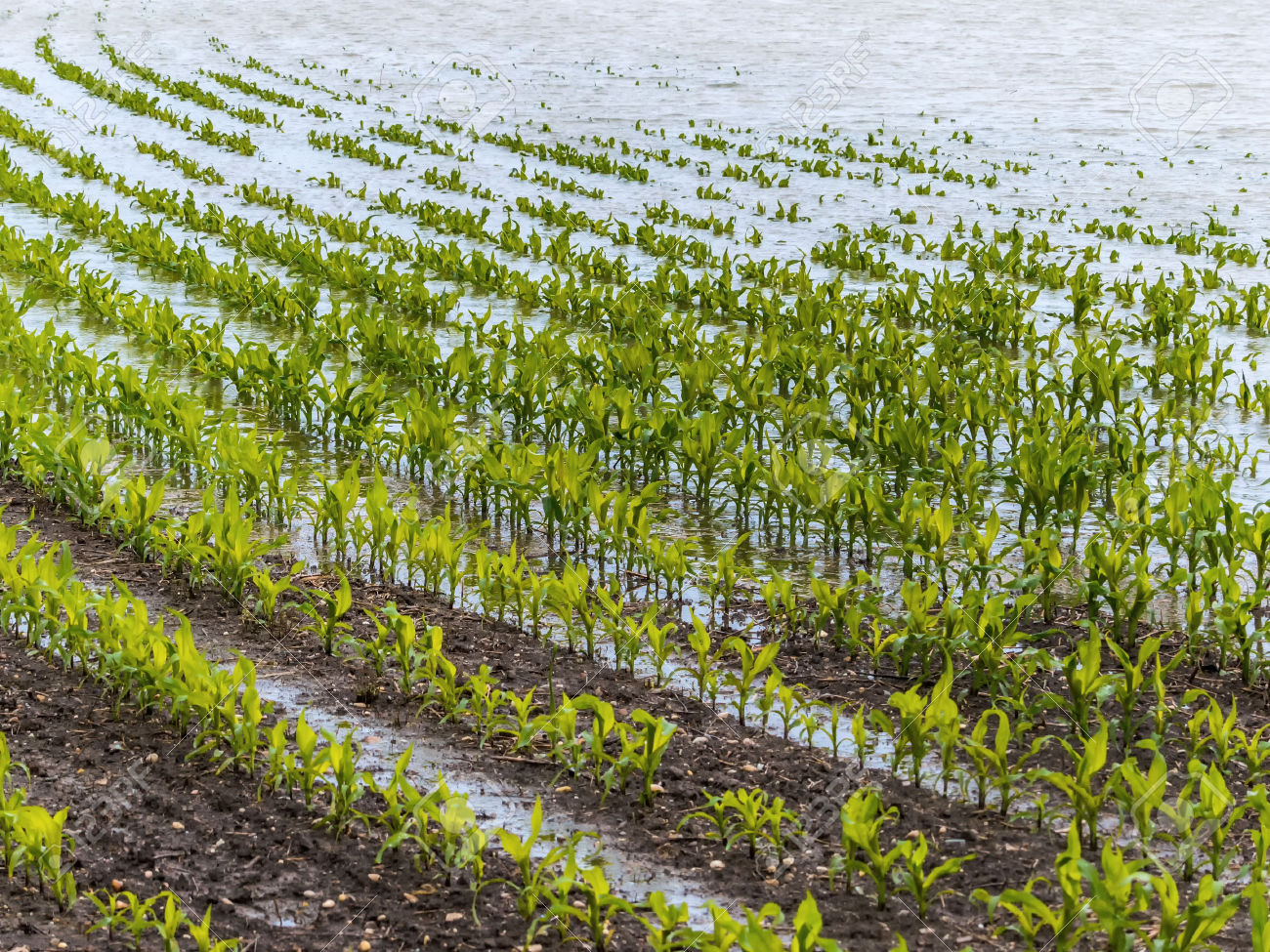
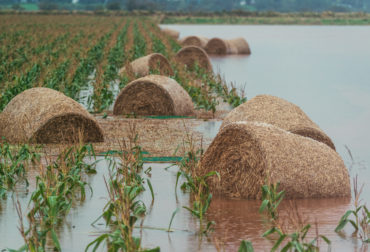
Harvest season is in full gear, but many farmers are facing major loss after last month's flooding damaged their crops. Farmers are now assessing the extent of the water damage, and seeing what they can salvage after last month's flooding. This now adding to the stress farmers are already facing, after a year where many growers have been struggling to post a profit. Robert Hansen is just one of many farmers throughout the state, who are finding themselves at a loss this season. "I farmed for about 50 years and it's the first time I know of a crop being flooded right at harvest time," said Hansen. "During the summer we expect this. The Wapsi river will get up, and it will get into the crops and you'll lose some, but to have it happen just a week before the harvest is just unimaginable." Farmers across the area were left with flooded fields after torrential rains devastated the area. Corn and soybean fields were covered in water. While most are used to seeing a dry cornfield during harvest season, many farmers are now seeing their fields turned into muddy rivers. The Iowa Department of Agriculture is instructing farmers to destroy all their flood damaged grain, because of the potential it has to contaminate their harvest. "I mean I have to go out and actually destroy the crops," said Hansen. "Crop insurance individual was out there this morning measuring out the beans to see how much we loss." Hansen has 125 acres of beans, and 60 acres were completely damaged by flood waters. He also says 37 acres of his corn had water up to the ears. "Now I know people farming around the Shell Rock River  who are playing in mud," said Hansen. "It's a loss for everybody all the way down here. But it doesn't happen every year, you take the good with the bad." Many farmers do have crop insurance, but they will still be taking  a loss. Secretary of Agriculture Bill Northey says as of today, 19% of corn and 43% of beans have been harvested, but this is still behind the five-year average Co-op's that take the grain have also been instructed to not accept any of the damaged grain. The Iowa Department of Natural Resources says Iowa has seen nearly 10 more inches of rain than normal for the 2016 water year. Just in September alone, the statewide average was more than six inches. This number makes it the wettest September in 30 years. Source - http://www.kwwl.com

12.10.2016

Canada - Snow across Alberta brings fall harvest to abrupt standstill

What was shaping up to be a good yield for Alberta farmers came, at least temporarily, to an abrupt halt when snow blanketed the province over the Thanksgiving weekend. "It was looking really good, but it's all wet now," says Glen Stankievech who runs a mixed farm near Trochu. With 60 per cent of his canola and barley still on the field, Stankievech had to call an end to his harvest Friday morning  when the build up of heavy, wet snow made it impossible to continue. "The trucks were consistently getting stuck. So finally it just got (to be) too much snow and we had to quit." [caption id="" align="aligncenter" width="494"] Humphrey Banack is hoping for warm, windy weather in order to complete the harvest. (CBC)[/caption] While the October snow put a stop to the harvest, for many the harvest was already long delayed by the wet September. "Normally we're done by Sept. 5," said Stankievech, adding that nothing can be done until the fields dry up. Humphrey Banack with the Alberta Federation of Agriculture says he estimates between 60 and 70 per cent of the harvest is complete, and he's hoping for a good stretch of warmer dry weather to get the harvest back on. "If we can get back out and harvest this crop and put it into the bin, the losses will be significantly less than if it has to overwinter," said Banack, who farms near the hamlet of Round Hill, southeast of Edmonton, along with his son and his brother. He said if crops stay on the field over the winter, the quality will drop, and so will the amount of revenue farmers will be able to earn. [caption id="" align="alignleft" width="312"] Snow and muddy fields made it impossible to continue the harvest on Glen Stankievech's farm near Trochu, Alta. (Courtesy of Glen Stankievech)[/caption] "We have $600,000-$700,000 in the field yet out of our operation. That's a real hit to our cash flow not to have that. The grade will go down significantly if we have to over winter it." Stankievech estimates his barley crop will fetch about half the amount it's worth now, if it can't be taken off the field until the spring. "A pay cut of half is huge," he said, pointing out it won't be a total loss as he should be able to use the barley in the spring to feed his cattle. While Banack is grateful for the downtime over the holiday weekend, he would have rather been out finishing the harvest. He's hopeful a change in the weather will bring a successful end to the harvest. "Not to have to work over Thanksgiving weekend and visit with my family and friends was a bonus, but looking out the window to see it snowing steadily was really a challenge to truly enjoy Thanksgiving." According to the most recent Alberta Crop Report published by Alberta Agriculture on Oct. 4, 2016, crop quality in the province was already starting to decline due to the extended harvest season. Source - http://www.cbc.ca

11.10.2016

Spain - Drought threatens asparagus in Granada

If the drought persists, last year's good agricultural performance will appear in sharp contrast to the poor outlook for the coming months. The asparagus sector is concerned about the lack of rain, as it could decisively affect this star product of the West and in Vega of Granada. Asparagus production in 2016 decreased by 30% and, if does not rain immediately, things will get much worse. Paco Delgado, from Los Gallombares, said that if they didn't get 300 liters of rain per square meter in the remainder of the year, the harvest in 2017 would be greatly affected. Source - http://www.freshplaza.com

11.10.2016

USA - Wichita, Archer county farmers to get $2 million in crop insurance

Farmers in Wichita and Archer counties are on track to receive a combined $2 million in crop insurance payments this year, according to the U.S. Department of Agriculture. The payout covers the difference between the sales price of crops and what is referred to as the "break-even" price, meaning the dollar amount above which crops sell at a profit. Wheat, for example, sold on average for 61 cents less per bushel than the break-even price of $5.50 in 2015. In Wichita County, whose king crop is wheat, farmers enrolled in the insurance plan are scheduled to collect $1.65 million in federal tax dollars for crop losses, said Albert Lopez, executive director of the USDA's Farm Services Agency in Wichita and Archer County. Farmers in Archer County are expected to get a payout of $825,000 from the program, he said. This is the first time U.S. agriculture producers have received insurance payments from the so-called "price loss coverage" program, a mechanism of the 2014 Farm Bill. Lopez said the payment system differs from the previous program in that it takes into account crop sales and measures them against break-even prices, as opposed to paying farmers a flat rate. Payments made this month — which are intended to cover monetary losses incurred in 2015 — are expected to exceed $7 billion nationally. Speaking of wheat specifically, Lopez said it's likely that next year's price loss payments for 2016's crop will exceed the $7 billion figure. Record yields globally have caused the price of domestic wheat to plummet, widening the gap between the crop's selling price and break-even threshold. Wheat sales now averaging about $3 a bushel, well below the break-even price of $4.50. Still, wheat exports remain on target to meet the USDA goal of 950 million bushels exported in 2016-17. Source - http://www.timesrecordnews.com

11.10.2016

India - General insurers’ September gross direct premium growth at 88%

General Insurance companies posted a positive growth of 87.9% (year-on-year) in gross direct premium in September. Data from the General Insurance Council show that private players witnessed higher premium underwritten compared with public sector insurance companies. Industry officials also said specialised insurers such as ECGC and AIC reported huge growth likely due to crop insurance. In September, the general insurance industry saw gross premium income at Rs 15,087.01 crore against R8,029.59 crore in September last year. While private insurers registered gross premium income at R5,459.98 crore up 66.9% compared with the previous year, public sector insurance companies saw growth of 51.7% at R5,626.68 crore. The general insurance sector saw a sustained growth during the last few months and higher participation from private players as against public sector insurers. “Overall, there has been demand, but this strong growth in September is largely due to the crop insurance scheme. Private insurers are already leading with high market share in motor insurance segment, while several public sector insurers have high share in fire and marine insurance segments,” said a major insurance player. Industry officials believe that the crop insurance segment could bring in premiums in the range of R15,000-18,000 crore this fiscal. Standalone health insurance companies saw a 48.2% surge in their premium income in September. Two specialised players – ECGC and AIC – witnessed 380.2% growth in September. “Non-life industry couldn’t touch R1-lakh-crore mark in last financial year, but this year within first six months we have reached R60,000 crore mark. It seems this year could be positive for general insurers,” said a senior official from a leading public sector insurance company. Data from the GIC show that gross direct premium underwritten by the industry stood at Rs 60,407.87 crore up to September, compared with R46,966.19 crore in the year-ago period, a growth of 28.6%. Source - http://www.financialexpress.com

11.10.2016

India - Centre working on proposal to compensate farmers speedily for crop loss

Having drawn flak after farmers in Chhattisgarh received compensation cheques of just Rs 7 to Rs 81 following crop loss this year, the Central government is mulling a proposal to fix a minimum value below which no payouts will be issued. The move comes after the Centre faced a backlash following a large number of farmers in Uttar Pradesh too got compensation cheques of amounts as low as Rs 63.“The government is examining a proposal to ensure that farmers hit by crop loss get compensation adequate enough to address their distress. Instances of farmers getting cheques of Rs 7 and Rs 63 should not be repeated in the events of crop loss due to unseasonal rains, hailstorm or any other cause,” said Ashish Bhutani, joint secretary in the Ministry of Agriculture (MoA). The Akhilesh Yadav-led Uttar Pradesh government issued an order this year that farmers should not get compensation below Rs 1,500, regardless of the extent of damage to their crops. But such a rule is not part of the Pradhan Mantri Fasal Bima Yojna (PMFBY), which was launched for the Kharif season this year, after addressing various anomalies in previous crop insurance schemes. “We are studying data on the conclusion of the PMFBY coverage for the Kharif season. Priority is to ensure that insurers should bear the burden of the distress of the farmers in difficult times,” said Bhutani. According to the functioning of the PMFBY, if there is a damage to 10 per cent of the cropped land, the farmer gets one-tenth of the sum assured. “The government is working with insurers to see that the sum assured taken by the farmers is higher, as the premium to be paid by them is only 1.5 per cent for Rabi and two per cent for Kharif crops,” said an MoA official. The same quantum of land could be insured for higher amounts without financially burdening the farmers. The government is also employing technology to ensure that real-time data and pictures of crop damage are made available to the insurers. “Farmers can take photographs of the damage and upload them on the website, which can be vetted by local officials in quick time to make the whole process smooth,” added the official. Source - http://www.newindianexpress.com

11.10.2016

Pakistan - Crops suffer due to hot, windy weather

As the month of September being exceptionally hot and normally windy, the agriculture cycle in Punjab has been disturbed. On the other hand, October is also hot; so standing crops are suffering varying degrees of losses, sowing for potato, and harvesting of cotton has been delayed, with farmers hoping to squeeze more and more yield. Wheat sowing is likely to suffer as well. The temperature, which historically has been lower, or at mid-30°C during September, rose to over 40°C and the winds rose to a speed of over 60km per hour to flatten crops in some areas. The temperature increase was 4-5°C. The shedding of cotton bolls and corn-comb, and the weakening of their stems, following high-speed winds, led to lodging of a portion of not only these crops, but sugarcane and rice as well. The farmers’ estimates of losses from the shedding and lodging of these major crops vary from 15-40pc because crops and areas were not hit uniformly. Some corn farmers claim that they are now selling their crop to silage makers as fodder instead of to the industry. All of them, however, lament ‘substantial losses’. Official circles have more conservative loss estimates. Cotton growers claim higher losses. Their sense of loss is magnified by earlier positive signs for the crop which, by and large, had recovered from hot weather shedding during June-July. Even the recent first picking of early sown crops was healthy brightening the final output prospects. But then three factors extended heat-wave lasting right up to the first week of October (when this piece was written), the widespread attack of White Fly and high-speed winds dotting September came together to hit the crop. These dimmed farmers’ hopes. The White Fly attack has started a blame game in the province with farmers and officials holding each other responsible for it. The province started the cotton season under the threat of Pink Bollworm, which had destroyed last year’s crop. It scared the farmers of over 1m acre to opt out of the crop, fearing a repeat of the attack and more losses. The acreage thus dropped to 4.4m acres a reduction of 22pc according to official statistics and 25pc as per farmers’ claims, compared to last year. The decline, which started from 6.6m acres, reached 4.4m acres in the last few years. The planners also revised the Economic Threshold Level (ETL) for Pink Bollworm to one meaning that if farmers find even one pest on the plant, they must spray the crop, turning it essentially into a preventive exercise. However, the Jassid and White Fly (two other lethal pests) were ignored in the process. The ETL for them was neither revised nor any especial measures suggested. This failure is now haunting the crop. Farmers blame official circles for not revising ETL levels, and the private sector for not educating farmers on the potential threat. Interestingly, the last ETL for different pests was prepared in 1973. The provincial agriculture bureaucracy says the White Fly was not a hidden pest, like the Pink Bollworm which remains invisible on the plant till its cycle starts, and then becomes virtually impossible to control. On the contrary, the White Fly is entirely visible from the get go and thus controllable by timely action even the first pest can be seen on stem and leaves. It is mainly the farmers who fail to break the reproductive cycle of the White Fly through quick and repeated sprays, even after official warnings. Owing to financial reasons or lack of awareness, the situation still persists in the most affected parts of the province. Source - http://pakobserver.net

836
of 1225