NEWS
842
of 1225
News
21.09.2016

India - Government to scale down insurance cover for crop insurance fraud

Many farmers have found an ingenious but improper way to maximise their cash flow -by taking loans and insurance cover for a much bigger area and a more capital intensive crop than they cultivate, while banks don't bother to crosscheck as they are under pressure to show higher lending to the priority sector. The government is now considering strict measures including heavy penalty for misdeclaration of the crop and the area insured to end this menace which includes scaling down of subsidies given on premium payments. Government officials flagged the issue last week in agriculture ministry's meeting with states for the forthcoming rabi crop season. The Centre is determined to rectify during the implementation of the Pradhan Mantri Fasal Bima Yojana (PMFBY), the biggest-ever crop insurance scheme, for which Rs 5,500 crore have been allocated in this year's budget. Besides imposing heavy penalty on rogue farmers, officials proposed that such farmers be debarred from the low-premium scheme for the season. The most glaring case highlighted in the meeting was from Churu in Rajasthan, during the rabi 2012-13 season, where 5.2 lakh hectares with gram plantation were insured, but revenue department estimated the sown area to be 1.27 lakh hectares while satellite imagery showed 2.34 lakh hectares. "Under PMFBY, the premium rate for all crops of a season is same, hence the probability of over insurance for risky crops for which historical claims are high may see a further increase in such areas," a note said. "(There is) tendency among farmers to show higher value crops in terms of scale of finance though they avail loans for low value crops with intention to fetch higher claims in case of yield losses," it said. "Lending banks do not object to it (reporting area discrepancies) due to their interest to fulfil target of the priority sector." Banks are " interested to insure their loan with subsidised crop insurance", according to a presentation at the conference. Gopal Naik, professor at Indian Institute of Management (IIM) Bangalore, said the problem persists as integrity of data cannot be verified. "As far as data is concerned, there is always a question because we don't have proper data from the government sources like crop area and so on. So, we have to go by farmer's declarations and this is what the government system accepts," said Naik who is on the board of directors of Agricultural Insurance Company (AIC) of India. Most issues relating to crop insurance have been linked to inadequate data collection. "Declaration is made at the time of taking loan which is provided by the bank or any other agency and insurance is based on that application. This particular process has been sort of a self-declaration and there is always some checks done, but I don't think it is foolproof," Naik said. According to the June 2016 quarterly report of AIC, operating profit from crop insurance business has decreased by more than 70%, compared to June 2015 quarterly report. According to government officials, farmers try to avail themselves of the entire loan they are eligible to take for their land at the beginning of the sea son although vagaries of weather determine what crop they plant and how much of the area they cultivate. Historically , cases of discrepancy in t area insured and area sown were re ported in every crop season. Dr PK Mishra committee report, which was submitted in May 2014, gave recommendations in this regard which have been incorporated in PMFBY. Source - http://economictimes.indiatimes.com

20.09.2016

India - Drone: The farm multiplier

Farmers want to cut input costs in an environment of uncertainties: Weather, pests, fertiliser costs, water availability and soil health. Drones, the unmanned aerial vehicles, equipped with sensors and imaging techniques, can cull out facts over vast stretches of farmland. The data can be utilised for farm growth. An IIT-Kharagpur graduate promises a new revolution. For decades, Indian agriculture scientists have tried and failed to predict onset of deadly diseases to crops. The result is enormous wastage of money and efforts. A study by the Associated Chambers of Commerce and Industry of India says annual crop losses caused by pests and diseases amount to Rs 50,000 crore, which is significant in a country where at least 20 crore people go to bed hungry every night. There is hope: unmanned aerial vehicles (UAV), popularly called drones, are coming. Punjab may soon see the rollout.The man behind the technology in this part of the country is Taran Singh (37), an IIT Khargpur graduate in agriculture. He is also an IIM Kolkata passout. He has worked in Indian and international markets, especially the UK and Middle East, for 11 years and has experience in management, consulting, business solutions, data analytics, food manufacturing and supply chain. Taran is eager to do something innovative in precision agriculture (application of precise inputs like water, fertilizers, and pesticides at the right time for increasing crop productivity). He is passionate about making a platform for community-based farming.“When I was in Class VII, I saw a documentary about an NRI who returned from overseas and revolutionized floriculture in Punjab. When I cleared IIT entrance exams, I chose B.Tech in agriculture from IIT Khargpur, the only IIT in India offering such a course,” he said.He says these drones can help in warning a farmer 10 days in advance about crop growth & water stress and fertilizer requirements by using artificial intelligence. How it works A drone is a flying computer and works with the help of artificial intelligence to make the best possible decisions in-flight. So, farmers can be advised about the exact amount of urea needed, for instance, in a wheat field. Most farmers in Punjab are small and marginal. They need to save on urea and water to cut input costs. Drones require a controller, something the pilot uses to launch, land, and navigate. Controllers can take many forms, from gamepad-like controllers to smartphones and tablets. Regardless of how they look, controllers need to communicate with the drone, and typically do that using radio waves. Drones are typically run by 2.4 gigahertz radio waves. To communicate with their aircraft, many drone controllers use Wi-Fi, which can be transmitted on the 2.4 gigahertz spectrum, and is something that smartphones and tablets can tap into without any accessories.Crop imaging over vast tracts of farmland can help in early detection of pests and weed attacks. “At the moment nobody in India is using agri-analytics. The deployment of drones will help farmers, insurers, commodity experts and even traders,” says Taran. Future is here There is a need for coordination among agriculture, corporate and commodity experts with guidance from academics, says Taran, adding his company Agnext is in talks with a leading university in Punjab. He has also tied up with a leading mobile equipment manufacturer to set up a demo centre in Gurgaon. The move will expand Internet of Things (proposed development of internet in which everyday objects have network connectivity, allowing them to send and receive data). The food industry is quickly embracing the very latest Internet of Things devices and big data innovations. By collecting more and more data on crops and growing conditions, yields can not only be controlled, but predicted. This data enables farmers to access accurate information on growing conditions so they can implement changes to increase yields.In the near future, farmers may expect some help for speedy settlement of claims in crop insurance, thanks to drones. Insurers are taking a serious look at drones besides a real-time mobile application to address claim settlements. As part of the Pradhan Mantri Fasal Bima Yojana (PMFBY), deployment of drones has been allowed to estimate crop losses in localized calamities.“We are innovating digital interventions to solve agriculture issues, introducing a unique platform of hardware, software and analytics as a device. Our aim was to create integrated hyperlocal farm data collection and crop analytics platform using latest technological innovations,” says Taran. Source - http://www.tribuneindia.com

20.09.2016

USA - What You Need To Know About Crop Insurance

For young growers, securing crop insurance can seem like a daunting task with all of the information available. Fortunately, there are options at your disposal through USDA’s Risk Management Agency (RMA), which manages the Federal Crop Insurance Corporation, providing crop insurance products to growers. Through the Federal Crop Insurance Program, approved insurance providers (AIPs) sell and service federal crop insurance policies in every state through a public-private partnership with RMA. RMA then backs the AIPs who share the risks associated with catastrophic losses due to major weather events. RMA Associate Administrator Tim Gannon offers young growers four pointers to keep in mind about federal crop insurance and what mistakes they should avoid. 1. People New To Farming And Ranching Can Get Special Considerations With its beginning farmers and ranchers provisions, USDA continues to serve the next generation of growers by improving access to land, capital, and risk management tools, Gannon says. Those who qualify for the beginning farmer and rancher designation, receive an extra 10% in premium subsidy, meaning the premium for crop insurance paid out of pocket by the grower is less. Furthermore, qualifying beginning growers do not have to pay an administrative fee for their policy, may use the production history of the previous grower from that farm, and are eligible for a higher substitute yield adjustment used for the years they did not have a history of growing the crop to help determine the expected yield. 2. Consider Going Organic Organic agriculture is experiencing remarkable growth in the U.S., seeing $39 billion in retail sales last year. The RMA oversaw $649.7 million in federal insurance coverage provided nationwide in the 2015 crop year for certified organic crops and those transitioning to certified organic. In addition to the same opportunities for crop insurance that are available to non-organic growers, RMA has established organic prices for 57 crops that more accurately reflect the higher prices organic growers receive for their crop. Also, for more than 60 crops, organic growers and growers transitioning to organic practices may now use their contract prices to cover an amount of liability that is more reflective of the actual value of their crop through the use of RMA’s Contract Price Addendum. Whole-Farm Revenue Protection coverage also is available to organic crop growers, Gannon adds. 3. Understand Your Coverage And The Covered Causes Of Loss Causes of loss are crop specific and can change depending on the crop. It is best to consult the specific crop provisions for more information regarding covered causes of loss, he says. Noteworthy causes of loss include: • Adverse weather conditions; • Failure of the irrigation water supply due to a specified cause of loss that also occurs during the insurance period; • Fire; • Insects, but not damage due to insufficient or improper application of pest control measures; • Plant disease, but not damage due to insufficient or improper application of disease control measures; and • Wildlife. 4. Know Your Dates Adhere to the deadlines in the Federal Crop Insurance Program. • Sales closing date: This is the date an application must be filed and is the last date you may change your crop insurance coverage for a crop year. • Acreage reporting date: This is the date you are required to submit your acreage report. • Earliest planting date: This is the initial planting date, which is the earliest date you may plant an insured agricultural commodity and qualify for a replanting payment, if such payments are covered by the policy. • Final planting date: This is the date a crop must initially be planted to be insured for the full production guarantee or amount of insurance per acre. 5. Crop Insurance Mistakes To Avoid If you are a young or beginning grower, USDA’s Risk Management Agency (RMA) Associate Administrator Tim Gannon says to steer clear of these five crop insurance blunders. 1. Waiting until a loss occurs to decide insurance is needed. Don’t wait until you have a loss to explore your options in managing risk. 2. Not dedicating time to learn about crop insurance choices. Spend the time needed to explore various combinations of crop insurance products, individual-based and area-based, to find the best fit for your farm. The RMA Agent Locator web page provides information about insurance agents and will help growers find agents selling crop insurance in their area. There even is a process by which you can request insurance on a crop that is not insurable in your county, but is insurable in other counties. For this, you may complete and submit a Request for Actuarial Change through a crop insurance agent. 3. Deciding you can’t afford insurance before checking out the possibilities. Every grower’s situation is a bit different and you will want to work with experts including your crop insurance agent, to consider your farm’s financial needs and risks, along with various choices and combinations of products for crop insurance. The RMA website shows all of the crop policies available as well as a cost estimator that can help you estimate the amount of insurance and premium. 4. Not buying because there isn’t an agent nearby. If you are having problems finding an agent, contact one of the insurance companies on the RMA website and talk to someone who can help you find an agent. 5. Not knowing your numbers. Records are important and so is figuring out whether a crop will be profitable. These same numbers will be used to determine the correct amount of insurance for risk protection for your farm and will be used to determine loss payments. Question From A Grower: What Are The Options When You Don’t Have Historical Yield Or Earnings Data? USDA’s Risk Management Agency (RMA) Associate Administrator Tim Gannon addresses a question from a young grower seeking help with crop insurance. “I am a tree fruit grower in my third year of production, but the past two years my trees suffered freeze damage and I did not have a crop either year. This year, my orchard sustained hail damage. Because my orchard doesn’t have historical yield or earnings data, I can’t file a claim. What should I do?” Gannon: In this case, you could have purchased crop insurance in your third year, and the expected yield would have been determined based on a mixture of your actual production for the two previous years and a percentage of the county’s transitional yield, which is an average county yield as determined by RMA. Since you did not have production those first two years because of freeze damage, you could use a yield substitution option to replace the zero yields with 60% of the county transitional yield. Thus, you would have had historical data and could have received coverage. For some tree crops, there are additional requirements to be considered insurable, such as the age of the tree and/or minimum production. Another consideration would be if you qualify as a new producer. If you haven’t grown the crop in question for more than two years in the county, you could receive an initial yield of 100% of the county transitional yield. A young grower may also be eligible for beginning farmers and ranchers’ provisions, which would lower the premium and could increase any yield adjustments that were opted for as a result of adverse weather or natural disaster. Suggestion to the young grower: Go see an agent to learn about crop insurance and all the options that may be available as a risk management tool.

20.09.2016

India - Rs 80 billion interest-free loans to be extended to 0.5 million farmers

The Punjab agriculture department has started registration of growers under 'Khushal Kissan Khushal Pakistan' scheme which is aimed at extending Rs 80 billion interest-free loans to 5,00,000 farmers having up to 12 acres of land. The registration will be carried out at tehsil land record centers, which will remain open from 4:00 pm to 8:00 pm daily for a period of one month. The growers have been advised by the department to visit these centers along with original CNIC, mobile number and detail of their land. Tenants and lessees can also get themselves registered with permission from the original owner of the land. There is no fee for registration and a token will be issued after it, said a spokesman of the department on Monday. Under this special package, 500,000 growers, each having 12 acres of land, will be provided Rs 80 billion loans through small phones. The farmers will be extended interest-free loan of Rs 25,000 per acre during Rabi season and up to Rs 40,000 per acre in Khareef season besides giving them a smart phone for just Rs 110. Growers can use these smart phones for having access to information such as technical guidance, market rates, weather forecast, seed providers etc. The growers will be given loan in three instalments besides provision of crop insurance facility, said the spokesman. Representatives of Zarai Taraqiati Bank Limited, National Bank, National Rural Support Programme, Akhuwat and Tameer Bank will contact the farmers who will fulfil the conditions of this loan. Farmers can contact the directorate of agriculture information Punjab from 8:00 am to 8:00 pm or agriculture extension wings office of their respective district. Source - http://www.brecorder.com

20.09.2016

Africa - 'Smart farming' to help farmers tackle drought

Southern African farmers know a lot about climate change due to the worsening drought conditions they face. But, according to agriculture and development researchers, these farmers lack the resources to put solutions that work into place. That is in part because government agricultural extension services, which offer training and advice to farmers, have too few agents, states a report by the Technical Centre for Agricultural and Rural Cooperation, based in the Netherlands. In many cases, farmers are simply not aware of potential solutions, said Oluyede Ajayi, a senior programme coordinator with the centre, speaking on the sidelines of a meeting in Johannesburg on scaling up climate-smart agricultural solutions. Such shortcomings are one reason an ongoing drought in southern Africa has left 23m people dependent on food aid, with another 13m in need of help, according to the Southern African Development Community, which launched a €2.5bn emergency appeal in July. But a new regional push, focused on promoting four key actions to adapt agriculture and curb growing hunger, could help, Ajayi said. The best ways to assist southern Africa’s farmers, agricultural experts said, are by increasing their access to insurance for crop failure and livestock deaths, and giving them better weather advice via mobile phones. Helping them diversify their sources of income is also key, they said, as is developing stress-tolerant seeds and better ways of managing land to conserve water. Source - http://www.freshplaza.com

20.09.2016

Chile - Frost damage to cherry crops uncertain

On the first days of September, Chile had a series of frosts that mainly affected the Sixth and Seventh Regions. While these frosts were expected, their magnitude surprised cherry producers in these regions. "The most affected region goes from Curico up to the coast, and even though we still don't know what the extent of the damage on the coming harvest will be, we estimate that 30% of the cherry flowers in this region have been damaged," the producers in the area said. The Sixth Region wasn't as affected by the frost. Hence the damage in this area would be moderate and producers believe that only 15% of crops will be affected. Generally speaking, producers took the appropriate and required preventive measures. Unfortunately, many producers don't have frost control systems, which makes things more difficult. According to weather forecasts, there should be be no more frosts in the next few weeks, but producers will take precautions for the whole month of September. Before the frost, the weather had been ideal to produce an extremely large harvest. Thus, its hard to calculate how the 2017 Chilean cherry campaign will be. As a result, it's also very difficult to know what percentage of the fruit was lost. "It is possible that a 30% damage to flowers will not necessarily affect the harvest volume producers expect. Additionally, most cherry producers have their crops in different areas, so the weather changes affect them differently," the producers stated. Source - http://www.freshplaza.com

20.09.2016

India - Add crop loss by wildlife in PM’s insurance scheme

Local MLA from Pilibhit and minister in the UP government Riaz Ahmad has written to the PM, requesting that a new provisions be added to the Pradhanmantri Fasal Bima Yojana (PFBY) for providing compensation to farmers whose crops are damaged by wild animals. The scheme does not cover this type of crop loss. The request comes in the wake of massive damage to standing cane and paddy crops by elephant herds over the past few weeks in the areas situated along the Indo-Nepal border. District magistrate Masoom Ali Sarvar has directed the agriculture as well as the social forestry department to prepare a report on the total agricultural area affected by the wild animals. In a recent incident, a herd of around 40 pachyderms trampled over crops spread over 10 acres and vegetables plots at village Naujalha Nakta Number 2 on Sunday night. A team of revenue department officials has inspected the damaged crops to assess the quantum of loss while a team of social forestry comprising the SDO, the range officer and forest guards was sent by divisional director Adarsh Kumar to camp in the affected village during the night. Minister of state (independent charge) for fishery and public enterprise Riaz Ahmad said a total of 2,33,387 hectare in the district comprises agricultural land and crops cultivated in more than 50% of this land are likely to be damaged due to frequent movement of wild animals through them. Referring to the 690-km-long periphery of Pilibhit Tiger Reserve (PTR), Ahmad said except 50- to-60-km-long part of this periphery that adjoins the forest areas in Nepal and Uttarakhand, the rest adjoins agricultural belts of the district. The MLA said the eco-sensitive zone of PTR that borders a 5-km radius along the reserve's periphery, was facing the most appalling situation due to decimation of standing crops by the neelgai, wild boar and the monkeys. The divisional director said the agricultural belts along the dozen or so rivers which flow through the district are also the grazing ground of herbivores like neelgai and antelopes who live amid the long grass and shrubs found along river banks. District magistrate Sarvar said the joint field survey report of the social forestry and the agriculture departments would be sent to both state and central governments for protection of farmers from loss of crops caused by wild animals. Minister Ahmad said he had also marked a copy of his letter to the CM with an appeal to make arrangements for awarding compensations to farmers in case the Centre fails to provide a shield to farmers against crop damage by wild animals. Source - http://timesofindia.indiatimes.com

19.09.2016

India - MahaRain app to give 1 crore farmers rainfall data, help them plan crop cycle

MahaRain — the App developed in-house by the state agriculture department, is all set to provide over one crore farmers the rainfall data. The App, which is to be published soon on the Google Play Store, gives the farmer access to information on rainfall at the touch of a finger allowing them chalk out their cropping cycle. This is one of the many steps which the department has taken to ensure better planning and better data is generated from the fields, officials said. While the agriculture department maintains circle level data of rainfall on its website, its dissemination to the grassroot level has not happened. Uday Deshmukh, Chief Statistician of the Agriculture Department, said the App will allow farmers to access the data seamlessly. The department has more than 2,000 rain gauges which allows for rain measurement across the state. While various players do provide this data over subscribed SMSes, the App will make the process easier and more accessible. Meanwhile, Pradhan Mantri Fasal Bima Yojana (PMFBY), the flagship program of the central government, has promoted further use of technology in agriculture. Now, agriculture officers will use GPS technology to conduct surveys and prepare reports about the health and position of crops. One of the most critical exercises of an agriculture officer is to determine the crop yield. These reports are used both by insurance companies as well as government agencies for planning and settling of insurance claims. As PMFBY is an insurance policy against crop losses, information regarding crop health and expected yield rise of great importance. Instead of the traditional method of relying on visual inspection to determine the yield, the agriculture department has decided to use GPS technology and an App to feed data into the central server in Pune. Deshmukh said the App can be operated both offline and online. “It will allow the agriculture officer to Geo tag a field. Also, as the App would be on the smartphone of the officer, a picture can be taken of the filed conditions which will be tagged through GPS. This data would then be uploaded to the centre server,” he said. Once collated, this data would be analysed to give the expected yield of the crop for the season. Other than insurance claims, this data can be used for deriving various policy related interventions later on. Deshmukh said that master trainers training for all the 34 districts have been trained and a similar training will be held on September 19 also. At present, this App is being used to collect information about the ongoing harvest of black gram and green gram. Source - http://indianexpress.com

19.09.2016

India - After politicians, agriculture officers attack crop insurance scheme

Having faced criticism from political parties in Haryana, the much-touted farm insurance scheme Pradhan Mantri Fasal Bima Yojana(PMFBY) has run into fresh trouble in the state. Now, agriculture officers have accused the state government of "unnecessarily pressuring" them to meet targets related to the scheme, saying that it was impossible for them to achieve those. ADOs, working in the state agriculture and farmers welfare department, have been assigned crop-cutting experiments (CCEs) under the scheme. Though, initially, a private firm was to be assigned the job, the contract between the state government and the firm did not take shape. CCE is to be used for assessing the insurance amount for farmers in each village. The ADO Association Haryana met in Hisar on Saturday to discuss the problem. According to the association, the state government has directed ADOs to complete the process of collecting CCE data immediately. "However, the process can't be carried out right now, as some farmers have already started to harvest their crops," said association president Sushil Goyat. The ADOs said they were already engaged in collecting samples for Prime Minister's soil health card scheme, so forcing them to complete CCE quickly was not possible and would have chances of fabrication of reports. The ADOs claimed that the state government had threatened to charge-sheet them if CCEs were not completed in time. Goyat said the insurance amount under PMFBY was determined on the basis of the average crop production of the village assessed through crop-cutting experiment. The same process was to be carried by some private companies at the rate of Rs 547 per experiment. He said the agreement between the state government and companies could not be finalized on account of some disagreements. "We were assigned this job after that," he said. Goyat said paddy, cotton, bajra and maize crops were identified for CCE in this season. "So, four crop cutting experiments have to carried out in each village. Bajra has already arrived in the markets, and harvesting of early varieties of paddy and cotton has started. At this stage, it is not appropriate to carry out CCE, as the selection of fields and planning for such experiments had to be carried out at least 15 days prior to the start of harvest season," he said. Goyat said crop cutting experiments were a technical process and they also required the assistance of revenue officials for carrying them out. "A hurried exercise would ultimately lead to an illegitimate process. It would also be against the farmers' interest, as insurance companies might deny insurance to them in future on the grounds of not following CCE in accordance with guidelines," Goyat said. Source - http://timesofindia.indiatimes.com

19.09.2016

Germany - Hail late in the season

At the end of August, after a week of warm summer weather, a hailstorm caused considerable damage around Hamburg in northern Germany. The walnut-sized hailstones came down in the region of Bergedorf, which lies to the southeast of Hamburg. Most of the damage occurred in Vierlande, part of the region Bergedorf. Many greenhouses are located in this area. About 60 instances of damage were reported to the agricultural insurance. Greenhouses made up two-thirds of the reported damage and mainly minor damage at that (20 to 60 glass panes). However, for about 15 companies, the extent of the damage is up to 800 damaged panes. The stock in these greenhouses may also have been damaged to a significant extent. [caption id="" align="alignnone" width="459"] On 28 august hailstones damaged more than 60 greenhouse companies in the area of Hamburg (Vierlande), photo: GV[/caption] The affected region is home to numerous companies that grow cut flowers, roses, and at least the current harvest has been affected. Even the next harvest might be affected, if the repairs take longer than 2 to 3 weeks. The day after the storm employees of the insurance company were already in the region to assess the damage. Due to the substantial size of the damage and the outstanding assessments of the crops, there isn’t a complete assessment of the total extent of the damage yet. The insurance company estimates the total damage to be between a half and one million Euros of insured losses. Source - http://www.freshplaza.com

19.09.2016

India - With good rain, fewer farmers opt for crop insurance this year

A good monsoon in most parts of the state is helping the dull agriculture sector recover. Agriculture department data shows that the number of farmers who have opted for crop insurance has dwindled considerably, compared to last year. One of worst droughts hit the state last year and 84 lakh farmers had opted for insurance. This year, even as the government has rolled out a new insurance scheme that has increase indemnity levels, only 53 lakh opted for it. Officials said a major reason for the dip was good rainfall in most parts of the state and expectation of a healthy crop yield. Also, the new insurance scheme is now voluntary. The Pradhan Mantri Pik Bima Yojana (PMPBY) has been implemented in the state from this year. It's a central scheme under which policy the premium to be paid by farmers has been reduced to 2% of the sum insured for all the crops, and the rest will be borne by the state and central governments. Under the PMPBY, many more conditions in which claims can be made in case of a damaged crop, have been included, like post-harvest losses. The indemnity levels have also been increased from 60-70%, so that higher damages can be recovered. "The rains have been very good this year, which has made farmers hopeful about a good crop yield and so farmers did not take any insurance," said a senior agriculture department official. So far more than 98% of the sowing for the kharif season has been completed. Another official said under the new scheme, sugarcane growers have been excluded, so the numbers have dwindled. Of the set target of over Rs 37,000 crore as agriculture loans to farmers, Rs 27,000 crore has been disbursed. This year over 40 lakh farmers have taken farm loans, as against 37 lakh last year. Source - http://timesofindia.indiatimes.com

19.09.2016

Chile - Frost could damage 30% of plum production

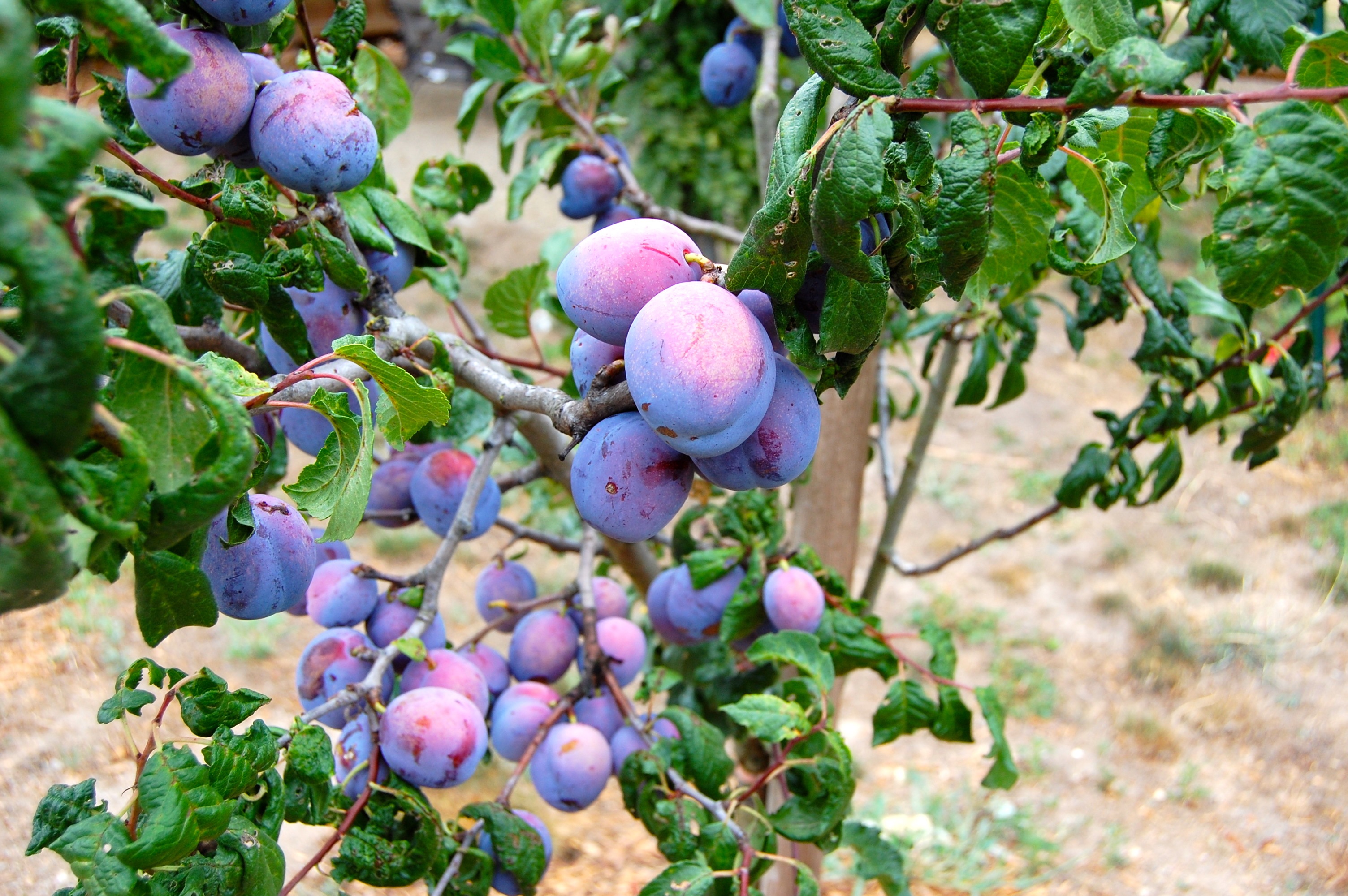
Chile had a series of frosts in early September mainly affecting the Sixth and Seventh Regions. While these frosts were expected, their magnitude surprised the producers of stone fruit in these regions. The plum was the most badly affected stone fruit and  these 6 days of continuous frost could have damaged up to 30% of future production.  "This was a polar front that had been announced, but its magnitude was much higher than expected and it affected many areas at the same time. The vast majority of the producers in the Sixth and Seventh Region have been affected, to a greater or lesser extent, depending on their orchards' location and their phenological state. At present, it is very difficult to quantify the damage, "said Alvaro Sepulveda, assistant commercial manager at Copefrut. According to weather forecasts, there should be no more frosts in the next few weeks, but producers will take precautions for the whole month of September. "Since the plum is a fruit with a great productive potential, there is hope that the final damage is less than we've seen on the ground and that the frosts served as a natural thinning. We'll only have a clearer picture of what the consequences really were on the plum production at the beginning of October," said Sepulveda. Source - http://www.freshplaza.com/

19.09.2016

Taiwan - Meranti causes crop loss of NT$800 mil.

Agricultural loss caused by Typhoon Meranti on Taiwan have been estimated at nearly NT$800 million, a report said Saturday. Meanwhile, the Air Force apologized for failing to provide meals to its servicemen dispatched to a village in the mountains of Hualien to help with prevention work against typhoon-triggered disasters last week. Meranti, which ravaged Southern Taiwan on Tuesday, damaged over NT$460 million worth of crops in Kaohsiung alone, the United Evening News reported, citing the city's Agriculture Bureau. The city's guava farms sustained heavy damage, with losses estimated at more than NT$200 million, the bureau said, adding that jujube farms were hit with losses estimated at over NT$90 million. In Pingtung, aquaculture farms were also hit hard by Meranti. In some cases, power outages caused failures to life-support systems for grouper ponds, resulting in losses of more than NT$14 million from fish deaths, according to Fisheries Agency Deputy Director-General Haung Hung-yan. But Huang said power supply to the Pingtung grouper farms had been more than 80 percent restored. Huang also said work was continuing at Taitung's Fugang Fishing Port to clear the area of driftwood washed down from the mountains. Hungry Servicemen The United Evening News reported that servicemen of Wing 401 complained after their Air Force unit failed to send them meals while they were working at Wenlan Village in the mountains of Hualien to help with disaster prevention efforts last week, during which two typhoons hit Taiwan. The servicemen said their superiors had them ask the village chief for food, upon which they were given rice and canned food only, according to local media. "For the failure to send meals, which resulted in complaints from the servicemen, the Air Force Command Headquarters apologizes," the Air Force said in a press statement issued in response to the report. The Air Force added that it had instructed all of its disaster prevention units to take good care of its members. Before the Air Force released the press statement, Defense Minister Feng Shih-kuan gave what was regarded as a confusing response to the Air Force servicemen's meal complaints. Asked for comment on the Air Force case, the minister said he had personally checked the meal boxes prepared for Army servicemen sent to do disaster prevention work in Southern Taiwan. Feng said he found that the meals were "better" than the ones usually sold in restaurants and the one given him. Source - https://www.chinapost.com.tw

16.09.2016

USA - Louisiana flood damage estimates make marked jump

In mid-September, following floods and continuing wet conditions, damage estimates for the Louisiana agriculture sector have been raised to $277 million. In late August, “we did an initial rough, down and dirty, estimate right after the heavy rains and the flooding began,” says Kurt Guidry, LSU AgCenter economist. “That first estimate for damage was around $110 million. We knew it would change predominantly because we were only looking at impacts to gross revenue from yields. Guidry and colleagues’ latest findings for four major crops: Rice Estimated reduction in farm receipts: $60.5 million. Estimated increases in farm production costs: $8.41 million. Total estimated impact: 68.9 million. Soybeans $62.1 million; $7 million; $69.1 million. Corn $39.4 million; $4.6 million; $44 million. Cotton $26.2 million; $460,000; $26.6 million. Guidry spoke with Delta Farm Press on September 14. Among his comments: On the revised damage numbers… “The second assessment looked at quite a few more issues producers are facing. Not only did we readjust the yield impact but also things like quality impacts, which brings in not only the southern part of the state but also the north. That’s not because the north has had the flooding issues of the south but is due to persistent rainfall that’s delayed production practices and/or harvest. Many of our producers are looking at crops with significant quality problems. “We also looked at lost commodities in storage. While we didn’t have a lot of that in terms of row-crops, we did have a lot of hay lost in storage. “Another factor was increased cost of production. Many producers are harvesting commodities, salvaging what’s left in the field under very wet conditions. Doing that on saturated soils means harvest speed and efficiency goes down. In some cases, commodities were lodged – particularly rice although that also happened in corn. “In addition to the increased harvest costs, harvesting in wet conditions disrupts the land in terms of rutting. Producers, if they’re able, will have to go back in later this fall and do additional land work and prep that they’d normally not have to. There are certainly costs associated with the additional tillage and fieldwork. “Infrastructure losses were also a part of this assessment. These type of damages occurred predominantly in the southern part of the state. Tractors, implements, farm structures were included. In the case of livestock, quite a bit of fencing was totally destroyed. “So, when it was all said and done, we went from about $110 million in damages to $277 million. It’s unlikely that number will stay steady. In recent weeks, we haven’t had a period of five to seven days of dry weather to dry things down – really, we need two or three weeks’ worth of dry days. Instead, we’ve had a continuation of not flooding rains but enough rain to delay harvest and normal field operations. That could have additional impacts on the bottom line, particularly as it relates to quality damage.” On programs available to assist affected producers… “The 2014 farm bill basically eliminated the permanent disaster legislation under the former farm bill’s SURE program. SURE would automatically kick in as long as the parish or county was declared a disaster area. “What producers have now – and this is mostly for row-crop producers -- is an emergency loan program. That offers low-interest loans to producers who have had at least a 30 percent reduction in their production level. It’s a loan so it has to be paid back. In many cases, these type of loans can tide an operation over, allow it to get over the initial burdens caused by the damages. “For livestock, there’s a livestock indemnity program through the Farm Service Agency. That provides some assistance for livestock that was lost. The ELAP program can provide some assistance for things like hay that was lost and the cost of relocating cattle. It could also help with beehives that were taken out by the flood. “One caveat for the ELAP program: a $20 million funding limit for the entire United States for the entire year. So, producers impacted in southern Louisiana in August will be going after the same pot of money as those who were hurt in the March floods. That $20 million may be stretched thin. “There is an Emergency Conservation Program through FSA. That will largely be for the parishes where there was flooding that left behind a lot of debris. The program provides some cost-share help to remove the debris and, in some cases, to maintain critical land. “Beyond that, there’s not much. Right now, row-crop producers will have to rely on crop insurance. There is some hope that additional assistance will come later but none of that is guaranteed.” Lost farms? Will this mean some farmers will be taken out? “That’s always a concern. To answer that, we really need to go back 18 months to two years ago. The August rains and floods are the third major event to hit Louisiana agriculture. In 2015, we had quite a bit of flooding along the Red River. Last March, we had significant flooding across much of northern Louisiana and a smaller area in the southeast. “Add low commodity prices to these terrible weather events and the cumulative effect has put significant financial stress on many of our farming operations. It’s too early to give a percentage but it’s plain the financial wellbeing of many operations is a concern. “If corn prices were at $8 per bushel and soybeans were at $15 per bushel, the operations would have the opportunity to recover in a much easier fashion. Unfortunately, if you look at where commodity prices are predicted to go in 2017, there’s not a lot of optimism for big price improvements.” On sugarcane… “Another thing to keep an eye on is the Louisiana sugarcane industry. Thankfully, the cane wasn’t hurt too badly with the flooding. But producers are about to begin harvest season. Without dry conditions – and these near-daily rains are putting any chance of that in real jeopardy – cane damage could increase. We’re not confident the evolution of the damage is completely done.” Source - http://deltafarmpress.com/

16.09.2016

Africa - Smarter farming could cut hunger in drought-hit country

Southern African farmers facing hunger as a result of worsening drought know a lot about climate change but lack the resources to put solutions that work into place, agriculture and development researchers say. That is in part because government agricultural extension services, which offer training and advice to farmers, have too few agents, according to a report by the Technical Centre for Agricultural and Rural Cooperation, based in the Netherlands. In many cases, farmers are simply not aware of potential solutions, said Oluyede Ajayi, a senior programme coordinator with the centre, speaking on the sidelines of a regional meeting this week in Johannesburg on scaling up climate-smart agricultural solutions. Such shortcomings are one reason an ongoing drought in southern Africa has left 23 million people dependent on food aid, with another 13 million in need of help, according to the Southern African Development Community, which launched a $2.8 billion emergency appeal in July. But a new regional push, focused on promoting four key actions to adapt agriculture and curb growing hunger, could help, Ajayi said. The best ways to assist southern Africa's farmers, agricultural experts said, are by increasing their access to insurance for crop failure and livestock deaths, and giving them better weather advice via mobile phone. Helping them diversify their sources of income also is key, they said, as is developing stress-tolerant seeds and better ways of managing land to conserve water. CATTLE SWAP One way of diversifying incomes and reducing risk, researchers said, was for farmers to raise fewer cattle and more drought-resistant animals such as chickens and goats - or even protein-rich insects. Many farmers, who pride themselves on their cattle, have so far resisted that switch. But "goats, sheep and chickens are considered animals that can take care of themselves, unlike other animals," said Sikhalazo Dube, a southern African representative of the International Livestock Research Institute. Southern Africa so far this year has lost over 630,000 cattle, worth an estimated $220 million, to drought, according to the U.N. Food and Agriculture Organization. That money could have been saved if farmers had taken out insurance on their livestock, slaughtered them early in the face of drought warnings or found ways to feed them as pastures dried up, said Godwin Mashiri, a micro-insurance expert with mobile phone company Econet Wireless, based in Zimbabwe. But persuading farmers to buy indexed insurance, which provides payouts when certain weather triggers are reached - such as a certain number of days without rain - remains a struggle, he admitted. "Farmers in southern Africa have mobile phones and may be aware of weather index insurance products offered via mobile phones but their lack of understanding of and trust in insurance products meant they suffered losses when they could have taken some insurance on their livestock," Mashiri said. NEW CROPS In Zimbabwe, some farmers in Mashonaland East province have adapted to the dryer weather by growing drought-resistant feed for their livestock, such as cowpea or velvet beans, alongside maize, the region's staple crop. The project, funded by the Australian Center for International Agricultural Research, has helped dairy farmers keep animals alive and helped them avoid buying costly commercial feed to get their animals through the drought, Dube said. Similarly, farmers who are growing stress-tolerant maize using water-conserving techniques have seen their harvests rise by as much as 130 percent, Christian Thierfelder, an agronomist with the International Maize and Wheat Improvement Center (CIMMYT), told the Thomson Reuters Foundation. But most farmers in southern Africa have been slow to make the switch, he said, because of lack of knowledge about the options or lack of capacity, such as access to seeds or needed machinery. Some also worry about controlling weeds under the new system, which reduces plowing of the soil. Globally, 150 million hectares of crops are grown under "conservation agriculture" techniques, but only 10 percent of small-scale farmers in southern Africa have adopted them, Thierfelder said. Such climate-smart agriculture is seen as key to helping farmers survive weather shocks, adapt to climate change and improve food security, according to the U.N. Food and Agriculture Organization. The region has seen pockets of progress however, with more than 100,000 small-scale farmers in Malawi now adopting the techniques under a 12-year-old collaboration between Malawi's government and Total LandCare, a non-governmental organisation. Those that have adopted the changes have seen income from their farms rise by between 40 and 100 percent, according to a report by CIMMYT. (Reporting by Busani Bafana; editing by Laurie Goering :; Please credit the Thomson Reuters Foundation, the charitable arm of Thomson Reuters, that covers humanitarian news, climate change, women's rights, trafficking and property rights. Source - http://news.trust.org

16.09.2016

India - Rajkot district panchayat urges state government to pay crop insurance to farmers

Pointing out that scanty rainfall and pests had affected crops, the Rajkot district panchayat on Thursday adopted a resolution, urging the state government to initiate process for paying crop insurance to farmers of the district. “Kharif crops like cotton is feared to fail due to less and irregular rainfall and infestation of pink worms in the current year of 2016-17. Groundnut crop is also likely to fail due to infestation of white grubs. This is likely to impact the earnings of farmers and make condition of agriculturalists pitiable. Before farmers are forced to take any unusual step, it is hereby unanimously resolved to request state government to initiate the process of awarding crop insurance to farmers,” a resolution moved by district panchayat president Nilesh Virani stated. The resolution, moved by the chair at the trimonthly general board meeting of the district panchayat, was adopted unanimously. Rajkot district as a whole is facing around 32 per cent rainfall deficit. Almost all major dams in the district are empty and there is little water available for irrigation. In fact, some talukas of the district are facing scarcity-like situation due to scanty rainfall. Vinchhiya taluka has received just 199 mm rain so far and is running 48% deficit. Crops have failed in some villages in this taluka. Source - http://indianexpress.com

842
of 1225