NEWS
865
of 1225
News
17.05.2016

USA - Virginia's farmers struggle with Mother Nature

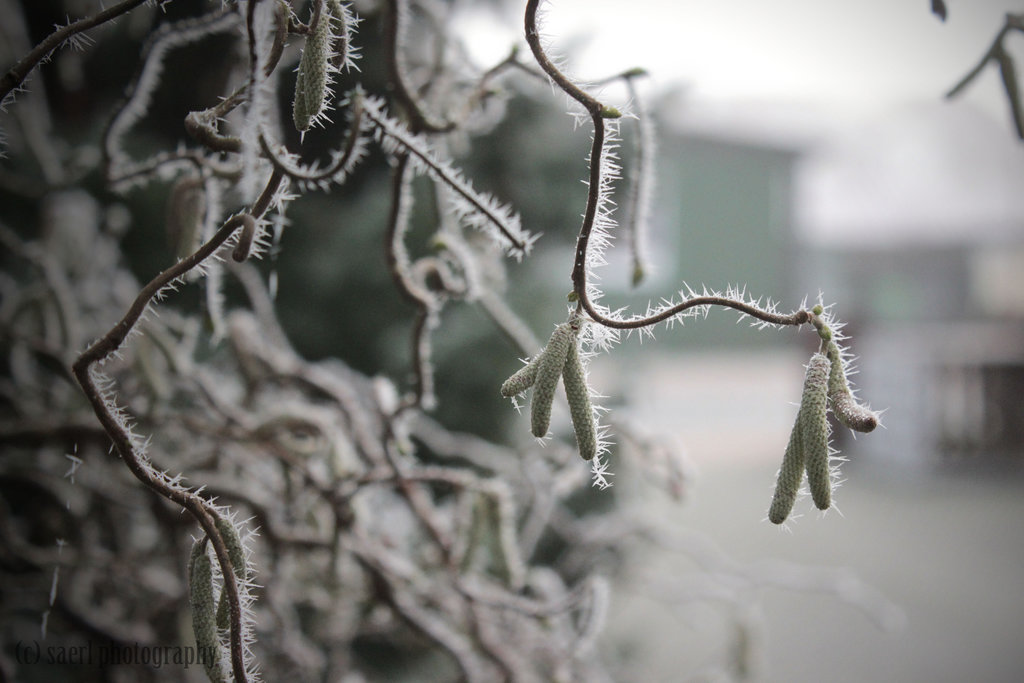
A massive snowstorm hit Virginia in January, and April didn't bring its usual warmer weather and spring showers, rather frost and freezing temperatures - a most unwelcome development for farmers in Nelson County. According to Michael Lachance, the county’s Virginia Cooperative Extension agent of agriculture and natural resources, the freeze left damage in both peaches and apples, as well as some other fruits. “We know that we have a significant reduction in crop,” he said. Jim Saunders, of Saunders Brothers Farm in Piney River, said in addition to a loss of some of the early peaches, they also have seen damage in certain varieties of cooking apples and Asian pears as well as in cherries. “Frankly, we feel pretty fortunate to have some peaches and to have the apples that we have,” Saunders said. However, despite some loss of fruit, Saunders said many peaches were saved with the help of a wind machine. Saunders said he saw a “marked difference” in the peaches located within the six to 10 acres of the orchard affected by the machine. “The slightest rise in temperature on the orchard floor will save the peaches,” he said. “[The machine] made a huge difference.” Though the full extent of the damage from the freeze has yet to be seen, Lachance still has high hopes for this year’s crop. By comparison, Nelson farmers likely will have more fruits than farmers in northern states like New York, New Jersey and Michigan, he said. “Really the [question] now is within the next couple of weeks, which blossoms have fallen and which remain for the upcoming year,” Lachance said. Source - freshplaza.com

17.05.2016

USA - Peach, cherry, tomato crops hit by hail storms

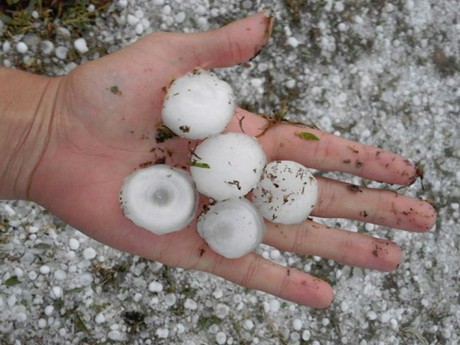
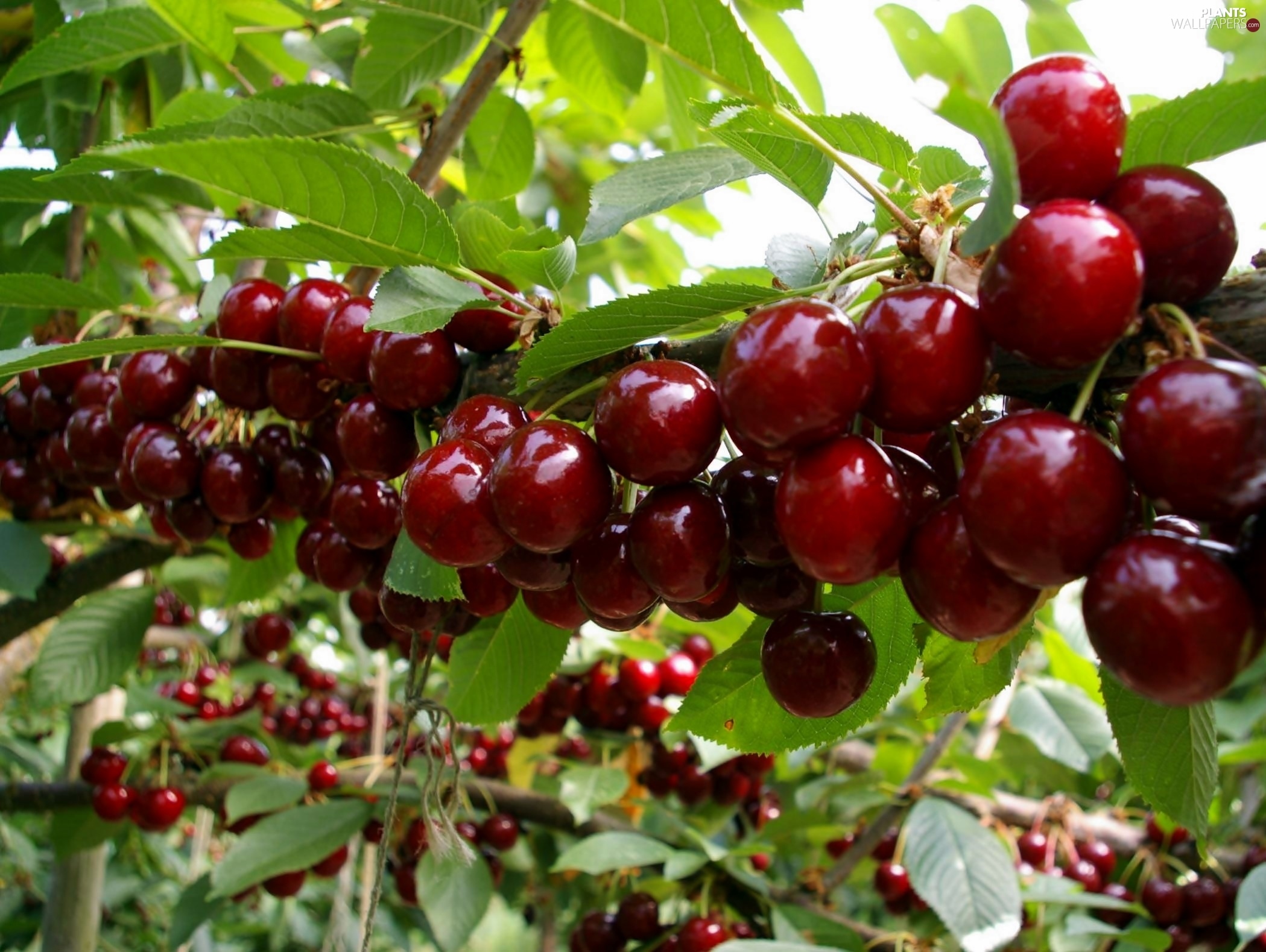
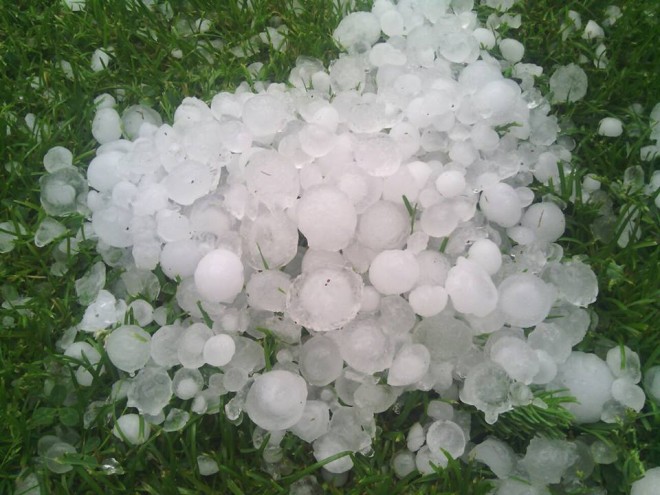
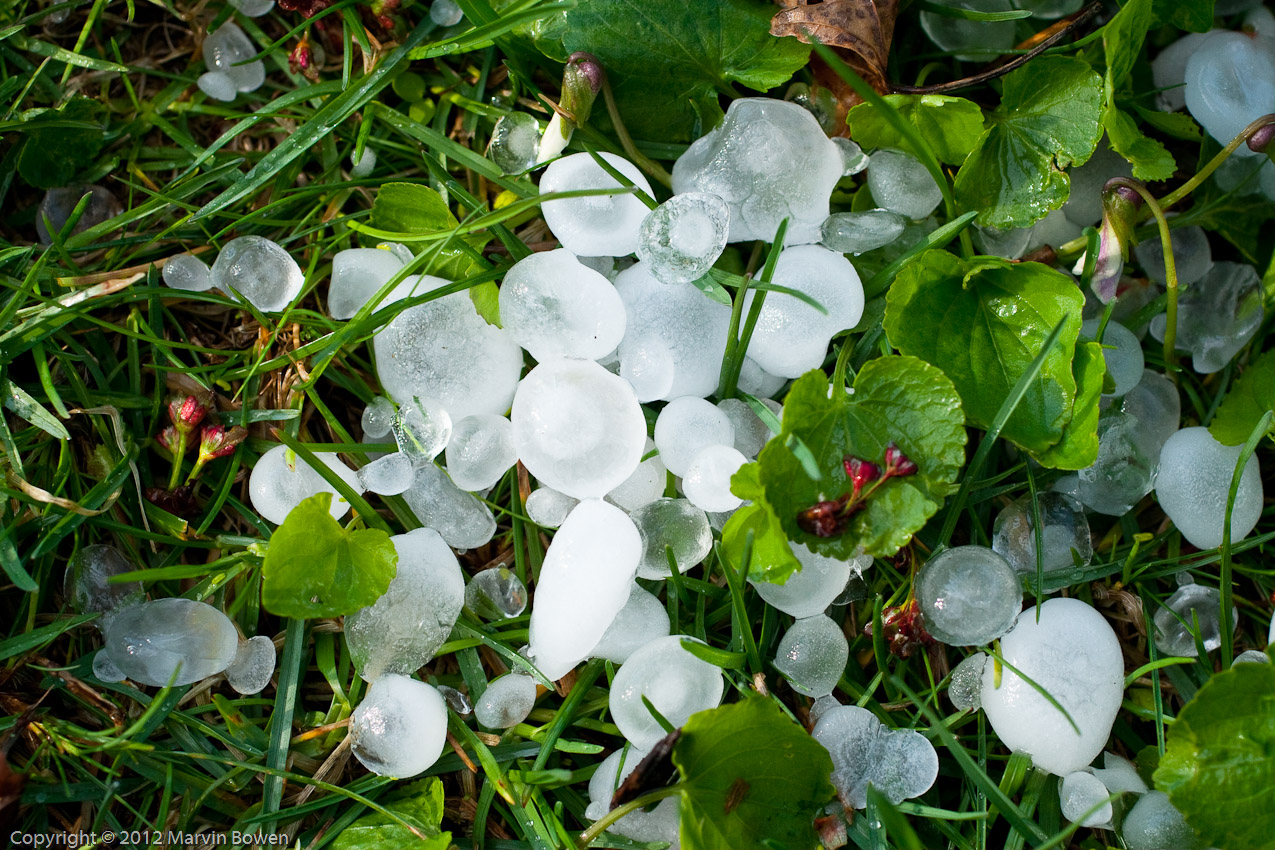
The cling peach crop in Sacramento Valley has been hit by hailstorms, less than two weeks after rain, wind and hail damaged prunes there, leaving some growers without a crop. Cherry and tomato farmers in the San Joaquin Valley also reported concerns, as farmers continue to gauge the effects of the storms. “We’re still doing an assessment of the cling peach crop, but our estimation right now is that about 2,000 acres had some impact from the hailstorms that moved through the area last (week),” said Rich Hudgins, California Canning Peach Association president and chief executive officer. “That’s about 20 percent of the total Yuba City production and about 10 percent of the whole state’s cling peach production. It’s a major deal for the peach industry.” Hudgins said he believes some orchards have been so severely damaged that they won’t be able to deliver a crop in 2016, whereas other orchards may be able to salvage some usable fruit for the canneries. “In some orchards, you can see where leaves and fruit were actually knocked to the ground as the hailstorm dropped on the orchard,” Hudgins said. “It marks the fruit and creates a problem for the canneries, but it’s also dropping hundreds of fruit per tree on the ground. We’ll see yield losses and quality issues, and it’s a significant impact for the growers involved.” Last year, the Yuba/Sutter growing region grew 9,966 bearing acres, which yielded 186,955 tons, the California Canning Peach Association reported. The total for the state in 2015 was 18,538 bearing acres, which yielded production of 335,613 tons. Though cherry season has been ongoing, the recent storms have been disconcerting, causing quality issues for the fruit. In past several weeks, rain and wind following by heat has caused some splitting, among other issues. California Cherry Board Executive Director Chris Zanobini said, “In general, we’re seeing lots of damage to cherries,” estimating that 50 percent of the state’s bing cherry crop has been damaged. “The cherry crop went from 8 million (18-pound boxes) to 6 million (boxes) as of last Thursday, and is now somewhere between 4 and 5 million (boxes),” he said. Hailstorms also hit processing tomatoes. The USDA National Agricultural Statistics Service reported Monday that hail damaged several hundred acres of tomatoes, with damage occurring in both Colusa County in the Sacramento Valley and Fresno County in the San Joaquin Valley. In many areas, tomato leaves were shredded, leaving only the stems, USDA reported. Fresno County farmer Don Cameron, a processing tomato grower at Terranova Ranch in Helm, reported that rainfall in the Fresno area caused problems for tomato transplants. Source - freshplaza.com

17.05.2016

Spain - Rainfall spoils 80% of Bajo Aragon's early cherries

Fruit growers in Bajo Aragon Caspe have started the campaign on the wrong foot. One of the early cherry varieties, the first to come into the market, has registered losses ranging between 70 and 80% due to the rains recorded in recent days. The producer Oscar Barceló has described the damage caused by the heavy rainfall as "disastrous." The most affected variety has been the Early Bigi, which is the most difficult to cultivate. In many cases, and because of the size that the fruit had already reached, the vast majority of them have cracked and can no longer be marketed. Only the smallest ones have been saved. Other varieties, like the Burlat, have also been affected by the rain, although to a lesser extent. Despite it not being the most common variety in the territory, the damage entails a high economic loss, since it is generally sold at a higher price. In any case, producers are more optimistic about the remaining varieties, which will start being harvested in the coming weeks, although it is still to early to make any estimation. The decline in the production of early cherries should not affect the work of seasonal labourers, who have already started arriving to Bajo Aragon Caspe for the harvest of this and other fruits in the coming months. As pointed out by Oscar Barceló, only those producers who are 100% devoted to the cultivation of early varieties, and who have lost almost their entire production, will have to reduce the workforce contracted. All that remains now is to hope that the weather conditions will be good in the coming weeks, so that no issues are recorded with the later varieties. Source - freshplaza.com

17.05.2016

USA - Weekend frost nips some farm fields

Two days of early morning frost over the weekend in west central Minnesota may cause problems for early planted crops. Reports of damage vary in the region—and it will take another day or two to determine what the true impact will be—but so far it looks like most crops escaped serious harm. Some crops, however, may have to be replanted. "The moral of the story is we really need to give it a few days and see how crops responds to warmer weather," said Kevin Beekman, director of the Farm Service Agency in Renville and Redwood counties. "We really won't know for a few days." Crop consultants and insurance agents were busy doing field assessments Monday. Jared Anez, from Anez Consulting in Willmar, said he saw some crop damage "everywhere" in southern Kandiyohi County and Renville County. During a telephone interview while he was evaluating a corn field south of Danube, Anez said he saw plants that were "brown and mushy" next to some that had just light frost damage on leaves and some that had no damage at all. So far, he had not seen corn plants killed by the frost. "You can see the damage, but it's too early to tell if we have to replant or not," he said. "In a couple days we'll know how many plants will survive the stress of growing new leaf tissue," Anez said. "If you can get it to survive, you really shouldn't have any crop loss." Young sugar beet plants are typically sensitive to frost, but Kelvin Thompsen, president and CEO of the Southern Minnesota Beet Sugar Cooperative in Renville, said it appears sugar beet farmers "dodged a bullet" this time with minimal damage. Thompsen said of the 119,000 acres of sugar beets planted for the cooperative, 100,000 acres were planted with a cover crop of oats. The typical environmental benefit of a cover crop is to reduce wind and rain erosion, but Thompsen said the oats may have also provided some cover from the frost. "In this case the cover crop really helped us out in protecting the seedlings," he said. Although fields are still being assessed, Thompsen said the sugar beets are in "very good shape" and the "entire acreage base appears to be OK at this point." It could be a different story for soybean growers. Depending on how much of the soybean plant was emerged from the soil during the freeze, beans could either be fine or could be dead and in need of replanting. Beans are typically the last crop to be planted and if they haven't emerged yet, they will be fine, Beekman said. But soybeans that have emerged could be in trouble, he said. Anez said he had not seen any beans out of the ground yet, but because the seed comes out of the soil with the first couple leaves, beans that were up before the frost are a "done deal" now and may have to be replanted. The top leaves of the alfalfa crop may have also been killed by the frost. Because the crop is so advanced for this time of year, Wes Nelson, director of the Farm Service Agency in Kandiyohi County, said some farmers are being advised to take a first crop hay cutting now and "get as much as you can." With the forecast calling for sunny skies and highs in the 70s, Nelson said it will be a good week to make hay. Source - wctrib.com

17.05.2016

USA - Eldorado wheat crop destroyed by hail

Southwest Oklahoma wheat farmers are dealing with empty pockets, and feeling jinxed by Mother Nature after hailstorms cut an unpredictable path of destruction through their crops. The storm spread about 10 miles long in Jackson County, destroying a little more than 1 million bushels in its path. An estimated $6 million was lost in crops so far in the area. The exact word Eldorado farmer Brian Thompson used was "devastating." He says they were just two weeks out from harvesting the wheat until golf ball sized hail came pouring down in the middle of the night and changed his plans for the season. "You work all year for something and you lose it and you've got nothing,” said Thompson. More than 1,800 acres of Thompson's land was hit by hail last week in an Oklahoma spring storm. Thompson said his job is challenging, especially when he can't plan Mother Nature. "That's a risk the farmers take, and you got to love what you do in order to do this,” Thompson explains. Thompson said he will rely on crop insurance to help cover some of what he lost. However, he chose not to have hail insurance like some farmers do, yet he still doesn't regret it. "I have cotton, cattle and wheat and that's one reason for diversification so you don't put all your eggs in one basket," Thompson said. Not only were farmers’ lives and land affected by the storm, but the communities as well. "This is an agricultural town,” Barney Trammel, Co-Op manager, said. Trammel said in spite of the damage, the amount of wheat harvested in Eldorado only accounts for about 10 percent of their overall crop intake, so it won't be a significant blow to the nearly 9 million bushels the co-op averages each year. "It will hurt us, but I'm still looking at handling quite a bit of wheat,” Trammel said. As for farmers in Eldorado like Thompson, starting over and getting ready for next season is the only thing left to do. "I'll be spraying throughout the summer to control the wheat and fertilizing and putting in the crop next fall and hopefully we don’t have this next year and we'll take another crop to town,” Thompson said. Thompson said this is only the second time hail has damaged his wheat this bad in his 20 years of farming in southwest Oklahoma. The hailstorm only lasted about 45 minutes, but still ruined 11 months worth of work for farmers. Source - kswo.com

17.05.2016

India - Gujarat makes Rs. 469-cr provision for crop insurance scheme

  The Gujarat Chief Minister Anandiben Patel on Monday informed that the state government has started preparations for implementation of the crop insurance scheme under the Pradhan Mantri Fasal Bima Yojana. A provision of Rs. 469.32 crore has been made for the same. Despite two successive years of drought, the State administration estimates crop production in the State to be around 95 per cent of the normal. At a high-level meeting chaired by Prime Minister Narendra Modi on the drought and water scarcity affected parts of Gujarat, the chief minister said the state government has made a total payment of Rs. 105 crore for 18.14 lakh mandays from April 1, 2016, till date under MGNREGA as scarcity-hit regions grappled with unemployment and poverty. However, she also raised a demand for Rs. 500 crore from the Centre and urged the Prime Minister to immediately release it. At present, a total of 2.7 lakh shramyogis were working and this may be increased to 3.5 lakh daily, the minister informed the Prime Minister. The meeting, where senior officials from the Centre and the state were present, saw presentations on the steps being taken for drought relief. The Chief Minister said of the 33 districts of the state, six have been declared drought-affected. A population of around 22 lakh in Jamnagar, Kutch, Devbhoomi Dwarka, Porbandar, Rajkot and Banaskantha have been affected. As the drought situation turned severe because of the depleting water storage levels at various reservoirs in the State, the Chief Minister apprised the Prime Minister about the long-term drought mitigation measures taken in Gujarat. These included large-scale water conservation programmes such as the state water supply grid and the large network of canals in the state. Elaborating on the State’s efforts for water conservation, recharge and creation of water bodies, the Chief Minister further said 1.68 lakh check-dams, 2.74 lakh farm ponds, and 1.25 lakh bori bandhs have been made with a combined storage capacity of 42.3 billion cubic feet of water, aimed at benefitting 6.32 lakh hectares. The State Government had constituted a Cabinet sub-committee for drought relief on September 23, 2015, and regular review meetings have been conducted since April 2016. Amid the water scarcity, drinking water supply posed a major challenge for the administration. According to the government, currently, piped water supply was being provided to 77 per cent of the households in the State. In spite of deficient rainfall for the second consecutive year, the work done for the state water grid has resulted in only a few tankers being required for water distribution in some remote areas, a statement from the Gujarat government said. The Prime Minister, while appreciating this effort, called for further action to completely eliminate the need for water supply through tankers, it added. On fodder availability in the State, the chief minister said the state government had distributed fodder at the rate of Rs. 2 per kg in scarcity-affected districts through 120 grass distribution centres. Source - thehindubusinessline.com/

17.05.2016

Canada - B.C. agriculture ministry develops and distributes guide on hail coverage for Okanagan tree fruit growers

British Columbia’s Ministry of Agriculture has developed and distributed a guide to help Okanagan tree fruit growers understand hail coverage and the claims process. Although Okanagan tree fruit growers have been experiencing ideal weather conditions this spring with reports that flowers are blooming a month earlier than normal, the weather can change quickly and growers are being reminded they can protect their investment with hail insurance offered jointly by the governments of British Columbia and Canada. The guide, titled A Guide to Understanding your Tree Fruit Hail Coverage and Claim Process, specifically outlines hail insurance coverage and the different options for growers to consider, the ministry noted in a press release on Sunday. The guide notes that hail coverage cannot compensate for losses due to other perils such as frost or winter damage – yield coverage is intended for that purpose. Production insurance for tree fruits is purchased at two different times, with November 30 being the deadline to renew the policy for the upcoming year. Insurance coverage takes effect at 12:00 noon on the second day following receipt of full payment of the premium, the guide noted. As soon as hail damage is suspected, the guide notes, the grower must file a Notice of Loss with the local production insurance office. This notice must be filed each and every time hail damage is suspected. As well, hail damaged fruit is graded twice, once disregarding any hail damage and then re-graded taking into account the hail damage. Grading of the fruit can only be done accurately when it is mature. The governments of British Columbia and Canada subsidize the premium of each hail insurance policy in the province, the release noted, adding that a sample policy with 80% coverage for an apple crop worth $100,000 would result in $6,744 in producer premiums, with the governments contributing a roughly equal amount. Though coverage for up to 100% of a crop is available, many growers choose to purchase 80% coverage as an appropriate level, the ministry reported. In 2014, B.C. growers produced more than 126,000 tonnes of apples, cherries, peaches, pears, plums and prunes, nectarines and apricots. Farm cash receipts from B.C.’s tree fruit growers amounted to nearly $105 million – more than one-third of Canada’s tree fruits receipts. There are nearly 6,000 hectares in tree fruit orchards in B.C. with the majority located in the Okanagan Valley. Source - canadianunderwriter.ca

16.05.2016

Hungarian open ground strawberries severely hit by frost

Frosts caused significant damage to open ground strawberry plantations in April, with damage nationwide estimated at 30 percent as reported in Monday's edition of Magyar Idők (The Hungarian Times) by Mr Ledó Ferenc, head of the Hungarian Fruit and Vegetable Interprofessional Organisation (FruitVeB). In Somogy County, where most of the strawberry fields are located, up to 60-80 percent of the crops have been lost to the cold. He added that if rainy weather comes after the cold, the strawberries will likely become affected by rot, causing a shortage of high-quality Hungarian strawberries which would certainly affect prices. In any case, according to the president of FruitVeB, strawberries grown under cover will record no significant changes in terms of quantity or quality, so growers are optimistic regarding this year's season. In the market, besides the continuing presence of imports, with the majority of strawberries coming from Italian and Spanish exporters and sold for 700-1,000 HUF per kilo (2.22-3.17 Euro) there have also appeared the first Hungarian strawberries grown under cover, which cost 1500-2200 HUF (4.75-6.97 Euro).   Source - 24.hu

16.05.2016

India - Heavy rain in Kumaon, crops damaged, roads blocked

Over 20 mm rain accompanied by hailstones in parts of the Kumaon region, particularly in Munsiyari and Dharchula and hilly parts of Champawat district, last night led to road blocks, damaged vegetable crops and residential houses and also disrupted electricity supply. The unexpected rain continued for hours in these parts today. At Munsiyari, hailstones destroyed potato and wheat crops in the higher region. The affected farmers are demanding compensation from the government for the crop loss. “Hailstones also destroyed vegetable crops in Gangolihat, Berinag and the Kanalichina region of the district,” said Deepak Danu, a farmer in the Nachni region of the district. Source - tribuneindia.com

16.05.2016

India - State seeks Rs 2,000cr from Centre to tackle drought

The state government has sent another proposal seeking Rs 2,017crore from the Union government for drought-hit areas and failed rabi crops. Revenue minister Eknath Khadse said on Saturday that the proposal was signed by chief minister Devendra Fadnavis on Friday and sent to the Centre immediately. He said the CM has discussed the issue with home minister Rajnath Singh. Fadnavis had a meeting with Prime Minister Narendra Modi in New Delhi last week when he sought assistance for drought and affected rabi crops in Marathwada and Vidarbha regions. Speaking at a press conference in the city, Khadse said his government is taking all necessary steps to give maximum relief to farmers. Khadse said the upcoming kharif sowing season is vital for Maharashtra. "Many parts of the state have received deficient rains since last three years. The weather department, this time, has predicted an above average monsoon and excess rains in some parts. The agriculture department is ready for sowing. The state has enough stock of seeds and fertilizers. Over 390 squads have been assigned to keep a watch on illegal sale or supply of seeds and fertilizers," he said. In case of excess rains, the farmers should go for crop insurance to avoid losses. All types of crops are covered under the new crop insurance scheme floated by the Union government, said Khadse. The state government plans to set up over 6,000 onion storage structures to restrict damage to harvested crop due to untimely rains and market fluctuations. Besides, there is a plan to put up 1700 shed-net projects this year to grow and store vegetables. "Onions prices have seen a lot of variation. Many a times farmers have no choice but to sell onions in the market at low rates due to absence of storage facility. To overcome these problems, the government has proposed 6,000 storages in the onion producing belt of Nashik, Dhule, Nandurbar and parts of Jalgaon. It will help the farmers to store the produce for at least 4-5 months," he said. Source - timesofindia.indiatimes.com

16.05.2016

Pakistan - Punjab seeks indicative price for cotton over loss fears

As cotton sowing season starts in Punjab, the province on Saturday warned the federal government to either fix an indicative price of Rs3,000 per 40kg for the commodity or risk losing up to 50pc of acreage for the most important crop of the country. In a letter to the federation, the provincial government maintained that farmers were reluctant to sow cotton because they had suffered huge economic losses on the crop during the last two years, and feared further losses. Punjab not only wanted the federal government to fix a support price, but also induct the Trading Corporation of Pakistan to make timely arrangements for purchasing at least two million bales for stabilising the cotton market once harvesting began. Explaining background of the correspondence, an official of the agriculture department said weather pattern and market forces had necessitated official intervention in crop trading. Unpredictable rain patterns and regular flooding, both local and national, had led to huge water logging, especially in the core cotton belt. Cotton, being a crop of the dry areas, had lost huge tracks because of the changing pattern of sub-soil water. After sowing, the crop regularly suffered erratic weather – heavy torrential downpours coupled with hot weather only leads to pest attack. The farmers neither had pesticides nor financial muscle or management skills to deal with the situation. On the other hand, the official said, such weather conditions suit competitive crops such as rice, sugarcane and maize, which farmers were now turning to in droves. These crops, along with fodder in certain pockets, had emerged as most suitable alternatives for cotton. The cotton area was already on decline because of these factors; from 6.2 million acres in 2011-12, it had come down to 5.5 million -- a loss of 700,000 acres. This year, the department feared more loss. Though it has fixed a target of 4.7 million acres for 9.5 million bales, but both figures sound mythical given ground realities where no farmer was ready to risk the crop for abovementioned factors, he concluded. “There are so many uncertainties about cotton that famers have no choice but to avoid the crop,” claimed Naeem Hotiana of Sahiwal. There was no dependable seed, new pests were attacking the crop against whom the farmers did not have any protection or pesticides, climate change had robbed farmers of any confidence in the final yield and dwindling world market had proven to be the last proverbial nail in the coffin. He further said the crop was sure to lose a huge chunk of acreage and only those farmers would go for it who had no other crop option. With so many doubts afflicting the crop, the federal government must come up with some kind of an insurance package if it wanted the crop to survive. Otherwise, cotton, which was already on a downhill tumble, would lose more very quickly, he feared. Source - dawn.com

16.05.2016

India - CPI (M) expresses concern over crop damages due to hailstorm

CPI (M) has demanded early compensation to the orchardists and farmers who suffered losses due to today’s devastating hailstorm in Anantnag, Kulgam and Kupwara. The party has alleged that whenever natural calamities cause damage to the fruit and crops, the worse affected are assured compensation and even surveys are conducted but no relief reaches to them. Calling for a comprehensive compensation for the farmers and orchardists who suffered extensive damages due to hailstorm, the party has urged the state government to go for immediate assessment of damages to fruit and standing crops and disburse financial relief to the affected families without any delay. In a statement issued here today, CPI (M) State Secretary Ghulam Nabi Malik said that during the last Kharief season surveys were conducted in the hail storm affected areas of the valley but relief is still awaited. Mere assurances and surveys cannot satiate the interests of the affected farmers; he maintained and urged the government for initiating practical measures to provide timely relief to the affected orchardists and farmers. The CPI (M) leader said that the hailstorm caused massive damage to horticulture sector in valley and the state government's apathetic attitude towards its farmers has been playing havoc with the sentiments of the farming community which has been demanding relief during the past many years. Even during the current season, the crops across the length and breadth of the State have been extensively damaged due to unseasonal rains, hailstorm and farmers have been crying for help from the state government and its agencies, he added.” Reiterating his call for introduction and implementation of Crop Insurance Scheme (CIS) in Jammu and Kashmir, Malik said the scheme will save the fruit growers and agriculturists in the event of losses suffered due to natural calamities. The agriculture, horticulture loans which have been mounting due to successive failure of crops in most parts of the State have been pinching the pockets of the farmers, who have nowhere to go, he said and stressed on the need to arrange one-time waiver on specified amount of KCC and other loans in favour of farmers and horticulturists who are not in a position to purchase fertilizers and pesticides for their farms and orchards. Source - scoopnews.in

16.05.2016

India - Crop loss insurance claims in state at Rs 4100 cr, highest since 1999

Insurance claims made by Maharashtra farmers against crop losses due to the severe drought in 2015-16 are estimated to touch Rs 4,100 crore, the highest since 1999. The sheer enormity of the claims indicates the distress faced by the agriculture sector in the state due to drought. According to data released during the review meeting for the upcoming kharif season, of the 1.36 crore farmers in the state, 83.37 lakh farmers who took insurance for their crops have sent claims worth Rs 4,100 crore only for the kharif season of 2015-16. Kharif crops on 43.46 lakh hectares were insured. Around 30.56 lakh farmers insured their rabi crops, cultivated on 24.44 lakh hectares, but claims for the rabi season are yet to be received and could further inflate the figure. Approximately Rs 300-400 crore will be from the premium paid by farmers, the rest of the amount will be shared by both the state and Centre. Officials said this number may be just be an indicator and real losses may be higher as the current insurance scheme only covers up to 60% of losses. There are still some farmers who aren't part of the scheme, so their losses will be unaccounted for. Under the current policy, all farmers who take bank loans have to take crop insurance under the central National Agriculture Insurance Scheme (NAIS). Under this scheme, premium is fixed depending on the crop being insured. Only a small percentage of the total premium is paid by the farmer, the remaining is pooled in by the state and central governments. "Claims against losses this year are going to be exceptionally high as this is the fourth consecutive year of drought and the most severe one," said a senior official. Productivity and area under cultivation in the state have significantly dipped due to poor rainfall. For the next cropping season, the NAIS is being replaced by the Pradhan Mantri Fasal Bima Yojana (PMFBY) from June 1. Under this policy, premium to be paid by farmers has been reduced to 2% of the sum insured for all crops, while the rest will be borne by the state and central governments. The PMFBY includes many more conditions under which claims can be made, like post-harvest losses. "The new insurance scheme offers more coverage. We are trying to get more farmers to take insurance under the PMFBY scheme," said the official. Source - timesofindia.indiatimes.com

16.05.2016

USA - Should Billionaires Get Unlimited Crop Insurance Subsidies?

Do you support the federal government handing out unlimited crop insurance subsidies to millionaires and billionaires without disclosing who gets them? That question – and many more – was nowhere to be found in the crop insurance industry’s poll of 1,000 registered voters released this week. While some poll questions asked voters how favorably they thought of farmers and the government paying a portion of crop insurance premiums, it provided an incomplete picture of the crop insurance program. For instance, do most Americans know that crop insurance is the primary way that the federal government subsidizes farmers today? Probably not. The vast majority of crop insurance policies insure against losses in revenue, not losses in crop yield – another fact probably missed by most Americans. How would voters feel if they knew that although millionaires and billionaires are no longer able to collect traditional commodity subsidies, they can and likely do collect unlimited premium subsidies through crop insurance? In 2011, 26 farming operations collected more than $1 million each in premium subsidies while the bottom 80 percent of policyholders received an average of $5,000 apiece. Much of the story behind crop insurance is unknown to the majority of Americans. They don’t realize that the government reimburses crop insurance companies for the cost of selling insurance policies while also shouldering much of the cost of reimbursing farmers who experience losses. Growers who get crop insurance subsidies are also eligible for numerous other farm subsidies. Two new ones enacted in the last farm bill, known as Agriculture Risk Coverage and Price Loss Coverage, pay farmers for the exact same “loss” as crop insurance. These subsidies are expected to cost taxpayers more than $19 billion from 2016 to 2018 – 70 percent more than originally projected. Other farm subsidies have payment limits, which means that farmers can only collect a certain amount of money and that people who make more than a million dollars a year can’t get those subsidies at all. Not crop insurance. And although the names of recipients of all other farm subsidies are required to be disclosed to the public, along with the amount of money they received, the government hides the identities of recipients of crop insurance subsidies from taxpayers and members of Congress. What the crop insurance industry appears to be doing is polling consumers based on the false premise that groups calling for crop insurance reform are somehow trying to get rid of the program altogether. Of course there should be a safety net for farmers. But the federal crop insurance system we have today more closely resembles income support than the safety net most Americans would expect. Earlier this year the Obama administration released a proposal to reform the crop insurance program and save taxpayers an estimated $18 billion over the next 10 years. It would not eliminate crop insurance for farmers, just lower the premium subsidies so that the share that farmers and taxpayers each contribute is closer to 50-50. Testifying in support of the proposal before the House Appropriations Committee, Secretary of Agriculture Tom Vilsack said it’s time we had a more equitable partnership between the farmer and the taxpayer. That’s probably something that all Americans would agree is a good place to start. Source - ewg.org

13.05.2016

India - Climate change makes the going tough for Assam tea sector

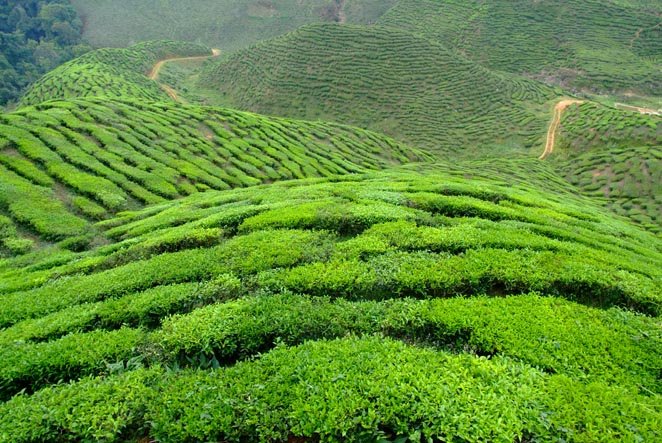
Assam’s tea sector has, of late, been facing the brunt of climate change in the form of extreme weather conditions — either a drought-like situation or high-intensity rainfall. The state’s tea sector, which had a good start this year with “above-normal” crop harvest in March, saw a dip in production the next month due to excessive rainfall. Industry sources say the dip in April’s production could be as high as 30-35 per cent and production of first flush (generally till April or mid-May) could be 34 million kg against 44 million kg produced in 2015. Many tea gardens in Brahmaputra valley battle the problem of water logging due to high intensity rainfall. Tea crop loss for a short duration of time every year due to extreme weather conditions has more or less become a normal feature of late. If it is excessive rainfall this year, it was drought-like condition in past three years which affected tea production in Assam. In 2012, excessive rainfall coupled with pest attacks made the going tough for the state’s tea sector. Studies indicate that Assam, particularly the Brahmaputra valley, has been witnessing ‘significant’ changes in rainfall pattern and temperature in recent years. A study on climate change, done by the Indian Institute of Technology (IIT) Guwahati, found the state has been witnessing long rainless spells or high intensity rainfall of short duration in recent years. The study, conducted by Arup Kumar Sarma, found that water logging and soil erosion in tea gardens — due to short-duration, high-intensity rainfall — were the two major challenges of ‘alarming nature’ for the state’s tea sector. “A significant variation in total yearly rainfall with time has been seen in almost all districts (of Assam). Such variation in rainfall will definitely have some impact on various sectors of economy,” the study noted. An earlier study conducted by the Tocklai Experimental Station of Tea Research Association, based in Jorhat in Upper Assam, to gauge the impact of climatic changes on the tea sector, too, had revealed similar details. The study had found the average minimum temperature in Assam had risen by one degree Celsius in the past 90 years. Besides, the region lost around 200 mm rainfall because of climatic changes. Another study by the Centre for Environment Social and Policy Research, and Rashtriya Gramin Vikas Nidhi in collaboration with Indian Network on Ethics and Climate Change found that six districts of Assam — Dibrugarh, Jorhat, Lakhimpur, Sonitpur, Morigaon and Baksa - spread across the Brahmaputra valley have already started experiencing the impact of climate change. “We in the tea industry do not want to talk about climate change and its impact on us. It might be due to business considerations. But, it is true that it is affecting us and we have to find remedial measures to tackle it. We cannot let the quality of Assam tea go down,” said Dipanjol Deka, secretary of Tea Association of India. However, if one goes by the annual production figures of the Assam tea sector, it throws baffling details. Figures say production has been on an upswing in recent years. The tea sector, which was struggling to touch the 500 million kg annual production mark till 2010, has been posting annual production figures above 600 million kg since 2013. The state’s tea sector puts forth the ‘make-up in later months’ theory. This means, after the extreme weather phase subsides, production picks up and the industry catches up with the loss. However, some have a different take as they believe the increase in production could be possible due to the recent growth in number of small tea growers. “It is only because of the growth in the number of small tea growers that we are able to post bumper production figures these days. The production graph has been more or less stagnant for large and medium sized tea estates. Had there been no small tea growers, the production scenario would have been very different,” said an industry insider. Assam has nearly 70,000 small tea growers and they contribute around 25 per cent of the total tea produced in the state and 14 per cent of total tea produced in India. Pranab Kumar Sarma, a tea expert who formerly worked with Tezpore Tea Company, said climate change could affect the quality, if not quantity, of tea. “Tea industry is affected by climate change and there is no denying the fact. There is no drastic dip in production, but the changes in weather can bring down the quality of Assam tea.” However, Sarma added modernising tea factories and extensive use of technology in factories could help retain Assam tea’s distinct quality. The IIT study, cited above, found that Golaghat district, which is often considered the world’s best tea producing area, has of late been suffering from long spells of drought-like conditions. On the other hand, it also often experiences high-intensity rainfall, leading to erosion or water logging. The study also revealed that both maximum and minimum temperature has an increasing trend in Tinsukia, Golaghat and Karbi Anglong districts. According to Deka, many of the big tea gardens in areas that are often hit by rainless weather condition have woken up to the climate change challenge. They have begun investing on irrigation facilities and in acquiring new technologies for tea factories. The tea industry has been demanding the state government to come up with an irrigation scheme for it and also partly subsidise it. “What appeared a distant need some years back has now almost become a necessity for survival for us,” Deka added. Bidyananda Barkakoty, advisor to North Eastern Tea Association, said the state government should commission a study to ascertain which irrigation system is better for tea gardens. He said some studies have shown drip irrigation — which is also less expensive — to be suitable for tea gardens. Sarma, who believes water logging in gardens is a bigger threat than rainless weather conditions, cited a study to say that around 70 per cent of the tea gardens in Sivasagar, Dibrugarh, Darrang, Sonitpur and North Lakhimpur districts were prone to this problem. Source - business-standard.com

13.05.2016

USA - Volatile market leads to lower crop insurance premiums for farmers

Thanks to a drop in market volatility and grain prices, farmers may pay up to 10 percent less this year for crop insurance. The federally subsidized insurance program protects farmers from income loss caused by poor crop yields or crop prices. The taxpayer-funded program came under scrutiny by federal lawmakers after a drought in 2012 resulted in more than $17 billion in payouts to farmers. Farmers pay about 40 percent of the insurance premium’s cost. For the 2015 crop year, Illinois farmers enrolled about 19 million acres in various crop insurance programs and paid an average of $15 per acre for their share of the premium, according to federal data. Each acre was subsidized with taxpayer funds of about $19 on average. Experts say that although crop insurance premiums for farmers will likely be the same or lower in 2016, farmers in Champaign County may still see a loss in profit this year due to current market conditions. Gary Schnitkey, a professor of agricultural and consumer economics at the University of Illinois at Urbana-Champaign, initially anticipated potentially higher crop insurance premiums. But due to a decrease in market volatility and grain prices, he said farmers can expect their premiums to decrease by possibly five to 10 percent on average. Schnitkey said one of the biggest factors driving the decrease in premiums is the lower volatility. “That was pretty unanticipated,” he said. “I did not think it was going to come down as much as it did.” According to an article by Schnitkey on Farmdoc Daily, an agricultural news website based from the University of Illinois, the volatility factor “summarizes the market’s estimates of the likelihood for price movements of various magnitudes.” Schnitkey said this decrease in volatility is the most surprising change that affected the premiums, and that it is “pretty hard to anticipate those being as low as they are.” Farmers had to make a decision on crop insurance by the annual deadline of March 15. “What we’ve been hearing is that most farmers will just stay where they’re at [with their coverage],” Schnitkey said. He noted that the Risk Management Agency, the U.S. Department of Agriculture agency that determines crop insurance rates, primarily considers the overall risk factor, the crop’s price level and the volatility of the market when determining rates. “Farmers view it as a pretty important piece of their risk management strategies,” Schnitkey said. “Without crop insurance, they don’t have any sort of guarantee on revenue, and with it, they do.” Rodney Weinzierl, a corn and soybean farmer in central Illinois and the executive director of the Illinois Corn Marketing Board, said farmers may still lose money this year. “A farmer can insure a portion of their loss, but they’re still going to have a loss even with crop insurance,” he said. “Very few farmers will not lose money… just because of the market conditions.” Doug Yoder, a crop agency manager with Country Financial Insurance, said the expectation for lowered premiums is “a good example of how volatile this whole environment is for farmers and landowners.” With the high cost of items like fertilizer and fuel and the decrease in grain prices, Yoder said most farmers will find it difficult to generate enough revenue to break even on expenses this year, let alone make a profit. Therefore, he expects to see farmers looking to cut costs in certain areas. “I don’t think crop insurance is one of those ways they should cut expenses,” Yoder said. In 2015, 89 percent of corn acres and 87 percent of soybean acres were insured in Illinois, Yoder said. “The reason they need it so much is [that] so much is out of their control — weather, bugs, disease, the markets, the prices they receive,” he said. “So many things are out of their control, and that’s why they need this type of protection.” The vast majority of policies purchased in Champaign County last year — 90 percent — were revenue protection policies, Yoder said. When farmers’ revenue falls below a specific threshold, the policy pays a part of that lost difference. Coverage can vary greatly even within the state, but Yoder said Champaign County is one of the counties in Illinois that produces a more stable yield. “For the most part, we’re talking very good, productive soils with good growing conditions,” he said. Yoder said educating elected officials is one of the biggest challenges facing the federal crop insurance program in the future. “A lot of newly elected officials don’t understand agriculture to start with, and they don’t understand this very complicated crop insurance program,” he said. “They just see the dollars they’re spending on it . . . they want to cut those costs.” But, Yoder said, cutting costs to the crop insurance program can only do more harm. “Without (crop insurance), our cost of food would go up in the end because it’s going to be that much more expensive to grow it, without this protection,” he said. Source - cu-citizenaccess.org/

865
of 1225