NEWS
867
of 1225
News
11.05.2016

India - Drive to expand crop insurance cover

In the run-up to the monsoon and the new agricultural season, the authorities in the district are bracing up to expand crop insurance cover in the district. At present, less than 15 per cent of the nearly 3.7 lakh agricultural loanees in the district have crop insurance cover and hence the focus on widening the insurance net. District Lead Bank Manager K.N. Shivalingaiah said that a high-level meeting, chaired by the Deputy Commissioner and involving all senior level officials from different fields, including banks, Departments of Agriculture, Horticulture etc., will be convened in due course to finalise the implementation of the Pradhan Mantri Fasal Bima Yojana (PMFBY) Lack of insurance cover is one of the reasons for the spate of farmer suicides in case of a crop loss and even among those insured, the terms and conditions are stringent. Hence not many opt for the insurance scheme though it is compulsory for farmers availing loans from commercial banks, to have insurance cover. But there is a catch here. As Kurubur Shanthakumar, President, Karnataka Sugarcane Cultivators Association explained: insurance cover is extended only to those cultivating the notified crops and this varied from region to region. Mr. Shivalingaiah conceded that insurance cover is only for the notified crops for the region but there are proposals to bring in more crops under the ambit of notified crops. “This will ensure that more farmers are covered under the insurance scheme,” he added. Besides notified crop, the notified area or the unit area of insurance is also being redefined. Earlier, the unit area was a hobli but it is has been further reduced to gram panchayat level under the PMFBY, said Mr. Shivalingaiah. But Mr. Shanthakumar said that farmers want the unit of insurance to be further localised. There are further relaxation in norms for declaring crop failure in the unit area and earlier it was mandatory that at least 50 per cent of the crops had failed in the unit. “But is has now been reduced to 33 per cent to avail insurance cover,” according to Mr. Shivalingaiah. Source - thehindu.com
10.05.2016

Canada - Dry weather prompts Alberta farmers to buy more crop insurance

Kelly McIntyre has tilled the soils of northwestern Alberta for more than 30 years, but only this spring did he conclude that he needed crop insurance. "There just seems to be increased risk, more risk all the time," says McIntyre, a wheat and canola farmer near Fairview in Alberta's Peace Country. He says the rising cost of machinery, land, seed and fertilizer means he's putting more on the line every season, so he finally went for the extra security of the federal-provincial insurance. "You've got to cover yourself so that you can grow a crop next year, if it happens to be a bad year." He's one of the many Prairie farmers who have opted to start or increase their coverage this year as forecasts call for another arid growing season that is raising worries about the success of this year's harvest. The tinder-dry spring has already contributed to the devastating wildfires that have consumed large swaths of Fort McMurray. Alberta also issued a special heat advisory as century-old temperature records were broken. McIntyre says he's normally fighting the moisture at this time of year with muddy tires and wet fields, but that's not the case now. "We're seeding in conditions that are probably the driest I've ever seen." Crucial soil moisture gone Stephen Vandervalk also took a look at this year's weather conditions and decided to bump up his crop insurance coverage to the highest level on offer — which covers up to 80 per cent of a farmer's losses — something he hasn't done in years. The crucial store of moisture in the soil is gone this year, leaving crops much more vulnerable than usual, says Vandervalk, a grain farmer near Fort Macleod in southwestern Alberta. "It doesn't take much," he says. "You take a couple weeks of windy hot weather on your crop, and you're in trouble." The El Nino weather pattern that caused drought conditions across the Prairies last year also made for a dry winter, and the trend is looking to continue this summer, says Environment Canada meteorologist Brian Proctor. "It's likely going to be exacerbating the problem as opposed to helping the moisture-deficit issues." The Calgary area received 12.1 millimetres of rain between January and March compared with 33 millimetres last year, while Grande Prairie, Alta., saw about half as much precipitation over the same stretch last year, Proctor says. The head of operations at Agriculture Financial Services, an Alberta Crown corporation, says he's seen a jump in the number of farmers opting for the highest level of crop insurance available. 57% of farmers buy insurance For years, around 50 per cent of farmers took out that coverage, but that jumped to an all-time high of 57 per cent this year, Merle Jacobson says. "There's a trend of producers buying higher levels of coverage than in the past," Jacobson says. "If you look at the long-term trend, it's quite a bit." The total number of crop insurance applications also rose by 1.6 per cent this year in Alberta, up 197 to 12,339 despite a general trend towards fewer, bigger farms. Shawn Jaques, head of the Saskatchewan Crop Insurance Corp., says about 40 per cent of farmers bought the highest level of coverage in that province this year, up from 38 per cent. But he cautions there could be several reasons for the increase, including the highest ever potential payout per hectare, adding that the province had one of its best crop seasons last year despite mid-season concerns about drought. Alberta also came out of last year much better than expected after the province declared an agricultural disaster last August and predicted insurance payouts of between $700 million and $900 million. In the end, Jacobson says he expects total payouts to run between $510 million and $530 million after some fortunate late-season rains and delayed frost and snow. For McIntyre, it confirms how unpredictable farming and weather are, and how much faith is needed as he puts hundreds of thousands of dollars more into his fields this year. "Farmers are eternally optimistic," he says. "If we weren't, we wouldn't plant a crop every year." Source - cbc.ca

10.05.2016

India - Crop insurance for ryots under Pradhan Mantri Fasal Bima Yojna

District collector Babu A has said that the crops will be insured under the Pradhan Mantri Fasal Bima Yojna from Kharif - 2016 season. This will be a boon to farmers as the premium rates to be paid by farmers have been brought down to enable more farmers to avail themselves of the benefits of the scheme. In a statement on Sunday, the collector said the crop loss per hectare, if any, will be calculated and insurance will be paid paid accordingly to farmers. He said that under the new scheme, the farmers will have to pay a uniform premium of 2 per cent for all kharif crops which will provide a cover for 80 per cent of the income. Source - http://timesofindia.indiatimes.com

10.05.2016

India - Farmers hit by heavy rains after drought

In the Warangal district in the Indian state of Telangana, the farming community has been suffering from the effects of drought on their crops; now they have also been hit by untimely rains which descended on the district for the past three days. Mango orchards, banana plantations and vegetable cultivators have suffered huge losses because of the sudden rains and heavy gales. Horticulture officials are yet to assess the extent of damage across the district, but according to sources, horticultural crops on about 2,000 hectares have been damaged. ‘The yield this time is much less due to drought conditions and now the heavy gales have added to our woes,’ lamented a farmer. The founding president of Telangana Karmika Rythu Rajyam party, Martha Rajaiah has demanded the state government provide compensation of Rs 50,000 per acre for mango grooves and Rs 25,000 for other crops. He wanted the officials to access the crop loss in a comprehensive manner. (1 Indian Rupee= 0.015 USD) Source - freshplaza.com

10.05.2016

India - Farmers seek compensation

The farmers have demanded the government to pay compensation for the crop loss due to drought in the district. In a statement here on Sunday the Desheeya Karshaka Samajam general secretary Muthalamthode Mani said that farmers in the state have sustained a crop loss of nearly Rs 100 crore in the drought. In Palakkad district alone the crop loss is estimated at Rs 30 crore, he said. The drought affected paddy, rubber, mango, vegetables, pepper, banana, cardamom and other crops because there was no rain for the last seven months due to the failure of both the North East and South West monsoon, the statement said. He alleged that the agriculture department has not taken any steps to assess the crop loss and pay compensation to the affected farmers. The drought has also affected the dairy farmers in the district with around eight cattle deaths reported in the district last month. The milk production in the district has reduced to half affecting the dairy farmers very badly, the statement said. Source - timesofindia.indiatimes.com

10.05.2016

Bangladesh - Hailstorm damages crops in Lalmonirhat

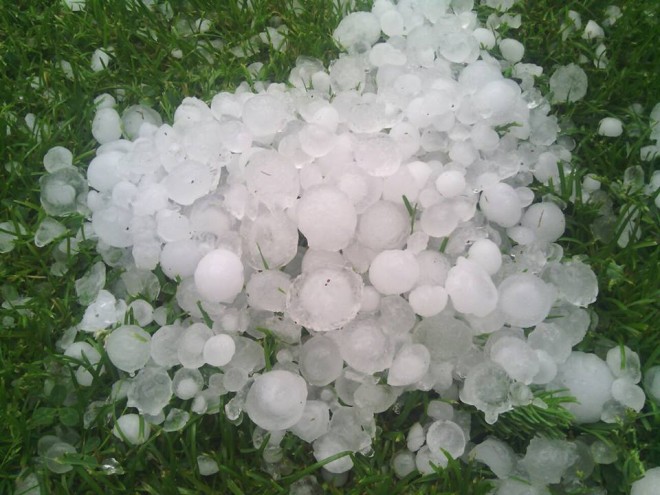
[caption id="" align="aligncenter" width="703"] Hailstorm badly damaged hybrid bitter gourd seedbeds at Dakkhin Durakuti village in Mogholhat union of Lalmonirhat Sadar upazila on Friday night. Photo: Star[/caption] Hailstorm damaged crops on around 1,500 bighas of land in eight villages of Mogholhat union under Lalmonirhat Sadar upazila on Friday night. Eight tin-roofed houses were also damaged by the hailstorm in the union. The affected villages are Dakkhin Durakuti, Fulgachh, Banshtari, Chapartal, Kodalkhata, Bhatibari, Bamontari and Etapota. tul Chandra Roy, 38, a vegetable seed producer at Dakkhin Durakuti village, said he prepared four bighas of land for producing hybrid chilli and bitter-gourd seeds, but they were destroyed. “I invested Tk 2 lakh, hoping to earn at least Tk 5 lakh by selling the seeds,” he added. Lakhkhi Kanta Barman, 48, a seed producer of the village, said “I produced hybrid chilli and bitter-gourd seeds on five bighas of land. I would have harvested the seeds from my fields in the third week of the current month, but all my preparation was in vain because the hailstorm damaged the crop,” he said. Sudhir Chandra Barman, 60, a farmer at Banshtari village, said the hailstorm damaged boro paddy on four bighas of land. “I had decided to harvest the paddy from my filed on Saturday, but it got damaged,” he added. Habibur Rahman, chairman of Mogholhat Union Parishad, said crops on 15,00 bighas of land were badly affected by the hailstorm and the damage could be worth around Tk 15 cr. “The affected farmers will get help from the union parishad and the local administration,” he said. Officials of the Department of Agriculture Extension visited the affected villages to assess the loss. Source - thedailystar.net

10.05.2016

India - A fifth of farmers covered under crop insurance scheme

The implementation of the crop insurance scheme in the country is crucial as there has been a steady rise in the suicide of farmers. Currently, 20 percent of the farmers and 23 percent of total cropped area in country has been insured. This information was given by the minister of state for agriculture Mohanbhai Kalyanjibhai Kundariya in Rajya Sabha on Friday. Through Pradhan Mantri Fasal Bima Yojana (PMFBY), the ministry of agriculture and farmers welfare is aiming to increase the insurance coverage of cropped area to 50 percent in next two to three years. Under the scheme, there will be a uniform premium of only 2 percent to be paid by the farmers for all kharif crops, 1.5 percent for all Rabi crops and 5 percent for commercial and horticulture crops. The balance premium will be paid by the government to provide full ensured amount to the farmers against crop loss on account of natural calamities. There is no upper limit on government subsidy. Even if the balance premium is 90 percent, it will be borne by the government. Earlier there was a provision of capping the premium rate which resulted in low claims being paid to farmers. Capping was done to limit government outgo on the premium subsidy. Now the capping has been removed so farmers can claim against full sum ensured without any reduction. In addition, a Unified Package Insurance Scheme (UPIS) has also been approved for implementation on pilot basis in 45 districts of the country from Kharif 2016 season to cover the other assets/activities like machinery,  life, accident, house and student-safety for farmers alongwith their notified crops (under PMFBY/ Weather Based Crop Insurance Scheme - WBCIS). The Narendra Modi government launched Pradhan Mantri Fasal Bima Yojana (PMFBY) in January this year to replace National Agricultural Insurance Scheme (NAIS) and Modified National Agricultural Insurance Scheme (MNAIS) from Kharif 2016.  Premium rates under Weather Based Crop Insurance Scheme (WBCIS) have also been reduced and brought at par with new scheme. Source - http://www.governancenow.com

10.05.2016

Italy - Rain in Apulia damages early cherries

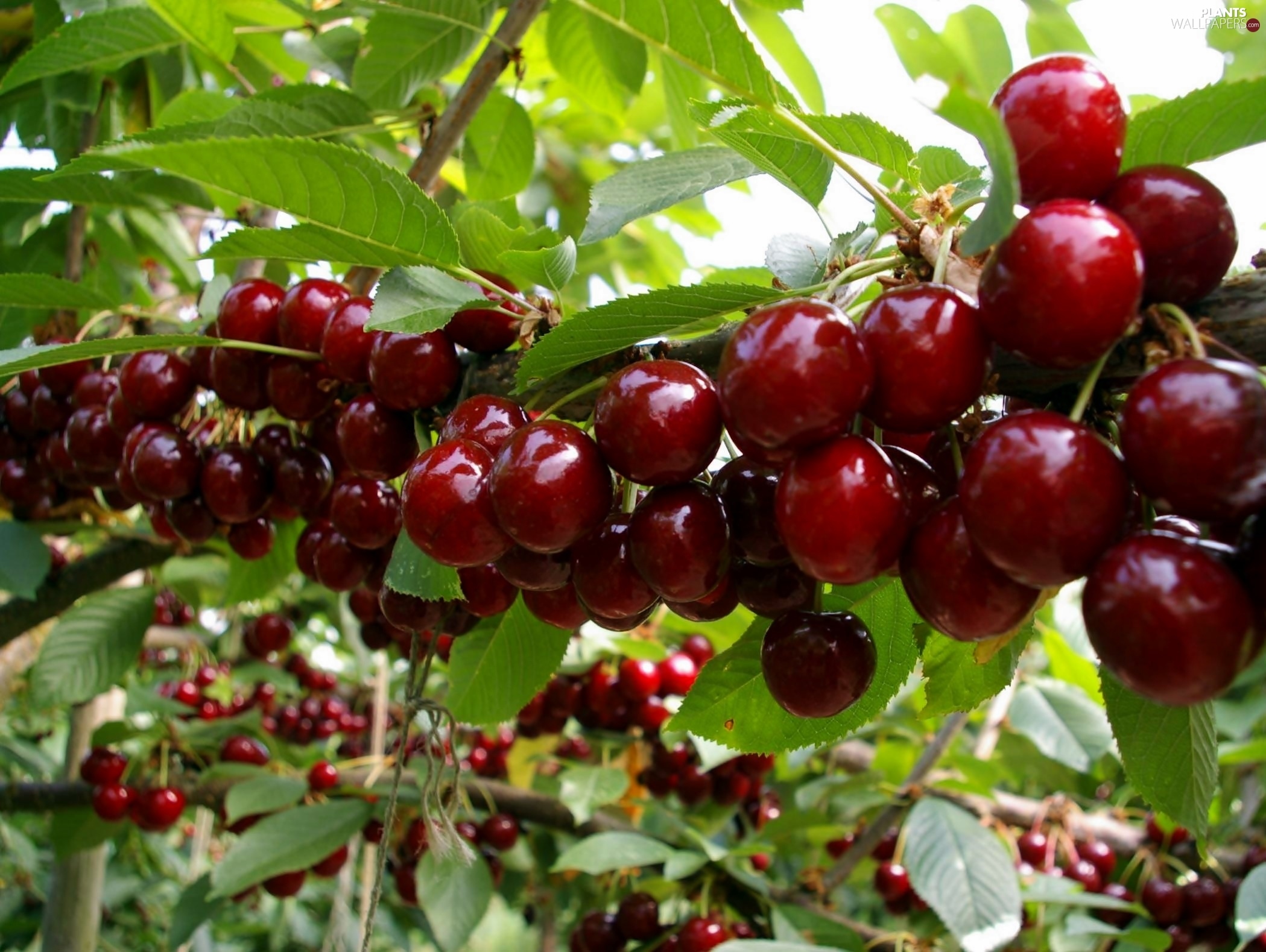
Exceptional bad weather hit Apulia in the past 48 hours with terrible effects on early cherries. Unfortunately, we must report that delicate early cherries such as the Bigarreay and Giorgia varieties, which had already produced only limited volumes, did not survive two and a half days of rain. In these cases, in fact, humidity leads to cracking (see photo below). In addition, 7°C temperature drops meant trees experienced a thermal shock that burned many flowers and led to shorter stalks. Over 70% of Bigarreau and around 30% of Giorgia cherries were destroyed. At the moment, the Ferrovia variety, the leading cultivar in Apulia, seems to have been spared, although a 10% loss has been estimated for early Ferrovia plants. The Bisceglie Cherry Consortium confirms the gravity of the situation - "only those who had already harvested managed to contain the damage." Angelo Corsetti from Coldiretti Bari warns that "there are thousands of families in the Bari area that depend on cherry production. Each hectare requires around 600 hours of work, 85% of which are concentrated during harvesting. This means that many jobs were destroyed in just a few hours, making it impossible for entrepreneurs to recoup their investment." Giacomo Patruno from Congfagricoltura Bari stated that the situation is still uncertain because the temperatures, which are still low, could lead to further cracking. Yesterday's prices (May 3rd, 2016) were €6-50-7.00/kg. With its 4,700 tons of produce, Bari is the leading Italian province for cherry production. It harvests 34% of the domestic production. The Apulia region grows 39.8% of the domestic cherry production. Source - freshplaza.com

06.05.2016

Hungary - Up to 30% frost damage

Frost which hit Hungarian apricot growers last week, is expected to have caused up to 30% losses in production. Fortunately some producers were able to save their crops by using frost candles, while others saw complete losses. Blooming had been doing really well leading up to last week and it had appeared that it would be a good season. However, the cold weather caught many growers off guard because it usually does not happen this late in the growing season. The damage is expected to cause prices to go up. The cold weather is supposed to continue during the next few weeks, with temperatures only becoming warmer later on in the month.  Apricot prices in Seville are also expected to be affected by the cooler temperatures with growers there experiencing delays, along with some frost damage as well. The Hungarian harvest for the early varieties are expected to take place between the third to fourth week of June. No delays are expected as of yet, but it is still too soon to tell. There is typically around a two week gap between the Spanish apricots grown in Seville and the Hungarian season, but sources say that it is not expected to be as large this year with only one week between. Source - http://www.freshplaza.com

06.05.2016

USA - Cold snap hits peach crop

A Connecticut fresh produce distributor, Ken Yandow, of FreshPoint Connecticut, says growers are reporting that 75 to 80 percent of the state's peach crop could be lost because of the cold snaps that hit the state in February and March. Though it’s early, Yandow says 25 to 30 percent of Connecticut’s apple crop could also be in danger. He says other Connecticut crops, such as corn, peppers and root vegetables, appear to be doing well. Yandow says any voids in locally-grown produce will be filled by products grown elsewhere. For example, he says Georgia peaches appear to be doing quite nicely and more of them might find their way to Connecticut this year. He says tomatoes on the east coast are also bountiful this season. Meanwhile, Yandow says consumers should expect to pay more in the weeks ahead for leafy greens grown out west, because of weather-related damage there. Source - freshplaza.com

06.05.2016

Ukraine - Cold spell decimates stonefruits

An unexpected cold spell has decimated orchards and berry plantations in the western and some central regions. On the night of April 25th, air temperature fell to 4-6 degrees below zero, causing serious damage to orchards in Chernivtsi, Khmelnytskyi and Zakarpattia Oblasts with some farms reporting of losses of up to 100% of their stonefruit crops. Berry growers from Cherkasy Oblast also talk of damages and expect losses to reach 30-40% in the region, with plantations under early strawberries said to have suffered the most. Meanwhile, the situation in the southern regions of Ukraine (the main stonefruit producing ones) is more optimistic: lack of sharp drops in temperature and moderate rainfall have created favorable conditions for blossoming and fruit set. Source - freshplaza.com

06.05.2016

India - Release compensation for crop loss

Karadi Sanganna, MP, has urged Lok Sabha speaker Sumitra Mahajan to direct the Karnataka government to release the balance amount towards payment of compensation to farmers for the crop loss they suffered in 2015-16. Speaking in the Lok Sabha, Mr. Sanganna said that the Union government had released Rs. 1,540 crore to Karnataka, of which the share of Koppal was Rs. 63.75 crore. He said that the State government had disbursed only Rs. 46.18 crore to the affected farmers in Koppal district as input subsidy. According to him, Koppal, comprising four taluks, is the main hub of agrarian activities. Source - thehindu.com

06.05.2016

India - Chennai floods didn’t dampen books of all insurance firms

Despite receiving claims of more than Rs 6,000 crore form floods in Tamil Nadu last year, insurance companies reported mixed results in the previous financial year. While HDFC ERGO General Insurance Company saw its profit after tax (PAT) growing by around 45% at Rs 151 crore, ICICI Lombard General Insurance Company reported around 5% decline in PAT to Rs 507 crore in 2015-16. ICICI Lombard General Insurance Company saw its profit before tax at R708 crore for FY16 against R691 crore in the previous year. Its gross written premium went up to R8,307 crore from R6,914 crore in FY15. Bhargav Dasgupta, MD & CEO, ICICI Lombard General Insurance, said, “Profit before tax (PBT) increased to R708 crore despite being impacted by chennai floods and crop insurance losses. Fiscal 2016 was a positive year for ICICI Lombard, as we grew by 20.2 %, outpacing the industry growth of 13.8%, thereby strengthening our market share to 8.4% compared to 7.9% in the previous financial year. This growth was registered across segments.”’ Of the total claims received by insurance industry post Chennai floods, approximately R3,000 crore was seen by four public sector insurance companies. Senior players in the insurance industry say claims arising out of Tamil Nadu floods have surpassed the number during Mumbai floods. In Mumbai floods during 2005, the insurance industry had received claims of over R4,000-R5,000 crore. HDFC ERGO’s gross direct premium (excluding declined risk pool) stood at R3,380 in FY16 crore against R3,182 crore in previous year.  Source - financialexpress.com

06.05.2016

Nepal - Apple crop insurance launched in Jumla

Apple crops in Jumla have been insured for the first time allowing farmers to receive compensation should their harvests fail due to bad weather. Weather Index Insurance, a new insurance plan designed to protect farmers, was launched by Sikhar Insurance in association with Sakchyam, an access to finance initiative funded by UK Aid. Apple farming depends heavily on the amount of rainfall. Fruit growers in Jumla have been affected by erratic rains in previous seasons which led to a sharp drop in output. Under the new insurance scheme, claim settlement will happen automatically after the local weather station provides data showing that less than 60 millimetres of rain fell during the policy period, said Sikhar Insurance. Farmers will not need to approach the insurance company. The drought insurance premium has been fixed at 2 percent of the total coverage. Apart from low rainfall, the insurance policy will cover damage to crops by hailstorm. Farmers have to pay another 0.25 percent of the input costs for additional coverage. Sikhar is planning to extend the insurance service to four more apple producing districts. The insurance scheme was officially launched by Insurance Board (IB) Chairman Fattah Bahadur KC amid a ceremony in Jumla on Thursday. Recently, apple growers have started grading their harvests using a new piece of equipment which had lain gathering dust for half a decade because there was no power to operate it or a place to set it up. Until a few years ago, apples produced in Jumla had to be dumped for lack of buyers and proper quality while the market was flooded with imported fruits, particularly from India. Things are very different now, as organic apples grown in this far western district of Nepal have become widely popular among Nepali consumers. As Jumla’s organic apples are relatively cheaper and of better quality compared to Indian products, they are becoming increasing popular. The farm gate price of apple is Rs50 per kg. Jumla’s organic apples cost Rs80 to Rs120 per kg in the retail market depending on the quality. In the wholesale market, their prices range from Rs70 to Rs80 per kg. Last year, the Karnali region produced 14,000 tonnes of apples. The output in Jumla, Mugu and Kalikot amounted to 3,990 tonnes, 2,923 tonnes and 5,115 tonnes respectively. Likewise, Humla and Dolpa produced 1,438 tonnes and 532 tonnes of apples respectively. Source - bit.ly

06.05.2016

Australia - Drought insurance product could soon be available to livestock producers

A drought insurance product, based on one created for Kenyan farmers, is being developed for the Australian market. The Swiss-based CelciusPro, which has an offshoot in Australia, launched a pasture drought insurance program last October developed in conjunction with the World Bank, Kenyan government and International Livestock Research Institute. The product utilises the Normalised Difference Vegetation Index to determine when pastures are under stress and calculates rates from 0-10, with zero being the worst. The Kenyan government pays the premium for certain vulnerable pastoralists, who can receive up to $177 a livestock unit if the NDVI rating reaches “severe drought conditions.” The pay-out is equal to the cost of fodder for livestock during a severe drought. CelsiusPro managing director Jonathan Barratt said he is working with Australian producers to create a local version of the product. “Australia is such a big place we have to sit down with individuals to get the parameters and right structure for the region,” Barratt said. He dubbed the new cover a “parametric insurance product, in which compensation depends on an associated event, such as weather, rather than actual material loss. He said the government here was unlikely to fund the premium like in Kenya but he added he aims to get bank and institutional support to help grow the market. The company already provides products for Australian cropper who can insure for a season or against specific weather events such as frost. Source - insurancebusinessonline.com.au

05.05.2016

USA - Texas A&M AgriLife study shows insect costing millions

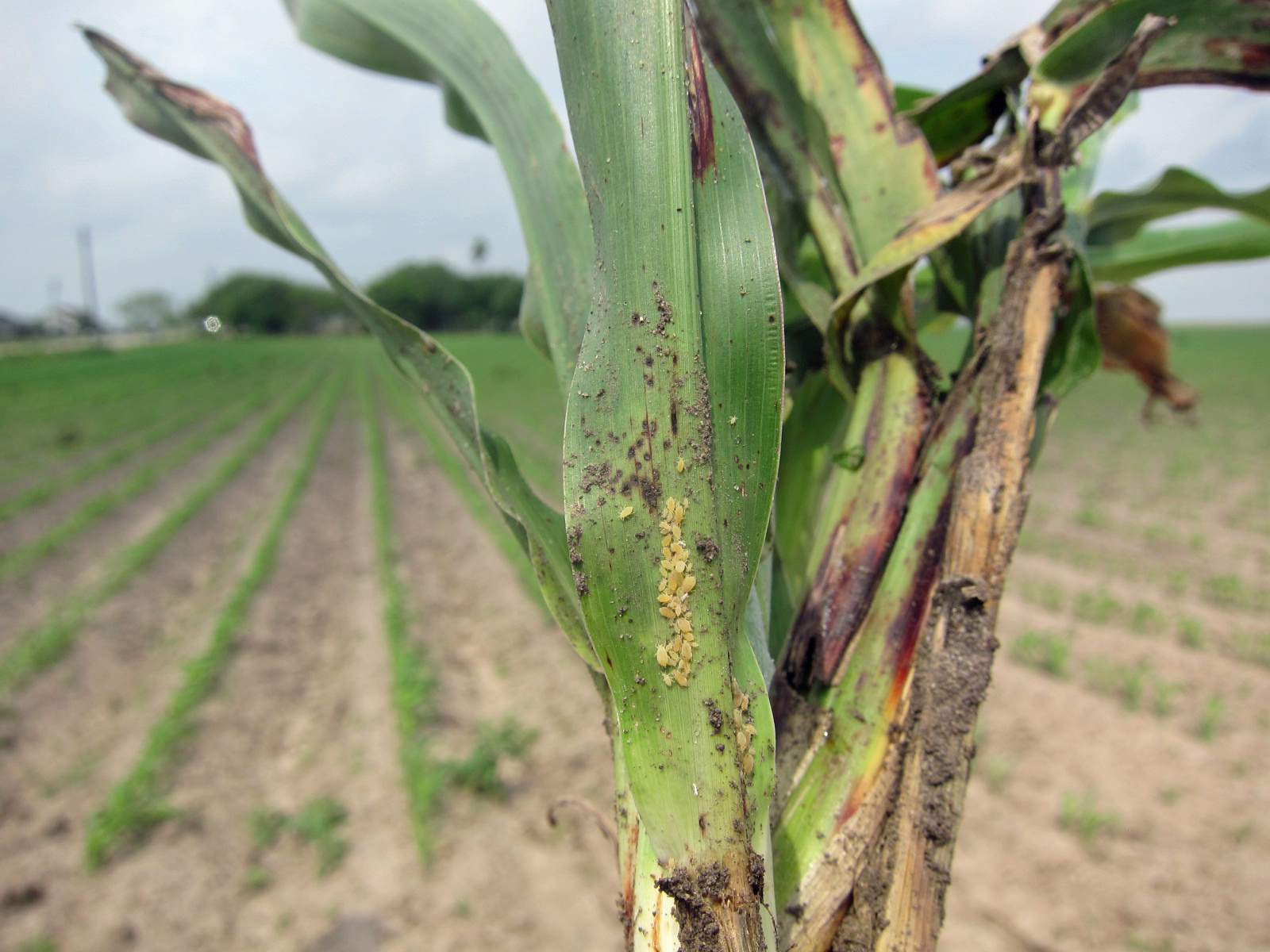
It may be hard to spot, but the tiny sugarcane aphid is racking up tens of millions of dollars in losses in just the four South Texas counties evaluated so far, according to a report by an economist with the Texas A&M AgriLife Extension Service. And the losses would have been much higher had grain sorghum growers not followed the advice of AgriLife Extension experts, according to Dr. Samuel Zapata, who conducted the study from the Texas A&M AgriLife Research and Extension Center in Weslaco. “The economic study we did here in the Lower Rio Grande Valley of Texas on the sugarcane aphid is the only such study available,” Zapata said. “It’s the only study that has been able to quantify the economic damage caused by this insect.” [caption id="attachment_51256" align="alignleft" width="300"] The tiny yellow specs on this sorghum leaf are sugarcane aphids, newcomers to the state’s forage and grain sorghum crops causing multi-million dollar losses. (AgriLife Communications photo by Rod Santa Ana)[/caption] Zapata estimates the sugarcane aphid caused a total loss of $31 million to the Valley’s sugarcane industry in the 2014 and 2015 growing seasons. But at the same time, growers were able to avoid another $35 million in potential losses by following control recommendations released by AgriLife Extension. Sugarcane aphids were first reported in the U.S. in Florida in 1977 in sugarcane, according to AgriLife Extension entomologists. In 2013, they were found feeding on Texas sorghum near Beaumont. By October 2014, the new sorghum-feeding biotype had spread to the Rio Grande Valley. From there they moved north and south, devastating thousands of acres of grain and forage sorghum crops as they went, according to Danielle Sekula-Ortiz, an AgriLife Extension  integrated pest management agent in Weslaco. [caption id="attachment_51257" align="alignright" width="300"] Dr. Samuel Zapata, an Agrilife Extension economist in Weslaco, has calculated sorghum crop losses for 2014-15 in South Texas and has been awarded a grant to expand his study statewide. (AgriLife Communications photo by Rod Santa Ana)[/caption] “By late 2014, the aphid had reached about a dozen states in the south and several states in Mexico,” Sekula-Ortiz said. “It spread much farther and faster than anyone had predicted and quickly became the No. 1 pest in grain sorghum.” In 2015 the reigning champion of sorghum pests continued to cause damage throughout Texas, but losses were not nearly as severe in the Rio Grande Valley due to favorable weather — wet and cool — and grower control-methods, she said. “With the hot, dry weather we’ve been having this year, sugarcane aphid populations appear to be on the increase again. We’re recommending growers scout their fields every two to three days and spray as needed.” To establish the initial economic impact of the sugarcane aphid in the Valley, Zapata first surveyed growers. “We asked local grain sorghum producers about their farming practices and the control efforts they conducted to mitigate the damages caused by this insect,” he said. Based on their responses, Zapata said he was able to establish, or assign, a dollar amount to damages. “Grower input was crucial to this study,” he said. “Growers provided very detailed information about what they did to control the sugarcane aphid. And what our estimates tell us is that the aphids caused a loss of about $62 per acre.” Valley growers normally plant about 350,000 acres of grain sorghum annually. But those losses would have been much greater had growers not followed the recommendations of Texas A&M AgriLife, Zapata said. “What we found is that due to following those recommendations, growers were able to save, or protect, about $48 per acre,” he said. “We also found that for every dollar spent on controlling the sugarcane aphid, growers were able to protect about $4.50 in crops, so it’s obviously been a good idea to follow the recommendations provided by AgriLife and producers’ associations.” [caption id="attachment_51258" align="alignleft" width="300"] South Texas grain sorghum producers averted multi-million dollar losses by following AgriLife Extension recommendations. (AgriLife Communications photo by Rod Santa Ana)[/caption] Recommendations for control efforts included the timely use of insecticides, the use of more tolerant sorghum varieties and to plant early. Sugarcane aphids are tiny yellow insects about the size of a pinhead. They feed on plant leaves and eventually make their way to the grain head where they can keep the grain from maturing, reducing both quantity and quality, Sekula-Ortiz said. They also leave behind a sticky waste called honeydew that can clog up harvesting equipment. Zapata said he was recently awarded a grant to replicate his economic loss study statewide.

867
of 1225