NEWS
868
of 1225
News
05.05.2016

Philippines - El Nino damage to agriculture reaches P7.013B in Jan.-May '16

The Department of Agriculture on Wednesday revealed the damage brought by the El Nino phenomenon has reached P7.013 billion for the period January to May 3, 2016. DA Undersecretary for Operations, Agribusiness & Marketing Emerson Palad, in a press briefing, said the most affected commodity was rice with total value of P3.489 billion planted to 117,790 hectares; followed by corn with P2.606 billion total value affecting 91,858 hectares; and those considered as high value crops such as coffee, cacao, rubber, banana, and onion, with P2.475 billion planted to 19,109 hectares. To address the plight of the farmers affected, Palad said the DA has signed a Memorandum of Agreement (MOA) with the Department of National Defense (DND) to enlist the assistance of cloud seeding experts and the use of Philippine Air Force (PAF) aircraft in the cloud seeding operations. Prior to the agreement, he said the DA’s Bureau of Soils and Water Management (BSWM) has deployed contracted aircraft to seed clouds for rain in identified vulnerable agricultural areas and watersheds to minimize the impact of El Nino to crop production. To date, a total of 252 sorties (352 flying hours) with a success rate of 68 percent were conducted in various locations in North Cotabato, South Cotabato, Sultan Kudarat, Sarangani, Maguindanao, Davao del Sur, Davao del Norte, Davao Oriental, Davao City, Bukidnon, Misamis Oriental, Lanao del Sur, Isabela, Cagayan, Quirino, Nueva Vizcaya, part of Ifugao and Kalinga provinces. Cloud seeding was also undertaken in areas of wide magnitude where the development of crops such as rice and corn becomes critical due to inadequate soil moisture. The DA has also programmed interventions, initiated strategies and activities as early as 2014, among them the maximization of production in non-threatened areas; saving vulnerable areas through appropriate irrigation intervention or crop shifting using short gestation crops; massive information dissemination; and rehabilitation of vulnerable areas that cannot be saved. "Though the damage wrought by the prolonged dry spell is considerable, it would’ve definitely been worse without the Department’s preparations," said Palad. To address water scarcity in vulnerable areas due to low water levels in reservoirs, particularly those that are at the tail-end of the irrigation systems, he said the DA had distributed irrigation pump equipment for open source/replacement for damaged/non-functional pumps; shallow tube wells (STWs) to eligible farmers’ organizations and irrigators’ associations; and provide high density polyethylene pipes and water drums. To date, the DA has distributed 9,000 bags of hybrid rice seeds, 60,000 bags of rice certified seeds, 20,000 bags of fertilizer and hybrid seed package, and paid crop insurance to farmers affected by the weather phenomenon. The DA has also provided 20,000 bags of hybrid corn seeds, 30,000 bags of OPV corn seeds, and 30,000 bundles of cassava seed pieces. It has also been actively promoting crop shifting through distribution of drought-resistant assorted vegetable seeds (pinakbet varieties) mungbean, peanut and cuttings of sweet potato, watermelon, squash and cucumber to affected farmers to augment food support and additional income. In addition, multivitamins, vaccines, dewormers and various veterinary drugs and biologics were also provided thru the affected local government units (LGUs) to keep backyard animals from acquiring diseases that are prevalent and devastating during dry season. There are also provision of feed concentrates and forage seeds. For crop management, the DA provided interventions and prevention measures to pest and diseases affected by El Nino, such as 200,000 cards of trichogramma, 3.1 million earwig production distribution, 2,000 cards of Bio-N, 200 kgs of zinc phosphide, 30,000 packs of metharhizium and conducted 90 trainings for pest management. At present, a total of P1.671 billion worth of damage was reported due to pest infestation in rice, corn, and high value crops for the first quarter of the year. As such, Palad said the DA has requested the Department of Budget and Management (DBM) for replenishment of their quick response fund (QRF) amounting to P500 million for the continuation of its El Nino mitigating measures and rehabilitation of irrigation damaged by previous typhoons. He said the DA has already fully utilized its QRF worth P370.08 million, which has been allocated to the El Nino-affected regions. Meanwhile, the DA is now preparing for the onset of La Nina as forecast by the State weather bureau, which often follows El Nino episodes. La Nina is a weather phenomenon which, in contrast to El Nino that causes severe droughts, brings intense rains. Source - http://interaksyon.com
05.05.2016

Ethiopia - Can insurance help the poorest cope with extreme weather?

Zemada is a smallholder farmer who lives in the village of Abraha Atsbeha in Tigray, Ethiopia. Throughout her life, recurring droughts have left her and her four children teetering on the brink of chronic hunger. When one drought hit, she found herself in court, unable to pay back the small loan she had used to buy seed and fertiliser for her small plot of land. People like Zemada, who have played no part in causing the climate crisis, are now finding themselves on its frontlines. Smallholder farmers, pastoralists, and others whose livelihoods depend on predictable weather patterns are especially vulnerable. One failed crop can wipe out years of hard work and precipitate a descent into a vicious cycle of poverty. Right now, a number of countries – Ethiopia among them, as well as Malawi, Zambia and Zimbabwe – are at crisis point, facing a severity of drought not seen for decades. Hundreds of millions of people across India are in the grip of unprecedented heatwaves, droughts, and floods. Recently, Cyclone Winston wreaked devastation on the island of Fiji and wiped 10% off its GDP: it was the worst storm ever recorded in the southern hemisphere. These are not anomalies: they are part of a trend. Extreme weather events occurred twice as frequently during the past decade as they did in the period 1985-94. How can financial mechanisms be deployed to tackle this ‘new normal’ of climate shocks? How should governments shift towards building resilience before disasters occur, rather than reacting afterwards, often at staggering human and economic cost? These are key questions that world leaders must address when they meet in Istanbul on 23-24 May for the first World Humanitarian Summit. In a new report by Results UKlaunched ahead of the World Humanitarian Summit, we explore the role of insurance as one part of the solution to this problem. Risk financing mechanisms are one way for governments to harness private-sector risk capital, technology and expertise to deliver financing fast in the event of disasters and extreme weather shocks. According to one analysis, £1 invested in sovereign disaster insurance that pays out within two-four weeks can save £4 in averted humanitarian costs. Climate risk insurance can play three critical roles in supporting vulnerable countries and communities. First, insurance acts as a safety net to provide fast payouts that can protect people from falling into poverty. Second, it provides the security needed for investment; for example, allowing a low-income farmer to access as a small loan for the first time to boost their productivity. Third, the institution of insurance across developing countries, if designed well, has the potential to incentivise risk reduction, promote data-driven risk analysis, and improve disaster preparedness. In order to realise these benefits, however, it is crucial to recognise that insurance is not a silver bullet. It cannot work effectively as a standalone solution to the impacts of extreme weather events. Rather, it must be seen as part of a much broader approach to climate risk management. This means that public investments in risk financing should not replace, but can bolster and complement, investments in disaster risk reduction, climate adaptation, and social protection. Some 15 developing countries have already introduced weather-based insurance programmes that target individuals directly, and some 20 have established institutional-level disaster risk financing. Innovative regional risk pools now exist in Africa, the Caribbean and the Pacific, and discussions are underway about a new risk facility for Asia. India recently announced a new nationwide ‘National Crop Insurance Scheme’, with huge ambitions of reaching 50% of the country’s farmers by 2018. In Kenya, the government has launched the ‘National Agricultural Insurance Programme’ and the ‘Kenyan Livestock Insurance Programme’ to cover small-scale farmers and herders against weather-related crop failure and loss of livestock. The Government of Ethiopia recently launched a new vegetation index-based microinsurance product, with the intention of scaling up coverage to 15 million low-income farmers by 2020. Certain donor countries are at the forefront of this movement, notably Germany and the United Kingdom, which have spearheaded a new G7 initiative on climate risk insurance. This initiative aims to expand climate insurance coverage to an additional 400 million poor and vulnerable people by 2020, as well as to support the development of early warning systems in the most vulnerable countries. This is an ambitious goal, and the explicit focus on reaching the poorest and most vulnerable people is laudable. But achieving it will be impossible unless donors go beyond ‘building markets’, in which the imperative is to transition schemes to commercial viability as soon as possible. Donors must be prepared to provide significant, long-term financial support to reach the most vulnerable and marginalised people that the private sector alone will not, including support to pay the premiums of the poorest. In our report, Results UK puts forward a new set of evidence-based Pro-Poor Principles for Climate Risk Insurance: a gold standard that we want to see adopted by donors and governments as they increase their investments in risk financing. Following this principled approach, donors will be able to capitalise on the prime opportunity to expand climate risk protection to hundreds of millions of vulnerable people. Leaving it to the private sector alone won’t get the job done. What difference can insurance make, really? Today, Zemada no longer fears the drought. She has signed up to a programme called the ‘R4 Rural Resilience Initiative’, run jointly by Oxfam America and the World Food Programme, which is built into the government of Ethiopia’s national social safety net and supported by donors. The R4 Initiative offers weather-based microinsurance to the most marginalised farmers previously considered uninsurable, as part of an integrated package together with micro-credit, micro-savings and local risk reduction activities. When drought reappeared in 2012, Zemada received a payout of 2,100 birrs (roughly £70). Nowadays, Zemada has five sheep and has expanded her farm into growing mangos. Her children no longer go hungry. Source - publicfinanceinternational.org

05.05.2016

India - Dry spell hits Bengal's vegetable crops

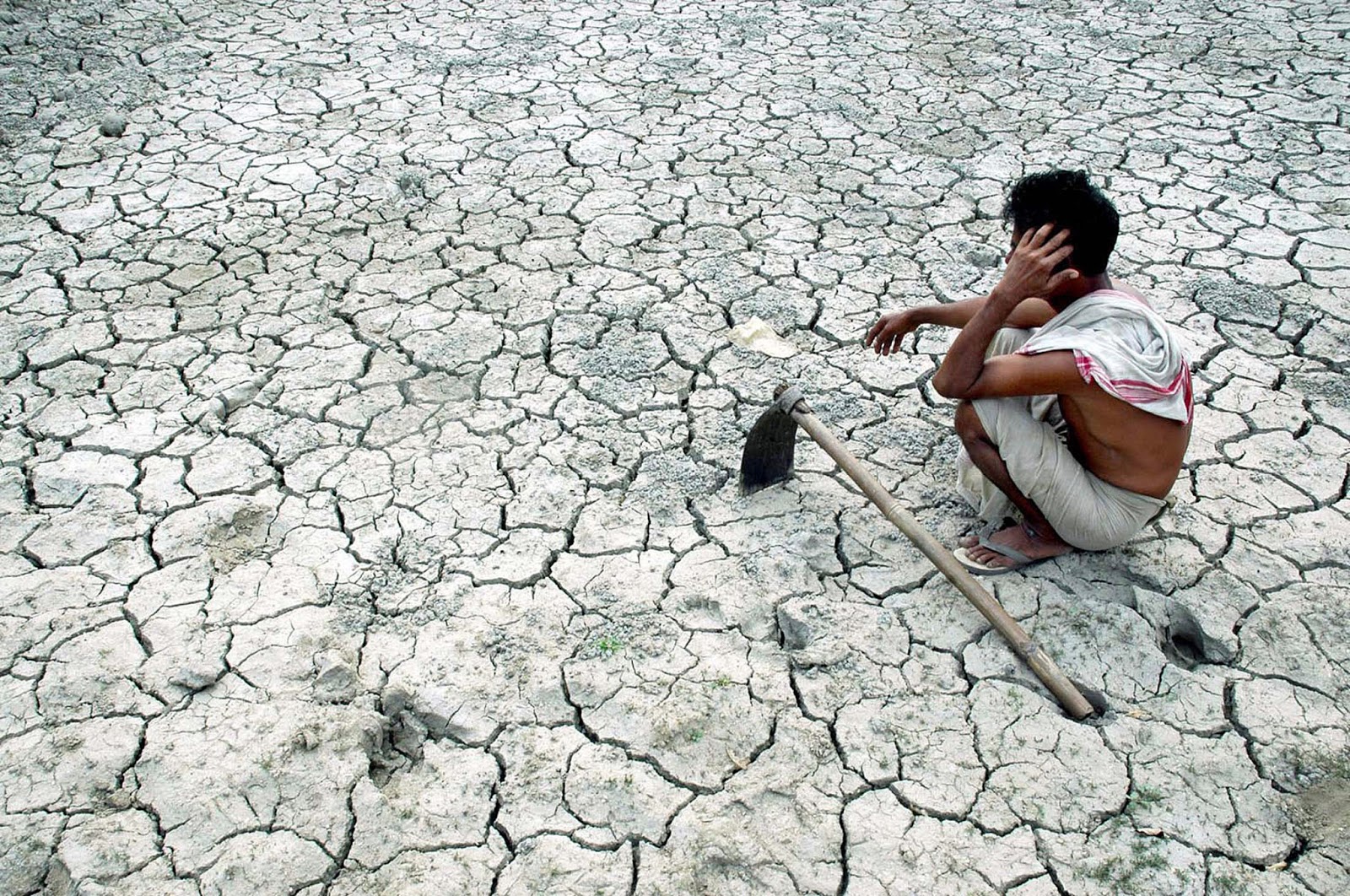
Water levels in almost all of West Bengal's major reservoirs are lower than last year. The Kana river, the principal source for irrigation, has turned into a dry soil bed and numerous ponds have transformed into depressions of cracked soil. According to Kashi Patra, a farmer leader in Dhaniakhali, ''It’s a near-drought situation.” Water reservoirs at the Damodar Valley Corporation are a major source of irrigation in Dhaniakhali from December onwards. After the monsoon, water replenished in the reservoirs is used for irrigating potato, paddy, jute and vegetables between January and May. However, last year, there had been almost no rainfall between August and December. Farmers are worried about loan repayments. “Last year, the government restructured loans. We have submitted a plea to the government for a similar facility this year,” says Patra. Banks have restructured a significant portion of crop loans in West Bengal for the kharif season. Farmers were given a year-long moratorium, extension of repayment up to five years and a facility to avail new loans for the rabi season. The drought in the early kharif season last year, followed by heavy rain, led to significant crop damage. “Unless the government declares a drought, we cannot restructure loans. So far, there is absolutely no offtake for kharif loans as the weather conditions are not conducive,” says a United Bank of India executive. Source - http://www.freshplaza.com

05.05.2016

USA - Northwood man's crop insurance fraud conviction upheld by appeals court

The federal court of appeals upheld a Northwood, N.D., man's conviction and sentence for damaging his potato crops to commit insurance fraud. After a two week trial, brothers Aaron A. Johnson, 52, and Derek M. Johnson, 49, both originally from Northwood, were found guilty in December 2014 of intentionally destroying some of their own potato crops from 2002 to 2010 to receive crop insurance and federal disaster payments. Both brothers were convicted of conspiracy, false statements to the U.S. Department of Agriculture Risk Management Agency, which oversees crop insurance, and to law enforcement on different occasions. Aaron Johnson also was found guilty of lying to the USDA Farm Service Agency, which oversees farm programs. The brothers added chemicals like septic system products Rid-X and Flush to their potato seeds and harvested crops, in addition to storing potatoes in extreme temperatures. On March 9, 2015, Aaron Johnson was sentenced to four years in prison and five years of supervised release, while Derek Johnson was sentenced to 18 months in prison and five years of supervised release. The judge ordered forfeiture and restitution for the two amounting to $932,000. Though Derek Johnson did not appeal his conviction or sentence, his brother did. Aaron Johnson argued the government's witnesses were inconsistent and unreliable, and the conviction was based on limited, circumstantial evidence. But on Wednesday, the Eighth Circuit U.S. Court of Appeals affirmed the conviction and sentence for Aaron Johnson. "Unfortunately, there are a few who take advantage of this system and some, like Aaron Johnson, who brag about defrauding the system," U.S. Attorney Christopher Myers said in a news release. "Today's affirmance of his conviction and sentence sends a clear message to all those honest farmers who follow the rules and hate seeing some people take advantage of the system." Derek Johnson is expected to be released June 30, Aaron Johnson is scheduled for release on Oct. 3, 2017. Source - http://www.grandforksherald.com/

05.05.2016

Austria - Many fruit farmers face total crop failure - 100 million Euro damage

The cold snap of last week has led to massive damage in large parts of Styria. According to a preliminary estimation 80% of the fruit harvest has been destroyed and the damage is estimated at about 100 million Euro. After the difficult weather conditions in 2014 and 2015 Agricultural Chamber president Franz Titschenbacher now fears another disappointing harvest this year. “It would be very sad if the fruit growers have to cope again with huge losses.” A gigantic disaster, especially for apple farmers Particularly the 2,000 apple farmers in Styria are affected, many have to deal with the expectation of a total crop failure. The first calculations show damage of the fruit crops (wine and pumpkins excluded) of about 100 million Euro. The politician Johann Seitinger wants to check how much of the damage can be covered by the insurance. “It is really a gigantic disaster. You should imagine that more than 2,000 farmers and their families have lost their yearly income in one night. And you have to consider the economics behind it, on the one hand we have to convince the farmers to hang in there, and help and hope that the natural disasters will decrease. On the other hand we have to expand the insurance possibilities.” Source - freshplaza.com

05.05.2016

USA - Crop Losses Due To Storms

Strong winds, heavy rain and damaging hail. Multiple storms all within the past week. Spring storms are not uncommon in the Central Valley but as crops begin to grow, depending on who you talk to, our recent weather has had both positive and negative consequences. "Hail damage can impact a cotton plant, if it hits the terminal or the growing point of the plant than it will be effectively dead within 12 to 48 hours." says Jodi Raley of the California Cotton Growers & Ginners Association. Fruits and berries, such as cherries, are especially vulnerable right now.  Workers at a fruit stand in South Fresno say their cherries and strawberries came out fine, but that doesn't mean the same for everyone across the valley. "See some of this fruit looks like it could already have some significant scaring due to thrifts, fruit of this size could have some substantial damage." comments Fred Rinder as he inspects a tree outside the Fresno Agricultural Commissioners office. The Fresno County Agricultural Commissioners Office is in charge of reporting any information on losses that local growers might experience due to weather, when total losses hit 30%, that's when action is officially taken. "If it looks like we might be heading toward a 30% loss than we'll focus on individual growers and try to make contact with them to compile how much damage actually occurred." continues Rinder. Low interest rate loans will be given to farmers who experience substantial losses, while many while many farmers prepare ahead of time with crop insurance. But figuring out just how much is lost takes time. "Within the next 24-48 hours will be a large determining factor in how some growers move forward with their crop." Jodi Raley with the California Cotton Growers and Ginners Association says cotton has experienced loss due to flooded fields and hail, but it's fortunately still early enough in the season to replant. "any damages that we do have, and we do have some, they're able to get replanted and continue on with their season." Source - yourcentralvalley.com

04.05.2016

Extreme snowfall and frost damage in Europe

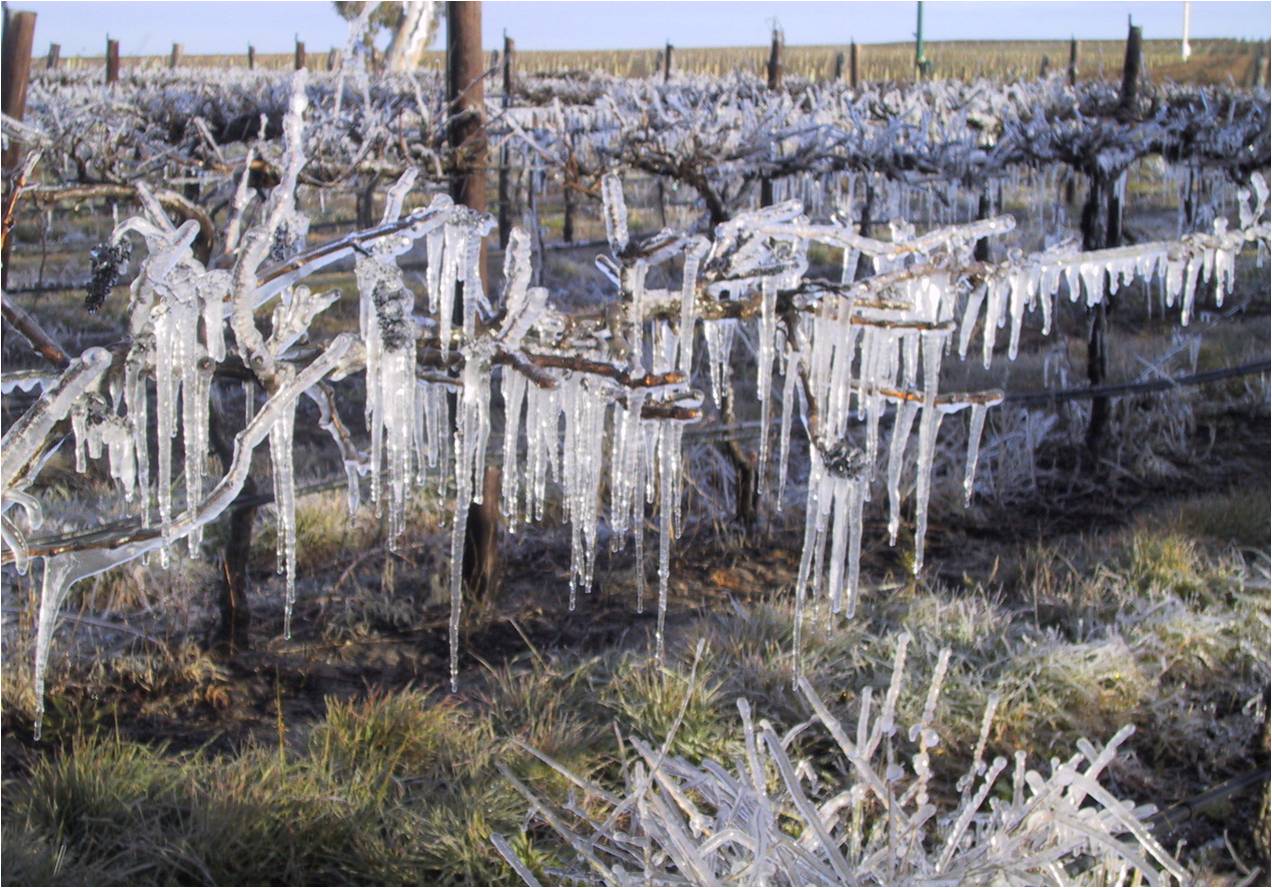
In several European countries – such as Austria, Switzerland, Italy, Croatia, Germany, Slovenia, France and Belgium – apples, pears, cherries and grapes were frozen early last week. The snowfall also created challenges with the roofing systems, and occasionally the snow completely ruined things. Snow and cold temperatures are predicted for some places in the coming nights again. NFO, the Dutch fruit growers association, summarised the results per country as follows: Austria In the cultivation area in the state of Styria the words ‘complete catastrophe’ have been used. About 80 per cent of the fruit harvest would be destroyed (see photo left of the news report in which firefighters remove snow from hail nets in Gleisdorf, the link is at the bottom of this article and external). During the night from Monday to Tuesday the small fruits had to endure temperatures of 2 to 6 degrees below freezing according to the Landwirtschaftskammer. Initial estimates concerning approximately 2,000 Styrian cultivators indicate €100 million Euro in damages for the fruit sector (without grapes) alone. Councillor Hans Seitinger: “This is truly a unique situation, which has not occurred in the last 50 years.”  Whether financial support will be given to the affected growers has to be further examined. Austrian growers have broad weather insurance, but because of the high premiums not a lot of growers use it. Damages have also been reported from Burgenland, slightly more to the east, where temperatures were recorded at 3 to 4 degrees below freezing. Austria produces about 170 million kilograms of apples annually. Golden Delicious and Gala are the largest strains. Germany In the night from Tuesday to Wednesday, 27 April approximately 10 centimetres of snow fell in south Germany. Roofing specialist Voen made photos of cherry plantation under a net, which remained standing safely under a thick layer of snow. Switzerland Switzerland also shows a very white image. In the region Graubunden in eastern Switzerland, which cultivates a lot of grapes, multiple braziers were used. The region also employed a helicopter to mix the different layers of air. Italy The Italian agricultural organisation Coldiretti also reported that the fruit cultivation suffered damages from the weather circumstances. The increasingly often occurring results of climate change resulted in more than 14 billion Euro of damages to agriculture in the last ten years, according to Coldiretti. Last winter, Italy had the warmest winter in history. This resulted in an early development of crops. Belgium In Belgium, as in the Netherlands, it is mostly corn snow that is a nuisance to fruit cultivators. Night frost is not ruled out in Belgium for the coming nights. Croatia The NFO also received reports about frost damage from Croatia, particularly from the north on the border with Hungary and Slovenia. The photo below shows a cultivator from the region with brown apple fruits. Slovenia Slovenia also reports damages. Temperatures, which entered the country from the eastern side, went to 4 degrees below freezing. Most damage is currently with nuts and stonefruits in eastern Slovenia, and are already called catastrophic. Apple and pear cultivation has also been hit. The low-lying areas are frozen over for 60 to 70 per cent; the higher areas less so, with several tens of percentages. France Especially temperatures bothered fruit cultivators, and grape cultivators in particular, in France. High atmospheric humidity because of rain and snow in Burgundy (north eastern France) caused many problems for the young vines. This combination means that there are now talks of the sharpest frost since 1981. See the watering photo of the grape field.    Source - NFO

04.05.2016

Hungary - Extent of frost damage to fruit and veg will be known in late May

The actual extent of the damage to fruit and vegetables caused by spring frosts in Hungary will be known in late May, as reported by the head of the Department of Horticulture of the National Agrarian Chamber (NAK), Béla Mártonfy. He stated that a total of 24 billion forints (76.9 million Euro) will be allocated to compensate producers reporting damages to at least 30% of their crops. Frosts affected a number of regions, with the most damage hitting grapes, apples, nuts and maize. The most severe frosts were registered in the counties of Somogy, Zala, Bács-Kiskun and Szabolcs-Szatmár-Bereg. Source - ekonomika.sme.sk

04.05.2016

Mexico - 100 hectares of avocado in Morelos damaged by hail

According to the authorities of Tetela del Volcan, the hail that fell on April 18 and 19 damaged at least 100 hectares of avocado, which is why they plan to support producers so as to reduce the economic impact of this damage. The mayor of the municipality, Ana Bertha Haro Sanchez, spoke about the damage the hailstones caused on avocado and pomegranate crops, endemic fruits in the region that are the livelihood of many families. "This damage will affect the producers' economy, they were expecting to achieve a certain production but they lost some avocados to the hail," she said. City officials detailed that producers had lost up to 80 percent of their crops in at least 100 hectares of avocado, which was the production that was affected the most. To try to compensate the damage caused by the hail, the city council gave support to about 100 producers. Said support consists of chemicals so that the orchards grow fruits again, which, according to Haro Sanchez, were acquired with resources from the State Fund for Economic Development Contributions (Faede). "It's not fumigating, but it is strengthening the orchards so that they grow again and so that the trees that were affected by the hailstorm get stronger," she said. She also stated that they had sent an official letter to the Secretariat of Agriculture, Livestock, Rural Development, Fisheries and Food (SAGARPA) and the Ministry of Agricultural Development Morelos (Sedagro), to report the losses caused by the hailstorm. Historically, avocado growers in the region of Los Altos have complained about the losses suffered because of natural contingencies, which makes it harder for them to ensure their crops. Source - El Sol de Cuautla

04.05.2016

Kenya lost Sh1.2tr to drought in 3 years

Drought denied the economy a whopping Sh1.2 trillion ($12.1 billion) between 2008 and 2011. This is slightly over 20 per cent of the country’s gross domestic product (GDP), or the total value of goods produced by the country. Speaking during the launch of the sixth drought disaster resilience and sustainability initiative (IDDRSI), Devolution Cabinet Secretary Mwangi Kiunjuri noted that besides the immense human suffering caused by drought, the economic cost of drought is also enormous. “In the Horn of Africa, more than 13 million people were affected in 2011 by a combination of drought, conflict and economic crisis,” said Kiunjuri in a speech read on his behalf by Kenya’s ambassador to the African Union (AU) and Inter-governmental Authority on Development (AU), Catherine Mwangi. The International Livestock Research Institute (ILRI) estimates in its annual report that of the Sh1.2 trillion loss, 27 per cent of it, or $3.3 billion (Sh337 billion), occurred in the livestock sector. Kenya is in the process of setting up a National Drought Contingency Fund (NDCF) contingency fund to ensure early response to drought, according to Kiunjuri. Ms Mwangi, however, could not disclose how much has been put into this fund so far. Kenya is also in the process of establishing a national livestock insurance scheme and a livestock evaluation system that will make it easier for pastoralists to access credit. Already, there is an insurance product tailored for livestock farmers. Dubbed the index-based insurance (IBLI), the insurance does not rely on physical evidence of loss by the insured but rather on the satellite images showing state of vegetation in the region. “By April 2015, this pilot project had sold more than 10,000 policies and paid policyholders nearly $150,000 (Sh15.3 million). So far, about 18 donors and 106 partners have invested about $2.5 billion (Sh255 billion) in drought and disaster resilience projects with Marsabit, Turkana and Wajir taking up the lion's share of the investments. A total of 25 counties, most of them in the ASALs, have benefited from these funds. Ambassador Mahboub Maalim, the chairperson of IGAD, noted that as a result of some resilient initiatives put in place by Kenya, the country for the first time was able to deal with drought without seeking international aid. Nonetheless, Kenya’s agricultural output in 2014 was dampened by drought. According to the Economic Survey 2015, rainfall amounts received during the 2014 long rains were depressed over most parts of the country, with most stations recording rainfall less than 75 per cent of their seasonal Long Term Means (LTMs) for March to May. The survey adds the worst conditions were observed over North western, Nairobi area and parts of central Rift Valley (Narok) where several meteorological stations recorded less than 50 per cent of their LTMs. The erratic rains saw the agricultural sector record a not-so-good performance in 2014 as production in some crops as well as pasture regeneration for livestock took a hit. Source - http://www.standardmedia.co.ke

04.05.2016

USA - Are Billionaires Getting Crop Insurance Subsidies? We Still Don’t Know

Last week (April 18) EWG published the names of the fifty billionaires on the Forbes 400 list of the richest Americans who received millions of dollars in farm subsidies between 1995 and 2014. This list included banking tycoon David Rockefeller Sr., Microsoft co-founder Paul Allen, who owns the Seattle Seahawks and the Portland Trailblazers, stockbroker Charles Schwab and dozens of other billionaires. It’s apparent that some folks missed the point. So let me thank our friends at Farm Policy Facts for allowing us the opportunity to drill down into this important issue a bit further. As we mentioned last week, traditional commodity subsidies are now being subjected to a modest means test that was tightened under the 2014 Farm Bill. However, in 2014, Congress failed to enact reforms to the crop insurance program that would prevent millionaires and billionaires from collecting unlimited subsidies through the federal crop insurance program – and they likely do.  The Senate twice voted for a means test, but the final Farm Bill allowed millionaires and billionaires to remain eligible for crop insurance subsidies. Why is that important? Crop insurance is now the primary federal subsidy for farmers. As the Congressional Research Service reported, the total cost of the federal crop insurance program has increased substantially in the last decade. Between 2010 and 2014, its annual cost averaged $8.7 billion, with about $6.5 billion going toward premium subsidies. Unlike traditional commodity subsidies, there are no payment limits, means testing or transparency requirements for recipients of crop insurance subsidies. This means that growers and farm businesses can receive unlimited taxpayer subsidies via the crop insurance program even if  they are billionaires – or they help fund groups such as Farm Policy Facts. In fact, a 2015 report by the Government Accountability Office found that four individuals, each with a net worth greater than $1.5 billion in 2013, received crop insurance subsidies. While billionaires may not qualify to receive traditional commodity subsidies anymore, they are still eligible to receive unlimited crop insurance subsidies under the current rules. It is high time that Congress fixes this unfair system. Click here or on the preview chart below to view the full list of 50 billionaires.  Source - http://www.ewg.org

03.05.2016

USA - Subcommittee probes growing farm financial pressure

The House Agriculture Committee’s Subcommittee on General Farm Commodities and Risk Management April 14 held a hearing on the growing financial pressures faced by United States farmers and ranchers. Conditions in farm country today contrast sharply with those during the formulation of the 2014 farm bill, Subcommittee Chairman Rick Crawford, R-AR, said in opening the hearing. “When America was going through the Great Recession, agriculture was one of the bright spots in the economy. It provided jobs, a trade surplus and security for our nation. Now, as the overall economy continues to recover, the farm economy has been turned on its head,” Crawford said. “In fact, net farm income has dropped 56 percent over the past three years alone. While many producers are struggling just to hang on, some in Washington continue to advocate for gutting the farm safety net. Those same folks refuse to acknowledge that the 2014 farm bill was written for times just like these and that we would be spending considerably more were it not for the reforms included in the 2014 farm bill. Now is not the time to pull the rug out from under our nation’s hard working farm and ranch families.” “Today’s hearing was the first in a series the Agriculture Committee will be holding to focus on growing financial stress in farm country,” House Agriculture Committee Chairman Mike Conaway, R-TX, said after the hearing. “With low commodity prices, high input costs and no relief in sight, the farm safety net is proving vital to helping our nation’s farmers and ranchers weather growing economic uncertainty. Today’s hearing was also a reminder that farm policy critics live in a fantasyland where markets are fully functioning, foreign countries play by the rules and the weather always cooperates. “Unfortunately, our farmers and ranchers must operate in the real world, and it is in our nation’s best interest to continue providing them with the risk management tools they need to continue feeding and clothing our nation. I look forward to further exploring this topic with the rest of our subcommittees.” While high prices for many farm commodities led to tremendous growth in net farm income through 2013, many of those prices have spiraled downward over the past three years. Witnesses spoke broadly about the factors that are driving current market conditions, the bleak outlook going forward and the impact that both are having and could continue to have on our nation’s farmers and ranchers going forward. They also spoke to the vital role that farm policy and crop insurance are playing in helping absorb some of the shock, and they stressed the devastating impact that further reductions to these vital tools could have. For example, USDA chief economist Rob Johansson told the subcommittee that farmers are forecast to collect $7.2 billion from agriculture risk coverage and nearly $2 billion from price loss coverage programs during this year. “Overall government payments, which are more tied to economic conditions than before, are expected to rise from about $10.6 billion in 2015 to about $13.9 billion in 2016, which also includes conservation payments of approximately $3.6 billion.” USDA estimates that net farm income, which reflects the net value of production and is a measure of wealth, will stabilize this year after plunging by a combined 54 percent from 2013’s record $123 billion. The debt-to-asset ratio, a widely used indicator of farm sector health, is forecast for a low 13.2 percent this year. Longer-term projections by the U.S. Department of Agriculture leave net cash income averaging less than $80 billion for the coming decade and net farm income at less than $70 billion over the same period. “While borrowing is up, the level of bankruptcies and farm loan forfeitures remain at historically low levels,” said Johansson, because farmers and ranchers used the agricultural boom to pay off debts and build up their bank accounts. Farmers are feeling the pain of the continued slump in commodity prices, American Farm Bureau Federation President Zippy Duvall, said. Lower prices will affect income for all farmers and ranchers, but will have an even greater impact on new and young farmers who have not built up equity, are renting a significant portion of their land or are paying off equipment. “The bottom line is that farmers and ranchers are being forced to tighten their belts and pay much closer attention to their financial situation,” Duvall said. “They will be in greater need of safety net and risk management programs than has been the case for some time—for some, since they started farming.” Duvall’s testimony included a long list of bad economic news. Cotton, at 80 cents a pound just a few years ago, now brings prices in the 50-cent range. Milk that was selling for $20 or more per hundred pounds a couple years back now fetches $15 or $16. Bad news notwithstanding, Duvall said he found hope on the horizon, telling the subcommittee members there were numerous things they could do to help the farm economy, including: Approving the Trans-Pacific Partnership to raise overall farm income without adding to government spending; Stopping the Waters of the U.S. rule, which places additional costs and burdens on farming; Reversing spill prevention and control requirements that add costs without clear environmental benefit; and Establishing a voluntary nationwide labeling standard for genetically modified food to avoid a patchwork of state laws. In his testimony, National Farmers Union President Roger Johnson told the subcommittee that a prolonged period of low commodity prices will result in farmers having to deal with trouble accessing credit, negative farm budgets, depressed markets and tests to the farm safety net. ”The downturned farm economy has put a significant strain on farm financials,” Johnson said. “We are seeing this manifest itself in the Farm Service Agency’s loan portfolio, an early indication of challenges ahead. “Local lenders are concerned that with high yields being necessary to protect from low prices, weather-induced yield losses will exacerbate an already difficult situation. One thing that my local lenders wanted to drive home to members of this committee is the importance of a strong safety net.” While Johnson felt that, overall, commodity programs are functioning as designed and assisting producers through challenging times, he did acknowledge several programs that need thoughtful attention today and others that would benefit from additional changes in the next farm bill. Specifically, he mentioned the Agriculture Risk Coverage program, Price Loss Coverage program, Dairy Margin Protection Program and the Stacked Income Protection Plan. Exploring bright spots in the farm economy, Johnson highlighted the organic and local food sector, which has grown by nearly 300 percent since 2002. He noted these sectors seem to be less subject to the falling commodity prices.

03.05.2016

India - Centre closely monitoring Water Crisis in Drought hit areas

Stating that the country has experienced two successive years of poor rains, Union Agriculture & Farmers Welfare Minister, Shri Radha Mohan Singh has said that immediately after the IMD’s monsoon forecasts in April, 2015 recognizing the gravity of the situation, Government of India, in collaboration with State Governments, responded rapidly with a multi-pronged approach to mitigate the effects of the drought. The Minister has outlines various measures taken by the Government here today. These include among others, The Central Research Institute for Dryland Agriculture (CRIDA), in collaboration with the State Agricultural Universities, prepared a Contingency Plan for 600 Districts to implement location specific interventions to sustain agriculture production. Weekly video conferences with State Governments to discuss rainfall patterns, supply of seeds, the impact of drought and other related issues were held. Weekly meetings of the Crop Weather Watch Group were also held. Adequate quantities of drought resistant seeds and seeds of low water intensive crops were made available. The States took various measures like in-situ soil and moisture conservation, micro-irrigation and ground water re-charge. These steps ensured that in spite of two successive droughts, the overall agriculture production has not dipped and food stocks are adequate. Drinking Water There are 1.71 million rural habitations in the country. More than 25% of these habitations (441,390) are facing drinking water scarcity. To address the situation the Governments have taken the following measures: Repair/restoration of 738,650 hand pumps; Addition of 1,076,961 meters of riser pipe to boreholes in order to access deeper groundwater reserves; Establishment of 1,398 temporary piped water supply schemes; Water trucking through tankers to 15,345 habitations ; Hiring of 13,372 private bore wells to augment water supply; and Commissioning of 44,498 new bore wells The government has released Rs. 819.67 Crore under ARDWP to the States as the first installment for 2016/17. Further, the States have also been requested to utilise the Flexi Fund under the programme to mitigate scarcity of drinking water in drought affected districts. The Government is closely monitoring the situation on a daily basis. Food: The National Food Security Act (NFSA) is already implemented in all the drought affected States. Continuous persuasion with the States resulted in the number of States/UTs under NFSA increasing from 11 to 33 in the past year.  At present all beneficiaries in drought affected States – are receiving food grains under NFSA at NFSA prescribed rates. Additional allocation of food grains has been made to Maharashtra and Karnataka States on their request. The Mid Day Meal Scheme provides for serving of mid-day meals to eligible school children during summer vacations in areas declared to be drought affected by the State Government. The majority of the drought affected states have obtained financial approvals to serve mid-day meals during summer vacations in their drought affected districts/areas. Assistance to distressed Farmers: The Government enhanced the quantum of input subsidy (relief assistance to farmers) provided under SDRF/NDRF by 50% in April 2015. Further, the norms for assistance were also made more farmer-friendly by setting the threshold for assistance at a crop loss of 33% or above rather than the earlier threshold of 50%.  Under NDRF, Rs. 10,275 Crore has been released to States, the highest assistance ever provided. The Reserve Bank of India amended the criteria of crop loss from 50% to 33% in the guidelines for relief measures by Banks in areas affected by natural calamities All the State Governments were advised to take necessary steps, in coordination with Banks and District Level Coordination Committees (DLCC) to implement the amended guidelines so that relief is extended to farmers. Loans worth more than Rs. 15000 crore have already been restructured. Insurance companies were proactively persuaded to make timely payment of insurance claims. Claims to the excess of Rs.13,000 crore have either been paid or are being settled expeditiously. This is more than double the amount paid out last year. States have also been requested to send the claims for the Rabi season urgently. The Government of India has rolled out a new Crop Insurance Scheme called the Pradhan Mantri Fasal Bima Yojna from Kharif 2016. The scheme has the lowest ever premium for the Farmer-1.5% for Rabi and 2% for Kharif.  It has also enabled insurance cover to be provided for various risks that have hitherto been uninsurable. The scheme aims to increase the insurance coverage from 23% to 50% of the cropped area. Employment: The Mahatma Gandhi National Rural Employment Guarantee has been strengthened as a concerted response to tackle agrarian distress and to meet the demand for work in drought affected areas, creating durable, income generating assets in the process. In the year 2015-16, States were asked to provide employment where needed, particularly in drought affected areas, with the assurance that the Government of India would make the required resources available. In response to this, 13 States generated person days beyond their estimated labour budgets for the Financial Year 2015-2016.  The financial commitments made to these states have been honoured.  The programme achieved the following mile-stones: 235 Crore person days have been generated in the last FY (49 days per household), which is highest in the last five years; The expenditure of Rs. 42,253.75 Crore in FY 2015-16 is the highest ever since the inception of the programme. More than 63% of the total expenditure was on agriculture and related works with a focus on Natural Resource Management (NRM) and water conservation. The entitlement has been expanded from 100 to 150 days of work to households in drought affected regions. More than 20 Lakh households in these regions have availed this opportunity and exceeded 100 days of work. In 2015-16, Rs. 33,000 Crore was initially allocated under MNREGA. This year, the initial allocation is Rs.38,500 Crore, and this will be further augmented based on demand from the States.  On the 7th of April 2016, the Ministry directed all States to maintain the tempo of work from April to June, especially in drought affected regions. The Government is fully committed to ensure that the necessary resources are made available to meet the demand for work. Livelihoods: Livelihood diversification is an essential part of the drought response strategy. Every block in the drought affected areas is being targeted for intensive work under the Deen Dayal Antyodaya Mission. This involves risk mitigation through the development of multiple livelihoods and by formation and support of self-help groups. At least eighteen lakh young people from households who have completed 100 days of employment in any of the last two years will undergo skills training through Project LIFE (Livelihoods in full Employment). Water Security and Drought Proofing: Under the Integrated Watershed Management Programme (IWMP), a series of activities have been undertaken to develop rainfed/degraded areas and wastelands. An amount of Rs. 1,064.23 Crore was released to drought affected States during 2015-16 for watershed related activities. The Government has also undertaken pre-monsoon preparedness by advising the affected States on a series of short and medium term measures to conserve water received during the monsoon period and to better manage the demand for existing water resources. In addition to these national actions, States have created district level plans which address local issues of availability of drinking water and fodder as well as the establishment of cattle camps and provision of food for those in need. For example, the State of Maharashtra has launched the Jalyukt Shivar Abhiyan in which village level plans have been prepared to renovate and rejuvenate water bodies to improve water security. Source - http://www.odishanewsinsight.com

03.05.2016

India - States award contracts for crop insurance

States such as Andhra Pradesh, Jharkhand, Odisha, West Bengal, Himachal Pradesh, Uttarakhand and Andhra Pradesh have already awarded contracts to the designated insurance companies to provide crop insurance coverage to farmers in the forthcoming kharif season under the NDA government’s flagship programme Pradhan Mantri Fasal Bima Yojana (PMFBY). Sources told FE that Punjab, however, won’t roll out the new crop insurance scheme while Haryana is yet undecided. “The Punjab government has decided not to implement PMFBY while it is discussing implementing Weather Based Crop Insurance Scheme (WBCIS) whose premium has been brought on a par with PMFBY,” a source said. Under the new scheme launched by the Modi government this January, the premia paid by farmers would be reduced to 2% of the insured value for the more rain-dependent kharif crop and 1.5% for the rabi season, compared with 3.5-8% under the previous schemes. Subsidy from the government would now be “unlimited” and grow a steep 183% to `8,800 crore by FY19. The premium, including the subsidy by the government, would be around 10% of the sum assured, incentive enough for insurance firms. The subsidy would be borne by the Centre and the state government concerned equally. In the case of Haryana, the state-level coordination committee on crop insurance meetings were held last month and it is yet to decide on rolling out the mega crop insurance scheme. However, Maharashtra, which had received deficient rainfall during the last few years leading to destruction of crops, has recently decided to implement PMFBY. In Gujarat, Uttar Pradesh and Chhattisgarh, the bidding process to identify insurance companies has been completed and notifications are expected shortly. The rollout of the crop insurance scheme would commence in Tamil Nadu and Assam only after the state elections. The Centre has named state-owned Agriculture Insurance Company of India (AIC) and 10 private companies, including ICICI-Lombard General Insurance, HDFC-ERGO General Insurance, IFFCO-Tokio General Insurance and SBI General Insurance, for implementation of the mega scheme. PMFBY stipulates a uniform premium of 2% to be paid by farmers for kharif crops, and 1.5% for rabi crops. The premium for annual commercial and horticultural crops will be capped at 5%. Officials said there is no upper limit on the government’s subsidy for this scheme. “The provision of capping the premium rate, which existed in earlier schemes and resulted in low claims being paid to farmers, has been done away with,” an official said. The official added that farmers will get claims against the full sum insured, without any reduction. For PMFBY, finance minister Arun Jaitley had allocated Rs 5,501 crore in 2016-17 while Rs 2,995 crore was allocated for various crop insurance schemes in the last fiscal. Sources said many drought-hit states have increased fund allocation under PMFBY significantly. Maharashtra has allocated a higher amount of `1,855 crore in the 2016-17 Budget for PMFBY while only Rs 725 crore was earmarked in 2015-16. Madhya Pradesh has allocated `1,898 crore next fiscal for the crop insurance which is substantially higher from the current fiscal. Karnataka, Uttar Pradesh and Odisha have also increased allocations for the crop insurance. Only 20 million of an estimated 140 million farmers in the country — earning for a population four-five times as many — had crop insurance cover in 2014-15, even as the facility was just against the cost of cultivation and barely provided any income protection. According to agriculture ministry data, most of the farmers who took crop insurance were in Rajasthan, Bihar, Uttar Pradesh, Maharashtra, Karnataka and Andhra Pradesh. ‘Onus is on banks now’ The Centre is now going to entrust the responsibility of getting more number of farmers under the Pradhan Mantri Fasal Bima Yojana (PMFBY) with banks, a senior agriculture ministry has said. “Banks will be squarely responsible. In case there is crop loss to a loanee farmer who is not insured, the bank will have to make good the losses. The onus is now on banks and insurance companies to deliver,” Ashish Kumar Bhutani, joint secretary in the agriculture ministry, said at a seminar organised by the PHD chamber of commerce and industry. He said the government is trying to bring non-loanee farmers such as share- croppers too within the PMFBY fold. fe Bureau Source - http://www.financialexpress.com

03.05.2016

India - A remote Himalayan village runs its own insurance scheme for its extraordinary horses

On a sunny May day last year, with not a cloud to mar the blue sky, Kishan Kumar opened the barn doors and led the whinnying horses and nickering foals out. They joined the steady stream of equine traffic in the narrow alley of Sagnam village on the banks of River Pin in the Spiti region of the northern Indian state of Himachal Pradesh. People moved aside to give way. The meditative eyes of the Buddha gazed from the walls of houses and shops as they walked past. They crossed a frozen section of the river and climbed up into the hills in the western margin of the Tibetan plateau. After an hour’s walk, the men accompanying the animals stopped. With a last look around, they left the horses to their devices and returned. The animals would free-range for the following months with no human in sight. By the time spring turns to summer, trickles of snowmelt course down the mountains, transforming River Pin, which separates the village from its pastures, into a roaring river. The currents are too strong to wade through, and horses are skittish about walking on rickety bridges spanning the river. So the villagers have no choice but to let the animals free-range. Kumar and his community worry about losing horses during the summer months. The culprits aren’t horse rustlers but snow leopards and brown bears. The predators pick the time and place of attack with impunity. Leaving animals to free-range may seem cavalier, but the community has little choice because they must work elsewhere to make ends meet. To cover their losses, people insure their horses. But there’s no insurance company involved. Instead, villagers run their own scheme, an innovative insurance program that compensates owners for the loss of their precious horses. These are, after all, not ordinary horses. For centuries, ancestors of Kumar transported salt, carpets, and silks over the high mountain passes between Tibet and India on the backs of these muscular Chamurti horses. Spiti became the Indian homeland of this indigenous breed after the 1962 Sino-Indian War ended trade with Tibet. Sagnam, the largest village in Pin Valley, owns the largest number of the horses. In the old days, Changpa traders from neighbouring Ladakh purchased most of these descendants of the Prezwalski’s horse that run wild across the steppes of Central Asia. They valued the breed’s unique ability to work hard in the thin mountain air. While man and any other beast can become breathless and nauseous, neither snow nor heat fazes these animals. The tough beasts of burden climb rocky mountainous paths without stumbling, while their natural gait allows horsemen to stay in the saddle for hours. [caption id="" align="alignleft" width="419"] The River Pin separates horse pastures from the village.(Janaki Lenin)[/caption] Demand for the ponies shot up in 2012, when the Indo-Tibetan Border Police sought these steeds for deployment along India’s mountainous borders. Inhabitants of Pin Valley began rearing more horses for the market. With higher profits at stake, the loss of animals to predators hurts more. Kumar had a lot of aspirations riding on his animals. If all went well, in November, his three-year-old colts would fetch a good price, between Rs50,000 and Rs80,000 each. A stallion can sell for as much as Rs1,50,000 at the Lavi Fair in Rampur Bushahr, 300 km away. For most of the 300-year-old fair’s history, merchants from Tibet, Afghanistan, Ladakh, and Kinnaur gathered there. These traders from neighbouring countries no longer visit, but it still remains the largest trade festival in the western Himalayas. When horses fetch such high prices, one would expect people to watch over them. Until a decade ago, families took turns camping in the meadows and guarding the horses in the summer months. But this changed when they began cultivating green peas as a cash crop for high profits. Members of every family worked flat out in the fields. Once a week, someone from the village trekked up to collect dung and check on the animals. Notwithstanding the minimal oversight of their animals, villagers outside Pin Valley admire the horse breeders of Sagnam. “They value their horses greatly,” says Tanzin Thinley, a villager from Kibber, 50 km away, a regular visitor to Sagnam. “When their mares are pregnant in winter, they sleep next to them. They take care of their animals’ every comfort. We don’t do so much work.” For a breed so highly prized, the Himachal Pradesh Forest Department paid a measly Rs1,500 as compensation for the death of a horse until 2014. This was hardly any succour for the embattled villagers. In autumn, they slogged from dawn to dusk for days to gather enough forage to feed the horse throughout the six-month-long winter. This naturally caps the number of horses a family can own. They also set aside their own comforts to make sure their animals lacked for nothing. Although they don’t estimate their investment in man-hours, they scoffed at the state’s meagre offering. The long-winded bureaucratic process also tried the patience of villagers, and they detested the long bumpy bus ride to Kaza, the sub-district headquarters, to file their claims. Eventually, their frustration with the department and helplessness in preventing losses aroused hostility against wildlife. Source - http://qz.com

03.05.2016

Austria - Frost causes severe damage to farm products

The damage caused by heavy snow and frost in Austria last week has threatened the livelihood of farmers across the country, Minister for Agriculture Andrae Rupprechter said Monday. He announced a package of short- and medium-term measures to aid the affected farmers, including money from a catastrophe fund that has already been approved by the finance ministry, Austria Press Agency reported. Among other measures, farmers can ask for a deferral of agricultural investment loans. Plans are also being made to allow them to pay half of the premiums on drought and frost insurance, with the state and federal governments paying a quarter each. Insurance group the Oesterreichische Hagelversicherung has estimated the total nationwide damage to be over 200 million euros (230 million U.S. dollars). State Agricultural Chambers President Hermann Schultes said practically all crops have been affected, from stone fruit, berries, pumpkins and corn to deciduous trees, Christmas trees, and vineyards, all of which will see significantly lower harvests. Rupprechter is to meet with state agricultural officials for further talks on the issue in Vienna on Tuesday. Source - http://www.shanghaidaily.com

868
of 1225