NEWS
869
of 1225
News
03.05.2016

USA - Arizona Property Owners Faced with Hail Damage Now Have Help

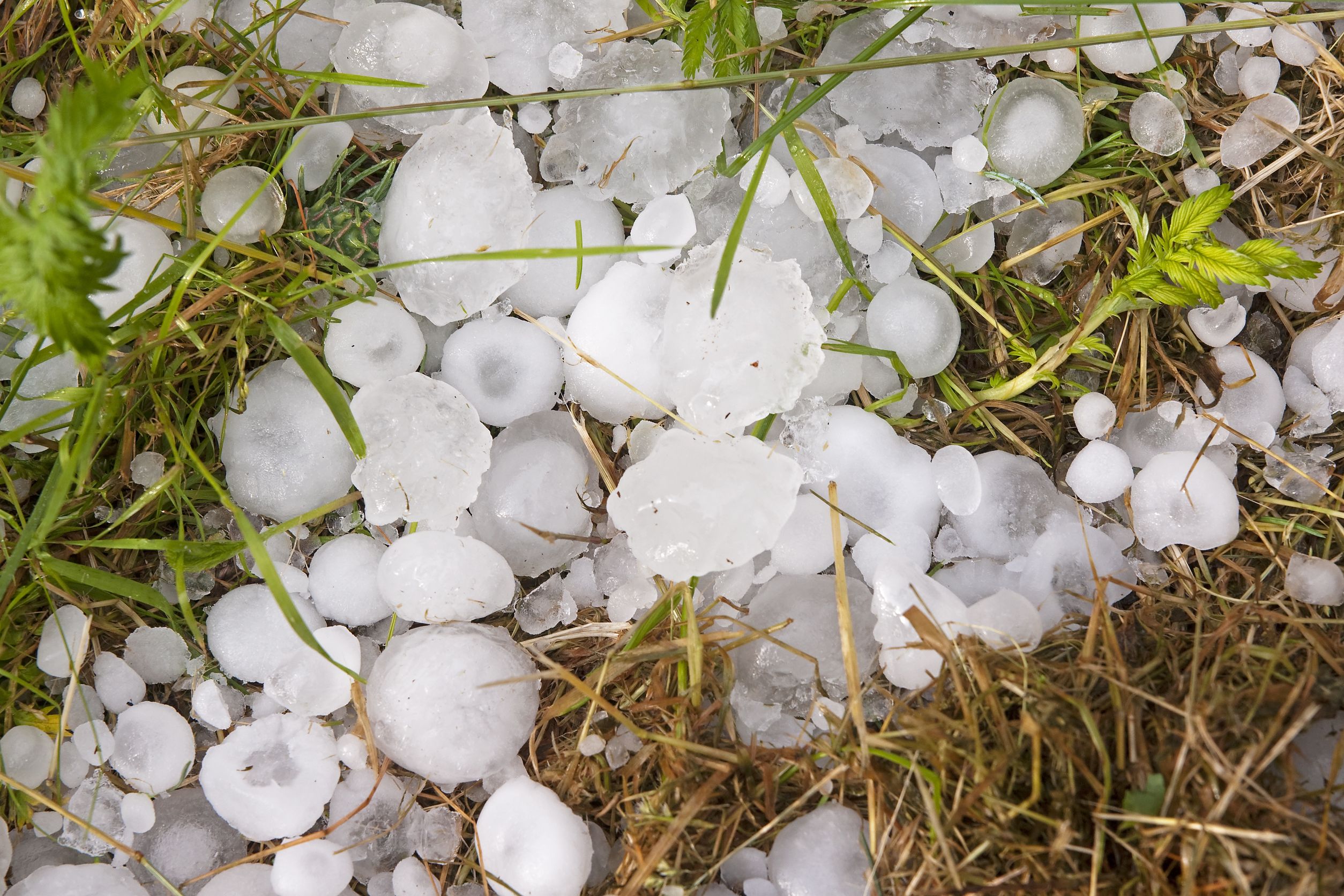
For people who do not live in the arid Southwest, the idea that powerful hailstorms can wreak havoc on people’s property may come as a surprise. However, residents from places such as the Phoenix metropolitan area know all too well that hailstorms are a real property threat that are not just associated with the monsoon season. The National Oceanic and Atmospheric Administration (NOAA) reports that hail causes approximately $1 billion dollars in damage to properties and crops each year in the United States. One of the nation’s largest insurance providers, The Travelers Companies, reports that between 2009 and 2015, 15% of homeowners insurance claims with the company were caused by hail. Storms that produce hail can occur anywhere and at anytime of the year, although Arizona and many other states experience the most storms from May through September. When they do occur, they can cause extensive damage to people’s homes, businesses and vehicles. Fortunately, hail damage to a home or building is covered by many homeowners insurance and commercial property policies. “While hailstorms can vary in intensity, property owners are advised to check for signs of damage after a storm that produced hail has left the area,” said Douglas Waldie, President of Hudson Douglas Public Adjusters, LLC. “This includes inspecting roofs, skylights, siding, windows, doors and screens. Also check outdoor furniture, grills and air conditioning units for damage. Some types of hail damage may also cause exterior damage that will allow water to enter a building. If this occurs it should be addressed quickly as many wet building materials can allow for the growth of mold in less than 48 hours. Older hail damaged properties could also encounter asbestos and lead-based paint issues during cleanup, demolition or repair activities.” Those faced with hail damage to their insured property should consider utilizing the services of a licensed and knowledgeable public adjuster to represent their interests and to help ensure the property is completely repaired. The experts at Hudson Douglas Public Adjusters provide this service to policyholders of both residential and commercial properties throughout Arizona. Source - http://www.environmental-expert.com

03.05.2016

Azerbaijan - Prospects for 2016 cereal production favourable

Harvesting 2016 winter cereal crops, which account for around 95 percent of the total cereal production, will start in early June. Remote sensing data shows that rainfall has been above average during January to mid‑March, when crops break dormancy and vegetative growth begins, which is expected to benefit crop development. Good levels of precipitation will also be beneficial for the spring planting, which will start in May. Assuming that favourable weather will continue, FAO forecasts the 2016 aggregate wheat harvest (winter and spring seasons) to remain close to last year’s level at about 1.7 million tonnes. Overall, total cereal production, mainly wheat, barley and maize crops, is forecast at 2.7 million tonnes in 2016. Favourable weather contributed to increased cereal production in 2015 According to latest estimates, the aggregate cereal harvest in 2015 stands at 2.71 million tonnes, 10 percent higher than in the previous year. Wheat production is estimated at 1.7 million tonnes, an increase of 16 percent compared to the reduced harvest in 2014. Barley and maize are estimated to account for 800 000 and 206 000 tonnes, respectively. Cereal imports to decrease sharply in 2015/16 marketing year (July/June) Following the 2015 bumper cereal harvests, the 2015/16 (July/June) cereal import requirements are expected to decrease more than 20 percent, compared with the previous year, to about 1.5 million tonnes.Imports account to about 40 percent of the country’s total domestic consumption. As in the past two years, the bulk of the imports in 2015/16 are expected to be from the Russian Federation. Prior to 2012/13, Kazakhstan was the main supplier of wheat and wheat flour to the country but the lower quality of the wheat from the past two harvests, together with higher prices in Kazakhstan, have led Azerbaijan importers to favour the Russian Federation as a source. Prices of local wheat flour 50 percent higher in early 2016 than a year earlier Prices of local wheat flour in January 2016 were 12 percent up from the previous month and almost 50 percent higher than a year earlier. Prices of imported wheat flour, which is generally more costly, was 30 percent higher than a year earlier. The price increases are largely due to the sharp weakening of the national currency. As of 15 January, the Government has exempted wheat, wheat flour and bread from the value added tax after widespread protests over the deteriorating economic conditions that have seen the prices of staples, such as flour and bread, rise steeply in recent months. The measure has been implemented to bring the prices of these foods down for consumers. Source - http://www.fao.org

29.04.2016

UK - Farmers Reliant on EU Subsidy May Want Brexit Anyway

For Britain’s farmers, leaving the protective custody of the European Union would mean a kind of freedom they haven’t experienced in decades. It’s just not clear if the change would be profitable. A U.K. vote in June to determine continued membership in the bloc is creating a dilemma for everyone from Welsh dairymen to English wheat farmers and Scottish potato growers. They are weighing the opportunity to gain more local control of their businesses against the risk of losing some 3 billion pounds ($4.35 billion) in annual subsidies that many rely upon to stay afloat. “The heart says vote to leave, but the head says stay in,” said Simon Pain, who farms 350 acres that include barley fields, pastures and a livery stable outside Berkeley, a town in southwest England near the River Severn. Pain says about a quarter of his revenue comes from subsidies, without which his farming operation would lose money. While recent polls suggest Britain probably won’t quit the EU, Pain says he plans to vote with his heart, joining a group of farmers arguing that the country’s agricultural producers would be better off on their own. The bloc’s Common Agricultural Policy has been derided for years as a bloated bureaucracy with too many rules governing everything from crop rotation to ditches. Even U.K. Farming Minister George Eustice has defied Prime Minister David Cameron in arguing in favor of a so-called Brexit. “I accept there’s some anxiety among some farmers, but the truth is, if we do this and we take back control, in five years’ time I think the question people will ask is why we didn’t we do it sooner,” Eustice said during an April 15 interview. “The farming industry is crying out for change.” Concerns about lost subsidies are overblown because the U.K. pays billions of pounds to the EU every year and only gets back about half of that in benefits, including farm payments that carry restrictions and dead-weight costs, Eustice said. Prime Minister Cameron, who backs remaining in the EU, has still pledged to continue farm aid under his watch if Britain exits the bloc. The U.K. should devise its own ways of helping growers that are more efficient or cheaper, like government-backed crop insurance programs, Eustice said. Local control would make it easier to ensure aid goes directly to farmers instead of wealthy landowners, and environmental rules could be better tailored to fit the British countryside, he said. While agriculture has a small footprint in the U.K., generating less than 1 percent of the economy, it provides more than half the food its citizens eat. The country is Europe’s third-largest wheat grower, a major dairy and meat producer and the supplier of grain like barley used in whisky exports valued at about 4 billion pounds annually.  The EU has provided price supports to farmers since the 1960s, and the U.K. joined the bloc in 1973. At a time of global crop surpluses and weak prices, the risk of Brexit may be too great for some agricultural producers. Earlier this month, the National Farmers Union said it supported the idea of remaining in the EU, though it won’t actively campaign because the issue is so divisive among members. “People say of course that farmers will receive support, but we don’t know that for sure,” said Tanya Robbins, a sheep farmer near Stow-on-the-Wold, southwest England. “I would love that we were out and independent. But the reality is, without the EU subsidies, I know with our present system I would not be farming.” Even in years when prices are up, the EU supplies more than half of the income U.K. farmers receive, usually 20,000 pounds to 22,000 pounds on average, said Allan Buckwell, an economist and emeritus professor from Imperial College London who has studied the impacts of European farm policy on Britain. Leaving the trade bloc would create more market uncertainty, stifle long-term investment and lead to tighter credit, he said. “The current recession in agriculture will turn into a depression” if the U.K. votes to leave, Buckwell said. “There will be an immediate noticeable impact in the farm economy, which is a negative one, because of the uncertainty." The referendum also may muddy trade relationships with the EU, which may not be easy to renegotiate, Buckwell said, though Eustice remained more optimistic. More than 70 percent of British food exports are destined for European markets, valued at 9 billion pounds annually. The U.K. still has a trade deficit with the bloc in food. Some farmers are still on the fence and looking for evidence of how leaving the EU would affect their business. Anthony Snell, a fruit grower based in Herefordshire, England, says his workforce triples to about 300 when he is harvesting strawberries and raspberries from May to October, usually with laborers from Bulgaria and Romania, which are fellow EU countries. If the U.K. could provide a substitute visa program for the European workers he relies upon, that might convince him to vote in favor of Brexit. “I could be swayed by very good arguments either way,” Snell said. “Like many people, I’m listening to all the debates and questions before I make a final decision.” Source - http://www.bloomberg.com

29.04.2016

USA - Public will play a role in future of crop insurance

[caption id="" align="aligncenter" width="620"] Source: University of Illinois Farmdoc Daily[/caption] Considerable debate surrounds the U.S. crop insurance program, including its cost, role in farm conservation and impact on farm management and farmland values. The objective of this article is to examine the broader considerations that underpin these specific debates. Unless these broader considerations are addressed, crop insurance will likely remain a topic of debate well beyond the next farm bill. Cost to the U.S. government of its crop insurance program has increased from $3.3 billion in 2000-04 to $8.6 billion in 2010-14. Costs include the subsidy of insurance premiums, reimbursement of Administrative and Operation (A&O) costs incurred by private companies in delivering the insurance program, and government’s share of participating in underwriting gains and losses. Any large expenditure program growing fast will attract attention. Moreover, the growth in crop insurance cost occurred during a period of generally low financial stress among crop farms. This feature runs opposite to the counter-cyclical nature of most farm safety net programs since these programs began during the 1930s. The increase in costs occurred even though the reimbursement rate for A&O was reduced and the reinsurance agreement, which affects the government’s underwriting losses and gains, was renegotiated. Share of total costs accounted for by these two cost components has declined since 2000. In contrast, the share of expenditures accounted for by the premium subsidy increased from 56 percent in 2000-04 to 87 percent in 2010-14. Federal subsidies for crop insurance premiums did not consistently exceed $1 billion per year until 2000. They then increased by around 150 percent, both before and during the period of farm prosperity. Because the per-acre value of a crop is a key determinant of premium subsidies, premium subsidies will likely decline if prices continue to stay low. Premium subsidies and program performance A rationale consistently given for enhancing participation in crop insurance was to reduce ad hoc crop disaster assistance. Ad hoc crop disaster assistance began in the mid-1970s after target price programs replaced price floor programs, and was enacted for almost every crop year through 2008 in which a non-trivial area of the U.S. experienced low yields. The 2008 farm bill authorized a so-called permanent crop disaster program, known by its acronym SURE. No ad hoc crop disaster program was enacted for the 2012 drought even though SURE had ended, and SURE was not authorized in the 2014 farm bill. Over the 1990-2008 period, spending on crop insurance premium subsidies averaged 1.3 percent of the value of U.S. crop receipts, while spending on ad hoc crop disaster assistance averaged 0.9 percent. During the 2014 and 2015 fiscal years, nothing was spent on ad hoc crop disaster assistance while premium subsidies averaged 3.1 percent of the value of crop receipts. Comparing the two periods, spending on ad hoc crop disaster assistance declined 0.9 percentage point but spending on premium subsidies increased 1.8 percentage points, or twice as much. It should be noted potential cost savings was only part of the argument for replacing ad hoc crop disaster assistance with crop insurance. Other key parts of the argument were the need for legislation on an on-going basis and the often difficult legislative negotiations about which geographic areas and crops should receive payments and how much payment they should receive. Concluding observations Crop insurance has emerged as a continuing policy issue on the American agenda. The program continues to successfully ward off attempts to cut spending, but each confrontation spends political capital and likely increases the ranks of critics. Discussions will continue until the reasons underlying the discussions are addressed. Crop insurance’s emergence as a policy issue reflects in part a large expenditure program whose spending has grown fast even during a time of crop farm prosperity. Premium subsidies account, by far, for the largest share of spending on crop insurance. Moreover, premium subsidy per dollar of insured liability has also increased. If society wants to reduce spending on crop insurance, it will eventually have to address premium subsidies. Federal spending on insurance premiums has evolved from a small to large expenditure item. Large expenditure items face different questions than small expenditure items. Simply put, for large expenditure items, benefit-cost assessment centers on society at large as much as program beneficiaries. “Whether money is better spent on another program society desires?” becomes a central question for no other reason than a large sum of money is involved. The implication is that supporters need to justify the program, not in terms of what it can do for program beneficiaries, but what the program can do for society. Prior to the late 1990s, crop insurance could succinctly be described as a government policy to assist farmers in times of stress resulting from yield shortfalls, usually from weather over which the farmer had little control. The non-agriculture public could easily understand and clearly relate to this story. However, yield insurance has morphed into revenue insurance which may now be morphing into margin insurance on the difference between gross revenue and some measure of cost. These changes have value to farmers and insurance companies and agents, but the story about what risk is being covered and how much farmers may or may not have control over these risks has become muddied and complex at best. Crop insurance supporters continue to create new products and add-ons rather than speak to the relevancy issues being raised by critics. From the political process perspective, the importance to a program of having a simple story to which the general public can relate cannot be emphasized enough. Crop insurance has another fundamental dilemma: There is no objective rationale for the current matrix of premium subsidy rates, either in total or by product and coverage level. The matrix of subsidy rates is a political equilibrium based on what society will pay. Lack of an objective basis for the rate of a subsidy is not an issue until a program becomes an issue. Failure to satisfactorily address the objective measurement question will ultimately lead to cuts and potential elimination of a program. Source - http://www.iowafarmertoday.com

29.04.2016

India - Drought damages Pune's banana production

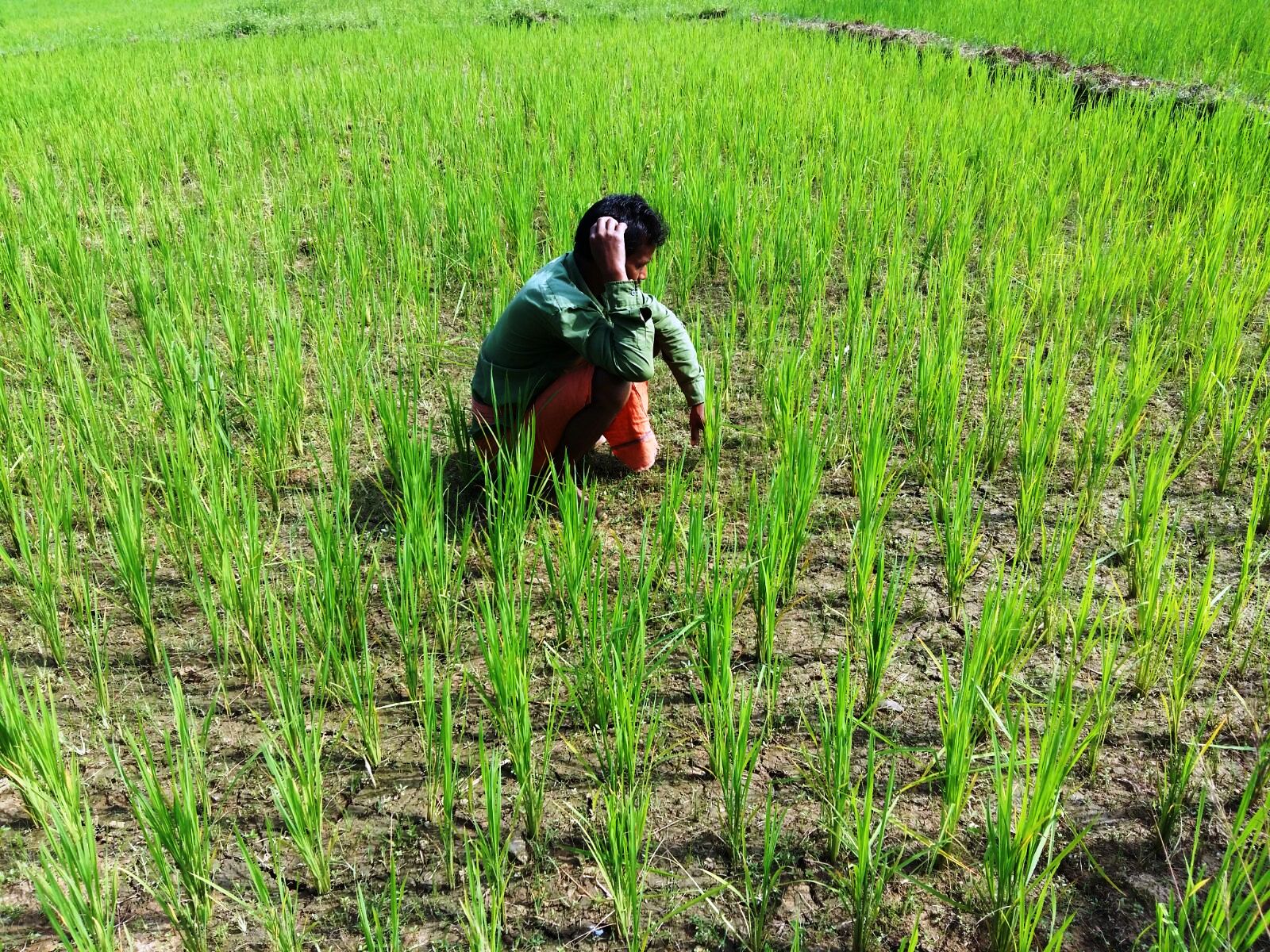
Farmland close to Pune is being affected by the scarcity of rainfall, which is causing wells to dry up and forcing farmers to destroy their banana crops. The old well at Namdev Raghu Kalamkar's farm in Baner dried up about a month ago- for the first time in three generations of his family. Kalamkar had no option but to burn his banana crop, which was destroyed due to the lack of water. Kalamkar's family usually grow maize and banana, but they have suffered losses this year due to the crop drying up. The farmer complains that the government is not paying enough attention to farmland around Pune. Source - http://www.freshplaza.com

29.04.2016

India - Maharashtra govt to restructure crop loans worth Rs 7,500 crore

The Maharashtra government has decided to restructure crop loans worth Rs 7,500 crore issued to farmers for the kharif seasons of 2012-13 and 2013-14. The decision was taken at a meeting of state ministers held in Mumbai. Similarly, the government has also decided to extend the time limit on the payment of the first instalment of the crop loans given for the season of 2014-15. This amounts to around R350 crore, cooperation minister Chandrakant Patil said. Around 65 lakh farmers in the drought-hit parts of Maharashtra are expected to benefit from this move. According to Patil, the state has been in the grip of a drought-like situation for the past five years, and some 20-22 districts have been facing these conditions. Because of this situation, farmers have been unable to repay their loans. This includes loans worth R2,438 crore for the year 2012-13 and R5,000 crore for the season of 2013-14. Since farmers will not be eligible for fresh loans unless they repay these loans, the government has decided to restructure the entire amount of R7,500 crore. These loans will be restructured into a medium term five-year period and the interest for the first year will be borne entirely by the state government, the minister said. The government will also bear 6% portion of the interest for the next four years. The government intends to approach the Reserve Bank of India ( RBI) to treat the restructuring of loans for the period of 2012-13 and 2013-14 as a special case. Patil also said crop loans worth Rs 3,503 crore for the kharif season of 2014-15 have already been restructured. The first instalment of this loan comes up for repayment during this time. Of the repayment of around Rs 700 crore, an amount of Rs 300 crore is likely to remain unpaid. Therefore, the government has decided to extend the time limit for repayment by one year. After two consecutive droughts, the India Meteorological Department (IMD) has said the monsoon this year is expected to be “above normal”. It forecast monsoon at 106% of the Long Period Average (LPA). The state government has begun planning for sowing operations on 1.5 crore hectare across Maharashtra. Government officials estimate a 23% rise in issuance of crop loans this season. With the focus on restructuring, a meeting of Nabard, RBI and Bank of Maharashtra ( BoM) has been planned soon. Around 80% of the state’s crop area is expected to be brought under the Prime Minister’s Crop Insurance Scheme. Maharashtra additional chief secretary (agriculture & marketing) DK Jain told FE that the final meeting will be held on Thursday after which the actual figure for sowing operations will be finalised. The government has also decided to focus on promotion of pulses with this being the international year of pulses. The target is to increase the pulse crop area by 2.5 times. The Centre has granted funds to the tune of Rs 350 crore for this purpose. The campaign for promotion of pulses shall include introduction of newer varieties, preparation of seeds through farmer producer companies and funding assistance of Rs 2,500 per hectare, Jain said. Source - http://www.financialexpress.com

29.04.2016

USA - Crop Insurance Rates Based On Political Will

Americans might think that there’s a formula to determine the amount of premium subsidies growers get through the federal crop insurance program. They’d be wrong. The subsidies are based on what politicians think taxpayers are willing to pay. That’s one conclusion of a new article by Carl Zulauf, professor emeritus at Ohio State University, on the “farmdoc daily” website of the University of Illinois. Professor Zulauf says the lack of any “objective rationale” for the current mix of premium subsidy rates is likely to bring the crop insurance program under increasing scrutiny. Increasing scrutiny, followed by far-reaching reform, is exactly what the program deserves. The average cost of the Department of Agriculture’s crop insurance program has risen from $3.3 billion a year between 2000 and 2004 to $8.6 billion a year from 2010 to 2014, and the main driver of this increase has been the premium subsidies. Since Congress passed the 2000 Agricultural Risk Protection Act, the subsidies have soared from less than $1 billion a year to more than $6 billion a year (Figure 1). These costs started to spike in 2011 and have stayed high during a time when growers have been making record profits. Figure 1: Premium subsidies have ballooned since 2000. [caption id="" align="aligncenter" width="687"] Source: Zulauf, C. "Why Crop Insurance Has Become an Issue." farmdoc daily (6):76, Department of Agricultural and Consumer Economics, University of Illinois at Urbana-Champaign, April 20, 2016.[/caption] Proponents of the crop insurance program claim that the only reason subsidies skyrocketed was that crop prices were at record highs, and now that prices are normalizing, the subsidies should go back down. But Zulauf says that although the subsidies may drop a bit, three other things affect the amounts: the subsidy rates set by Congress, crop insurance product types (revenue vs. yield insurance) and changes in risk ratings. Drops in crop prices alone won’t greatly shrink the subsidy amounts, he concludes. It’s ridiculous to think that taxpayers are paying billions of dollars a year for the crop insurance program when the rates that taxpayers support are being set arbitrarily. Common sense reform is needed now more than ever to stem the tide of wasteful spending on crop insurance. Source - http://www.ewg.org

29.04.2016

India - Maha govt plans to bring 70% farmers under crop insurance net

Considering three consecutive years of drought in Marathwada region and weak monsoon last year, the government is trying to bring more farmers under the crop insurance net to compensate them for failed crops. Speaking to reporters at Y B Chavan Center near Mantralaya here today, a senior official from state Agriculture Ministry said that at present only 30 per cent of farmers are covered under crop insurance scheme Prime Minister Fasal Bima Yojana (PMFBY). "The government intends to raise this target to 70 per cent," he said. The official added that there many small and marginal farmers, who were otherwise left out of the insurance net, will now be able to avail the insurance cover after paying the premium sums, which have been brought down considerably. Speaking to reporters after the state level pre-Kharif crop sowing season review meeting here, Minister for Agriculture Eknath Khadse said that as per the monsoon forecast issued by the India Meteorological Department (IMD) this year the monsoon is likely to hit Mumbai by June 10 and shall cover the rest of the state by June 20. Moreover, the IMD has forecast advancement of monsoon and shall be more than the normal average. Khadse said that considering the early onset of monsoon this year the farmers will have to decide on crop sowing for the Kharif crop between May 15 to May 21. Khadse said that the government expects the area under Kharif crop season to be at 150 lakh hectares. Assuring that the government has made adequate arrangements for supply of seeds and fertilisers in the state, he said that this year the government intends to sell white urea, which will be coated with neem oil. "This will help retention of nitrogen need for the crops to grow. The government had come across cases of misuse of white urea by chemical and pharmaceutical companies," he said. Source - http://indiatoday.intoday.in

29.04.2016

USA - Caps On Crop Insurance Subsidies Would Not Devastate Growers

If you care about the environment, human health or helping small growers, you should support reform of the federal crop insurance program. After all, most crop insurance premium subsidies go to the largest, most successful agricultural businesses. And studies show that these subsidies tend to drive up the price of farmland as well as give growers incentives to plant crops on high-risk and environmentally sensitive land. One question that often comes up is: What impact would reform have on growers? Today, we have a clearer picture. Limiting crop insurance premium subsidies would have a modest financial impact on only a small percentage of growers, and it would not ruin U.S. crop production – as many supporters of the program claim. That’s one of the findings of a new study by Vincent Smith, professor of economics at Montana State University, writing for the R Street Institute, a non-profit public policy research organization. Smith found that placing a cap on the premium subsidies growers receive would barely affect their finances at all. Smith analyzed data for a variety of crops in 12 states: Illinois, Indiana, Iowa, Minnesota, Nebraska, North Dakota, Ohio, Kansas, Oklahoma, Texas, Georgia and Arkansas. He found that if premium subsidies were capped at $50,000 a year, it would affect only 9 percent of the 254,233 farms in these states. Most of those farms have annual sales over $750,000, and the cut in subsidies would hardly influence these growers’ bottom lines, Smith says. Corn and soybean growers in the Midwest, who receive large premium subsidies, would especially not be hurt by subsidy caps. A $50,000-a-year cap in Iowa, Illinois, Indiana and Ohio would only have an impact on farms with annual revenues over $3 million. Even a $10,000 cap would only apply to growers who make more than $500,000 a year. A $10,000 cap would reduce premium subsidies to these farms by less than $12,000 a year; with revenues of $500,000, a $12,000 drop in government support is peanuts – barely 2 percent. Many farm subsidy programs already have payment limits, like the $125,000 cap on the Agricultural Risk Coverage and Price Loss Coverage programs. Congress should follow the example of these other programs and cap crop insurance premium subsidies. It would have an incredibly small impact on most farmers but save considerable taxpayer dollars. Source - http://www.ewg.org

28.04.2016

Drones on the horizon: new frontier in agricultural innovation

Three years ago, the average person had no idea what a drone was – or associated these flying machines with weapons of warfare. Things have changed. Now, unmanned aerial vehicles, or UAVs (also known as drones) have become one of the world’s most publicised and intriguing technologies, used by people in a wide range of professions, from journalism to humanitarian aid work. Farmers have always needed accurate and up-to-date information on the health of their crops and the environmental condition of the land. Agricultural aircraft have been in use since the 1920s, while agricultural experts increasingly use satellites to assess crop health from the sky. UAVs are a natural progression from macro to micro, from large-scale to small-scale farms. While UAVs are unlikely to entirely replace manned aircraft or satellites, they have a number of advantages over these more traditional remote-sensing methods. The technology is capable of collecting very high-resolution imagery below the cloud level, with much more detail than the satellite imagery usually available to developing country analysts. They are easy to use: most drone mapping and data-collection missions are now conducted autonomously, meaning that the drone essentially flies itself, while drone data processing tools are becoming less expensive and easier to use. Perhaps most importantly, drones are inexpensive. In 2016 it is possible to purchase a useful mapping UAV for less than $1,000. And surprisingly powerful mapping drones can be built at home for even less. While processing software can be expensive, open-source and lower cost options exist. Thanks to these low barriers to entry, UAVs are expected to provide significant help to farmers in developing countries, who historically have found it harder to access aerial imagery, either from manned aircraft or from satellites. The multiple purposes of UAVs But what can a farmer actually do with a drone? There are many possibilities, some of which are described in this magazine. On the most basic level, drones permit farmers to get a big picture view of their crops, allowing them to detect subtle changes that cannot be readily identified by "crop scouts" at the ground-level. UAVs equipped with special sensors can inexpensively collect multispectral Neutral Density Vegetation Index (NDVI) and infrared (IR) images, permitting farmers to view crop changes that are otherwise invisible to the human eye. This aerial data can also be used to speed up the painstaking process of conducting crop inventories and yield estimates – such as the palm tree counts and coconut oil yield estimates in Western Samoa that are described later in this magazine. Crop insurers and insurance policy holders also benefit from readily-available and easily repeatable drone imagery: in India, insurers plan to use UAVs to conduct assessment of crop losses after natural disasters, allowing them to more accurately and quickly calculate pay-outs, while large US crop insurers like ADM have begun running their own drone tests. Drones also have proven useful to agricultural planners, greatly reducing the time and cost required to conduct an accurate survey. UAVs can be used to conduct volume estimates, to create irrigation and drainage models, and to collect the data needed to generate high-definition, geographically accurate elevation models and maps. In an example described in this issue, a team tasked with planning a Nigerian rice farm used drone imagery to make decisions on the layout of both rice paddies and irrigation and drainage systems – and, thanks to the drone imagery, were able to quickly determine that their original design was poorly suited to the terrain that was actually available to them. Empowering local communities and fighting pests Ranchers and fishery managers are beginning to experiment with the technology, hoping to take advantage of UAVs’ ability to cut down on the time and expense of conducting patrols and reconnaissance work. Cattle ranchers with a lot of land to cover have used drones to determine where their livestock is, and some have found UAVs useful for conducting regular surveys of fencing. Long-range surveillance drones are being experimented with as a method of deterring and apprehending illegal fishing vessels in protected waters. The technology also has the potential to empower indigenous communities to document illegal occupations of their territories and natural resources – as is described in this magazine. With UAV-gathered imagery of illegal logging and land occupancy government agencies can prioritise and speed up their inspection efforts, ensuring that a week-long field inspection will collect enough evidence to justify government intervention. UAV technology may even be useful for fighting agricultural pests. The FAO has begun to investigate how drones may be used for detecting and eliminating locusts before they begin their destructive journeys – as can be read in this issue. In the US state of Florida, researchers are using sniffer dogs and UAVs to detect the redbay ambrosia beetle, an invasive pest that kill avocado trees. A growing market The international UAV market has grown considerably in the past few years, building on their demonstrated usefulness to agriculturalists and others. An August 2015 study from Grand View Research estimated the global commercial drone market size to be $552 million in 2014 – and its grow to $2.07 billion by 2022, with agriculture dominating other drone sectors. Other researchers have made similarly optimistic predictions for the growth of the agricultural drone industry. While North America currently produces the most UAVs in the commercial industry in general and in the agricultural sector in particular, many analysts predict the European market is close behind it in both. Demand (and production) in the rest of the world, including ACP countries, currently lags behind North America and Europe, but particular growth is expected in Asia-Pacific and the Middle East, per a recent report from research firm Markets and Markets. Numerous multinational corporations are major players in the commercial UAV industry, including Lockheed Martin, DJI, AeroVironment Inc., General Atomics, Israel Aerospace Industries, Parrot SA, and others. Other companies focus on UAV-specific services, including imagery processing, agricultural analysis, flight planning and drone-to-drone communication, and more. In developing nations, UAV service providers often will purchase a drone from a large manufacturer and then provide different mapping and analysis services as a small business – further decentralising the market. Some budget-minded small drone service providers build UAVs themselves from component parts. While UAVs are indisputably a promising technology, there are still a number of obstacles to surmount before they become a standard part of the farmer’s toolkit. Demand for regulations The largest barrier to drone’s wider adoption in the agricultural industry is regulatory, as nations grapple with the problem of keeping UAVs legal while securing air safety and privacy rights. Although some nations, such as South Africa, have already introduced detailed regulatory regimes, many others have no regulations at all. Countries like India, Nepal, and Kenya, have introduced strict restrictions or bans – meant to be lifted at a later, yet-to-be-determined date. In this magazine, after completing on behalf of CTA an ACP-wide study on the subject, Cédric Jeanneret provides a more comprehensive overview of the international state of drone governance and regulations. The rule-making process is ongoing around the world, on the local, national, and international level. One such international effort is represented by JARUS (Joint Authorities for Rulemaking on Unmanned Systems), an experts group whose members include regional aviation safety organisations and various national aviation authorities (NAAs). JARUS works to suggest a single set of operational, safety and technical requirements for certifying UAVs and integrating them into airspace – which can then be used by each participating nation to craft their own UAV regulations. Some drone-watchers are concerned that regulators will impose restrictions that are too onerous or too expensive for small-scale farmers to meet. Advocacy groups, like AUVSI (Association for Unmanned Vehicle Systems International), work to popularise the technology with the public and with policy-makers, with a goal of keeping the civilian use of UAV technology legal. Capacity building Awareness and education – or a lack thereof – present another barrier to the adoption of UAVs in the developing world. While drones are relatively easy to use, farmers will still need local-language training and technical support before they get started, as well as up-to-date information on the technologies legal status in their country. Technical challenges present another barrier to the widespread adoption of UAV technology in less-developed countries. UAV operators need adequate access to electricity (for charging batteries) and the ability to obtain or craft spare parts. Processing drone data is another challenge: producing maps, 3D models, and other useful data outputs requires considerable computing power, or Internet and mobile data that’s quick enough to access cloud-computing services. Drone operators, farm workers, and aid workers alike will need to develop methods of keeping UAVs functional in more remote areas. A bright future  It's difficult to predict the future of UAV technology in agriculture, but there are many promising trends and pilot projects. Analysing UAV data is likely to become increasingly automatic, as intelligent computer systems become capable of identifying different crop varieties, automatically categorising and mapping weeds, and swiftly assessing crop damage from pests. Automated analysis may also make wide-scale agricultural mapping a less lengthy process, helping analysts more accurately detect signs of impending famine or crop failure. More intelligent UAVs can be used for precision crop spraying, enabling farmers to use chemicals in smaller amounts and minimising human contact with dangerous substances. UAVs may also be used for "search and destroy" pest control missions, identifying then wiping out particularly bothersome insects. The technology could be used to quickly determine the distribution of livestock, enabling veterinarians to quickly find animals that may be infected with ailments like foot-and-mouth disease (FMD) – or enabling farmers to swiftly identify the movements of larger crop pests, from wild boar to elephants. Yet more uses for drones are likely to be dreamed up in the near future. UAVs may have the power to help farmers around the world monitor their crops, plan their farms, fend off pests, and more. To realise its full potential, actors along the agricultural value chain and lawmakers should work together to come up with ethical – but reasonable – regulatory regimes that keep UAVs legal, while keeping individual citizens’ safety and privacy rights secure. At the same time, development agencies should press forward with experimenting with UAV technology, pushing for a world where aerial imagery is available to all farmers. Drone Terminology Unmanned aircraft are referred to in many different ways. The word "drone" originates from the military, but is now widely used to describe civilian technologies. International standards and rules, notably those set by the International Civil Aviation Organization (ICAO) and the European Commission, refer to “unmanned aerial vehicles” (UAVs) as part of a broader category of unmanned aircraft that can be programmed to fly autonomously. The official terminology in civil aviation laws is "remotely piloted aircraft systems” (RPAS). "Unmanned aircraft system" (UAS) is also used by some regulators, such as the US Federal Aviation Administration (FAA). Source - http://ictupdate.cta.int

28.04.2016

Vietnam - Worse drought in almost a century

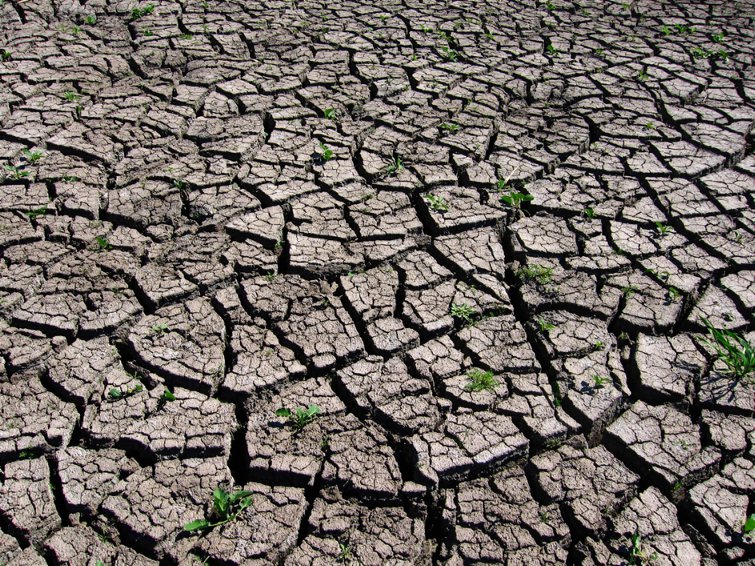
At a meeting in Vietnam on Tuesday 26 April, officials from the country’s agriculture ministry and the United Nations estimated that at least two million people in southern and central Vietnam lack clean water, with 1.1 million also in need of food support. Vietnam needs international aid worth US$48.5, as more than 60,000 women and children in 18 hardest-hit provinces are facing malnutrition, while around 1.75 million people from farming families have had their livelihoods badly hit. Dan Tri newspaper quoted agriculture minister Cao Duc Phat as saying there is a high risk of disease outbreaks due to the lack of clean water. Vietnam is going through its worst drought in almost a century amid intense and prolonged El Nino conditions. Nearly 260,000 hectares of rice and vegetables, more than 160,000 hectares of orchards and cash crops and more than 4,500 hectares of aquaculture farms have been destroyed, according to an official report released this month. The report estimated the drought damage at $250 million, saying it would rise since the situation would continue for several more months. Some 70 percent of agriculture land has dried up in the Central Highlands and south-central regions, the main producers of Vietnam’s major exports like coffee and pepper. Low water levels in the Mekong River have caused seawater to flow 90 kilometers into the basin, the furthest recorded in history. Since late last year the government has provided more than 5,200 tons of food to affected areas, officials said at the conference. Source - freshplaza.com

28.04.2016

USA - Storms damage crops in Sedgwick County

Farmers in Sedgwick County said the storm Tuesday damaged some of their crop. Hail and flooding caused damage to wheat and corn fields across the county. Max Tjaden farms wheat, corn, milo and soybean in the Clearwater area and went out to look at his wheat fields Wednesday to see if there was any damage. It turned out, there was. "I found some moderate damage. A lot of the heads, the heads have been, kernels have been knocked out. The top of the head has been knocked out. There's one the leaves have been completely stripped off and they're kind of small heads," Tjaden said. He said the wheat crop was suffering anyway because of the drought in Kansas. Once the hail came, it caused more issues, including splitting some important leaves. "The problem with that is the plant's deriving most of it's energy now, sunlight energy from this flag leaf and they're split and so they're damaged and more of that damage will show up in a few days," he said. "We were in the target zone for hail, I guess." At harvest time, Tjaden expects to lose three to four bushels an acre because of this damage. Tjaden said at his home, he got 3 1/4 inches of rain. He said he knows others who got a little more than two inches and one farmer who got only 1 1/2 inches. One of Tjaden's fields east of Clearwater had five inches. That heavy rain flooded some fields, including one of Tjaden's corn fields that he planted three weeks ago. "Probably one time last night, it's not a big field about 25 acres but about 20 of it was under water, so that was a little bit much and it's slowly draining off this morning," he said. If it can drain quickly enough or get enough sunlight, Tjaden said the crop may be okay. But if the water stays and doesn't percolate into the ground, the plants will drown and die. "It's part of the deal and you know and most, at least I do, I have crop insurance on all of these acres so I can take a little bit of a hit and still be okay," Tjaden said. After all, he said it is Kansas farming and that means bargaining with Mother Nature. "You don't want to turn down moisture when it comes in this part of the world but again there can be too much of a good thing sometimes," he said." Source - http://www.kwch.com

28.04.2016

Austria - Frost causes 100 mln euros in losses for fruit farmers

Austrian fruit farmers in the southeastern state of Styria on Wednesday said they face crop losses totaling an estimated 100 million euros (113.2 million U.S. dollars) following frosty conditions overnight on Monday. The fruit-growing regions of the state were affected by temperatures that had dropped to between minus 2.5 and minus 6 degrees Celsius. Estimates claim up to 80 percent of the entire fruit crop has been destroyed. Primarily affected have been fruit varieties either in full bloom or those beginning to grow small, delicate fruit. This includes apples, pears, plums, cherries and apricots. The approximately 2,000 apple farmers in the state appear particularly hard-hit, some now facing a complete crop failure. A spokesperson for commercial fruit growers in the state said, according to an ORF report, that in the current phase of growth the fruit crop is very sensitive to frost. It can only handle temperatures half a degree below zero, and even at minus one degree most of the flowers will have died. In preparation for further cold temperatures many farmers have reportedly also taken to placing paraffin candles amongst their crop in order to increase temperatures. There are fears that both wine and pumpkin crops could have been jeopardized by the frost, with both also in a sensitive phase of development. State officials are now examining how far insurance will cover the damage, and also to what extent the finance ministry will provide catastrophe funding to the thousands of families that have in some cases lost their entire income for the year. In 2014 and 2015, weather conditions also led to massive crop failures in the state's well known pumpkin industry. Source - shanghaidaily.com

28.04.2016

India - Central scheme to insure small planters

The Centre has floated market-linked Revenue Insurance Scheme for Plantation Crops for small tea growers to insure them against losses arising from fluctuations in yield as well as in prices . Sources said the scheme is similar to the Pradhan Mantri Fasal Bima Yojana, which was announced earlier this year, and will be rolled out on the basis of shared funding of premium between the Centre, state and the growers in the ratio of 75:15:10. The ministry of commerce had implemented a price stabilisation scheme for plantation crops, including tea, from 2003-13 with a view to protect the farmers from losses on account of price fluctuations. It was reviewed in the light of experience of implementing the scheme and a new scheme was then devised. Weather uncertainties have put the tea industry in a spot as it still does not have a proper insurance policy. Excess rainfall in Assam has put the industry in a spot of bother as floodwaters had entered the gardens. Small tea growers at present contribute around 35 per cent of the tea produced in the country. Growers holding up to 10.12 hectares are considered small holders in the country. "It is the small tea growers who are the most affected stakeholder in the entire industry and such a scheme would be most helpful for us," Bijoy Gopal Chakraborty, president, Confederation of Indian Small Tea Growers Association, told The Telegraph. The sector has problems of its own and is by and large unorganised because of its scattered small holdings. It has no processing facilities of its own and supplies green leaf to private bought leaf factories or estate factories either directly or through leaf-collection agents. Tea is a rain-fed crop and the physiology of tea plants is closely linked to external environmental and climatic factors - precipitation, temperature, soil moisture, temperature, light duration and intensity, humidity, shelter and carbon dioxide concentration. The inter-governmental group on tea under the Food and Agriculture Organisation said the situation of small tea growers continues to be problematic because their cost of production tends to be higher than the prices they receive for fresh tea leaves, if the cost of labour is factored in. Bidyananda Barkakoty, adviser, North Eastern Tea Association, said as the price the small tea growers obtain for their green leaf is dependent on the price of the finished product (made tea) of the factories to which the small tea growers sell their green leaf, the loss in production and income due to the above-mentioned factors are beyond their control. "An insurance scheme for small tea growers should be provided to cover production-related risks and price volatility," he said. He said as the new policy has talked about insurance premium being shared by the state government too, the association would take it up with the government that comes to power after the elections. "There used to be crop insurance several years back but not anymore . High premium was one reason which led to its demise," a tea industry official said. A senior official of Amalgamated Plantations Private Limited said the organised sector is looking for a policy that takes care of weather-related uncertainties. "The premium has to be reasonable," the official said, adding that employment costs and prices of other inputs have gone up. Source - http://www.telegraphindia.com

28.04.2016

India - Farmers may soon get insurance cover for crop damage caused by elephants

Farmers may soon get insurance cover for crop damages caused by elephant raids and migration under Pradhan Mantri Fasal Bima Yojana. The Union environment ministry is in talks with the agriculture ministry on the issue, and is expected to soon move an official proposal on the issue. Union environment, forest and climate change minister Prakash Javadekar has agreed to the proposal in-principle, senior officials from the ministry said. The Pradhan Mantri Fasal Bima Yojana provides for insurance cover against crop loss caused by natural calamities. Farmers have to pay 2% premium for all Kharif crops and 1.5% for all Rabi crops while in the case of annual commercial and horticultural crops, 5% premium has to be paid. According to the last official estimation study, there are more than 30,000 elephants in the country across 16 states with high concentration in north-eastern states and southern states. Elephants cover large distances in herds and they raid croplands for food or cross through them during migrations, causing major crop damages and financial losses to farmers. Obstruction of the natural migratory path of elephants, fragmentation of elephant corridors due to human interference and lack of legal protection for elephant corridors are some of the chief causes of elephants raiding crops or entering habitation, ministry officials said. "Crop raiding by elephants happens frequently in north-eastern states, eastern states and southern states. From forested areas, elephants are known to migrate long distances through human habitations and croplands. This often happens at night and thus curbing crop damage is extremely difficult," said a senior official from environment ministry. As per official data, in 2014-15 alone, Rs 34.5 crore worth compensation was paid for crop damages due to elephants by Centre and State agencies. In 2013-14 and 2012-13 the compensation paid was Rs30 crore and Rs34 crore respectively. Apart from the crop damages, human-elephant conflict also claims nearly 400 people and more than 100 elephants each year. The central-eastern landscape sees some of the worst cases of crop damages and human-elephant conflict across Odisha, Andhra Pradesh, Chhattisgarh, Jharkhand, Odisha and West Bengal. According to environment ministry data, Odisha sees average crop damage of 14,097 acres, Chhattisgarh has sees 12,230 acres of average crop damage per year while in West Bengal it is 2500-3000 acres of average crop damage per year. Source - http://www.dnaindia.com

27.04.2016

USA - Farmers check impact of spring storms

Rain, wind and hail that hit parts of California during the past week have caused farmers some concern, as they evaluate the potential impact to a number of crops in the Central Valley. Kern County almond grower Jenny Holtermann said a thunderstorm this past weekend brought quite a bit of rain, for which farmers are thankful, but also brought winds and quarter-sized hail in parts of the county. "Our farm has received most damage from the multiple windstorms we have had," Holtermann said. "We have suffered some minor crop losses, but we lost about 300 mature trees over the past few weeks." Shallow-rooted almond trees sometimes cannot withstand high winds and drenched root zones, she added. Jake Samuel, who farms cherries and walnuts in San Joaquin County, said cherries may have been affected by the recent weather, with growers expressing concern about the fruit splitting or cracking. "Sometimes, the splits can heal if small enough and not create any mold issues; however, in massive downpours and the closer it is to harvest, the cherry can split from top to bottom, making the cherry unsalvageable for the fresh market," Samuel said. In Colusa County, rice grower Randy Johnson said a freak hailstorm and heavy rains early this week caused him to set new priorities and move equipment to a different part of the county where it was not raining hard. Rain in Colusa also reportedly damaged some cut hay and knocked a few leaves off of almond trees. In the Sacramento Valley, prune growers say earlier storms took a severe toll on the 2016 crop, resulting in much heavier-than-normal shed of the developing fruit. Cold temperatures, high winds and heavy rains hit prune orchards in March. "When we first looked at the crop, it looked really good because we had a lot of fruit set, but a week and a half later, we looked again and most of the fruit had dropped off," said Neill Mitchell of Mitchell Ranch, who farms prunes and walnuts and operates a dryer in Yuba City. "We usually have a little rain during the bloom, but it blew and rained so hard that it did damage." His son, Joe Mitchell, said the farm doesn't have much of a crop. "The fruit dried up, yellowed and fell off of the trees," he said. "Now, the trees are real green and leafy—they look like a shade tree with not a lot of fruit on them. On some trees, you can count on two hands how many prunes are on the trees." Franz Niederholzer, University of California Cooperative Extension farm advisor for Yuba and Sutter counties, reported widespread damage throughout the primary prune-growing area from Red Bluff to Yuba City. Orchards that bloomed in the middle of the storm—between March 3 and 13—are most impacted, Niederholzer said, with very little crop remaining on the trees. During the storms, some orchards experienced up to 8 inches of rain, and heavy winds blew petals and pollen out of the trees. Average temperatures for many of those days dropped below 60 degrees, Niederholzer said, which slows the biological activity of the flowers. In many orchards, stormy weather also prevented honeybees from flying. Although prunes self-pollinate, Neill Mitchell said, the bees help increase fruit set. Typically during bloom, more than 20 percent of the blossoms pollinate and become developing fruit, Niederholzer said. This year, some UCCE test blocks in the Yuba City area show only 2 percent to 12 percent of blossoms growing into fruit in the lower half of the trees. "By the first of May, we usually see that 20 to 40 percent of the blossoms set. This year, even some well-cared-for orchards have only 25 to 30 percent of a normal crop," he said. "I talked to some growers that are really on the fence about harvesting, based on the cost of getting the equipment in the field and hiring the crew and potential returns, so this is really bad." Prune orchards that bloomed at the end of the storm, Niederholzer said, appear to have more fruit on the trees. Prune and kiwifruit grower Dan Bozzo of Gridley said his prune crop is lighter than usual, but he believes he may be one of the luckier growers whose orchards bloomed as the storms died down. "I feel better about our trees. We've got a light crop, but our intention is to harvest everything," Bozzo said. "We have probably 1,000 to 1,500 pieces of fruit on each tree. Generally, around 3,000 to 4,000 pieces is a pretty good amount." The crop loss comes at an inopportune time for the California prune business, said Greg Thompson, general manager of the Prune Bargaining Association, which negotiates with buyers to establish the price for prunes. If California prune growers are unable to effectively supply the market, Thompson said, this may open more doors for global competitors such as Chile and Argentina, which have had large crops in recent years. In addition, Thompson said, the amount of prune acreage in California has dropped during the past 10 years, from 60,000 acres to the 40,000-acre range. "We lost a lot of acres and we're hoping that we can have strong prices moving forward. A short crop will help stabilize pricing, but we're going to see more imports to make up for the shortfall," Thompson said. "One good thing is we have a fair amount of inventory from the 2015 crop that will help balance things out and keep the market supplied." Neill Mitchell said given what he sees in his orchards, he will likely file a claim with crop insurance, which reimburses between 50 percent and 75 percent of the damage, depending on a grower's coverage level. Jeff Yasui, director of the U.S. Department of Agriculture Risk Management Agency Regional Office in Davis, said considerable crop losses have been reported for prunes. Yasui said growers who suffer damage must report losses to their agent if they have crop insurance, and cautioned that failure to report the information right away could jeopardize the crop insurance indemnity. Farmers who have Noninsured Crop Disaster Assistance Program (NAP) coverage must contact their local USDA Farm Services Agency office to report damage for that program. Source - agalert.com/

869
of 1225