NEWS
893
of 1224
News
25.01.2016

South Africa - High risk crops excluded from insurance

South African insurers are cutting cover of some crops planted by farmers due to the high risk posed by the drought. Vegetable crops in northern regions are said to pose too much of a risk for some insurers, while premiums for farmers who can get cover are rising. “As part of our constant negotiations with our re-insurance partners, there are some crops that will probably be excluded in certain areas as the risk is just too high,” said Andries Wiese, manager of the agricultural unit at Johannesburg-based Mutual & Federal Insurance Co., a unit of Old Mutual Plc. “Insurers typically try to quantify their exposure in relation to the risk and then calculate an appropriate rate or premium,” Wiese said. “Where this calculation dictates caution, you will find insurers less willing to insure a particular event or item. Some examples would be citrus, tomatoes, dry land vegetables such as carrots, melons, pumpkins, squashes, peppers, spinach and cabbage.” South Africa’s crop insurance industry is estimated to be worth about 1 billion rand ($60 million) in annual premiums, according to Wiese -- about 2 percent of the total property and casualty insurance market. That means its contribution to short-term insurers’ earnings is dwarfed by other businesses, said Risto Ketola, head of financials coverage at SBG Securities in Johannesburg, a unit of the country’s biggest bank by assets. Nonetheless, Mutual & Federal and larger rival Santam Ltd. is only insuring crops planted within the optimum dates in land with sufficient soil moisture, said Gerhard Diedericks, the company’s head of agriculture. Source - freshplaza.com

25.01.2016

Kenya - Integrating index-based livestock insurance with community savings and loan groups

Partnering with members of group saving and loans organizations (GSLs) may be an effective way of undertaking extension work on index-based livestock insurance (IBLI). However, there is little evidence to suggest that extension through GSLs has increased IBLI uptake above the 6-9% household baseline rate. These are the findings of the latest research brief by the International Livestock Research Institute (ILRI), Integrating index-based livestock insurance with community savings and loan groups in northern Kenya. Despite the availability of huge livestock resources, pastoralist areas of northern Kenya are characterized by chronic vulnerability to drought-related shocks and pastoralists’ declining coping abilities. Innovative strategies are needed to safeguard livestock-based livelihoods and enhance drought-coping mechanisms. One such strategy is to link the acquisition of a livestock-based insurance product with access to informal financial services, smoothing out household consumption and preventing distressed sales of livestock. In collaboration with CARE Kenya in 2013, the IBLI project undertook a study of efforts to integrate livestock insurance with group savings and loan organizations (GSLs) in Marsabit County. Under their Marsabit Drought Resilience Project (MDREP), 71 GSLs were formed across the divisions. Constituted by community members—primarily women—GSLs pool their savings to extend small loans to group members. The main objective of this IBLI/CARE collaboration was to assess the impact of integrating an insurance product for pastoralists’ most productive asset alongside access to informal financial services. The study found substantive differences between the GSLs profiled, including interest rates, collateral requirements, and savings-to-loan ratios. Nevertheless, overall GSL members accumulated more savings and accessed more loans than their non-GSL counterparts. GSL members’ relative success in correctly answering questions on IBLI suggests extension through GSL groups may be more effective than through normal IBLI channels. But full product comprehension is patchy and depends on the quality and motivation of community-based trainers. Increasing understanding of IBLI hinges on improving training of GSL members and developing a package of more accessible educational tools for use in the groups. However, most households are reluctant to borrow to purchase insurance, due to high interest rates on loans, the social and economic sanctions on default, and the risk of the insurance not triggering. One way of increasing IBLI uptake, the brief recommends, would be to further subsidize insurance premiums or loans. Source - ibli.ilri.org

25.01.2016

India - BJP campaign to reach out to farmers

Describing the Prime Minister’s Crop Insurance Scheme as a “weapon” to fight rising farmer suicides, BJP Kisan Morcha national president Vijaypal Singh Tomar on Saturday said the BJP will launch the ‘Kisan Jagran Saptah’ at a national level from March 1-15 to reach out to farmers and create awareness about the scheme’s benefits. The scheme will be implemented from April 1. Crediting the PM for devising the scheme, Tomar said it was the need of the hour to provide a protective cover to the farming community, which is facing repeated crop failure due to droughts. “Farmers have been going through a difficult time for the last two years. We conveyed our suggestions to party president Amit Shah and Home Minister Rajnath Singh, who addressed a national conclave organised by the Kisan Morcha in New Delhi on January 11 and 12. On January 14, the Union cabinet cleared the scheme, which is nothing short of historic,” he said. Mr Tomar said the scheme provides insurance cover to farmers from pre-sowing to a period of 14 days after the harvest. “Under the scheme, a premium of 1.5 per cent will have to be paid for rabi and two per cent for kharif crops; this was 13 and 15 per cent respectively earlier. The Centre and the State will pay the premium on behalf of the farmers,” he said. He added that the crop insurance scheme incorporates all previous schemes with key changes. “It also removes the capping system present in previous schemes which gave less compensation for higher damage. Now, more compensation will be given if the crop damage is higher,” said Mr Tomar. Source - thehindu.com

25.01.2016

India - Rain affects Ballari cotton, chilli growers

Untimely rain during the week has left the cotton and chilli growers a worried lot in Ballari taluk. For, they apprehend loss with the discolouration of crops due to excessive dampness caused by rain. If the harvested chilli, which was strewen for drying, developed dampness, the ready to harvest cotton was also affected by the rain. The farmers in Yerangali, Somasamudra, Kolur, Kolagallu and surrounding places have been apprehending that the untimely rain would lead to discolouration of both the crops. Chilli growers, along with their family members, engaged in shifting the chilli crop to a dry and elevated place to prevent the rotting and discolouration besides removing the affected ones was a common sight during the visit to some of these villages. The cotton, which was ready to be harvested, had developed lot of dampness and it would be difficult to pluck on one hand and the lint cotton would fall due to heaviness on the ground and suffer discolouration. “The price of chillis was around Rs. 6,000 per quintal and after the rain, it would not be in demand because of the likely discolouration. We had cultivated chilli-availing loan and how to repay it has been our main concern,” informs Somalingappa, a farmer in Kolagallu village. Sources in agriculture department, while admitting that the untimely rain would affect the crops, toldThe Hindu that they were yet to get a report in this regard. Source - thehindu.com

22.01.2016

How do drones work in agriculture?

Drone technology has the potential to change the way farmers scout their fields for situations like disease issues and pest pressure. The technology appears to have come a long way in a relatively short time, but there’s a more basic question to ask first: How does it work? “If you’re a farmer who wants to use a drone, it’s like having a 200-foot ladder to survey your field,” said Ian Smith, business development and marketing manager for Drone Deploy of San Francisco. “Usually a farmer would take some pictures of the field, but just pictures won’t get you a lot of useful information.” Smith added, “Instead, you need to create maps.” The Drone Deploy software includes an app for smartphones. “You can connect your smartphone directly to the drone with the app,” Smith said. “Our software lets you create aerial maps, 3D models, and images of your entire field. The images will be zoomable, high quality and high resolution.” The smartphone is hooked into the drone control unit through a USB port. “When you open the app up, it’s connected to the drone,” Smith said. “You then draw on a base layer map and your drone’s GPS location shows up, similar to what you’d see on Google Maps to figure out where you are. Our app allows you to draw boundaries on a map that will show the drone where to go and take pictures.” Basically, the farmer drags the corners of a box to outline the area to survey, and hits “okay.” A split second later, the software draws up a flight plan. “The drone runs through a few flight checks, and then it automatically takes off straight up into the air,” Smith said. “It then starts to fly through the designated area and takes pictures. It surveys the field through waypoints on the map, getting good overlap between pictures. It then lands in the exact spot it took off from.” He said the farmer never has to touch the drone’s joystick. The app pilots the machine automatically. “When the drone lands,” Smith said, “you pull an SD card out of the drone. It’s similar to a card you’d find in a digital camera. You take it out of the drone and pop it in your computer, where you upload all those images to the Drone Deploy system. The system uses a photogrammetric stitching process to bring all of the pictures together into one high quality image. “It’s basically like having your own Google map of your farm field,” Smith said. How high the drone will fly depends upon how much area you need covered in the map. “There’s a default altitude that we set,” Smith said, “usually 250 feet above ground. Changes depend upon how big your picture needs to be. If you have a 400-acre farm, you’d probably want to fly higher than that because you have more ground to cover.” Flying higher to cover more ground can actually save on battery life for your drone. “If you adjust parameters, such as height, with our app, it will update in real time how long that flight is going to take,” Smith said. “If your drone has a battery that lasts 20 minutes, and you adjust it to fly higher, it covers more ground in shorter time. The flight time then will drop in real time, so you make sure you have enough battery for each flight.” The actual stitching process of your photos is entirely automatic. “Even when we’re all asleep here in San Francisco (company headquarters) and someone is making a map in Australia,” Smith said, “it’s all automated. No one has to be awake at all.” Once the images are uploaded, then it’s time for a farmer to wait. “You go grab a cup of coffee, or whatever,” Smith said. “Depending upon the size and quality of the images you collect, in a couple hours, you’ll get an email saying your map is done. Once you click on the link, you’re right in your high quality, high resolution map that same day you took the pictures.” He said same-day data is important for farmers, as things can literally change overnight because of events such as severe weather. Turnaround time on getting the stitching process done rarely takes more than a few hours. “It all depends on things like how many pixels are in each image,” Smith said. “For example, a high-end camera can take 60-75 seconds per image to process, so if you throw around 50 images in there, you’re probably looking at around an hour turnaround time.” Even if the system is processing a large number of maps, you’ll still get your map back in a short time. “With the horsepower we have in our big servers,” Smith said, “even if we’re processing 50 maps, you’ll still get your map back relatively quickly.” High-end drones can run up to $3,000, he said. You don’t have to spend that much to get a good map, but there is a baseline recommendation. “The lowest you may want to go if you’re getting into this today is probably $1,000,” Smith said. “However, six to eight months from now, you’ll probably be able to spend $800, and a couple years from now, it’ll be lower than that.” Источник - midwestproducer.com

22.01.2016

Philippines - Dry spell worsens, losses hit P143.7M

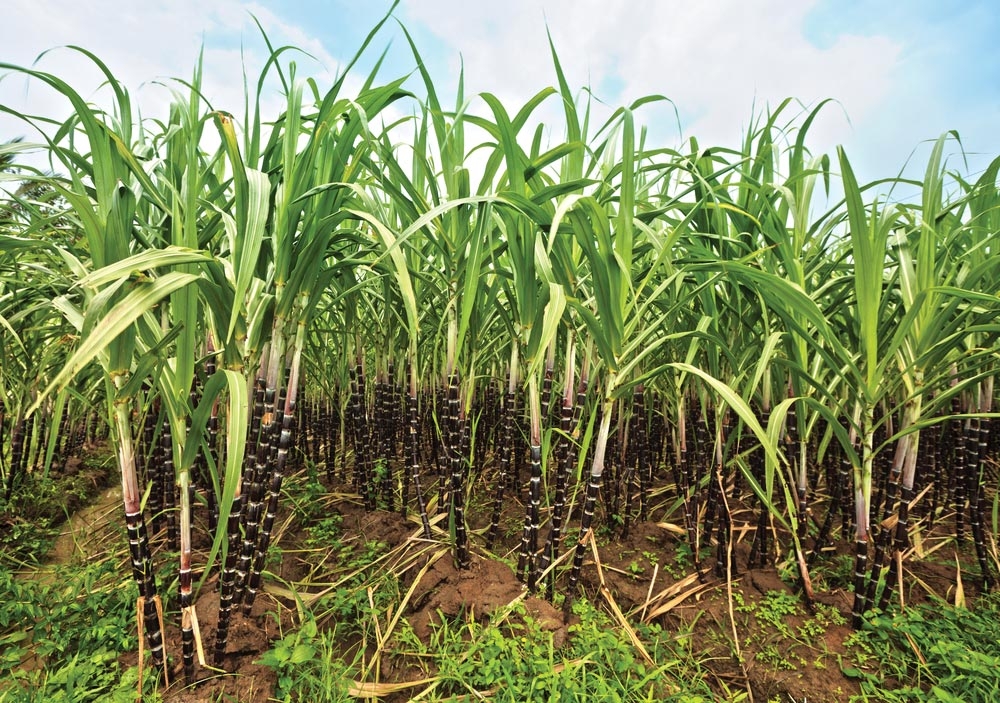
THE Sugar Regulatory Administration (SRA) has proposed the conduct of cloud seeding operations in Negros Occidental, as damage to sugarcane farms in the province brought about by the dry spell has reached P99.51 million. A total of P44.16 million in damage and production losses was also recorded for other crops and livestock. The SRA reported the adverse effects of the dry spell to sugarcane during the meeting of the Technical Working Group (TWG) of the Provincial Disaster Risk Reduction and Management Council (PDRRMC) in Bacolod City on Thursday, January 21. Affected were 7,372 hectares of sugarcane farms, or 21 percent of the 35,735.83 hectares of standing crop as of January. The figures cover four mill districts in the southern part of the province, affecting 7,861 planters from 14 local government units (LGUs). These include Southern Negros Development Corp. (Sonedco) and Dacongcogon, comprising parts of Kabankalan City, Cauayan, Ilog, Sipalay City and the whole of Candoni, with a reported damage worth P30.2 million; Ma-ao Sugar Central in Bago City, P8.25 million; Biscom Inc., covering Hinigaran, Binalbagan, Himamaylan, Isabela and Moises Padilla, P11.35 million; and Central Azucarera de La Carlota comprised of sugar farms in Pontevedra, La Carlota and La Castellana, P49.9 million. Reports further showed that the age of cane affected is seven to 11 months. These reports, however, only covered southern Negros since the SRA has not yet received reports from the central and northern portions of the island. Of the total damage, P91.59 million involves sugar while the remaining P7.93 million pertains to molasses. Helen Lobaton, acting head of the Extension Services Division of SRA-Visayas, said the recommendation for cloud seeding in the Negros Island Region, Panay Island, and Capiz was made by SRA Administrator Regina Martin. “SRA is currently advising sugar planters to take active measures against climate change through massive information dissemination,” Lobaton said. Provincial Planning and Development Officer Maria Lina Sanogal said the TWG will schedule another meeting with the entire PDRRMC on January 27. Sanogal said the PDRRMC can endorse the SRA's request for cloud seeding to the Bureau of Soil and Water Management (BSWM). Meanwhile, the Office of the Provincial Agriculturist (OPA) reported Thursday P43.82 million in other crop damage and production losses, covering 1,459.74 hectares, and affecting 1,455 farmers from six LGUs. In 12 barangays of Pontevedra, 218 rice farmers in 304.43 hectares reported P15.99 million in damage and losses. Hinigaran posted P12.18 million, covering 302 rice farmers, 24 farmers of high-value commercial crops (HVCC), and three corn farmers with a total area of 290.29 hectares also in 12 barangays. Forty-six rice and corn farmers in four barangays of Moises Padilla with an area of 327.34 hectares were affected with damage and losses pegged at P13.59 million while Hinoba-an reported P5.56 million, covering 557 farmers with 619.20 hectares in 12 barangays; Sipalay, P2.13 million, 75 palay farmers with 73.77 hectares in six barangays; and Cauayan, P6.54 million, 230 rice farmers in 135-hectare farmlands in three barangays. Provincial Senior Agriculturist Dina Genzola said that as of Thursday, January 21, 534 farmers have filed notices of loss for their claims under the Negros First Universal Crop Insurance Program (NFUCIP). “Adjusters from the Philippine Crop Insurance Corp. will conduct the adjustment and assessment to determine the amount of indemnities that can be claimed by affected farmers,” Genzola added. The damage and losses in livestock remained at about P346,000. Damage estimates were expected to increase as assessment and validation of the OPA and the Provincial Veterinary Office continue. Sanogal said the Province still cannot declare a state of calamity despite the damage and losses reported. “The Province can only declare a state of calamity after at least two LGUs have been placed under this level,” she said, adding that the Provincial Government has P135 million in PDRRM fund this year that can be used to counter the El Nino effects. Source - sunstar.com.ph

22.01.2016

India - Crop insurance plan may bring cheer[:ru]India -

In view of the growing volatility in the agriculture sector caused by vagaries of nature as well as market fluctuations, it is heartening to see the new Pradhan Mantri Fasal Bima Yojana (PMFBY) which is designed to compensate farmers for their crop losses.  Other than providing a robust cushion to our farmers, the new programme may also encourage them to consider investing more on inputs and crop protection solutions thereby adding to overall yield and production. The PMFBY goes many notches up above the existing schemes. In his letter to farmers soon after the scheme was launched, Prime Minister Narendra Modi had rightly highlighted the reasons that made the previous schemes unsuccessful – high premium rates, low claim value and non-coverage of localised crop loss. “As a result, not more than 20 per cent of farmers opted for crop insurance; and those who did, faced many difficulties to get their due. Eventually, farmer’s faith in insurance scheme eroded over time,” wrote Modi. The new version addresses many of these and incorporates new features. One of the key features of this programme is that the contribution of farmers in premiums will be substantially reduced between 1.5 and 5 per cent – and the government will bear the remaining financial burden even if the share of the government increases beyond 90 per cent. Under the PMFBY, there will be only one premium rate for each season for all foodgrain, oilseeds and pulses. For the farmers, this represents significant improvement over the existing Modified National Agricultural Insurance Scheme, under which the government subsidised a maximum of 75 per cent of the premium only. Under the PMFBY, farmers would pay only 2 per cent premium for all kharif, 1.5 for rabi and 5 per cent for horticulture crops. Previous premiums ranged between 8 and 12 per cent. This, experts say, is a good move as assessment under the old systems lacked transparency and systemic inefficiencies. It is also common knowledge that compensation took a long time and process of claims and disbursement was riddled with corruption. The PMFBY is also significant, agriculture experts say, in view of the unprecedented volatility in farm output because of erratic weather conditions causing losses to crops. It also assumes significance as the government has been working towards spreading financial literacy by providing access to the common man to insurance products in both the life and health segments thus bringing about some degree of financial inclusion. Starting a new crop insurance scheme can be viewed as an extension of the same ideology. The smaller farmers have to be targeted as this is particularly the vulnerable class. Presently, the scheme does not distinguish between the large and small farmer as that does raise the issue of identification. What is good, for the first time, inundation and post harvest losses arising out of cyclone and unseasonal rains have been included under localised risk cover, major improvements over the previous schemes. The scheme is also likely to rationalise government spends – as against its current annual spend of about Rs 5,000 crore on disaster relief, the new scheme is likely to cost Rs 8,000-9,000 crore, which shall only mean an incremental addition. Areas of concern However, there are areas of concern that need to be addressed to ensure the scheme is successful. First and foremost, we have to ensure the land records are in place and digitised including their linkages with the Aadhaar card number of the farmers. Secondly, the assessments of crop losses have to be done in a time bound manner, and using high-end technologies such as automatic weather stations (AWS), drones, Low Earth Orbits (LEOs) and satellites. Experts say these must be put in place immediately. Third, payment to farmers should be done directly into their accounts. Fourth, insurance companies and government departments dealing with this must be geared to deal with high volumes. Fifth, weather data of all regions should be adequately captured so that forecasts and assessments are done expeditiously. Sixth, creating awareness among farmers, and especially the small peasants who are more vulnerable, is going to be vital for the spread of the programme. Seventh, those assigned the task of making crop loss assessment should be adequately trained. Seen along with other major programmes by the Government of India including the Pradhan Mantri Krishi Sinchai Yojana, Soil Health Card, National Agriculture Market etc, the new crop insurance scheme will go a long way in improving the lot of our ‘annadata’. Source - deccanherald.com

22.01.2016

USA - Some Crop Insurance Premiums Might Move Upward in 2016

Farmers who buy revenue protection (RP) policies might want to brace themselves: premiums could rise by more than 10% this year. That’s according to analysis by Gary Schnitkey of the University of Illinois, who used a projected corn price of $4.15, a volatility factor of .21 and Risk Management Agency rate changes to estimate 2016 premium for a handful of key Illinois counties. The results will be unwelcome to farmers already worried about input costs and profitability in 2016. “All 2016 projected premiums are above 2015 premiums, with many of the changes being more than 10%,” Schitnkey wrote. “At an 85% coverage level, the RP DeKalb County premium is 11% higher for 2016 ($16.51 per acre in 2015 compared to $18.31 per acre in 2016). Champaign County is 8% higher ($15.97 per acre compared to $17.23 in 2016). Saline County premium is 16% higher ($50.37 per acre in 2015 compared to $56.28 per acre in 2016).” Of course, these are early estimates. The projected price and volatility factor won’t be finalized until the end of February, and right now, December corn futures stand at $3.90 or so. If that price sticks, it would reduce the jump in premiums, although they would still likely be higher than 2015, based on the .21 volatility factor. Source - agweb.com

22.01.2016

USA - Farmer relief bill introduced in S.C. House

A bill offering grants to flood-affected farmers was introduced Thursday with the support of more than half of the S.C. House of Representatives. The S.C. Farm Aid bill supplements “inadequate” crop insurance payments to cash-strapped farmers who lost more than $375 million from the October flood. House Ways and Means Committee Chairman Brian White, R-Anderson, is the bill’s prime sponsor. “We must stand up for our farmers to prevent a pillar of the South Carolina economy from collapsing,” White said in December. To be eligible for a grant, farms would have to be Farm Service Agency-verified; have sustained at least a 40 percent total crop loss in a county declared a disaster by the U.S. Secretary of Agriculture, and farmers would have to sign an affidavit accurately stating their losses. Grants would be equal to 20 percent of the total crop loss, a $100,000 maximum. Additional budget dollars could cover the presently unknown cost of the program, one House aide said. A seven-member board, appointed by the Legislature, would administer the program along with Commissioner of Agriculture Hugh Weathers. Source - postandcourier.com

22.01.2016

Peru - The drought threatens 3,500 ha of crops

Some 3,500 hectares of essential crops in the unregulated area of the Chili River in Arequipa are about to be lost due to the lack of water and rains in the region, said Percy del Carpio Lazo, president of the Board of Users of the Chili-unregulated area Irrigation District. The intense heat recorded in the city of Arequipa and the scarcity of water in the springs and waterholes in the south east has affected several hectares of crops and they are at risk of being lost, he said. The leader of the farmers in the unregulated area said the water shortage has affected the productive development of the planted products, and that the plantings in other growing areas had dried up. The lack of water in the unregulated area of Chili would affect the planting essential products, such as potatoes, beans, corn, peas, carrots, and animal feed. The districts comprising the unregulated area of Chili are: Pocsi, Quequeña, Yarabamba, Mollebaya, Polobaya, Chiguata, Characato, Sabandía Socabaya (lower part), Hunter, Paucarpata, and Uchumayo. 50 percent of the 7,000 hectares of crops in the unregulated area are at risk of being lost due to the lack of water. Thus, farmers in the area have requested support from the regional management of Agriculture to address this situation. Percy del Carpio said that, after learning about the presence of El Niño, they had requested Agriculture to carry out maintenance work on the irrigation infrastructure and to prevent the loss of water resources. "We asked Agriculture to execute maintenance work on the intakes and irrigation canals in the south eastern part of Arequipa so as to prevent water loss but to no avail," said del Carpio. Source - freshplaza.com

21.01.2016

South Africa - Crops Go Uncovered as Insurers Respond to Drought

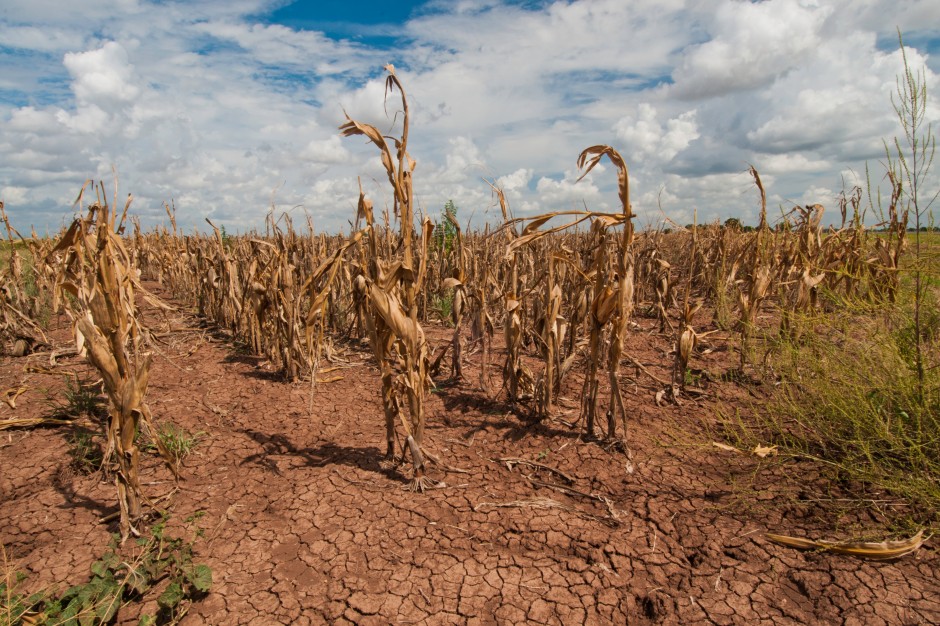
Swathes of dying cornfields and the lowest rainfall since records began have prompted South African insurers to cut cover for some crops planted by farmers. “As part of our constant negotiations with our re-insurance partners, there are some crops that will probably be excluded in certain areas as the risk is just too high,” said Andries Wiese, manager of the agricultural unit at Johannesburg-based Mutual & Federal Insurance Co., a unit of Old Mutual Plc. Farmers who missed deadlines to plant their corn in time to avoid winter frosts as they waited for rain, or whose drought-ravaged fields are too dry, can’t get cover. Vegetable crops in northern regions, sugar in KwaZulu-Natal and wheat in the Western Cape also pose too much of a risk for some insurers. Premiums for farmers who can get cover are rising. South Africa’s crop insurance industry is estimated to be worth about 1 billion rand ($60 million) in annual premiums, according to Wiese -- about 2 percent of the total property and casualty insurance market. That means its contribution to short-term insurers’ earnings is dwarfed by other businesses, said Risto Ketola, head of financials coverage at SBG Securities in Johannesburg, a unit of the country’s biggest bank by assets. “While the crop insurance results are likely to be dire, it represents a tiny market segment in the broader insurance sector,” he said. “Around 40 percent of the premiums relate to motor insurance and on that business line it can never be too dry.” Nonetheless, Mutual & Federal and larger rival Santam Ltd. are closely scrutinizing their farming customers before writing policies. Santam is only insuring crops planted within the optimum dates in land with sufficient soil moisture, said Gerhard Diedericks, the company’s head of agriculture. “Santam has tightened up underwriting measures in response to these conditions and this has resulted in premium increases in some areas. It’s possible new business volumes will decline due to the poor economic status of farmers and consumers.” Grain SA, the biggest South African grain and oilseeds farmer lobby group, last year estimated its members would plant 2.5 million hectares (6.2 million acres) in the 2015 to 2016 season. Thanks to the drought, only 50 percent of that was sown, according to Corne Louw, senior economist at the association. Those who want to plant now won’t qualify for insurance because they are too late, he said. “We might have to look into government helping us,” Louw said. “A subsidy or some sort of governmental insurance or scheme that will help bring down the cost of insurance down for farmers.” ‘Too Expensive’ The few corn farmers who do get enough rain may make a lot of money. White-corn futures in the continent’s biggest producer of the grain climbed to the highest on record and exceeded 5,000 rand ($298) a metric ton for the first time on Jan. 18. That’s no help to Ryan Mathew, who grows yellow corn in North West province and who couldn’t get insurance for his parched fields. Even if he could, the premiums were too high. “It’s too expensive to get insurance, we can’t afford it,” Mathew said. “They want you to pay 1,000 rand a hectare, we can’t afford that, especially now. We don’t even know if we will survive this year, to be honest. My father, who has been farming for 30 years, says he has never seen this situation, he has never seen it looking this bad.” Source - Bloomberg.com

21.01.2016

Bangladesh - IFC official says climate change threat to natural resource based businesses

The IFC is a member of the World Bank and Werner is its country manager for Bangladesh, Nepal and Bhutan. "These businesses (based on natural resources) are very vulnerable, they have practically no protection in the face of rapid climate change," Werner said while addressing the IFC's "Pilot Programme for Climate resilience" in Dhaka on Tuesday. She also called for more private sector involvement to ward off the hazards of climate change, especially in developing new climate resilient technologies. "ACI and Supreme Seeds are trying to develop climate resilient seeds to make agriculture sustainable in areas of Bangladesh affected by climate change. IFC has investments in both," Werner said, highlighting the IFC's efforts to help Bangladesh strategise to tackle climate change. Werner said climate change was being accorded top priority in policy making in both developed and developing nations. Claiming that IFC's "Pilot Programme for Climate resilience-PPCR" was the first of its kind in the world, Werner said the private sector was yet to be fully involved in combating the adverse fallout of climate change. "But the private sector must be involved, an effort has to be made for that," Werner said. World Banks Acting Country Director Martin G Roma said the global lender was giving 'maximum importance' to climate change in formulating its poverty alleviation and development strategies. "Adverse impact of climate change is an inescapable reality for countries like Bangladesh now. There is no way one could deny that." Kazi Shafiqul Islam, additional secretary of foreign ministry's economic relations division, said Bangladesh is one of the worst affected by climate change. "That is why much importance has been given to fund schemes to combat climate change in the country's Seventh Five year Plan". PPR has funded $ 110 million for projects in Bangladesh, without charging any interest. IFC has been involved in supporting various agro-business projects in developing climate resilience for the past ten years. They have mainly funded seed diversification to develop sustainable agriculture that can withstand adverse climate change. IFC works with Bangladesh's agriculture ministry in its new seed development program and to work out a policy for developing climate resilient agriculture. It has also worked with Green Delta Insurance to strengthen the crop insurance regime in the country. IFC's global investment in 'climate smart' programmes stood at $ 13 billion. In the last FY, an additional investment of $ 2 billion was made. Building technologies, agriculture and food security in an environment of adverse climate change were discussed at the conference on Tuesday by IFC officials. Source - bdnews24.com

21.01.2016

USA - Aspen Acquires Crop Insurer AgriLogic

Specialty insurer Aspen Insurance has acquired AgriLogic Insurance Services and certain affiliates for cash in a transaction that further diversifies Aspens’s specialty insurance business. AgriLogic, headquartered in Overland, Kansas, is a specialist U.S. crop insurer and agricultural consultant that reported estimated gross written premiums of $185 million in 2015. Terms of the deal were not disclosed. The company was founded as a consulting firm and leverages its technical capability and industry knowledge to provide its crop and agricultural insurance agents with customized risk management services for U.S. and international agricultural businesses. AgriLogic President and CEO Joe Davis will continue in his role, reporting to Brian Boornazian, chairman, Aspen Re and AgriLogic will form part of Aspen’s existing reinsurance operations, led by Michael Dicker, group head of Agriculture. “The development of a U.S. agriculture insurance platform is an excellent diversification for us, offering attractive return potential with modest incremental capital requirements, which is consistent with our strategy of enhancing returns to our shareholders,” said Chris O’Kane, Aspen Group CEO. Aspen’s move follows other recent deals in the crop insurance space. In December, Cargill Inc. agreed to sell its crop insurance unit to Silveus Insurance Group for an undisclosed amount and Zurich Insurance Group agreed to buy a Wells Fargo & Co. crop insurance business for as much as $1.05 billion. Last August, OneBeacon Insurance Group exited the crop insurance business when it sold its managing general agency – Climate Crop Insurance Agency – to AmTrust Financial Services. Source - insurancejournal.com

21.01.2016

New Zealand - Growers struggle for bumper kiwi crop in face of Psa and bad weather

Growers in New Zealand continue the ongoing battle with Psa and bizarre weather conditions are adding to their trouble; yet in spite of this, a bumper kiwifruit yield is still expected. Kiwifruit Vine Health communications manager Lara Harrison said spring had been "a tough one" for kiwifruit growers managing Psa. Figures showed in October 2015 the number of orchards with Psa in Tauranga, Te Puke and Katikati jumped to 2,051 from 1,978 in October 2014. Nationally the levels climbed to 2,757 from 2,595 over the same timeframes - a rise of 6 per cent. The wet, cold 2015 winter resulted in levels of Psa "that the industry had not experienced for a couple of seasons," she said. However, KVH chairman Peter Ombler said although that would have an impact the national crop was going to be large and overall it was winning the fight against Psa. Generally speaking the colder, challenged sites were more affected than the warmer sites, he said. Zespri supply chain general manager Blair Hamill said it received notification of a hail event that affected 70 orchards last month in Te Puna, Katikati, Kaimai and Oropi. An independent assessor had visited the affected orchards to make a preliminary assessment of the damage, which was estimated to be about 170,000 trays, he said. Zespri's hail insurance policy had a total pool cover of $12 million. It was too early to forecast current volumes but it predicted similar New Zealand volumes of green and another strong increase in gold volumes, Mr Hamill said. In 2015 there was a record green crop of more than 80 million trays and gold volumes were about 33 million trays with SunGold volumes increasing nearly three times from 10.6 million trays from the season before to 27.5 million trays in 2015/16. Papamoa kiwifruit grower Rob Thode said he expected to lose up to 15 per cent of his crop to Psa and was spending on average $2000 to $3000 per hectare on management. "It's a large budget and a fair chunk of my expenditure and a massive ongoing cost." Te Puke kiwifruit grower Don Heslop said he had a small amount of Psa in his orchards but "we are going to produce one of the best crops ever". Mr Heslop had about 10 hectares planted in three different varieties of kiwifruit and said although they had struggled with the weather, "we are in very good shape". Source - freshplaza.com

21.01.2016

India - New crop insurance scheme interests private insurers

The Pradhan Mantri Fasal Bima Yojana is likely to see a higher interest from private general insurers, with one authority to implement the scheme and availability of localised risk coverage. Insurance companies feel this will be beneficial since, unlike earlier where there was a claim subsidy, this scheme would offer premium subsidy and be more affordable for farmers. Last week, the Union Cabinet approved the scheme. A uniform premium of two per cent is to be paid by farmers for all kharif crops and 1.5 per cent for all rabi crops. For annual commercial and horticultural crops, it will be five per cent. The rest of the premium will be paid by the government, with no upper limit on the subsidy. Insurance executives said, by contrast, the Modified National Agricultural Insurance Scheme (MNAIS) had a high premium rate and farmers could not afford it. “There were multiple schemes — NAIS, MNAIS and weather-based crop insurance — with different implementing authorities. Now, with one scheme, it will be easier for us to be a part of it, since it covers almost all conditions,” said the chief executive of a mid-size private general insurer. Further, companies said, as all states have been asked to implement it, insurers will find it easier to be a part of the scheme. Sanjay Datta, chief of underwriting and claims at ICICI Lombard General Insurance, said they’d be keen to join. Adding of catastrophic events to this cover, such as protection from cyclone impact, would be beneficial. It is anticipated that there would be clusters formed of districts to implement the scheme. Senior officials said how these were classified would define how the premiums would be fixed. Insurers would wait for the contours of the classification before deciding to join. Anuj Tyagi, member of the executive management at HDFC ERGO General Insurance, said as farmer premiums would be down, the uptake of policies would be high. Use of technology being mandatory would improve operational efficiencyThe Pradhan Mantri Fasal Bima Yojana is likely to see a higher interest from private general insurers, with one authority to implement the scheme and availability of localised risk coverage. Source - business-standard.com

21.01.2016

Negative impact of fog on crop yield: experts recommend that government devise effective strategies

Leading experts on Wednesday expressed their concerns over negative impact of fog and change in rainfall pattern on crop yield, health and aviation operation and recommended the government to devise effective strategies for addressing these issues.  An International Conference on "Challenges in Water Security to Meet the Growing Food Requirement" organised here by the Pakistan Academy of Sciences (PAS), in collaboration with Association of Academies and Societies of Sciences in Asia (AASSA). Leading experts of Pakistan, Turkey, Malaysia, Korea and Nepal were the resource persons at this important scientific forum. In addition to technical presentations and discussions by the experts, three Panel Discussions of the workshop were led by senior scientists like Dr Amir Muhammed, Engr. Shamsul Mulk, and Dr Mubarik Ali. At the conclusion of conference, experts gave recommendations as a result of group discussions.  Dr Ghulam Rasool Director General (DG) of Pakistan Metrological Department said that winter fog is frequent with the passage of time and it is putting negative impacts on crop yield, health, aviation operation, and obstruction in transportation. There is a need to initiate action to investigate the reasons and develop strategies to address the problem.  He further said that shafting rainfall pattern has left severe impacts on season crops, which has declined, especially cotton yield and trees plantation in Nepal. There is a need to develop new varieties of best suit for the future climatic condition, he said. He maintained that agriculture meteorology department should be established in universities across the country adding that crops and livestock insurance scheme should be encouraged.  Another leading expert Dr Mushtaq Gill said that construction of small and large reservoirs without affecting delta is mandatory for coping with threats of climate change. He recommended institutional capacity building of stockholders and promoting high efficiency irrigation system with solar pumping in water stress areas.  Dr Mubarik Ali, Member Food Security and Climate Change, Planning Commission of Pakistan recommended that development of water accounting and auditing system is necessary for coping with current challenges and promotion of policies and technologies for efficient use of water.  He said that reform in agriculture marketing system will ensure fair price to farmers and establishment of good storage facilities for overcoming seasonal and annual fluctuation in food. While chairing the concluding session, Zahid Hamid, Federal Minister for Climate Change stated that despite the constraints of water scarcity and climate change food security for the fast increasing populations of Asian countries is achievable. He said this can be accomplished on sustainable basis by employing well thought of science-based solutions and strategies.  Source - brecorder.com

893
of 1224