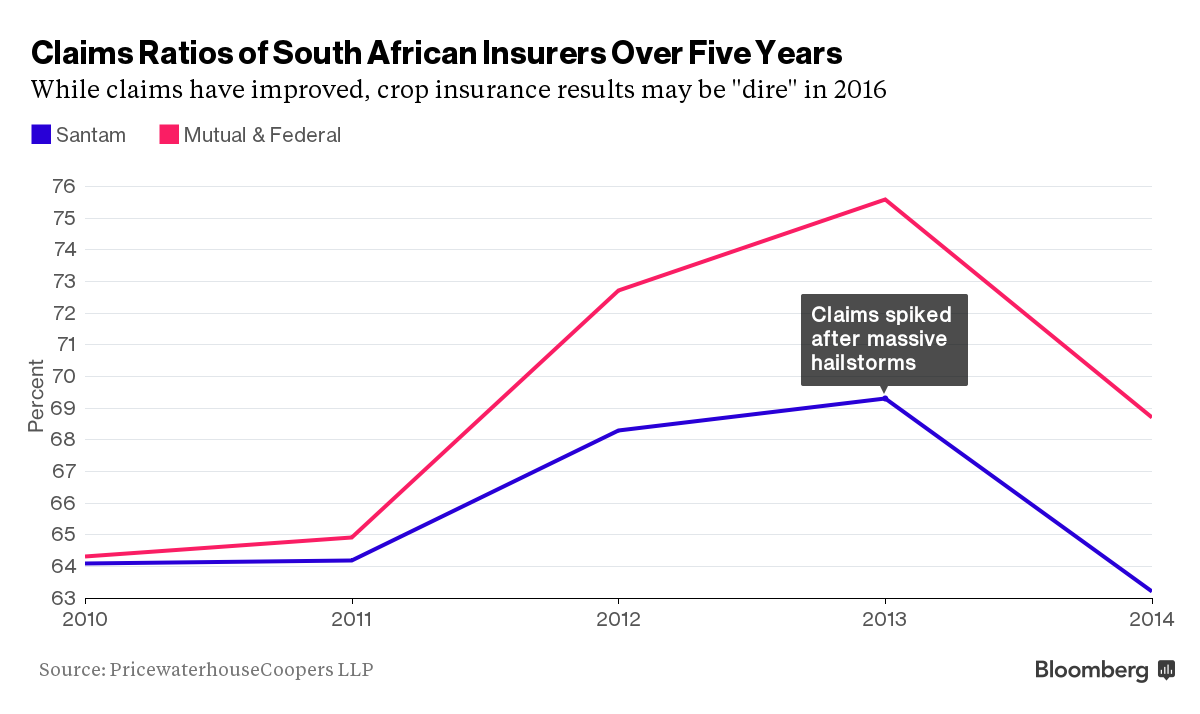
 Nonetheless, Mutual & Federal and larger rival Santam Ltd. are closely scrutinizing their farming customers before writing policies.
Santam is only insuring crops planted within the optimum dates in land with sufficient soil moisture, said Gerhard Diedericks, the company’s head of agriculture. “Santam has tightened up underwriting measures in response to these conditions and this has resulted in premium increases in some areas. It’s possible new business volumes will decline due to the poor economic status of farmers and consumers.”
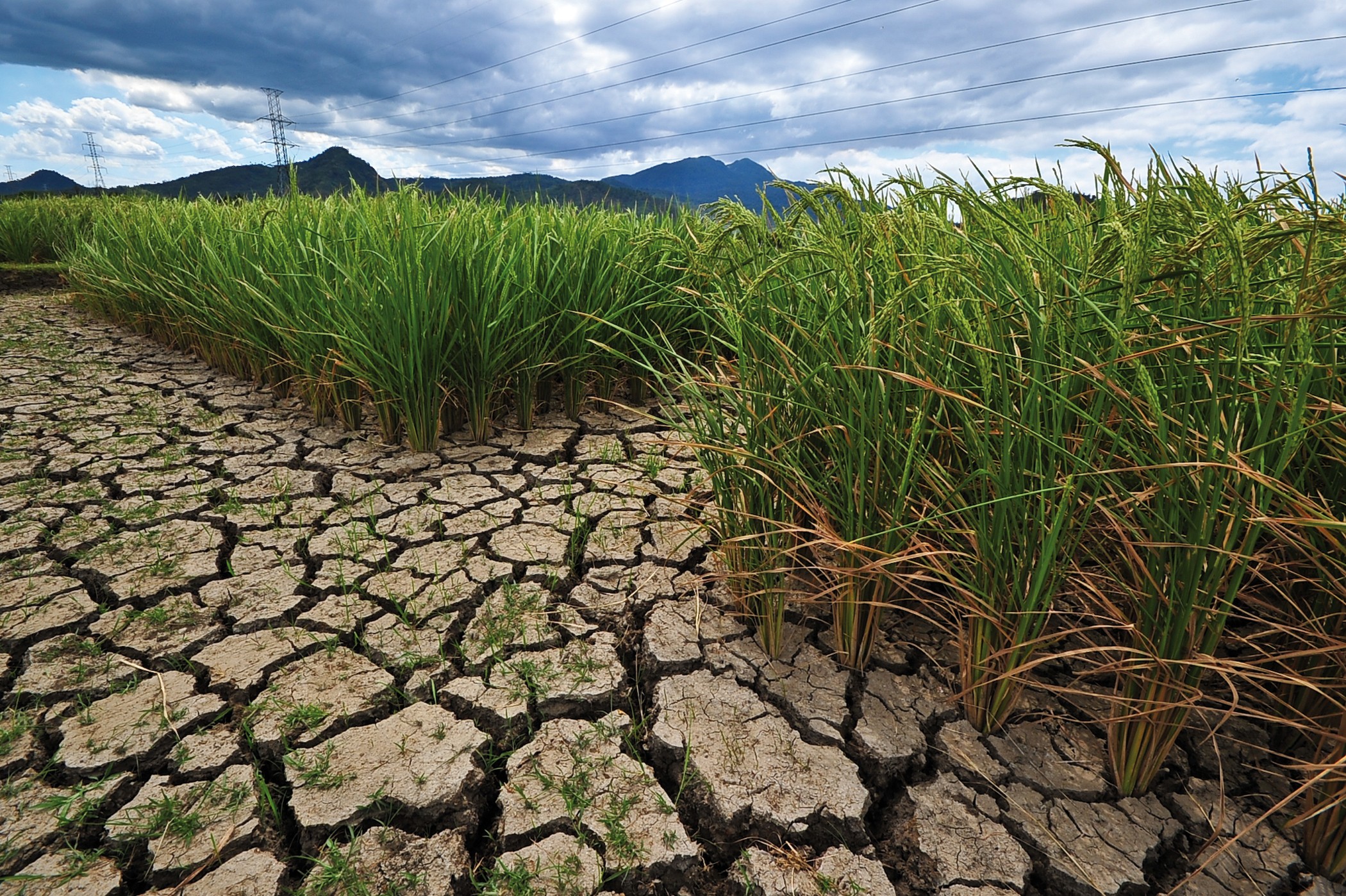
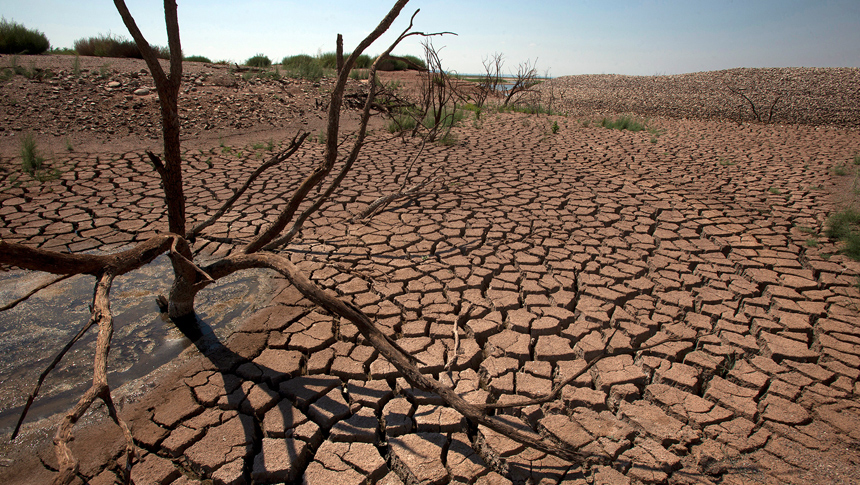
Grain SA, the biggest South African grain and oilseeds farmer lobby group, last year estimated its members would plant 2.5 million hectares (6.2 million acres) in the 2015 to 2016 season. Thanks to the drought, only 50 percent of that was sown, according to Corne Louw, senior economist at the association. Those who want to plant now won’t qualify for insurance because they are too late, he said.
“We might have to look into government helping us,” Louw said. “A subsidy or some sort of governmental insurance or scheme that will help bring down the cost of insurance down for farmers.”
Nonetheless, Mutual & Federal and larger rival Santam Ltd. are closely scrutinizing their farming customers before writing policies.
Santam is only insuring crops planted within the optimum dates in land with sufficient soil moisture, said Gerhard Diedericks, the company’s head of agriculture. “Santam has tightened up underwriting measures in response to these conditions and this has resulted in premium increases in some areas. It’s possible new business volumes will decline due to the poor economic status of farmers and consumers.”
Grain SA, the biggest South African grain and oilseeds farmer lobby group, last year estimated its members would plant 2.5 million hectares (6.2 million acres) in the 2015 to 2016 season. Thanks to the drought, only 50 percent of that was sown, according to Corne Louw, senior economist at the association. Those who want to plant now won’t qualify for insurance because they are too late, he said.
“We might have to look into government helping us,” Louw said. “A subsidy or some sort of governmental insurance or scheme that will help bring down the cost of insurance down for farmers.”
‘Too Expensive’
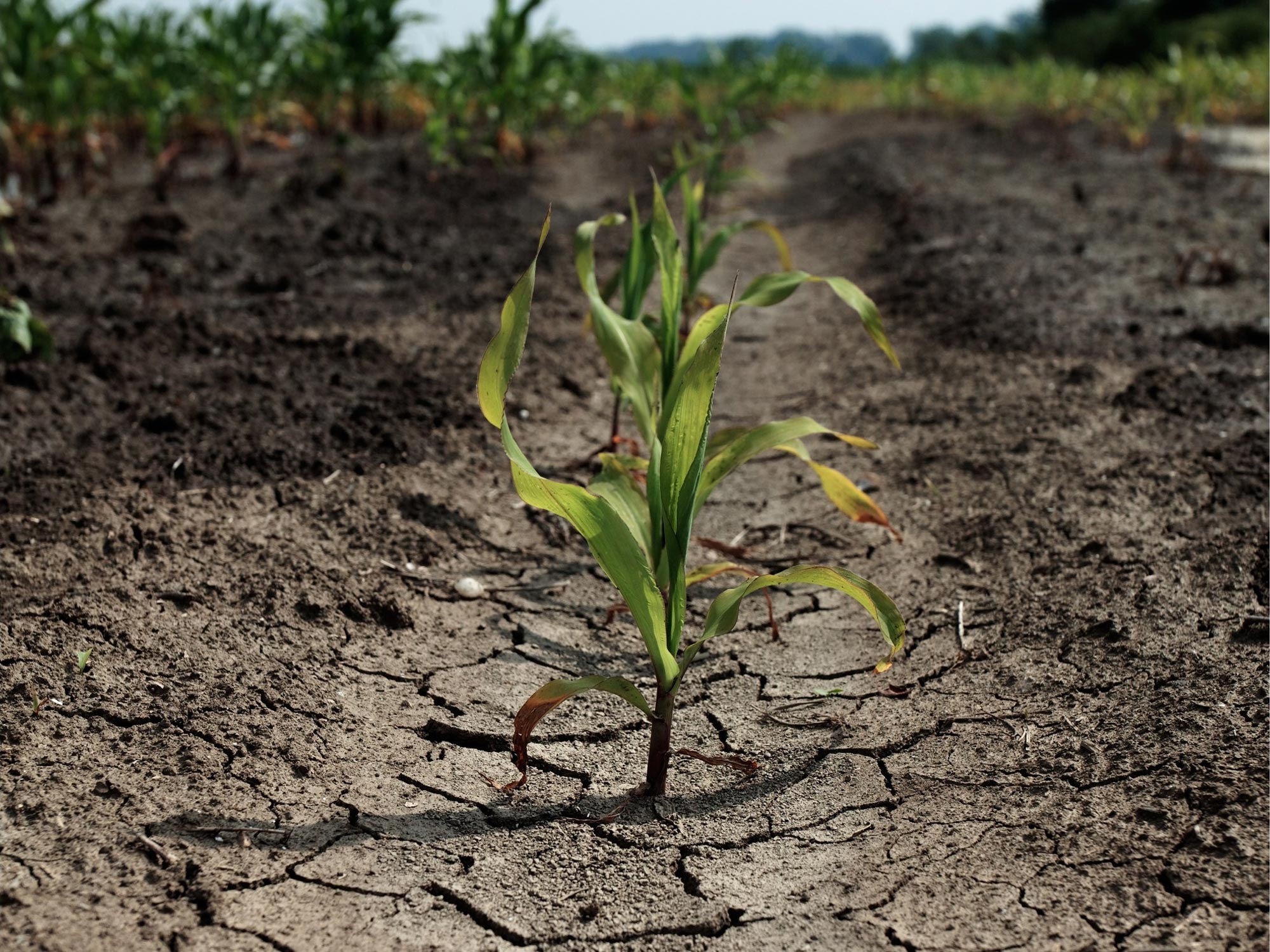
The few corn farmers who do get enough rain may make a lot of money. White-corn futures in the continent’s biggest producer of the grain climbed to the highest on record and exceeded 5,000 rand ($298) a metric ton for the first time on Jan. 18. That’s no help to Ryan Mathew, who grows yellow corn in North West province and who couldn’t get insurance for his parched fields. Even if he could, the premiums were too high. “It’s too expensive to get insurance, we can’t afford it,” Mathew said. “They want you to pay 1,000 rand a hectare, we can’t afford that, especially now. We don’t even know if we will survive this year, to be honest. My father, who has been farming for 30 years, says he has never seen this situation, he has never seen it looking this bad.”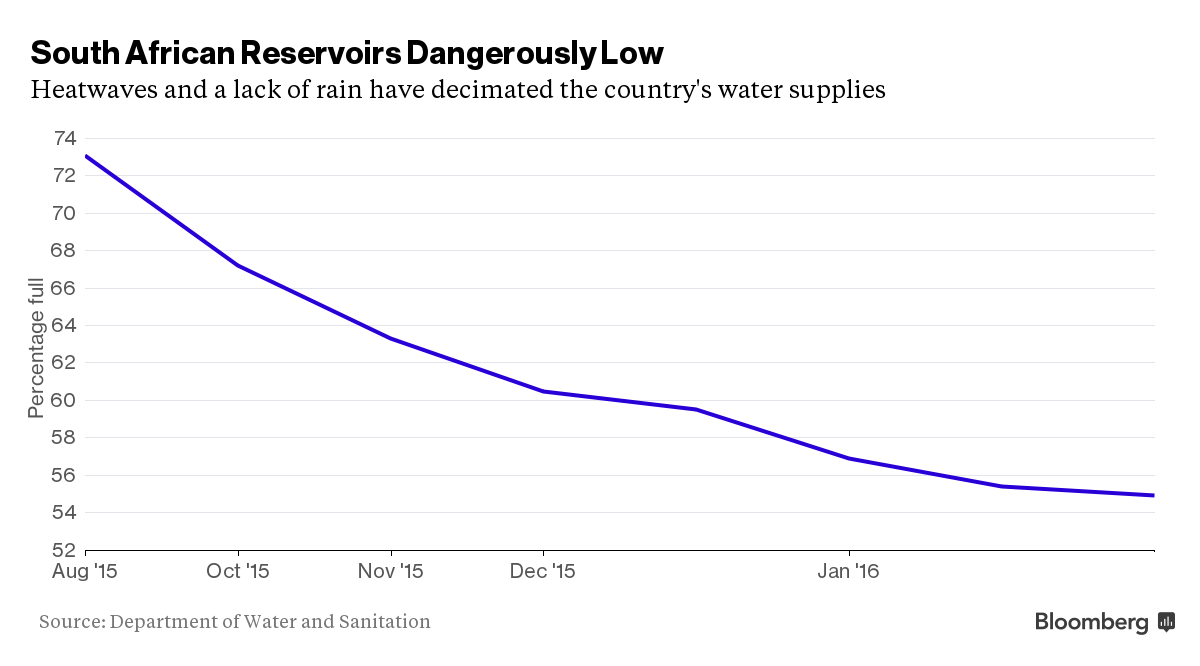
Source - Bloomberg.com