NEWS
895
of 1224
News
18.01.2016

India - Agriculture Ministry aims to achieve 4% growth in farm sector

Aiming to achieve 4% growth in the farm sector, Union Agriculture Minister Radha Mohan Singh today called for convergence of existing schemes to boost investment in the sector. "To achieve high growth in agriculture, we need to increase both public and private investments. We are looking at convergence of schemes to enhance investments in agriculture," Singh said while addressing a national conference on sustainable agriculture and farmers welfare here. Higher investment will lead to creation of backward and forward linkages besides support production, processing and marketing, he added. As per government data, public investment showed lower growth (11.42%) than private investment (19.81%) during 2004-05 to 2012-13. Currently, public and private investments are financed through two sources: loans from financial institutions by individuals and governments, and budgetary support from the central and state governments. Since the Centre and states have similar schemes for financing investments, there is duplication or concentration of activities in particular areas. Therefore, there is a need to pool the financial resources of the central and state governments. The three-day conference, after detailed deliberations with state agriculture ministers and officers, will recommend investment activities to be supported through public and private investment and accordingly schemes at the central and state level would be designed in an integrated manner. The suggestions with regard to investment and other areas will be placed before Prime Minister Narendra Modi tomorrow and may also find their way in the forthcoming Union Budget. Besides investment, Singh also emphasised on reforming the land lease policy, ways to improve credit flow in agriculture, effective implementation of crop insurance scheme, and establishment of national agriculture market. "Issues related to land lease have assumed importance, in view of its practice all over the country. But, lessees are not eligible for assistance from banks and governments. This is hampering productivity," he said. Sharing a success story of organic farming, Sikkim Chief Minister Pawan Kumar Chamling said that Sikkim is the first state in the country that follows fully organic farming. "We initiated organic farming in 2003 and have taken giant steps forward, turning into an organic state successfully. However, it would require further investments in diverse areas," he added. Chamling wanted the Centre to strengthen value chain, linking growers with consumers, support for distribution of seeds, certification, creation of facilities for collection, aggregation and value addition besides processing. Chamling also demanded central assistance in installing cold chain infrastructure, biofertiliser subsidy, special transport subsidy for movement of organic produce, and development of agri-export zone for organic products. He also wanted the regional centre of Indian Council of Agricultural Research (ICAR) to be converted into a national centre for organic farming. The Chief Minister also proposed an organic seed bank to be set up in the state. He pegged the global market for organic produce at USD 72 billion and wanted to promote organic agriculture in more organised and planned manner for it to emerge as the country's largest industry. Meanwhile, Ministers of State for Agriculture Sanjeev Kumar Balyan and Mohanbhai Kundariya also addressed the event. Source - wap.business-standard.com
18.01.2016

Philippines - More farmers get insurance coverage, benefits

The Philippine Crop Insurance Corporation (PCIC), a government-owned and controlled corporation (GOCC) under the Department of Agriculture (DA)registered two milestones last year when it shelled out more than P1 billion in insurance claims and covered more than one million farmers. In a report submitted to Agriculture Secretary Proceso J. Alcala, PCIC President Jovy C. Bernabe said the agency has “surpassed the one million mark in the number of farmers enrolled by PCIC as well as the one billion mark in the amount of damage claims (we have) paid in a year.” The report said the DA-PCIC has insured a total of 1.117 million farmers in its various insurance lines during the year. This is a 21.71 percent increase compared to the 917,814 farmers enrolled in 2014. Nearly half of them, or 545,425, were palay and corn farmers enrolled in the DA-PCIC’s core rice and corn insurance programs. In terms of damage compensation,  DA-PCIC said it shelled out around P1.1 billion,  48.96 percent higher than the P738.453 million paid to farmers in 2014. According to report, standing crops of the insured farmers were largely affected by the various weather disturbances that visited the country last year, particularly typhoons Lando and Nona which ravaged farmlands in Luzon last October and December, respectively. It added that the insured areas operated by farmers participating in the PCIC programs were spread out over 849,586 hectares, a size 7.24 percent greater than the 792,208 hectares in 2014. Source - mb.com.ph

15.01.2016

India - New Crop Insurance Policy is a step in the right direction but needs improvements

CSE welcomes the new crop insurance scheme but recommends further reforms to make it universal, inclusive and more effective Says insurance unit is still not at individual farmer level but at the administrative level such as tehsil, village, etc. which is a major problem in compensating losses of the individual farmers There is still no direct interface between insurance companies and farmers. This is a big lacuna in making the existing schemes less effective Use of technology is a good step but it is important to formalise a model which is viable Tenant farmers have not been covered under the new scheme which leaves out a large segment of farmers without insurance cover Frequency of extreme weather events and slow onset events such as droughts are likely to increase in the future due to climate change. India needs an effective, inclusive and universal insurance scheme to act as a safety net for farmers New Delhi, January 14: The Union cabinet, chaired by Prime Minister Narendra Modi, approved the new crop insurance scheme -- Pradhan Mantri Fasal Bima Yojna (PMFBY). The new scheme will replace two schemes – National Agricultural Insurance Scheme (NAIS) and the modified NAIS (MNAIS). In the case of Weather-Based Crop Insurance Scheme (WBCIS), the government said premium rates would be rationalized on par with PMFBY. The PMFBY will be effective from the April 1, 2016. In December 2015, CSE released a major report titled “Lived Anomaly: How to enable farmers in India to cope with extreme weather events”. The report highlighted the increasing vulnerability of farmers due to increased frequency of extreme weather events. The report recommended major reforms in agriculture insurance to strengthen the coping capacity of farmers. “Frequency of extreme weather events and slow onset events such as droughts are likely to increase in the future due to climate change. India needs an effective, inclusive and universal insurance scheme to act as a safety net for farmers. PMFBY is a step in the right direction, but it requires some key changes to improve its effectiveness,” said Chandra Bhushan, Deputy Director General, CSE. Salient features  CSE analysis shows that compared with the previous schemes, PMFBY has many positive feature and is a step in the right direction towards increasing coverage and improving effectiveness of crop insurance scheme. • The farmer’s share of the premium has been reduced to 2 per cent and 1.5 percent for all kharif and rabi crops, respectively, while for horticultural, commercial and annual crops it will be at 5 per cent. This will make the insurance affordable to a large number of farmers. • By keeping a uniform premium for the farmers and the balance premium amount being shouldered by the state and central governments (on a 50:50 basis), the target of insurance coverage for 50 percent farmers in 3 years seems relatively realistic. However, a lot will depend on the state governments and the union government to make their part of the payments on time. Delays in payments on the part of the governments will delay payouts to the farmers making the scheme ineffective. • The provision for capping actuarial premium rates, which resulted in a reduction in the amount of sum insured, has been removed.  In the previous schemes, due to capping of the premium rates, a farmer who faced a high risk could not insure the crop at a greater premium rate due to the capping. He would therefore have to absorb a majority of the financial risk on his own. The removal of capping would enable the farmer to claim against the full sum insured without reduction. • Earlier, the sum insured was the credit loan amount for a loanee farmer and maximum liability borne by the insurance company in the case of a non- loanee farmer. Under PMFBY, the sum insured under the new scheme will be based on the scale of finance for a particular region and for a particular crop, which will be based on the cost of cultivation. This will ensure that unlike the past schemes where the actual payouts to farmers were minimal, farmers will get more money to compensate their losses. A few misses  The new scheme does retain some key limitations of the previous schemes. • Insurance Unit still is based on the administrative unit such as block, mandal, nyay panchayat, etc. With such a large Insurance Unit (IU), loss estimation at the individual farm levels is never accurate. This means that some farmers will continue to get less money compared to their losses and some more. This has been a major concern voiced by farmer representatives and activists for a long time. As use of technology improves, changes should be made to make one farm as one insurance unit to make the scheme realistic in terms of gauging the losses and subsequent payouts. • PMFBY remains silent about the direct linkage between insurance companies and farmers. This leads to poor service delivery from the insurance companies. CSE analysis says there should be direct linkage between farmers and insurance companies. For loanee farmers, there should be a clear linkage and interface with the bank and the insurance company. For non-loanee farmers, there can be direct linkage with the insurance companies. • The monopolistic hold of one insurance company in an area will continue and farmers will still not have a choice to pick one insurance company over another. It is important that competition is encouraged among insurance companies so as to provide better services. • A majority of farmers who are tenants/cultivators or have taken land on lease cannot avail insurance, as they do not have documented proof of cultivating on a particular land. This is a flaw which needs to be considered and provision should be made for the cultivator to avail insurance and receive payout at the time of crop loss. Use of technology for loss estimation • PMFBY talks about using technology to a great extent, which is a welcome step. Smart phones and remote-sensing technology will be used to reduce the delay in processing payment claims. However, it is important that we formalise the use of technology through a model in which farmers will have confidence. • Even with more and more use of technology, dependence on the existing manual crop-cutting experiments or subjective method of visual examination of crop loss would play a major role in estimating losses. Currently, the existing crop loss assessment system, where the patwari plays the key role, is not transparent and is full of loopholes and corruption. The success of the new insurance scheme will strongly depend on strengthening and improving the institutions at the local level. • In the new scheme, there is no mention about developing an agriculture intelligence information system which is a platform to collect farm-level data on all parameters. This system will help estimate crop loss smoothly, accurately, quickly and in a more transparent manner. • CSE Director General Sunita Narain said, “Farmers in general do not have confidence in crop insurance schemes. Their wariness is, to a great extent, rooted in past experiences when they did not receive the insurance payout because of administrative issues, including incomplete or absent paperwork or identification, ineligibility due to changed circumstances or guidelines not followed. Operational guidelines of this new scheme need to be improved and implemented well to make it farmer-friendly in the real sense.” Source - cseindia.org

15.01.2016

South Africa’s drought devastates crops

Driving his pick-up truck down a dirt road, farmer Petrus Roux points to scorched fields that should be a sea of green maize, part of South Africa’s western grain belt. The worst drought in over a hundred years has devastated crops and could tip the economy into recession, adding to a loss of investor faith in president Jacob Zuma, pushing up food prices and possibly stoking social and racial tensions ahead of local elections. “As far as the eye can see, empty fields,” Roux said, pointing to pastures seared a rusty red. Alongside record temperatures, there has been a stampede from South African assets beyond the wider flight from emerging markets. The rand has fallen sharply, and analysts say a credit ratings downgrade to “junk” status is possible. Agriculture contributes only 2.2 percent to economic output, but a major farming contraction could turn slow growth into recession. This could push up the jobless rate from around 25 percent and widen the gap between rich and poor, factors already contributing to political tensions and exposing the racial rifts that Nelson Mandela tried to heal after years of apartheid. Online racial abuse spiked in the last month, and police had to deploy razor wire this week to separate crowds of whites and blacks protesting outside the court appearance of four white farmers accused of beating two black men to death. Sim Tshabalala, the head of Standard Bank, one of South Africa’s largest banks, said yesterday that racism and inequality were weighing on the economy. “There is pressure in the society over economic decline, and that pressure is playing out on social platforms,” said Gary van Staden, political analyst with NKC African Economics. Africa’s most industrialized economy grew 0.7 percent in the third quarter but that was after shrinking 1.7 percent in the previous three months. Some analysts are expecting a recession, usually considered to be two consecutive quarters of contraction, in 2016. This would make it harder for the ruling African National Congress, in power since the end of white-minority rule in 1994, to overcome a serious challenge from the liberal Democratic Alliance Party and the ultra-left Economic Freedom Fighters in mid-year local elections. Finance minister Pravin Gordhan said today the economy was not heading for recession. The government is forecasting growth of 1.5 percent in 2016, but recent indicators are downbeat. The rand, also hit by the slump in global commodity prices, slid 25 percent in 2015 and last week briefly plunged 10 percent to a record low of 17.995 to the dollar. This could push up inflation, currently 4.8 percent year-on-year, particularly if food is imported to compensate for the loss of domestic supply. Manufacturing output, which accounts for more than 12 percent of the economy, fell in both October and November. Finance, real estate and business services, the single largest contributor to output at around 20 percent, expanded 2.8 percent in the third quarter but is expected to slow. Agriculture, a particularly volatile sector, could make the difference. A 20 percent contraction in farming output, for example, could shave 0.4 percent off overall growth, analysts say. It shrank 12.6 percent in the third quarter after declining 19.7 and 18 percent in the previous two periods. “We are anticipating a recession this year and agriculture and the drought will be big parts of that,” said George Glynos, an analyst at Johannesburg-based financial consultancy ETM. A rise in food prices, a significant portion of spending for lower-income South Africans who are overwhelmingly black and many of whom have seen little economic improvement since the end of apartheid, could also contribute to tensions. South Africa may need to import as much as five million tonnes of corn this year, roughly half its requirements, producer group Grain SA said last week. The corn crop last year, when South Africa recorded its lowest average rainfall since records began in 1904, was down a third to under 10 million tonnes, and the harvest is expected to be much lower this year. Africa’s biggest corn producer is usually a net exporter of the grain. Futures prices for white maize, the main food staple for lower-income households, more than doubled last year because of the drought. “We expect general food prices to increase by 15 to 20 percent this year because the drought is hitting everything,” said Christo Joubert, head of the food price monitoring arm of the National Agricultural Marketing Council. That would increase political pressure on Zuma, already under fire for triggering financial turmoil by changing finance ministers twice last month. The central bank has repeatedly warned about drought and food prices and is expected to raise interest rates at the end of the month to curb inflation pressures. Analysts say Zuma has few tools to deal with the brewing problems and expect the ANC to spend money to win over voters. “The problem that underpins the annus horribilis of 2016 is no policy interventions to stop the backward slide. And with the local elections coming up, you will see fiscal indiscipline,” Van Staden said. Source - producer.com

15.01.2016

India - Rains wash away worry for crops like wheat, mustard and gram in North

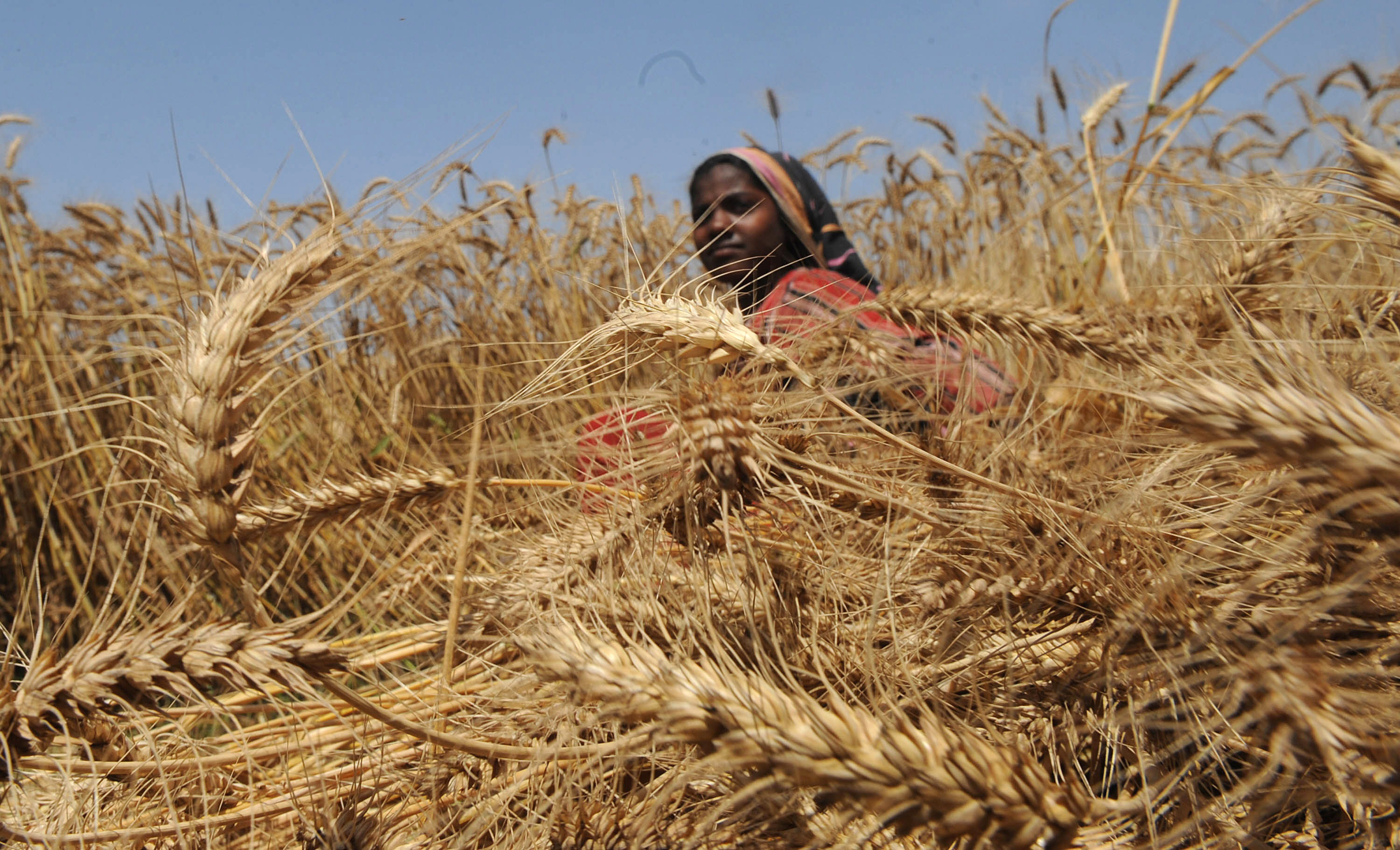
Rains in the North are expected to benefit crops which would have suffered if the unusually warm weather had continued. The major concern was for wheat, mustard and gram crop, which requires lower temperature for growth. The high temperature, however, has come as a boom for vegetable growers, particularly potato and tomato, as it has repelled pests which thrive in frosty weather. Temperatures will play a critical role for the next two months before harvesting begins and planting for summer crops starts. "Drop in temperature will help the standing wheat crop, which has two more months before harvesting begins," said Indu Sharma, director at the Indian Institute of Wheat and Barley Research in Karnal. "If weather remains conducive, the loss in production might not be huge." As on January 8, wheat has been planted on 28.2 million hectares, 6 per cent lower than this time last year, according to the agriculture ministry. In 2015, wheat production was 88.94 million tonnes, compared with 91.50 million tonnes the previous year. Source - economictimes.indiatimes.com

15.01.2016

Ghana - Fire destroys citrus and other crops

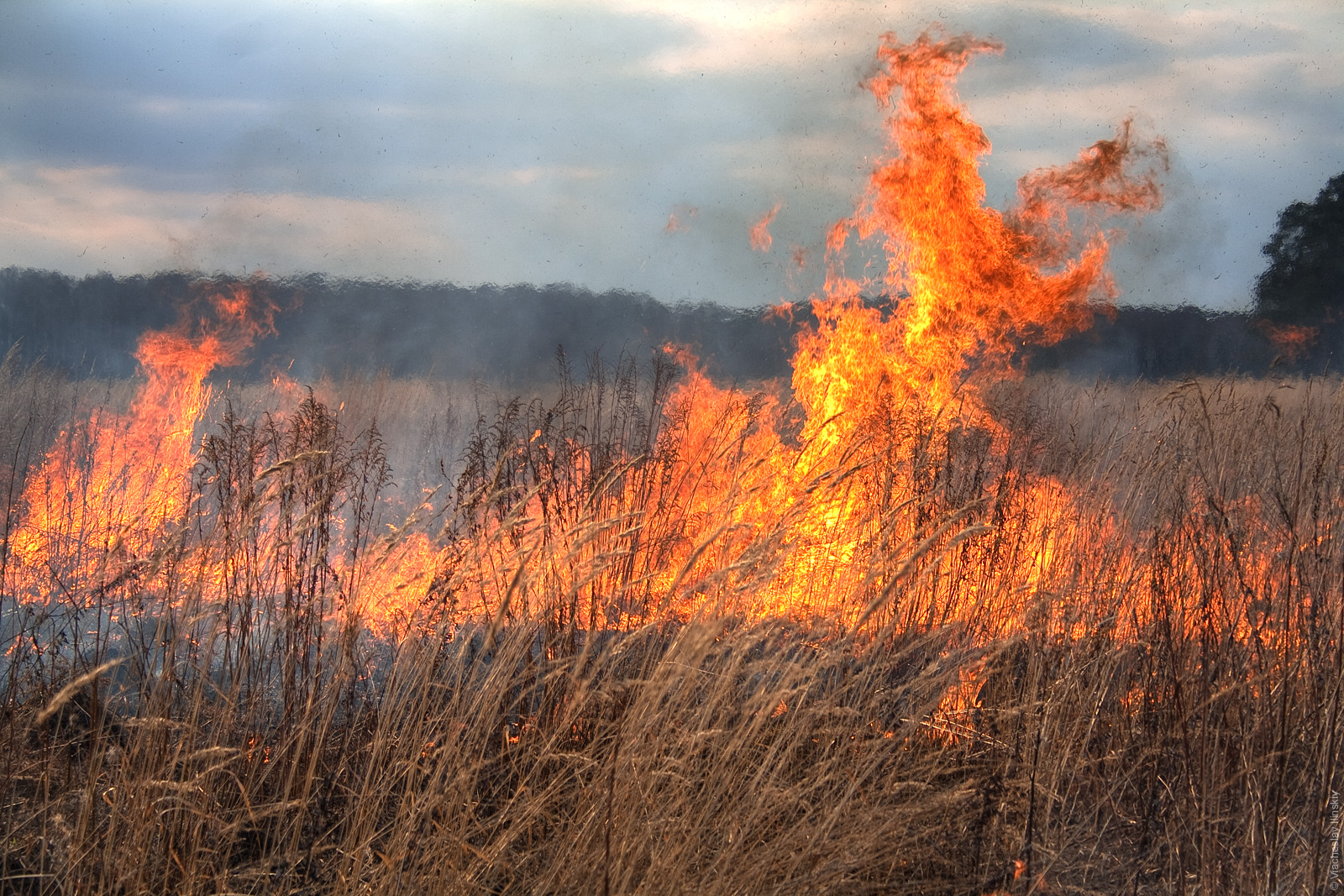
Wildfire which spread in the Asante-Akim Central Municipality in Ghana, ravaged more than 20,000 hectares of cash and food crop farms and has raised fears of imminent famine in the area. In all, about 10,000 farmers in six communities – Dwease, Praaso, Boatengkrom, Nsiakrom, Beposo and Nyamebekyere were affected. The uncontrolled fire, fanned by strong winds and the dry conditions, raged for three days running, laying to waste cocoa, plantain, cassava and cocoyam, citrus and other crops. The fire was believed to have started from the Dome Forest Reserve and quickly spread to the nearby farms, licking up everything on its way. Alhaji Braimah Boyong, the Municipal Chief Executive (MCE), had led a team of officials of the assembly, to assess the extent of the damage. He labelled it as a “tragedy”, considering the huge number of farmers, who had lost their farms and investment. The MCE said the impact on food security would be far-reaching as the affected communities had been producing the bulk of food crops in the municipality. Source - freshplaza.com/

15.01.2016

Canada - Twenty-five recommendations to help Manitoba farmers mitigate climate change

Programs 1. Consider a new permanent cover program to compensate producers for taking marginal land out of production. 2. Encourage insurance programs to promote the use of novel crops and ensure programs respond more quickly to the impact of climate change. 3. Continue to promote policies that reward and incentivize best management practices, including reforms to insurance, extension activities and other government programming. 4. Continue to develop the Excess Moisture Insurance program so that premiums and coverage reflect the risk and improve the long-term viability of the program. 5. Work with the federal government and other provinces to renew the AgriStability program in a way that deals with the expected effects of climate change. 6. Consider predictable compensation for producer’s losses in designated areas due to mitigation measures, and discuss shared funding options with the federal government. 7. Consider reforming AgriInvest so it can act as an incentive for best management practices among producers. Research 8. Support the Aquanty HydroGeoSphere modelling project to provide data to better inform decisions on policy and programs. 9. Examine practices employed by irrigation districts in Alberta to see if Manitoba can learn from them to improve water management through its conservation districts. 10. Explore development of whole-farm revenue insurance. 11. Research use of weather derivatives as a business risk management tool for producers. 12. Encourage ongoing and new research into perennial grain and win- ter cereals with a view to determine how different crop varieties handle wet and dry conditions. 13. Restore federal funding to public research, including research in the areas of climate change mitigation and adaptation for the agricultural sector. Mitigation 14. Recognize that mitigation activity requires a federal funding arrangement and should be part of negotiations for Growing Forward 3 or an equivalent program. 15. Support the BASIC program as a pilot program that encourages infra- structure investment by creating a fund for mitigation works. 16. Continue to develop and promote best practices program (Environmental Farm Plan focus) to encourage best management practices (e.g. tillage, crop rotation, tile drainage, equipment). 17. Renew investment in conservation districts — outcome to improve drainage or storage of water in current problem areas. 18. Conduct a comprehensive assessment of the role catastrophe insurance could play in mitigating the financial impact of weather-related disasters on the province (e.g. reinsurance for Manitoba and municipalities). 19. That the Manitoba government and its departments consider work- ing with the International Institute of Sustainable Development to develop advanced climate and weather forecasting programs. Other 20. Remove permanent Class 4 wetlands from municipal taxes through federal-provincial cost sharing. 21. Create a province-wide comprehensive approach to LiDAR to provide additional elevation and water management data to benefit agro-environment policy, program decisions and on-farm best practices and productivity. 22. Continue to encourage more constructive use of biomass (e.g. cattails). 23. Share best practices in municipal water management and infrastructure. 24. Ensure any subsequent negotiations with neighbouring jurisdictions such as the Prairie Provinces Water Board and the International Joint Commission include a focus on climate change. 25. Continue to invest in education and extension programming. Source - manitobacooperator.ca

15.01.2016

Mexico - Yellow dragon disease detected in Tamaulipas

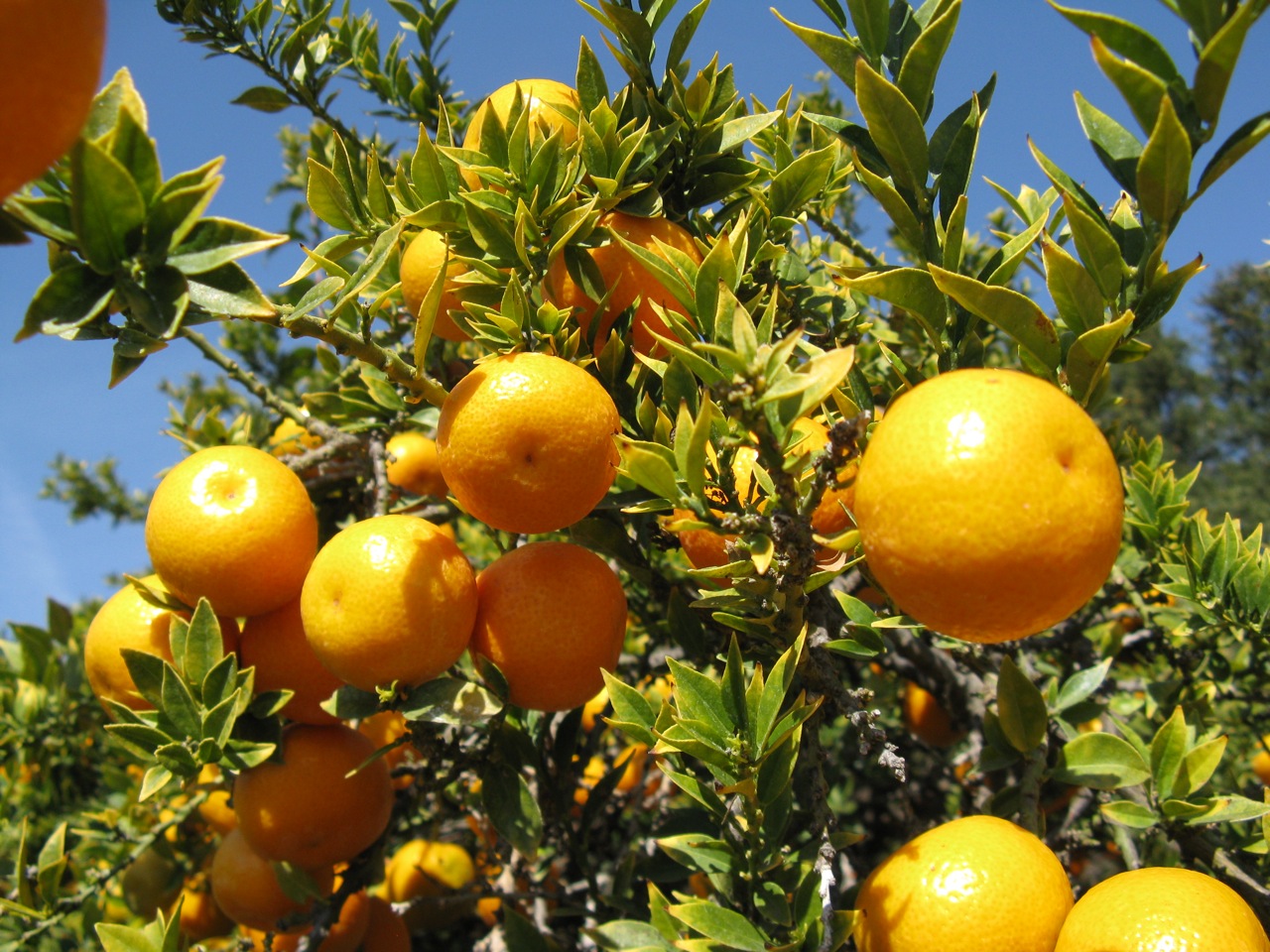
The citrus sector in Tamaulipas is seriously threatened by the presence of yellow dragon disease, which in less than three years has devastated more than 80 percent of the citrus surface in Colima and Michoacan. The risk in the central area devoted to this activity is enormous, as the psyllid infected by this disease have been detected within the 44,000 hectares devoted to the production of oranges, limes, and other citrus in the municipalities of Victoria, Padilla, Güémez, Hidalgo and Llera. Thus, inevitably, diseased trees will begin to appear pretty soon. Javier Ibarra Echartea, president of the Emiliano Zapata citrus growers union, which is part of the National Peasant Confederation (CNC), said his colleagues had already detected several cases of affected commercial plantations, but that they still hadn't found any infected tree. Each diseased tree, he said, must be destroyed immediately to prevent the plague from spreading. He also stated that this was the first time that the citrus industry was facing a risk that could wipe it out completely as there is currently no cure for this disease. Therefore, the preventive work through spraying is really important. If the citrus sector disappears, he said, it would be a terrible blow to the economy of central Tamaulipas because at least 250,000 people, including farmers, their families, pickers, and transporters depend on this sector, as well as other trade activities that benefit from it indirectly. He recognized that they were concerned that the disease could start attacking trees, which would require they sacrifice them to prevent the spread of this pest. The insect, he recalled, was first detected in backyard trees. Source - freshplaza.com

14.01.2016

Australia - Phone app to improve crop irrigation

In Western Australia, cooperation between a team from the Department of Agriculture and Food Western Australia (DAFWA) and computer programmers, has led to the creation of a new and free phone app. This app, Irrigate WA, has been developed to help West Australian farmers schedule watering time, volume and duration. The app uses real-time data from 136 weather stations across the state to provide specific scheduling information to individual farms. James Dee a project manager from DAFWA who has been working on the app, said it was an area where farmers needed assistance. "Irrigation scheduling is actually quite complex as it is dependent on understanding how much water the plants are transpiring, how much water is actually stored in the root zone of the plants and how effectively your root zone is storing water," Mr Dee said. Irrigate WA can assist irrigation farmers by calculating the plant water use for each crop and allowing farmers to track overall water use. Mr Dee said the app was designed with broad appeal and can be used alongside any irrigated fruit or vegetable crop. The app is currently available to be downloaded, however, initially farmers need to register through the DAFWA website. Source - freshplaza.com

14.01.2016

Uganda - 400 Farmers Trained in Better Post-Harvest Handling Skills

More than 400 farmers from Mubende, Kyegegwa and Kibaale districts have been equipped with skills to enable them minimise the post-harvest losses. These are mainly attributed to the damp conditions during storage which aid mould growth and the associated risk of aflatoxin contamination. At a recent workshop held in Mubende Town, Kenneth Oweyesigyire from Aponye Uganda--a company that deals in agricultural produce, noted that most of the produce is of low quality. "Post-harvest handling involves management of commodities before they are processed, which includes drying, storage, protection against pests and moisture regulation," he explained. "But many farmers poorly harvest their crops and some of them spray the crops with pesticides so that they can dry faster, others harvest crops before they are really dry enough thus compromising quality." He urged the farmers to develop bulk marketing strategy where they can set up groups so that they have a central point to market their produce. Massive losses Several farmers at the workshop admitted that they make many mistakes during the post-harvest period, and acknowledge that the training was an eye-opener. "Many of us lack the money to purchase improved technologies. But we believe that when we work in groups it will be easy for us to address such challenges," said Christopher Damulira, a farmer from Mubende District A survey by Uganda Cooperative Alliance and Uganda National Farmers Federation showed that many farmers were registering massive losses due to poor post-harvest handling . It revealed that Mubende and Masindi are the hardest hit districts, registering more than Shs16b in post-harvest losses per annum. Most farmers who incur losses during harvest account for 67 per cent ,followed by storage (12 per cent) and drying (10 per cent ). In Mubende, for instance, the average weight loss as a result of poor post-harvest handling is 30,000 metric tonnes of maize alone, worth more than Shs13b, while in Masindi, farmers lost grain worth Shs12.5b last year. Source - allafrica.com

14.01.2016

India - Rs. 95 crore released for crop loss

Minister for Mines and Geology and district in-charge Vinay Kulkarni has said that considering the crop loss to farmers in Dharwad district due to the drought this year, the State government had released Rs. 95 crore as compensation. Addressing presspersons here on Sunday, Mr. Kulkarni said that the State government move follows the proposal sent by the district administration regarding providing compensation for the crop loss. “Because of drought, the farmers in the district completely lost the kharif crop and the district administration had sent a proposal seeking a relief of Rs. 300 crore. The Cabinet sub-committee formed by the State government visited various parts of the district and based on its recommendation, Chief Minister Siddaramaiah has released Rs. 95 crore towards relief for the farmers,” he said. Meeting The Minister said that a meeting of district-level officials would be convened and steps taken to provide compensation to farmers within a week. He said that the farmers who had cultivated Bengal gram for the rabi season too had incurred loss as the yield had been reduced by half in Dharwad district. The issue would be brought to the notice of the State government also, he said. The Minister alleged that the Union government was not sanctioning funds under the Sarva Shiksha Abhiyan, although there were several old schools in Dharwad district which required funds for carrying out renovation of the weak buildings. BJP leaders from the district should prevail upon the concerned Union Ministry to get funds for these schools, he said. Mr. Kulkarni also demanded that considering the plight of the farmers in distress, Prime Minister Narendra Modi should waive off the farm loans just like his predecessor Manmohan Singh who had waived Rs. 72,000 crore of farm loans. Source - thehindu.com

14.01.2016

India - Cabinet clears new crop insurance scheme

In a major decision, the Union Cabinet on Wednesday cleared the new crop insurance scheme christened as 'Pradhan Mantri Fasal Bima Yojana. Under the scheme, farmers would have to pay low premium of 2% on kharif crops, 1.5% on rabi crops and 5% on annual commercial and horticulture crops like cotton. The scheme will come into force from April 1 for kharif plantation. Since the premium rate is unviable for any insurance company, the central and the state governments will share the balance premium. Also, there would be no upper cap on the central subsidy even if it goes up to 90%. As against the Centre's present annual subsidy bill of Rs 3,000 crore, the new scheme will cover 30% farmers in the first year with subsidy of Rs 5,400 crore, 40% in the second year (Rs 7,200 crore subsidy) and 50% in the third year (Rs 8,800 crore). The central government has also asked states to give legal rights to tillers who take land on lease or rent in order to enable them to take out the insurance of the crops. Asked about the insurance companies involved in the new scheme, agriculture minister Radhe Mohan Singh said none has been selected so far, but tenders would be floated soon to have one or two insurers in each state. For better coordination, a cluster of 15 to 20 districts would be created for choosing the insurers. So far the farmers had to pay 15% premium, mandatory if they take the bank loans, and that too with a cap to limit the government outgo on the premium subsidy. This cap has been removed and the farmers will get the claim against the full sum insured without any reduction. They can insure crops even if they take no bank loan. Delay in payments in case of crops destroyed in the natural calamities has been addressed by planning capture of the damage through the smartphones and remote sensing system to ensure payment to farmers at the earliest. Earlier, there was a provision of capping the premium rate which resulted in low claims being paid to farmers. This was done to limit government outgo on the premium subsidy. This clause has now been removed and farmers will get claim against full sum insured without any reduction. The use of technology will be encouraged to a great extent. Smartphones will be used to capture and upload data of crop cutting to reduce the delays in claim payment to farmers. Remote sensing will be used to reduce the number of crop cutting experiments. The definition of crops is also being expanded to cover the damage to both seeds and the harvested crops instead of limiting it to the standing crops, and the insurance will even cover loss of cattle, cattle sheds, etc destroyed in any natural calamity. The localised risks from inundation as also hailstorms and landslides will be covered while the post-harvest losses will be covered in case of cyclonic or unseasonal rains. Source - dnaindia.com

14.01.2016

India - Warm winter may cut India's wheat output for second straight year

India's wheat output is expected to fall for a second straight year in 2016 after a series of bumper harvests since 2007 due to an unusually warm winter in central and northern India. India, the world's second-biggest wheat producer, will likely weather the storm as it is sitting on surplus stocks. But lower wheat output will deepen the crisis in the countryside where adverse weather conditions have been a bane of late. Despite last year's lower output, the crisis has remained confined to farms but any further damage to the crop could start pinching the public if state stocks get drawn down. In 2015 untimely hail and rains during harvest cut output to 88.94 million tonnes from 91.50 million tonnes a year earlier. "We are observing higher than normal temperatures in most parts of the country, including central and northern India, where wheat is the main crop," Indu Sharma, chief of state-run Directorate of Wheat Research, told Reuters by phone from the northern city of Karnal, a wheat belt. If higher temperatures are going to imperil the crop yield, yellow pest infestation has come as a double whammy. "We've asked farmers to spray fungicide but there are chances that the pest infestation will spread to more areas in Punjab, Haryana and Himachal," Sharma said referring to the key wheat producing states of northern India. Wheat planting began on a slow note after two successive droughts. A lag in wheat planting typically leads to lower yields. "A lack of moisture in the soil, the absence of spring rains and higher temperatures couldn't have happened at a worse time. At the moment we see our production at 87-88 million tonnes," said Sharma. So far the worry was the fall in the area planted with the crop but dry weather conditions have now come as the second hurdle, she said. Provisional estimates suggest farmers have so far planted wheat on 28.17 million hectares, nearly 6 percent lower than the previous year. Farm Ministry officials say wheat acreage is likely to drop by a million hectares against an average area of 30 million hectares. "We'll have to keep our fingers crossed and pray that temperatures don't go up any further in February and March when the crop is ready for harvest lest production could fall below our estimates," Sharma said. The one redeeming feature is the grain bins brimming with 23.8 million tonnes of wheat against a government target of 13.80 million tonnes. Source - in.reuters.com

14.01.2016

USA - California citrus unaffected by wet weather

So far, the Californian citrus harvest is progressing well between the storms, an uncommon problem after four years of drought. However they are still facing problems with water supply, infrastructure, pests, regulatory constraints and uncertain market conditions. Kevin Severns, a Sanger citrus grower and general manager of Orange Cove-Sanger Citrus Association says they are a quarter of the way through the harvest which he expects will continue into May. If harvest delays stack up, the growers and shippers may get stuck with overripe fruit late in the season, he said, "but now quality is excellent." This season's navel orange crop is forecast to be slightly smaller than last year, an estimated 81 million cartons, produced on fewer acres and yielding somewhat smaller fruit, the U.S. Department of Agriculture crop survey predicts. The forecast includes conventional, organic and specialty navel oranges, including cara cara and blood orange varieties. California's grapefruit production is down 1 percent from the 2013-14 season, but lemon production is up 9 percent, USDA crop analysts found. Tangerine and mandarin production in California is up 24 percent from last season with continued increase in planted acres. Most packinghouses have planned for a wetter winter and as opportunities occur between storms, growers are moving enough fruit into processing plants to carry packing and shipping activities for a week or more at a time, said Bob Blakely, vice president of Exeter-based California Citrus Mutual. Another challenge, he said, is the threat posed by the Asian citrus psyllid. The California Department of Food and Agriculture said Dec. 28 that southern Stanislaus County has been placed under quarantine for ACP following detection of two psyllids within the city of Turlock. Source - freshplaza.com

13.01.2016

USA - Farm economy continues to concern Illinois farmers

Considering the current farm economy, 66 percent of Illinois Farm Bureau members surveyed prior to the organization’s annual meeting in early December feel less optimistic about the farm economy in the coming year compared to 2015. The answer was in response to an email survey of 327 IFB members registered with IFB’s Legislative Action Center. “For the second year in a row, IFB members said they feel less optimistic about the coming year, and it’s no surprise as to why,” said Richard Guebert Jr., president of the Illinois Farm Bureau. “Over the last year, commodity prices have stayed below break-even levels. Input costs like cash rent, crop protection and seed have not receded to follow the drop in commodity prices.” As a result of their concerns over the farm economy, 84 percent of respondents said they plan to reduce inputs or expenses in 2016. When asked specifically how they would do so, 91 percent of respondents said they plan to delay implement purchases over the coming year, while 45 percent said they would delay or cut back on chemical and fertilizer purchases. Additionally, 38 percent said they would negotiate lower cash rent; 37 percent said they would buy less expensive seed; 24 percent said they would incorporate new technology; 11 percent said they would choose a lower level of crop insurance coverage; and 9 percent said they would give up a portion of rented ground for 2016. (Respondents were instructed to choose all options that apply.) Concerns over the farm economy were added to concerns regarding regulatory and legislative issues. Respondents were asked to rank several priority issues in terms of importance in the coming year. The top concern was striking down the Waters of the U.S. rule, which defines which rivers, streams, lakes and marshes fall under the jurisdiction of the Environmental Protection Agency and the Army Corps of Engineers. That concern was followed by tax reform, maintaining the viability of federal crop insurance, preserving the Renewable Fuels Standard and making transportation infrastructure improvements. “As we look toward the coming year, farmers are going to have to carefully consider every decision they make to ensure they’re protecting their farms and are able to survive the farm economy downturn,” Mr. Guebert said. “We’re doing our best to provide our members with the information they need to make those tough decisions that will keep their farms on secure financial footing.” Members also were polled regarding their conservation- and nutrient-management efforts. Just over 92 percent of respondents said they regularly test soil for potassium and phosphorus levels; 65 percent said they use variable rate technology for fertilizer applications; 56 percent split nitrogen applications; and 55 percent follow the University of Illinois Agronomy Handbook recommendations for phosphorus and potassium applications. (Respondents were instructed to choose all options that apply.) Additionally, 46 percent of farmers said they have used cover crops in the past, with 76 percent having planted cover crops for five years or less. Of those who have not used cover crops, 64 percent said they would be willing to do so in the future. Eighty-four percent of farmers said they have installed buffer strips along streams or ditches on their farms. Nearly 53 percent of farmers said they receive no cost share or incentives for their best management practices. “This is the fifth consecutive year we’ve surveyed members to gauge their feelings on key IFB issues, concerns and conservation practices,” Mr. Guebert said. “It helps us as leaders ensure we’re tackling the issues and needs of our members and prioritizing our resources to the best of our abilities.” The Illinois Farm Bureau is a member of the American Farm Bureau Federation, a national organization of farmers and ranchers. IFB has a total membership of more than 400,000 and a voting membership of more than 82,000. IFB represents three out of four Illinois farmers. Source - qconline.com

13.01.2016

Assessing risk in the farm business

The process of assessing risk in a farm business is no different than in any other business. In agriculture, however, the types of risks in agriculture can be unique. How an individual views risk, how much they want to accept and how they manage it varies from person to person. Even so, there is a widely accepted framework that forms a logical and comprehensive process to assess and determine your approach. This article describes the framework and gives some suggestions on how to use it. Risk ‘Heat Charts’: The chart is called a heat chart (see at top of page). The more intense the colour, the more “heat” the business takes from an adverse event. Developing a heat chart for your farm is done in a series of steps, which are explained below. Step 1: Identify things that can go wrong This may be the most important step because it can be easy to miss or to avoid thinking about the very thing that causes the business to fail: this is the “Black Swan” concept, based on the book that was quite popular a few years ago. It’s important to be thorough and comprehensive. In our management courses we use the external and internal environment models developed by Michael Porter at Harvard to gauge risks faced by a farm business. They are simply comprehensive approaches to thinking about the risks in the external environment and internal environment. Risks in the external environment: Markets and customers: This can include anything from declines in commodity prices to loss of an important customer. The latter can include a range of negative events from a customer switching to another supplier, to a customer in financial difficulty who fails to pay a significant receivable. (Each event should be given an identifier: a price decline could be 1a; switching to another supplier 1b; failing to pay 1c, and so on for all the events identified.) Policies, laws and regulations: Many farmers are keenly aware of changes in environmental, land ownership, pesticide or animal welfare regulations, or changes in BRM payments or procedures. Socio-economic factors: This could, for example, include consumer concerns about red meat, pesticides, changes in ethnicity. Are there trends that threaten the market for what you produce? Competitors: Some farmers don’t consider others as competitors, but they can be if, for example, they adopt effective technology that drives their costs down. They certainly can be competitors for land that you want to buy or lease. Also, think about competitors in other countries; for example, Brazil is a growing competitor against Canadian grain and oilseed producers. Risks in the internal environment: People: This includes death or serious illness of a key person, including yourself; a key employee quitting; loss of support of key management in a related company; divorce; family feuding over any number of things that families feud over, especially in succession planning. Assets: Obviously this encompasses fire, property damage, hail, important off-farm investments. Finance: This requires understanding your financial position, especially debt service capacity and how it interacts with both production and markets. Processes: Business process involves all the activities from obtaining inputs to delivering and collecting on final products. Risks then include the possibility of breakdown, sabotage, or becoming outdated. Step 2: Estimating potential impact Once the potential events are identified, the next question is how bad will it hurt if each occurs? This will vary with the event. It often helps to get input from key employees or others familiar with your business. The bottom line is that you need to be realistic about the damage an event would cause, both in the short term and long term. Also, it’s important to be as realistic as possible. Look again at the heat chart, and note that it is set up as five levels of impact from negligible to extreme. These categories can be converted to dollar amounts that fit your farm to make the process more vivid. Step 3: Estimating the likelihood of occurrence This step is as described. Assign a likelihood on whether the event will occur. Note that the heat chart has five categories from remote to probable, which are translated into probability ranges. As with the potential impacts in Step 2, it is important to be as realistic as possible for each potential event. Completing the Heat Chart When you have the impacts and likelihoods estimated for each possible event, plot them into the various cells in the heat chart, using the identifiers for each. This will give a visual representation of the risks and their distribution. Some people then use a minimum numerical score (e.g. 10 and above) to decide which risks to manage. This then leaves the final step of developing a risk management plan for those events that qualify. The appeal of this approach is that it gives managers the opportunity to be as comprehensive as possible in identifying potential risks and it forces them to think seriously about their likelihood of occurrence and impact on the farm business if they occur. Source - country-guide.ca

895
of 1224