NEWS
896
of 1224
News
13.01.2016

Brazil - Growers Want WTO Case Against Crop Insurance Program

Brazil soybean growers are mulling over a World Trade Organization case against the U.S. crop insurance program.  That and recent domestic attacks against crop insurance are a concern to many U.S. soybean farmers.  Minnehaha County farmer and American Soybean Association Director Kevin Scott says they are surprised by this recent opposition to what is a good and viable program for growers. He says crop insurance is a necessary program for growers.  Plus it’s economically responsible and not as expensive as ad hoc disaster. Scott says the U.S. federal crop insurance program is not a difficult one to maintain and is a good partnership between insurance companies and the federal government. There has been no confirmation as to whether or not the Brazilian government has given their soybean growers a positive response on making a WTO challenge over U.S. crop insurance. - See more at: http://wnax.com/news/180081-brazil-growers-want-wto-case-against-crop-insurance-program/#sthash.HDYF01aG.dpuf

13.01.2016

India - Cabinet may take up proposal on new crop insurance scheme tomorrow

The Cabinet is likely to take up tomorrow the proposal of a new crop insurance scheme that aims to reduce the premium burden on farmers and ensure early settlement of claim for the full sum insured. The proposal, moved by the Agriculture Ministry, was discussed in a Cabinet meeting last year, but the decision was deferred due to differences over the premium rate. "The Agriculture Ministry's proposal on crop insurance scheme is listed on the agenda of the Cabinet meeting tomorrow," a source said. Meanwhile, the sticky issue of premium, whether to charge zero or 1 per cent from farmers, was sorted out in the meeting held last week by Prime Minister Narendra Modi with his Cabinet colleagues. However, in the Cabinet note, the ministry has proposed a premium between 1.5 and 2.5 per cent for food grains and oilseeds crops and a maximum of up to 5 per cent for horticultural crops and cotton, the source said. The government proposes to implement this scheme from the next kharif season starting this June. "The government's liability is expected to be Rs 18,000 crore if 1 per cent premium is charged from farmers and if 50 per cent of the crop area is covered, while the expenditure would be Rs 20,000 crore if premium is kept at 0 per cent," the source said, adding expenses would go up if coverage increased to 80 or 100 per cent crop area. Besides lower premium, the ministry has proposed that many private insurance companies along with Agriculture Insurance Company of India Limited (AIC) will implement the scheme. It has recommended that all claim liability will be on insurer and the government would give upfront premium subsidy. The new crop insurance scheme has been proposed to replace the existing schemes, National Agricultural Insurance Scheme (MNAIS) and Modified National Agricultural Insurance Scheme (MNAIS) which have inherent drawbacks. Under NAIS launched in 1999, being implemented in 14 states by government insurance company AIC, the premium burden on farmers is up to 3.5 per cent for foodgrains and oilseeds crops and actuarial rates for horticultural crops and cotton, but the all claims liability is on the government. Whereas under MNAIS launched in 2013 but implemented in only six states, the premium burden on farmers varies between 2 to 15 per cent but the actuarial premium goes up to 57 per cent depending on the risky crops and areas. But due to capping of the premium, the sum insured gets reduced and as a result, farmers are getting lower claim amount. The ministry also implementing a Weather-based Crop Insurance Scheme since 2013 in 12 states. Last year, only 27 per cent of the crop area was insured under these three crop insurance schemes, which cost Rs 3,150 crore to the national exchequer. Source - economictimes.indiatimes.com

13.01.2016

USA - First-Ever Drone Flight Calculator Launched

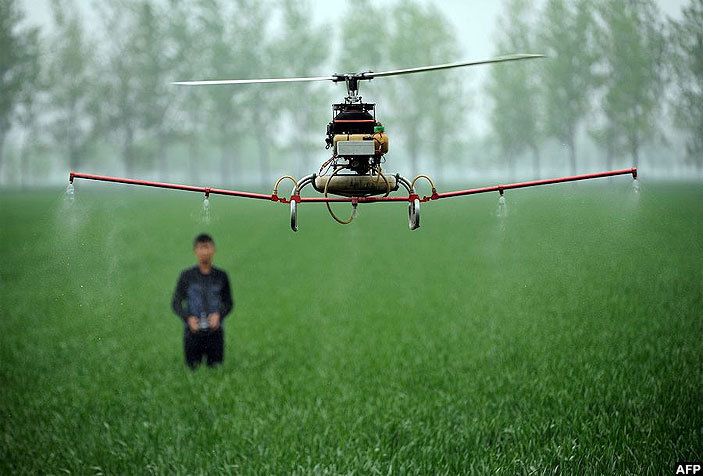
Measure, the nation's leading operator of drones, today released the first-ever Drone Flight Calculator to help farmers assess the value of using drones in their agriculture operations. The web-based application is the direct result of a study and flight operations conducted with the American Farm Bureau Federation in 2015. Available free of charge at www.measure.aero, the Drone Flight Calculator allows farmers to input data such as fertilizer use, farm size, and crop type to see how drones can improve operations and cut costs. "The Drone Flight Calculator allows farmers to easily determine if drone technology can improve their operations," said Measure CEO Brandon Torres Declet. "While drones have been marketed to farmers, until today no tool existed to help growers quickly and easily calculate the benefits of drones." The American Farm Bureau Federation recognized early that precision agriculture and drones in particular are important to the future of farming, but the relevant data has not been available until now. The Drone Flight Calculator quantifies the economic benefits of Drone as a Service® for any type of scouting including crops such as soy, corn, or grapes. Once farm-specific data is entered, the Calculator provides economic returns on a per acre and per growing season basis. Farmers can also learn how much they can expect to save on inputs such as fertilizer and irrigation. In July 2015, Measure and the American Farm Bureau Federation released a study identifying the broader benefits of drone technology in precision agriculture. The study highlighted the best use cases for drones such as field scouting, 3D terrain mapping, and crop insurance. The study was sponsored by a number of industry leading companies such as PepsiCo, Archer Daniels Midland (ADM), Richardson International, and Lockheed Martin. Source - theprairiestar.com

13.01.2016

India - Kandhamal potato growers to get relief for crop loss

Kandhamal district's potato growers, who suffered losses due to wilting of crops during the last kharif, will get compensation. The state government sanctioned a compensation amount of 23,100 per hectare recently. "The amount will be transferred to the bank account of each beneficiary. The potato growers have been asked to provide their bank account numbers," said deputy director of horticulture (DDH) Sukanta Subudhi. As many as 497 farmers of around 100 villages in Daringibadi and Tumudibandh blocks had cultivated the tuber on 137 hectares. They had raised potato on an experimental basis under the state government's Mission Potato. The farmers had got input subsidies and technical support from the horticulture directorate. In a major jolt to the mission, almost entire crops in these two blocks had wilted within a month of the cultivation due to suspected sub-standard seeds, which had been procured from the National Seeds Corporation. Even though the farmers applied pesticides according to advice of experts, the crops could not be revived. The farmers had demanded compensation. The district administration had taken up the matter with the government with collector (Kandhamal) Yamini Sarangi seeking compensation to the potato growers. After prolonged discussion, the government released the amount. "We hope the amount will compensate the farmers' loss," said the DDH. The farmers raised the crops taking loans from primary agriculture cooperative societies (PACSs). The administration had provided subsidized seeds at 1,150 per quintal through PACSs, official sources said. The amount needs to be increased to at least 25,000 per hectare, said Hemanta Pradhan of Bhramarabadi village in Daringibadi block. He had cultivated potato on one acre, but suffered huge losses as the entire crop withered away. Source - timesofindia.indiatimes.com/

12.01.2016

Australia - The El Nino felled them but grain growers will rise again

At the beginning of October, following an unprecedented heatwave, many grain growers were estimating substantial decreases in expected yield. “There’s precious little moisture in the soil,” said Mansfield’s Johnny Adams in October; he began feeding livestock in March. Facing feed shortages, some livestock breeders brought forward their expected dates to sell weaner cattle and lambs, rather than carry them through into late 2015 or 2016. Agronomists advised dairy farmers to plant more forage crops to offset a decreased Victorian grain yield and increased prices transporting interstate supplies. Grain yield fell as low as 0 tonnes/hectare and some growers made the strategic decision to harvest hay or graze livestock on their cereal crops. “We’ve had a catastrophic season, the weather at the beginning of October was unprecedented and I hope I never see that again in my lifetime,” said Victorian Farmers Federation Grains Group President, Brett Hosking. “The season has put a sizeable proportion of grain growers under immense pressure and a significant number – 30-40pc – made a trading loss.” While wheat harvest varied between 0.7-6t/ha, the fast and hot finish to growing season yielded high quality grain. The lower Victorian dryland wheat harvest yielded a significant quantity of H1 and H2 grade grain, said Marcus Dingle, Reid Stockfeeds commodity manager. Fortunately, domestic demand for grain meant prices remained buoyant and Victorian growers with capacity stored grain. “They have the option of chasing alternate markets, hedging for better prices,” Mr Dingle said. There was more variation in the barley harvest, F1 to F4; Profarmer Australia market analyst Scott Niewand recommended the Saudi Arabian market for competitive returns on feed barley. While the Victorian canola harvest was down, yield losses were offset by good quality and increased price, $50/t more, said Pierre Colinet, Cargill Australia’s overseas trading manager. Cargill exported 57,000 tonnes of the Victorian harvest two weeks ago, into the high-value global market; but still expected to fill domestic demand. “We had a lot of concerns early in the year, but the Victorian harvest is only 400,000 tonnes lower and less people are holding canola in storage,” Mr Colinet said. There were other highlights out of the past year. Grain buyers, under intense lobbying by the VFF, came forward with some trade based solutions for farmers – many implemented payment periods as short as seven days. ProFarmer Australia offered payment terms of one day to 30 days, with production return better value for higher graded crops. Serpentine’s Luke and Prue Milgate were glad their irrigated barley crop was graded malt, after testing prior to harvest. Their 650 hectares of dryland crops yielded 0.3-2.0t/ha and irrigated barley yielded 9t/ha. “Fortunately, our irrigated crops and sheep will carry us through,” Ms Milgate said. The Victorian government announced the Murray Basin rail upgrade to begin mid-2016, which, by standardising gauge, should increase industry competition. The Port of Portland became a viable infrastructure partner. This meant the three ports, Geelong, Portland and Melbourne, should now provide competition efficiencies for growers. The Victorian grain harvest – notwithstanding the weather vagaries – stands at 2.5 million tonnes annually, an increase of 0.5 million since 2008; and should continue to increase as growers adopt new technologies, diversify crops and the cropping industry expands across the State. No-Till was the leading form of cultivation. “Because of stubble retention and no-till farming, we were still able to get a harvest, even though the quantity was small,” said Kaniva farmer, Wal Meyer, who wrote ‘F*** the drought’ in his wheat crop. “No-Till has become accepted best practice for 80-90pc of Victorian growers,” Mr Hosking said. “Cultivation is still necessary for weed control and as a management tool for some farmers.” Growers continued to adopt new technology and management, particularly around precision agriculture; and new varieties – poppies, sorghum, cotton, corn, pulses and legumes – into their cropping rotations. “Many growers sold their legumes at harvest, providing them with cash flow and allowing them to hold onto cereal crops,” said Profarmer Australia’s market analyst Scott Niewand. Yarrawonga hosted the southern-most cotton crop this year, while increased interest in growing poppy crops should see more competition in the market, with licences issued to more growers and processors. Farmers, through a Victorian government initiative, installed soil moisture probes to monitor crops and better gauge fertiliser applications and weather conditions. Managing El Nino – without a doubt, talking with farmers across Victoria, there was a solid awareness of its impact and many had risk management strategies to cope. “The knowledge base of Victorian grain growers – about contracts, climates, cropping and technology – is outstanding and I’m very proud of them,” Mr Hosking said. Source - stockandland.com.au

12.01.2016

USA - Georgia Crops Threatened by Warm Winter Weather

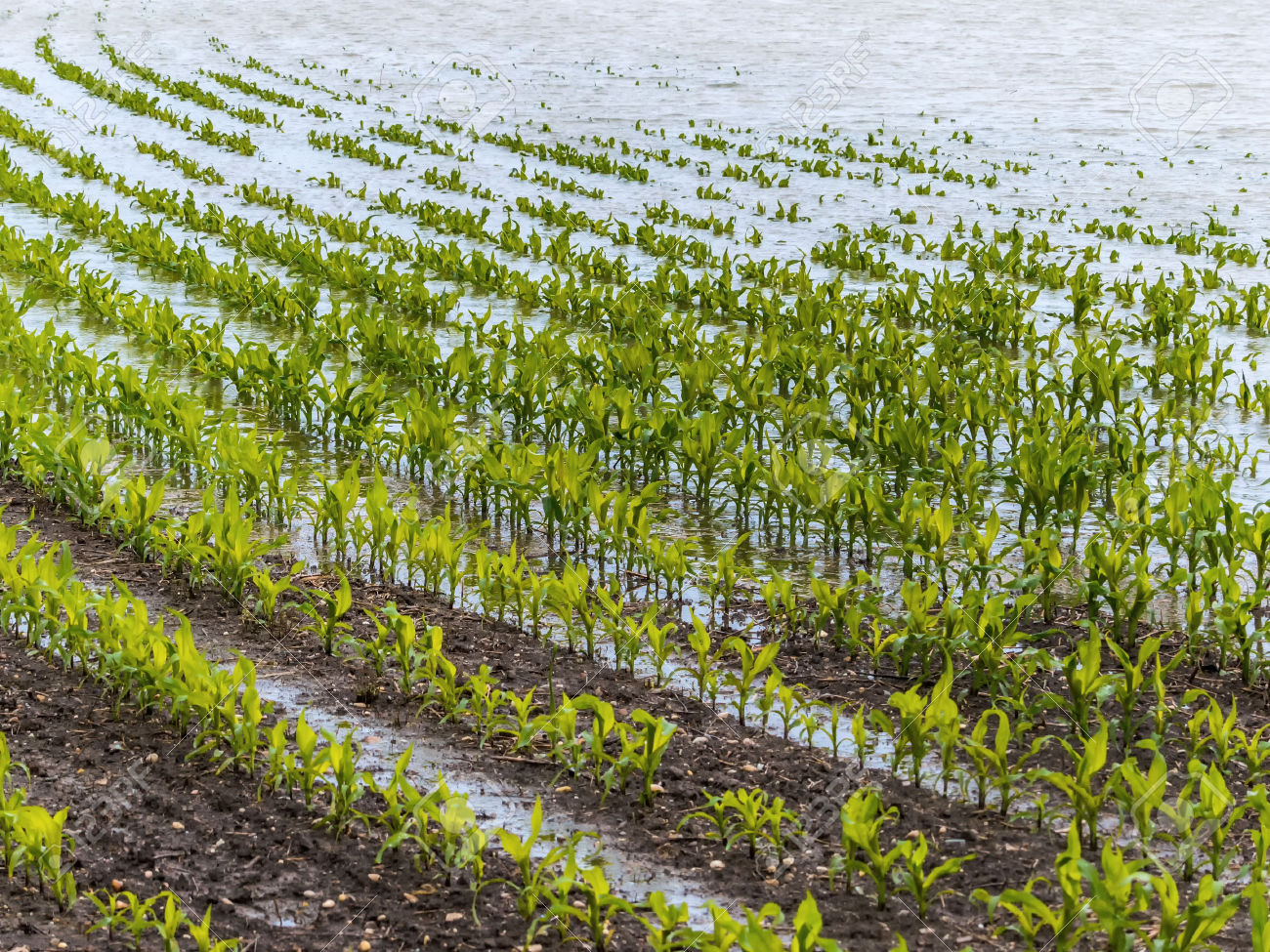
Georgia farmers have endured a winter that wouldn’t start and rains that wouldn’t quit. The state’s pecan, peach and blueberry crops have been threatened by too many warm days and too much water, growers across Georgia said recently. The final month of 2015 was the second-rainiest December on record, with consistently warm days and nights, The Atlanta Journal-Constitution reported. Now, with the weather becoming wintry, growers hope their crops haven’t suffered too much damage. Hard rains in late fall and early winter have dampened projects for the state’s pecan harvest, said Randy Hudson, a grower in Ocilla, about 95 miles south of Macon. “Oh my Lord, I’ve got ducks swimming in pecan orchards,” Hudson said recently, as more rains swept the state. “We never, in our wildest imaginations, thought there would be so much rain, or snow, in the pecan belt.” The council represents growers from North Carolina to California. Nearly every state in the organization has experienced bad weather during the late-year harvest, Hudson said. Georgia has been particularly hard-hit, Hudson said. Groves have been too wet to accommodate heavy harvesting machinery. Growers had anticipated harvesting about 130 million pounds this season but now hope to take in 80 million pounds – an estimated $100 million shortfall. “This has been the most difficult harvest I can remember,” said Hudson, whose groves encompass 1,500 acres. “I’ve got ducks harvesting the pecans.” The warm weather in the last part of 2015 has also bedeviled blueberry and peach growers, said Charles Hall, executive director of the Georgia Fruit & Vegetable Grower’s Association. The organization represents about 350 farms and packing facilities across the state. Blueberries are a $335 million crop in Georgia, the nation’s largest producer of the tiny blue fruit. Georgia’s last peach crop netted growers $53 million. In Tifton, Bob Welker, who owns and operates Berry Good Farms, spent the last day of 2015 in much the same way he’d passed the previous weeks. He worried that early-blooming blueberries might be susceptible to frost later this winter. Source - insurancejournal.com

12.01.2016

India - Crop insurance scheme remains "unsucessful" as farmers pay high premium

The existing crop insurance scheme remains unsuccessful as it is being implemented in only six states because farmers are forced to pay a higher premium and get a very small amount of claim due to capping of the sum insured, a senior Agriculture Ministry official said. The Modified National Agricultural Insurance Scheme (MNAIS) is being implemented since 2013-14 rabi season in Andhra Pradesh, Rajasthan, Uttar Pradesh, Uttarakhand, Goa and Kerala. Under MNAIS, premium rates to be paid by farmers are 2-15% while the actuarial premium is up to 57% depending on high-risk crops and areas. "In MNAIS, premium rates have been capped and if the actuarial premium rate is higher than the capped rate, the sum insured would get reduced in the same proportion. This would lead to lower payments in the case of calamity in spite of higher premium rates," the official said. For example, the actuarial premium of paddy in Lalitpur district of Uttar Pradesh was 22% for Kharif 2014 and sum insured per hectare was Rs 30,000. Since premium was capped at 11% under MNAIS, the sum insured accordingly was reduced to Rs 15,000, he said. The official further said a farmer would have paid a premium of Rs 825 for the reduced sum insured of Rs 15,000. For the crop loss of 70%, he would have got a maximum claim of Rs 10,500 instead of Rs 21,000. In Bhilwara district in Rajasthan, the actuarial premium for sesame seed was 42.34% in Kharif 2014 and sum insured per hectare was Rs 27,000. Due to capping, the sum insured came down to Rs 7,015 and accordingly, the claim amount also got reduced to Rs 4,910 from Rs 18,900. "Since actuarial premium rates are high for more risky areas and having high variability in yield, the sum insured also gets reduced proportionately due to capping system and therefore, farmers in these districts do not get the full benefit of crop insurance," the official explained. That apart, there is a huge difference in the premium rates for different crops in adjacent districts since tendering is done at the district level, he said. Farmers find it difficult to know the premium rate they have to pay due to variation in rates from one district to another, he added. Stating that there is a huge delay in settlement of the claims under MNAIS, the official said there is a time lag in providing yield data from crop cutting experiments. Although the insurance urea area for crop cutting experiments has been reduced to the village level, many states have expressed inability to do this exercise, he said. Besides MNAIS, the Centre is implementing the National Agricultural Insurance Scheme (NAIS) since 1999 under which premium rates are fixed at 1.5-3.5% for foodgrains and oilseeds crops and actuarial rates for horticultural and cash crops but all claim liability is on the government. NAIS is being implemented in 14 states. In 2014-15, the insurance coverage was for only 23% of the total gross area of 194 million hectares. Source - dnaindia.com

12.01.2016

India - Drones to assess crop damage under new agro-insurance scheme

If reports are to be believed, the Cabinet is likely to approve a new agriculture insurance scheme for farmers, which will involve the use of drones to assess crop loss. The New Crop Insurance Scheme (NCIS), expected to be approved by the Cabinet next week, will collate feed from drones with satellite imaging and remote sensing technology to help insurance companies in calculating actual damage to crops. This will lead to a much more accurate disbursement. In addition to this, the use of smartphones and online data transmission will bring down the time taken to finalize the total yield data. NCIS also aims at bringing the premium rates down, in comparison to the existing insurance scheme, under which the average premium rate for farmers stands at 5.5%. Maximum premium of up to 1.5% for wheat, 2.5% for paddy, 2% for oilseeds, and 2 to 2.5% for other crops has also been proposed under the new scheme. Maximum premium for horticulture crops has been proposed at 5%. Currently, this premium touches 40% in certain cases. The new scheme is likely to be operation from 2016-17. Under the newly proposed scheme, farmers will get damages of the post-harvest product destroyed due to cyclone or unseasonal rains, up to a maximum of two weeks on ‘individual loss assessment basis’. As per agriculture minister Radha Mohan Singh, discrepancies in the existing Modified National Agricultural Insurance Scheme (MNAIS), is the reason the government wishes to work on a completely new scheme. Source - skymetweather.com

12.01.2016

India - New crop insurance scheme will reduce premium 10-fold, ensure faster payouts

The central government is expected to launch a new crop insurance scheme for which the rate of premium paid by farmers will be about a tenth of existing rates. The move is an attempt by the government to stem rural distress as farmers are facing three successive crop failures due to inclement weather conditions. The scheme, which is expected to be approved by the cabinet soon, will also put to use mobile phones to assess crop yields and cut down payout delays. Such a scheme will make crop insurance more affordable for the marginal farmers who now pay a high premium of up to 25% of sum insured and help cover about half of all farmers in the next three years. The decision also comes at a time when the Indian farm sector is witnessing a structural makeover with the entry of commercial horticulture crops—production of fruits and vegetables surpassed foodgrains by over 30 million tonnes in 2014-15 and farmers are dealing with a new class of risks like pest attacks and price volatility, in addition to conventional weather risks. A government official who did not want to be identified said that Prime Minister Narendra Modi expressed great concern at the high rate of premium a resource-poor farmer has to pay and had instructed the farm ministry to come up with a new scheme which addresses their hardships. Low penetration of crop insurance schemes despite their existence for over 30 years has been a major concern for the government, the official said, adding that lack of awareness coupled with high premium rates and lower claim payments drew the centre’s attention. While the rate of premium for the current crop insurance schemes are as high as 25% for some crops, under the new scheme it will be cut 10-fold, or 2.5% of the sum insured. The new scheme also aims to change the criteria to determine losses by providing local-level assessment for calamities like hail-storm. The Prime Minister got key officials on the drawing board and zeroed in on the proposed scheme after multiple meetings, the officer quoted above said. The new scheme will increase the coverage of from existing 23% of total farmers to 50% in next two to three years, he adds. Rural distress in the country has risen leading to fall in rural demand in the economy mainly due to crop failure. Firstly, in 2014 Kharif crop suffered losses due to a drought as the June-September south-west monsoon recorded a country-wide deficit of 12% compared to the normal. This was followed by a spate of unseasonal rains and hailstorms across 15 states between February and April 2015 that damaged the winter harvest and led to a 7% dip in wheat production. Further, a widespread drought in 2015 dampened the prospects of the Kharif crop. Between September and December 2015, 10 states declared drought and sought Rs.38,000 crore in central assistance. The centre, so far has approved over Rs.11,000 crore to seven states. The central assistance towards drought relief in 2015-16 is several times higher than what it spends to subsidise crop insurance premiums every year. Lower premium rates in the new insurance scheme means the subsidy component will rise substantially. In 2014-15, under the existing yield and weather-based crop insurance schemes, about 37 million or 27% of farmers were covered, the government informed Parliament last month. Farmers across the country paid a premium of Rs.2,696 crore in 2014-15, the rest of the gross premium of Rs.4,940 crore came as subsidy from centre and the states. Claims during the year when farmers were battered by drought and unseasonal rains was Rs.7,997 crore. Source - livemint.com

12.01.2016

India - Soaring temperature may hit wheat, mustard crop, fear farmers

Farmers across the state are apprehensive with soaring temperature in the past two weeks. Unusually, hot weather in winters may impact crops with wheat unlikely to germinate completely and mustard lacking oil content. Not able to recover from the Kharif crop loss, farmers sown large fields in hope of getting good harvest. However, by mid-January there is no flowering in mustard and wheat. "Situation is not at all looking good. Kharif season was bad because of untimely rain and now weather is not supportive for the Rabi crop too," said Nagendra Singh Khangarot, farmer from Ajmer. Farmers were happy with the early descending of winters this time and they hoped a good crop of wheat and mustered. "Both wheat and mustered required low temperature for a good quality and winters of Rajasthan are the best season to have a good crop in Rabi," said official of agriculture department. He added that crops like seasonal vegetables are also affected with high temperature. During the first week of January when the places like Churu remain coldest in the state having a minimum temperature on or below 0.0 degree Celsius, this year the minimum temperature of this district is on and above 5.0 degree Celsius. Since last fortnight the minimum temperature is rallying between 4 to 6 degree high than average. All hopes are now on the next 15 days with farmer's praying for winters to come in full force. Source - timesofindia.indiatimes.com

11.01.2016

USA - December weather-related insurance payouts may top $2 billion

Extreme weather in the United States during the last 10 days of December could bring insured losses for the month to more than $2 billion, reinsurance broker Aon Benfield said on Wednesday. At least 64 people were killed in the United States as a result of tornadoes, flooding, snowfall, hail and winds during that period, Aon Benfield said in its monthly global catastrophe report. Economic losses in the United States from natural disasters were likely to total more than $4 billion for the whole month, it added. Flooding is continuing, with Tennessee residents bracing for the rapidly rising Mississippi River to crest within days. But Aon said insurance payouts from the severe flooding may not be high. "The event is ongoing, but given under-insurance or a lack of any ... flood insurance across some of the hardest-hit areas in Missouri and Illinois, much of the flood loss is not expected to be covered by insurance," said Steve Bowen, author of the report. Source - reuters.com

11.01.2016

India - Measures to prevent spread root-wilt disease

Inter-crop farming and planting disease-resistant varieties are among the strategies the Central Plantation Crops Research Institute (CPCRI) of the Indian Council of Agricultural Research is adopting to counter root wilt disease which has been causing wide damage in coconut farms. P. Chowdappa, Director, ICAR-CPCRI, said the strategy, involving a cropping system with participatory technology transfer, had helped restrict the spread of the disease, besides ensuring better yield in demonstration fields. The productivity level of 150-200 nuts per coconut tree per annum could be achieved through upgrading management practices and technologies. Adoption of inter-crop pattern with the use of new varieties of coconut palms was demonstrated successfully in Bharanikkavu panchayat. Black pepper, nutmeg, banana, pineapple, and tuber crops were cultivated as inter-crops. Systematic evaluation trials at ICAR-CPCRI regional station at Kayamkulam have resulted in the release of three varieties of coconuts, Kalparaksha, Kalpasree and Kalpasankara, with resistance or tolerance to the disease, he said. The disease has spread to eight southern districts of Kerala, from Thiruvanathapuram to Thrissur and in isolated patches in the remaining six districts of the State. The annual loss due to the disease has been estimated at 968 million nuts and the monetary loss at Rs.3,000 million. (1 Indian Rupee= 0.015 USD) Source - freshplaza.com

11.01.2016

Paraguay - Heat and rains destroy crops

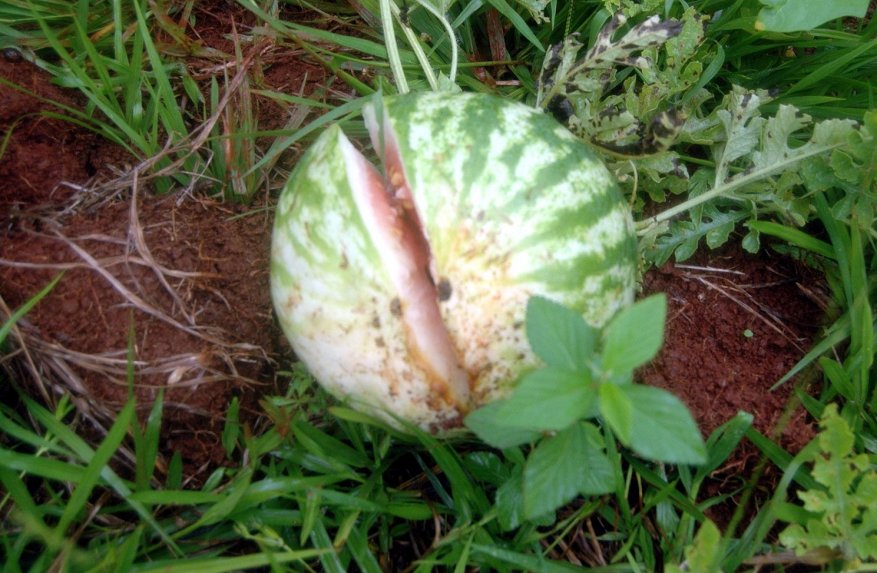
The heat and the strong sun are damaging the melons and watermelons. This year's harvest was very small, nearly 80% of what was cultivated rotted, said Marcelo Gauto, a producer from Cambyreta. "The watermelons burst, sometimes because they are ripe and other times because the sun is too strong and cracks them. The round ones burst the most," said Marcelo. Producers were only able to save a few watermelons this season. "If the plant cracks, the pests enter it and it rots. It hasn't stopped raining; there will be no cucumbers and melons this season. Nothing endures this climate," he said. The repeated rains cause the attack of insects and the spread of diseases in crops. According to the producer,  they've lost all the lettuce, spinach, and onions that were planted. He stated that there were practically no melons, and that, thanks to their care, they had been able to salvage very few locotes, cucumbers, and tomatoes. He said they had lost a lot of production because of the excess water and high temperatures that made everything rot. The best producers of watermelons in the region, in Paso Güembé, district of Trinidad, have also been affected by the weather. "They say it will keep raining until March," people in the area say. Producers are trying to decide what to do with their crops, but the truth is they really don't know, he said. Moreover, the head of the Committee of Producers of Paso Güembé, Victor Leiva, said the producers had been able to harvest watermelons, but with a great effort and in smaller numbers than in previous years. He said that even the vegetables produced in greenhouses or partial shade nets were rotting, and that even in the best scenario the harvests achieved had a lower quality and productivity than usual. The cassava was also affected The new cassava also started developing moisture spots, and leafy vegetables didn't develop correctly. In this regard, Pedro Kalpe, from Barrero Guazú, Cambyretá, said the cassava had been the most affected category because the excess water in the soil affected the tuber's roots, its edible part. In turn, Mary Klimchuk, a producer from Capitan Miranda, said the situation was especially complicated  for small growers. "It's hard to plant, lose everything and replant," she said. In greenhouses, producers are fighting on a daily basis to save their vegetables. The lettuce is the most frail crop and it is currently scarce in the supermarkets at Encarnación. "The outlook is bleak for all crops," he said.   Poor road conditions Additional to the weather, producers have been affected by the poor road conditions that prevent them from sending the few crops they manage to salvage to the marketing centers. The producers affected in this part of the country urgently need the authorities to come to their aid. It's worth noting that several peasant organizations requested through the press that the authorities implement measures to remedy the situation caused by the weather on agricultural production. Source - freshplaza.com

11.01.2016

Turkey - Greenhouse strawberry growers hit by frost

Snow and frost over the New Year has had devastating effects on strawberry growers in Anamur in Turkey’s Mardin province. Around 70% of greenhouse growers were affected, and the fruit and vegetable wholesale hall commissioner warns that prices could increase €2.45. As temperatures in the province fell to -2 degrees Celsius, greenhouse growers noticed the damage to their crop, grower Ahmet Seref Gumus explains: “For 2 days the weather was very cold and according to the news that’s reached us, frost has affected 70% of greenhouse strawberries. The frost has been a blow to our products for export. We are demanding that our debts should at least be cancelled so that we can get out of this difficult situation.” Due to farmers having to light stoves in their greenhouses to fight off the cold weather, strawberry prices could increase from around €1.20-1.50 to €2.45. In Bozyazi in the province, banana growers are also lighting their stoves in anticipation of more frost. According to the Anamur Chamber of Commerce and Industry data from 2014, in Anamur 26,600 decares were planted with 128,400 tons of bananas, and 56,000 tons of strawberries were grown on 17,000 decares. In Bozyazi, also in 2014,  8,420 decares produced 50,160 tons of bananas and 6,000 tons of strawberries were grown on 1,500 decares. Source - freshplaza.com

11.01.2016

India - New crop insurance scheme to cover 50% of farmers

The Union government's ambitious crop insurance scheme for farmers will be named 'Bhartiya Krishi Bima Yojana' and will aim to cover about 50 per cent of farmers in the next two-three years. At present, around 23 per cent of total cropped area of 194 million hectares is under insurance. Officials said, according to the final draft of the Cabinet note on the scheme, banks have to play a big role in ensuring its success. Banks, according to the Cabinet note prepared by the ministry of agriculture, have to mandatorily credit the claim received by insurance companies into famers' bank accounts within 14 days. That apart, banks have also to ensure that all farmers who have taken crop loans against notified crops are compulsorily insured. At the same time, those who have not taken crop loans, but want to avail the benefit of a crop insurance get the same. Banks have also to ensure that crop loans are disbursed to farmers according to the guidelines laid down and ensure that funds so allocated are properly used by farmers. The average premium rate for farmers under the new scheme will be a maximum of 2.5 per cent of the sum insured - it can be even lower - while the Centre's subsidy would go up to 90 per cent the premium. In the new scheme, assessment of farms for calamities such as hailstorm and unseasonal rains would be done to ensure that each individual farmer gets an insurance, even if the damage is highly localised. That apart, in the scheme, claims have to be mandatorily settled within 30-45 days of damage assessment and pictures taken through smart-phones, mobiles and tabs of the crop cutting data would be considered as valid proof of loss. "This would help in reducing the time for settlement of claims," the official said. "I feel government should differentiate between insurance and compensation, and insurance should just not be a risk mitigating strategy, but should also give some incentive. Also, crop assessment has to be accurate, or else, those who don't deserve get all the claims," Ajay Jakhar, chairman of Bharat Krishak Samaj (Indian Farmers Forum) told Business Standard. He said, apart from accurate assessment, crop insurance should be linked to Aadhar to check duplicity. Sudhir Panwar, president of Kisan Jagriti Manch and member of the Uttar Pradesh Planning Commission said that the unit of measurement of claim should be the individual farmer and not a village, as is the practice now, and claims regarding yield loss due to pest attack should also be included in the scheme. "As of now, claim settlement in agriculture is less than that of health, which needs to be improved. However, too low a premium might act as a deterrent for companies to participate," Panwar said. Source - business-standard.com

11.01.2016

Africa - Rain might still avert flood of farming claims

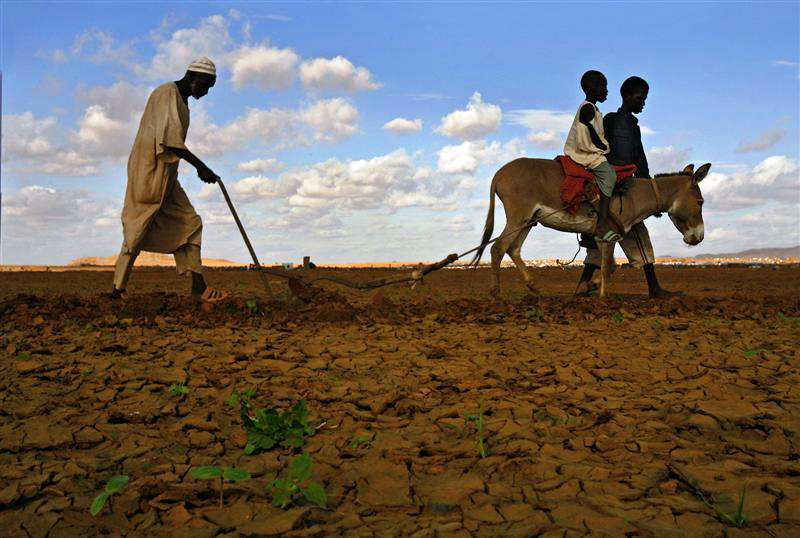
RAIN before the autumn or winter will determine whether insurers pay out millions in claims to affected farmers as SA’s worst drought in 20 years drags on. Last January, large parts of the Northern Cape, some parts of the Western Cape and isolated parts of Limpopo and Mpumalanga experienced 0mm to 10mm rain, according to SA Weather Service data. By December, this had spread to large parts of the Free State, the North West, Limpopo and the Eastern Cape. Farmers seeking financial relief from insurers may have to wait a while. Schalk Schultz, business development manager at Santam’s crop insurance division, said drought claims were calculated and paid only when crops were harvested, from June to August. Andries Wiese, manager for market intelligence at Mutual & Federal Agri, said veld fires had been caused by a combination of the hot weather, the drought and a lack of moisture after winter. "Where rain has fallen, this was accompanied by relatively high thunderstorm activity and lightning, as opposed to soft, ‘gentle’ rain," he said. "Lightning is a known factor in veld fires, and this is of concern as we expect a rise in veld fire incidences." Mr Wiese said few crops had been planted because of the drought, leading to a lack of claims for crop damage. "No claims have been made, but the total impact of the drought on our summer crops will only become evident as the season progresses." Santam expects claims to flood in from summer grain production areas in central and western SA at harvest time, while Mutual & Federal Agri anticipates the North West and the central and north-western Free State will be hit hardest. Adequate rain might alter this. In a published forecast, the Weather Service’s Cobus Olivier said rainfall for the late summer and early autumn seasons would probably be below average. "If it does rain adequately, or at least revert to our normal rainfall pattern, the farmers who did manage to get crops in — estimates put this at some 48% of the expectation as at December 21 — will realise crops as per usual," said Mr Wiese. Source - bdlive.co.za

896
of 1224