NEWS
909
of 1224
News
24.11.2015

Australia - Hot and dry conditions reduce malting barley crop

A warm and dry finish to the grain growing season has lowered the quality of Australia's barley crop. On average Australia grows eight million tonnes of barley. It is the second-largest crop in the nation after wheat. Barley is graded according to its quality: malt is the premium grade, feed the lowest. Western Australia is the nation's biggest malt barley grower. Trevor Lucas is the head of trading for WA's main grain handler and marketer, the CBH Group. He said he was expecting WA to produce about three million tonnes of barley this year, but it had been affected by a hot and dry September and October. "We are seeing very high screenings in barley. At this time in the harvest we would expect 30 to 40 per cent making malt, but at the moment we're tracking between 10 to 20 per cent, so down significantly on previous years," Mr Lucas said. Amount of premium malt grade barley below average While the tonnes for this year's national barley harvest will remain around average levels, the expected amount of premium malt grade barley is below average. Barley Australia's Andrew Gee said two million tonnes of barley usually achieved malt grade, but this year he was expecting about 1.8 million tonnes. "South Australia has suffered from the very warm October that we had, as did the barley growing areas of Victoria," Mr Gee said. "New South Wales isn't too bad, and Queensland, for the little barley that it grows, which is usually feed barley, hasn't been that affected, and I guess we're waiting to see the impact of the rains up there. "Screenings will be up in Western Australia, in South Australia and in Victoria. The test weights will be down and the grain screenings will be up." Oversupply of malt barley on global market Unfortunately for farmers in Australia, a less than average national malting barley crop has not resulted in a significant price increase for malt grade. But Mr Lucas said the spread for malt was increasing. "In typical years when retention rates were this low you would see probably more aggressive pricing at this stage, but globally there is an oversupply of malt barley," he said. "The French for example, they had a huge crop this year and they are going to be keeping a check on the premiums that Australian growers receive for their malt. "But that said, if things continue to come in at these sort of levels, I do think malt barley will correct, and we've seen that over the past few weeks." Malt grade barley is used to make malt, a key ingredient in beer. China imports about 80 per cent of its malt barley requirements from Australia. Brewers within Australia buy on average just under one million tonnes of malt barley each year. Mr Gee did not think the below average malt barley crop would impact beer prices. "I think the beer price is dependant on many more things other than the price of malt. Malt is actually a very small component of production in beer, even though it is what beer is all about," he said. Source - http://www.abc.net.au

23.11.2015

USA - SD Farm Bureau wrestles with policy on ag issues

From opposing budget cuts targeted at the profit margins of crop insurance providers to advocating for options besides perpetual conservation easements, members of South Dakota’s largest general farm organization met in Pierre over the weekend to talk policy. But as some 200 members of the group gathered for their annual meeting at the Ramkota on Friday and Saturday, members of the organization also discussed Farm Bureau positions on non-ag issues, including Obamacare. Farm Bureau members raised the topic with Republican Sen. Mike Rounds when he addressed the gathering. South Dakota Farm Bureau President Scott VanderWal, in an interview with the Capital Journal a short time after Rounds fielded questions on that topic from the audience, said it’s not surprising that Farm Bureau members are concerned about the federal government’s Affordable Care Act, commonly known as Obamacare. “It’s a family organization so we’re not limited to just strictly ag policy, and that’s the way we’ve looked at it over the years,” VanderWal said, adding that this is an issue that clearly has repercussions for Farm Bureau families. “We believe that having a government-controlled system like that is not in our best interests.” But a good part of the policy discussions within the organization are about agriculture. Here’s a look at some of the issues: Crop insurance cuts: The Farm Bureau opposes an effort to include $3 billion in budget cuts to crop insurance in a recent budget deal reached in Congress, and it is finding allies in South Dakota’s congressional delegation in trying to get the $3 billion restored. “The cuts are targeted toward the profit margins of insurance providers. But they make it more likely that we will see more mergers in the industry and cuts in the services which insurance companies provide to farmers,” Sen. Mike Rounds said. Rounds said he is working with Senate Republican leaders, including Sen. John Thune, to try to see the cuts restored. “We want this thing fixed. When we left on Thursday it was not fixed yet, but they were still in negotiations on it,” Rounds, a Pierre native, said to the gathering in his hometown. Rounds said crop insurance is a good deal for the public because farmers pay 40 percent of the premium cost for insuring themselves against disaster under the taxpayer-subsidized program. In contrast, Rounds said, if there is a presidential disaster declaration, the federal government — with tax dollars — pays 75 percent of the cost of a disaster, while the state and local cost is 25 percent. VanderWal agreed with Rounds that it’s good that “farmers have some skin in the game” in crop insurance. “We pay part of the premium, and the delivery system to make that happen is very important. It’s a private industry, which is a lot better than having government control.” VanderWal said the $3 billion budget cut could push some insurance providers “below break-even” if it goes through. “It doesn’t cut down on the program, the actual crop insurance that’s available, but it cuts down on the mechanism that’s available to get it to the farmers, and that’s what concerns us,” VanderWal said. “It’s a national security issue when you look at our ability to feed ourselves. If we allow our agricultural system to become in economic peril, we end up importing our food to a greater extent. That cuts down on our ability to take care of ourselves.” Permanent conservation easements: “We have some heartburn with permanent easements. Permanent is forever. We don’t believe that a certain generation should be able to tie the hands of future generations,” VanderWal said. VanderWal agreed with the position Rounds put forward a short time earlier, saying things such as the character of the land, economic conditions and family situations change over time and there should be some option less permanent, perhaps for a generation but not forever. “That gives future generations the option to do something different with it. It used to be farming was moldboard plowing and the dust blew all winter long, and so they took some of those marginal lands out of production. Now we’ve got no-till and strip-till and methods that we can use to hold the soil in place and do a responsible job of farming that land. There’s no reason those lands should be in permanent, non-agricultural easements.” Waters of the United States, or WOTUS: The Farm Bureau is deeply opposed to the federal Environmental Protection Agency’s effort to expand regulatory control over waters that previously have not been under federal jurisdiction. “We do not feel the EPA has the authority to do what they’re trying to do. They used some deceptive measures to go about trying to convince the public that they were right. They used tax money to campaign in favor of what they are trying to do. We did not think that was appropriate. The methods that they’re using to try to expand the reach of regulatory authority are very questionable. A normal, rational purpose wouldn’t come up with the idea that some of the things they’re calling ‘waters of the U.S.’ would ever be called that.” VanderWal said federal oversight was intended to be limited to navigable waters. Farmers are concerned that “dry creek beds and little depressions out in the fields” could end up being under federal regulatory jurisdiction under WOTUS. Rounds, speaking to Farm Bureau members, called WOTUS “one of the largest federal land grabs in the history of this country,” saying it would give the EPA control of nearly all water, including man-made water management systems, farm ponds, drains and ditches. Centennial: South Dakota Farm Bureau was formed in 1917 when the first county Farm Bureaus banded together to create the state organization, and the group now has 16,000 member families — more than any other ag group in the state. The state group is part of the American Farm Bureau Federation, which represents 6.1 million member families, and which was formed in 1919. VanderWal said the organization’s centennial year in 2017 will be cause for taking stock of its history. Source - http://www.capjournal.com

23.11.2015

India - National crop insurance scheme for the State

The government has issued a notification for the implementation of the revised National Crop Insurance scheme and the Weather-based Crop Insurance scheme from the second rabi crop season this year in Kerala. The revised National Crop Insurance scheme insures farmers against loss due to natural calamities and pest attacks for tapioca and banana crops in all districts and punja paddy (second crop) in Alappuzha, Pathanamthitta, and Kottayam districts. Coverage The second scheme covers the second and third crop paddy in Thiruvananthapuram, Kollam, Idukki, Ernakulam, Thrissur, Palakkad, Malappuram, Kozhikode, Kannur, Wayanad, and Kasaragode, banana crops in grama panchayats equipped with weather stations, sugarcane crop in Idukki and Palalkad districts, cashew crop in Kasaragod, Kannur, Kozhikode, Malappuram, and Palakkad districts and mango in Palakkad. Premium The State and Central governments will bear 75 per cent of the premium for paddy farmers and 50 per cent of the premium on other crops as part of the schme. Source - http://www.thehindu.com

23.11.2015

India - SHARECROPPERS DESERVE COMPENSATION FOR CROP LOSS

More than 200 sharecroppers and activists from all over the State participated in a consultation on security and compensation on crop loss for farmers organised by the All India People’s Forum (AIPF) at the Nagabhusan Bhawan here on Sunday. Sharecropper Hari Samal, a resident of Dhinkia village in Jagatsinghpur district said, “We are unlikely to get proper compensation from the Government for our crop loss.” The Government should identify sharecroppers through the Panchayati Raj Institutions and Agriculture and Revenue Department officials, said an organiser, Mahindra Parida. The Government should also bring amendment in revenue laws to allow formal agreements between land owners and share croppers, he said. He said the sharecroppers should be recognised as actual farmers and the Government should extend all possible support including compensation, loan, crop insurance, seed and fertiliser. The increasing rate of farmers’ suicide in the State is appalling and the Government has failed to provide adequate infrastructure, delivery mechanism and protection measures like irrigation facilities and insurance to farmers, especially to sharecroppers, AIPF members alleged. Source - http://www.dailypioneer.com

23.11.2015

Australia - High prices, workers let go following Vic hail storms

While supply will not be impacted for Victoria or Australia as a whole, the price for quality stonefruit will be high on the wholesale and consumer markets, to reflect damage done to crops ready to be harvested. “The price will be high, but we’re also working very closely with bodies such as Apples and Pears Australia Limited to develop the Hailstorm Heroes campaign, to sell what fruit we can save that’s been affected by the hailstorms,” said Fruit Growers Victoria Industry Development Officer Petar Bursac. “There was a similar campaign in the US when their crops were affected by weather events like this and I believe that was quite successful.”   At least 1,500 hectares of orchard land has been hit by two severe hail events,  one in late October, the second on November 12. Industry says the job now is to secure funding for hail netting, and ensure that remaining fruits are picked from trees in order to maintain health condition of plants for next year and prevent infestation of pests on damaged fruits. “The growers I’m speaking to are looking for government subsidy for hailnets, which can cost up to $40,000-$50,000 per hectare,” said Mr Bursac. “They are expected to last 20 years though, and so far none have told me that they will be leaving their orchards.” The November hailstorm hit exactly the same area, Victoria's Mallee twice in a month. The orchard owners have been involved in conversations with authorities, according to Mr Bursac. Some have lost multiple orchard crops, and all had spent money thinning trees following the first storm, as well as disposing of fruit that was too damaged to sell. “A lot have had to let workers go because they have to focus on maintaining the orchards and the condition of remaining trees.”   “I’m still conducting assessments, and this is the second hailstorm to hit all the same orchards that were hit one month ago, so profit for POME fruit and stonefruit will be affected next year,” Mr Bursac said. “At least 50-60% of people’s orchards have been lost in the affected area. POME fruit will be more affected next year, but the price for fresh stonefruit will be affected this year.”   Source - http://www.freshplaza.com/

23.11.2015

India - No Yield Data, No Insurance Cover for Onion

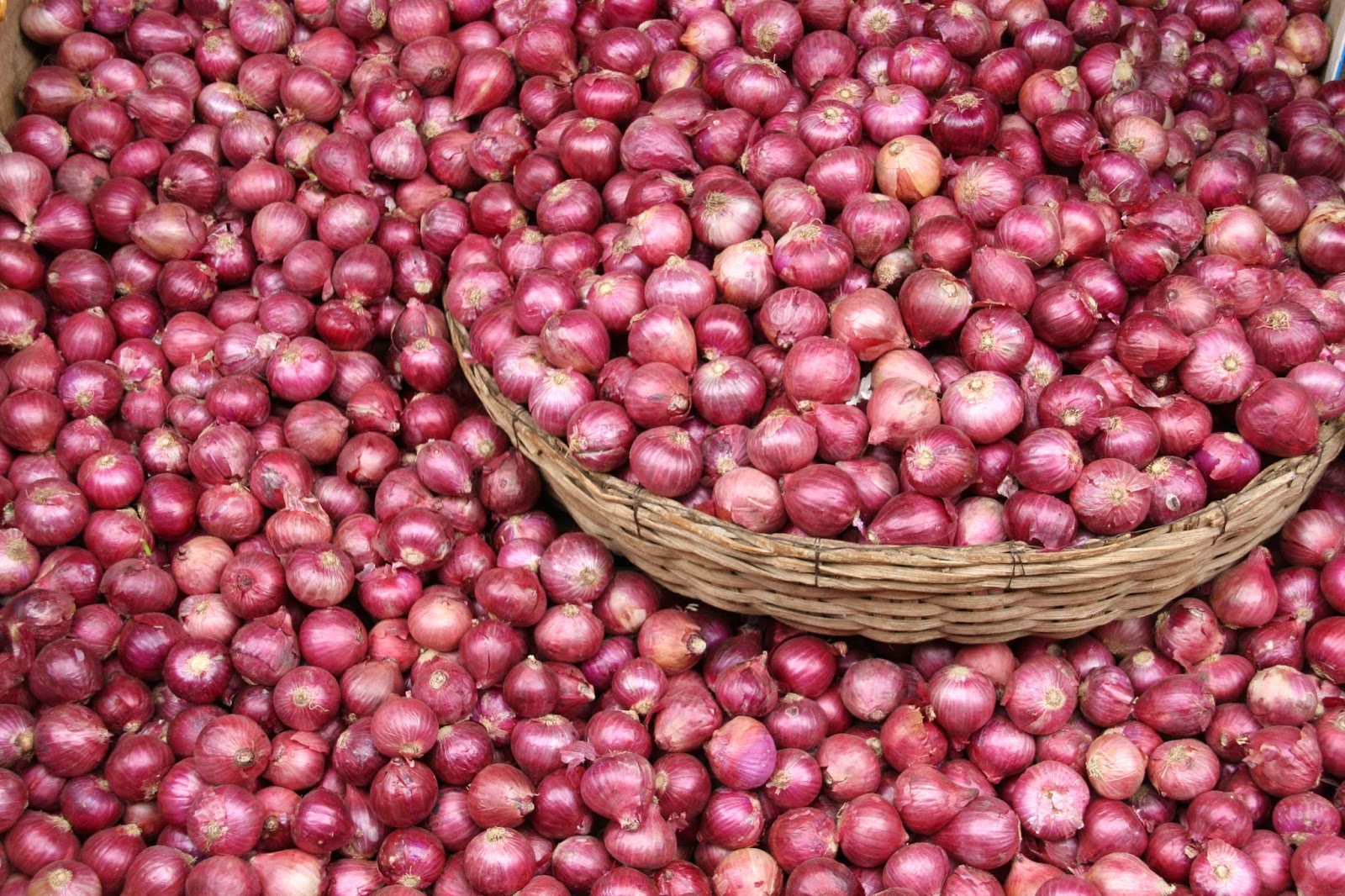
Even as Odisha is one of 10 major onion producing States in the country and has achieved self-sufficiency in its production, the rabi crop is not covered under National Agricultural Insurance Scheme (NAIS) due to lack of production figures. The State Level Technical Committee (SLTC) had recommended to the State Level Coordination Committee on Crop Insurance (SLCCCI) headed by Chief Secretary GC Pati for addition of four more crops to the existing list of four crops for insurance coverage under NAIS. But a meeting of the SLCCCI chaired by the Chief Secretary decided to extend the crop insurance to black gram (Biri) and green gram (Moong) in the rabi season. Though the SLTC recommended to cover onion and sugarcane under NAIS, the two crops were dropped. “Onion could not be considered for insurance coverage under NAIS due to lack of production statistics. The Directorate of Horticulture could not provide onion yield data for the preceding 10 years for calculation of insurance premium,” official sources said. On the other hand, sugarcane was kept outside the purview of the insurance scheme following resistance from cane growers. The farmers growing sugarcane said realising insured amount from the insurance companies in case of crop failure is a very cumbersome process and they had bitter experience in the past. However, potato has been extended insurance cover after the Potato Mission was launched by the Government last year. The State, which had registered onion production of 4.19 lakh tonnes in 2012-13, had a good harvest last year. The production was nearly five lakh tonnes last year. However, due to lack of storage and marketing facilities, farmers sell their produce at throwaway price. With weather becoming increasingly unpredictable and in the absence of any instructional arrangement to buy back the produce, onion growing farmers are very susceptible to the vagaries of nature. Besides, poor infrastructure and inability of the Government to create efficient storage facilities have proved a bane for the farmers who are now keen to go for cultivation of the cash crop in a commercial way, said an officer of the Horticulture Department. The State Government recently floated the idea of launching ‘Onion Mission’ to encourage farmers to take up cultivation on commercial scale and to create adequate storage space to stave off the rising prices of onion. Kalahandi, Balangir, Angul, Boudh, Dhenkanal and Mayurbhanj are the major onion producing districts of the State. Source - http://www.newindianexpress.com

23.11.2015

USA - Organic Workshop to Help Growers Meet Demand

Farmers are invited to attend an Organic Workshop on December 3, in Twin Falls, Idaho. The workshop will feature organic market opportunities, certification training, organic nutrient sources, and a farmer panel discussion on tips for organic transition and certification. The workshop is presented by the Northwest Center for Alternatives to Pesticides in partnership with the Idaho State Department of Agriculture (ISDA) and University of Idaho to help farmers meet the demand of the growing organic sector of agriculture. “The calls are coming in,” says Johanna Phillips, organic program manager with the Idaho State Department of Agriculture. “In the last year, we have experienced a steady increase in the number of farmers wanting information on the certification process and those completing certification for the first time. We now certify 166 farms in Idaho.” According to the recently released 2014 USDA Organic Survey, Idaho ranks 10th in the nation for the number of certified acres at 125,000 acres. Consumer demand is increasing with organic food sales up 11% in 2014 to $35.9 billion, according to the Organic Trade Association. “Consumers continue to show strong support for organically-grown foods,” says Jennifer Miller, healthy food and farms program director with the Northwest Center for Alternatives to Pesticides. “We are excited to offer this training and help more farmers successfully enter and stay in the market.” The workshop sessions include the following: - Organic certification requirements by ISDA; - Organic nutrient sources and composting by Amber Moore and Mario de Haro-Marti at the University of Idaho; - Organic market opportunities panel with representatives from Seneca Foods, Kelley Bean Company and Standlee Hay Company moderated by ISDA; - Assessing barriers and opportunities in organic farming by Carlo Moreno at the University of Idaho; and - Crop insurance options for organic producers by Heber Loughmiller of Leavitt Group Crop Insurance. - Organic farmer panel on tips for transition and certification “Organic production carries with it a distinct set of challenges,” says Carlo Moreno, extension educator with University of Idaho Minidoka County Extension. “The Organic 101 Workshop will offer farmers a unique opportunity to address the topics and skills that are critical to successfully navigating the organic transition and certification process.” The workshop is funded in part by USDA’s Risk Management Agency and Western Sustainable Agriculture Research & Education. This is an equal opportunity event. The Northwest Center for Alternatives to Pesticides (NCAP) works to protect community and environmental health and inspire the use of ecologically sound solutions to reduce the use of pesticides. Source - http://www.theprairiestar.com

20.11.2015

Poland - Over 80 million Euro compensation for drought

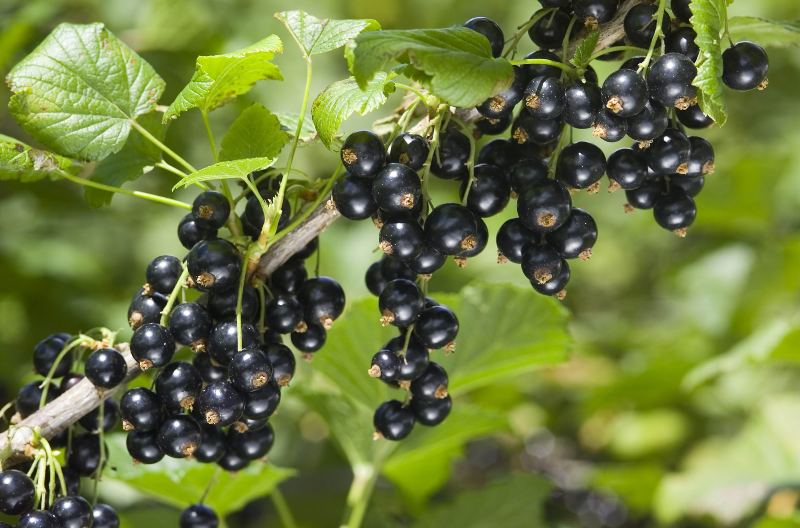
More than 341 million złoty (over 80 million Euro) is going to growers affected by this year's drought. Aid has also been granted to blackcurrant growers in compensation for the losses incurred due to the low prices of this fruit. According to the Agency for Restructuring and Modernisation of Agriculture (ARMA), the 341.6 million złoty allocated will go to more than 143 thousand growers. As regards blackberries specifically, nearly 21 million złoty (4.95 million Euro) will be granted to some 12.1 thousand producers. ARMA accepted applications for aid up to 30 September 2015. The Agency received approximately 174 thousand applications. The government agreed to help with this year's target reserve of 450 million złoty. Source - http://www.freshplaza.com

20.11.2015

USA - Corn stalk encased in ice hailed down from tornado-producing Texas thunderstorm

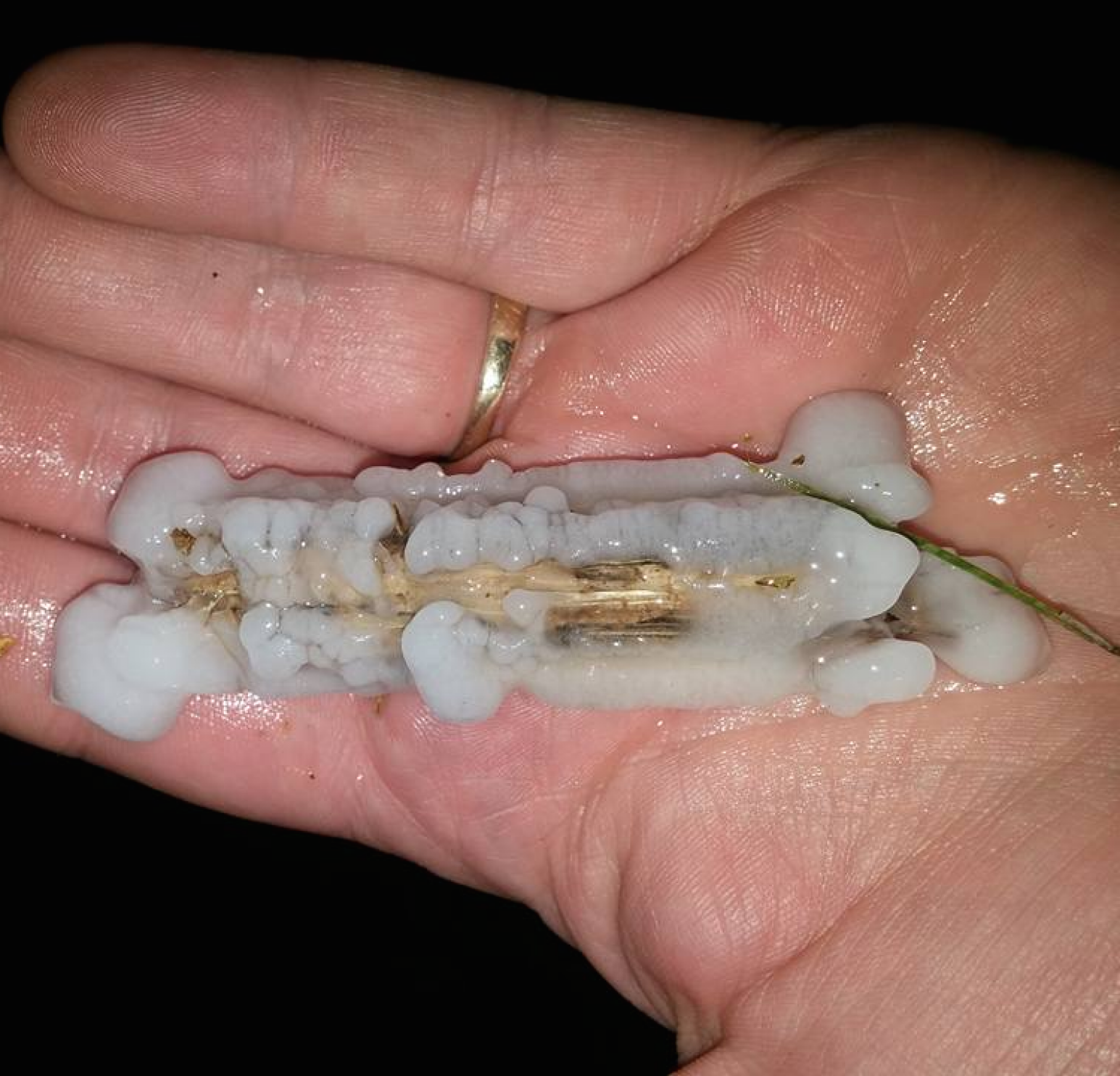
The thunderstorm that spawned the monster EF-3 tornado that walloped Pampa, Tex. Monday night lofted a corn stalk thousands of feet into the air where it was transformed into the nucleus or core for a deformed hailstone. The violent up and down vertical motions inside the storm added layer upon layer of ice around the corn until it became so heavy it crashed back to the ground.

20.11.2015

India - Rainwater stagnating Indian banana fields

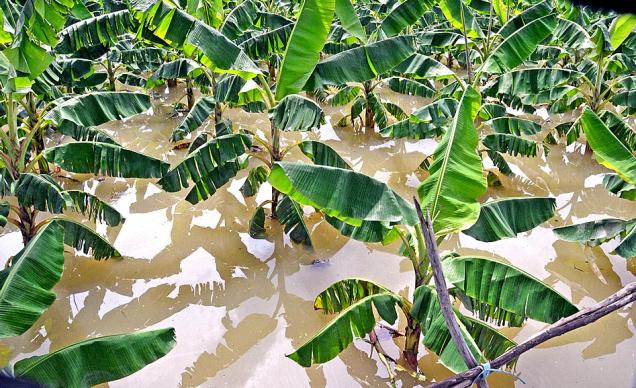
Banana fields were inundated in some parts of the district following heavy rains recently. The scenario worried farmers of Pudukottai, Palayakayal, Athimarapatti, Sebathaiyapuram, Mullakadu and Maravanmadam. K.P. Perumal, district secretary, Tamil Nadu Farmers’ Association, said here on Wednesday that the banana farmers would take a breather, if stagnating water was drained. If the water-logging prolonged for over a week, the crop would be susceptible to damage, he added. However, the yield from the waterlogged fields would be reduced more than 40 per cent compared to normal stage. Hence, steps should be taken to drain the rainwater on a war footing from the fields and save the farmers. Since waterbodies remain encroached, rainwater led to water-logging, Mr. Perumal pointed out. Deputy Director of Horticulture M. Ashok Macrin told that normally under such water-logging conditions, the banana crop could withstand up to a period of 15 days. He said banana cultivation had been taken up on 9, 281 hectares along the Tamirabarani river basin of Srivaikuntam, Alwarthirunagari, Tiruchendur, Karungulam, Sathankulam and also in Tuticorin blocks. Referring to other perennial crops, the Deputy Director said fruit crops on 11, 181 hectares, vegetable crops on 400 ha, spices on 1,310 ha, plantation crops, including cashew, beetelwine, palmyrah and coconut, had been cultivated. Besides, medicinal crops including senna and aloe vera on 54 ha and flower crops on 232 ha had been cultivated. Since the district received a good amount of rainfall, the cultivation of horticultural crops was expected to increase this year. Source - http://www.indian24news.com

20.11.2015

USA - Estimated agricultural losses from flood at $587M

South Carolina's estimated agricultural losses from last month's floods have doubled and farmers statewide are hurting, officials said. State Agriculture Commissioner Hugh Weathers initially estimated losses at $300 million, multiple news media outlets reported. Officials with his agency, however, told the House Ways and Means Committee on Wednesday that the total agriculture-related losses are now estimated at $587 million. Assistant Agriculture Commissioner Clint Leach told the panel that South Carolina farmers already faced a difficult year because of a late freeze and a summer drought. "They are to the point of desperation," he said. The news came as the budget-writing committee heard final testimony from agencies and local officials on the flooding's impact. Although much of the financial cost for repairing damage from the flood has not yet been tallied or released, agricultural officials say they do have estimates. Rep. Brian White, an Anderson Republican and chairman of the committee, said he believes the state should provide some financial assistance. "We help other industries," he said. "It's time we help farmers too." Farmers, Leach said, are not interested in obtaining low-interest loans, the aid being offered by the federal government. Farmers have gone a year without much income, officials said, some already had operating loans and they have no cash flow to pay for additional debt. Aaron Wood, an assistant agriculture commissioner, told the panel that while many farmers have crop insurance, it's inadequate for a natural disaster like this flood. Farmers are frustrated by the bureaucracy and depressed, Wood said. "Losing a home is bad," he said. "But losing a job and income potential is hopeless. This is a food and economic security emergency." Source - http://www.islandpacket.com

20.11.2015

Australia - Damage bill for crop losses ‘in excess of $60m’

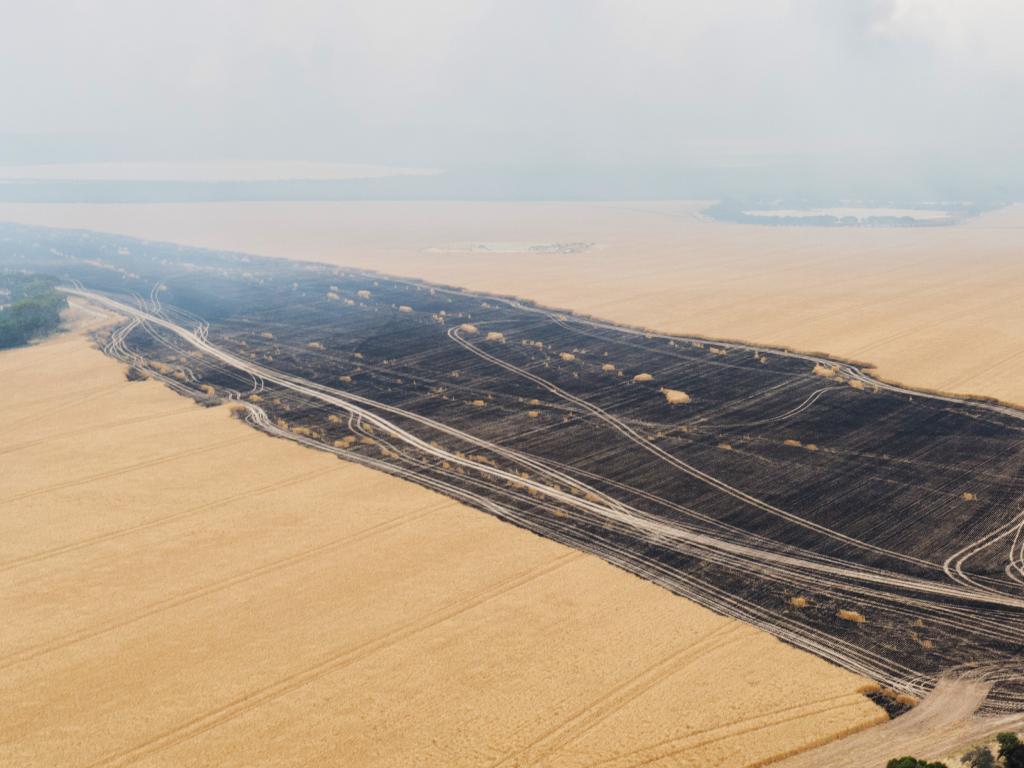
FIGURES are starting to emerge for massive crop losses caused by the Esperance fires, with WA Farmers saying the damage bill will likely be “in excess of $60 million”. WA Farmers President Dale Park said $60 million was a conservative figure based on 200,000 tonnes of grain losses. “I don’t know how many sheds, buildings, houses or machinery have been burnt but it’s likely to be a lot more than $60 million,” Mr Park said. The firestorm, which claimed four lives after being sparked by lightning on Sunday, has razed more than 130,000ha and decimated crops during what would have been a bumper season. Locals said that many growers had underinsured their crops this year and didn’t expect the harvest to be so fruitful. “Any time is a bad time for fire, but to see your crop going up in smoke after what was going to be a bumper season is heartbreaking,” WA Farmers chief executive officer Stephen Brown said. Mr Brown said the crops that bore the brunt of the fires were coarse grains — wheat, barley, canola, lupins, oats and hay. Three houses have been destroyed as well as stock losses of 1800 heads of sheep. The Department of Agriculture and Food said this number was expected to increase as further assessments were carried out. WA Premier Colin Barnett announced on Thursday afternoon that the state government would donate $100,000 to the Lord Mayor’s Relief Fund. “We will also be providing an emergency grant of $3,000 for those who have lost their home and a $1,000 emergency grant for those who have had severe damage to their home, but can return to it,” Mr Barnett said. The Lord Mayor’s Distress Relief Fund, which is the recognised state emergency fund, will raise and co-ordinate donations to support victims of the fires burning in WA’s south. Mr Barnett said the recovery process in Esperance was finally getting underway. “The recovery process is now starting to get underway, however roads are still blocked in some areas, power poles are down and there have been damaged communications towers” he added. Source - http://www.perthnow.com.au

20.11.2015

India - EG farmers begin lobbying for crop loss relief

The incessant rains lashing East Godavari district in the last two days have brought bad news to paddy farmers. At a time when majority of them were making arrangements to reap their kharif crop, these rains have dented their hopes, causing damage to the standing crop in most parts of the district. Farmers said even if they salvage this harvest, their returns are likely to be lower because traders are sure to turn their noses up at ‘discoloured’ paddy. In all, paddy was raised on 2.3 lakh hectares in the district during the kharif season and crop-cutting has been completed in 91,699 hectares. According to agriculture officials, some 33,132 hectares are inundated and the crop has been damaged in another 9,141 hectares. “Farmers can save the damaged crop by opting for bundling. Similarly, they can protect the grain from being discoloured by sprinkling salt water on it,” Joint Director of agriculture N. Vijay Kumar advised. Farmer leaders dispute these figures, however, and say the actual loss is much higher. “Paddy fields in all of Konaseema are under water. The crop loss will be much higher than the figures released by the Agriculture Department,” said Kovvuri Trinadha Reddy, general secretary of the Andhra Pradesh State Farmers Water Management Committees Association. Due to the sudden rains, farmers have switched to manual cutting of the crop instead of using harvesters. “The labour charges are already high at Rs. 750 per day per head. If labour demand increases, it could go up to Rs. 1,000,” said Adabala Satyanarayana, a farmer from Karapa in Kakinada rural mandal. Farmers are already dissatisfied with the minimum support price for paddy announced by the government. Now their worry is about a possible drop in MSP on the pretext of discolouration. “ We want the State government to announce an ex gratia of Rs. 20,000 per acre for the inundated crop,” said Tatipaka Madhu, general secretary of the CPI’s district unit. Source - http://www.thehindu.com/

19.11.2015

Australia - Crop insurance the talk of Victoria, but is it the best way to manage risk?

Insurance against Mother Nature: the idea has been dangled in front of Australian farmers for years, without much response. But, after a second horror season in the Wimmera Mallee grain belt, the subject is the talk of the farming community. Warracknabeal producer Phil Koschitze became the poster boy for multi-peril crop insurance in Victoria last year, after paying the $33,000 premium and receiving a pay-out. This year the list of walking advertisements is much longer — as is the list of providers and products on offer. One Birchip provider said about 25 per cent of producers in the region had opted for the cheaper 'input insurance', offered by Pro Crop Insurance, meaning a smaller pay-out but also, lower premiums. Watchem's Chris Colbert was one of those who took that option. A Pro Crop claim is triggered if the farmer receives less than 50 per cent of average annual rainfall during the growing period, and financial returns after harvest are lower than input costs. Mr Colbert paid an $8,5000 premium, based on the modest estimate that he spent $160 per hectare getting the crops in. He would usually reap about 20 bags of wheat an acre; this year he is pulling off one quarter of a bag per acre. So it was no surprise when Pro Crop Insurance said he was looking at a 92 per cent claim. "I look to get out of my insurance about $130,000. That's $130,000 I don't have to look for next year," Mr Colbert said. "I don't think I'll put another crop in without it." Widespread crop failure raises questions about insurer survival Widespread drought raises questions about the future of companies like Pro Crop Insurance, which only picked up clients in Victoria and South Australia this year. Bureau of Meteorology maps shows that a huge area of Victoria is experiencing a 1-in-20-year rainfall deficiency event, particularly in grain growing regions of the state. South-east South Australia is in the same situation but overall, the state is looking at higher than average grain yields. Pro Crop director Bob Smith would not reveal details around uptake but confirmed there was "limited" interest in areas where farmers were reaping good yields. "I can't talk about likely claim numbers at this point in time, it's far too early, but it's fair to say the season has been very dry and therefore poor for grain growers in Victoria," he said. "There's no doubt there will be claims paid by the insurers. "We did have some farmers take it up, on Eyre Peninsula particularly, but it was a fairly limited area. "It looks as though their season has been a very good one, so they won't need to rely on their insurance cover." Mr Smith said he did not expect premiums to increase dramatically next year, but did not rule it out. "The insurer will naturally undertake their own deliberations after this season .. and they'll determine what they believe is appropriate for the risk involved," he said. "But I believe our insurer is in it for the long haul." Mr Smith said the company's aim was to become a national insurance provider and he flagged the possibility of long-term commitments from farmers, to reduce risk. "We would certainly talk to farmers about a five year commitment," he said. "But our desire is to see a farmer build Pro Crop cover as a part of their overall risk management strategy and input expenditure. "Rather than see it as an insurance policy year-by-year, it would just be inbuilt into their risk management thought process." Is there a better way to spend $20,000 on risk management? Birchip Cropping Group chief executive Chris Souness said the hype around insurance could blindside farmers into believing it was the best approach to risk management. He stressed there were many ways $10,000, $20,000 or $30,000-plus could be used to reduce risk and lift profits. "How farmers spend those dollars, to make sure they minimise their risk but maximise their return, is going to be key," Mr Sousness said. "Is multi-peril crop insurance a good fit for you? Or actually is investing in livestock a potential option, or buying some commercial property in Bendigo or Melbourne? "We can't buy everything we want and insurance is one of those choices, just like extra fertiliser or a weed spray or the new ute." Victorian Premier Daniel Andrews agreed to explore ways the Government could assist in building a reliable insurance landscape for farmers. He agreed with farmers who said the cost of existing multi-peril schemes was excessive. "The premium for a policy would be about 10 per cent of what your output was, to get your crop into the ground," Mr Andrews said. "If you haven't got [for example] $30,000, insurance isn't much good to you. "I think there is an opportunity for us to work together and I think the national government would have an important place in this, to sit down and see whether we can't develop a better insurance product." Farmers, like Mr Colbert, want State and Federal Governments to subsidise premiums. "In the scheme of things, if we have a drought and farmers put their hand out for exceptional circumstances ... paying $10,000 or $20,000 [per farm] up front is a little bit less than what they'd have to pay in a full scale drought," he said. Source - http://www.abc.net.au/

19.11.2015

Australia - Pear growers devastated by second hail storm

In a devastating blow to Victorian pear growers, another hail storm hit the Goulburn Valley on 12 November 2015, further damaging orchards. “APAL would like to extend any support that we can to pear growers affected by this second hailstorm,” APAL CEO John Dollisson said. “It is heart-breaking to hear about this additional damage.” Fruit Growers Victoria (FGV) ran a meeting following the previous hailstorm to share useful information on how to manage affected orchards. For more information on this and on APAL’s planned ‘Hailstorm Heroes’ marketing campaign see Hope and help for growers affected by hail. Assessments of the additional damage are currently underway by FGV. FGV are also preparing a submission to the Victorian Government for hail net subsidies. Data collection on crop loads would assist in the success of this submission and they are requesting Victorian growers to contact them on +61 (0)3 5825 3700 to provide this data. John Dollisson has also contacted the Victorian Minister for Agriculture the Hon Jaala Pulford and is awaiting an appointment time to discuss the matter and what more can be done for growers. Source - http://www.freshplaza.com

19.11.2015

India - Relief distribution for crop damage in Haryana soon

Haryana government today said the special 'girdawari' to assess damage of cotton, guar, bajra and other Kharif crops by white fly and other pests is almost complete and distribution of compensation would start soon. "The special 'girdawari' to assess the damage caused by white fly and other pests on crops was almost over and disbursing of compensation would start within the next 20 days," Haryana Agriculture Minister, O P Dhankar said. Stating the state government is committed to increase the income of farmers and make them prosperous, he said, "For this, centres of excellence for fruits and vegetables have been established to encourage them to take up horticulture and cultivation of other cash crops instead of traditional ones." Dhankar also said, "A Horticulture University is being set up in the state." An agricultural insurance scheme of Rs 500 crore is being prepared with the support of the Central government, the minister said. "This scheme would be announced soon. Apart from this, the proposal to promote agricultural tourism is also being considered," he added. Source - http://economictimes.indiatimes.com

909
of 1224