NEWS
908
of 1224
News
26.11.2015

India - 1.75 lakh acres of cotton damaged by whitefly in Jind

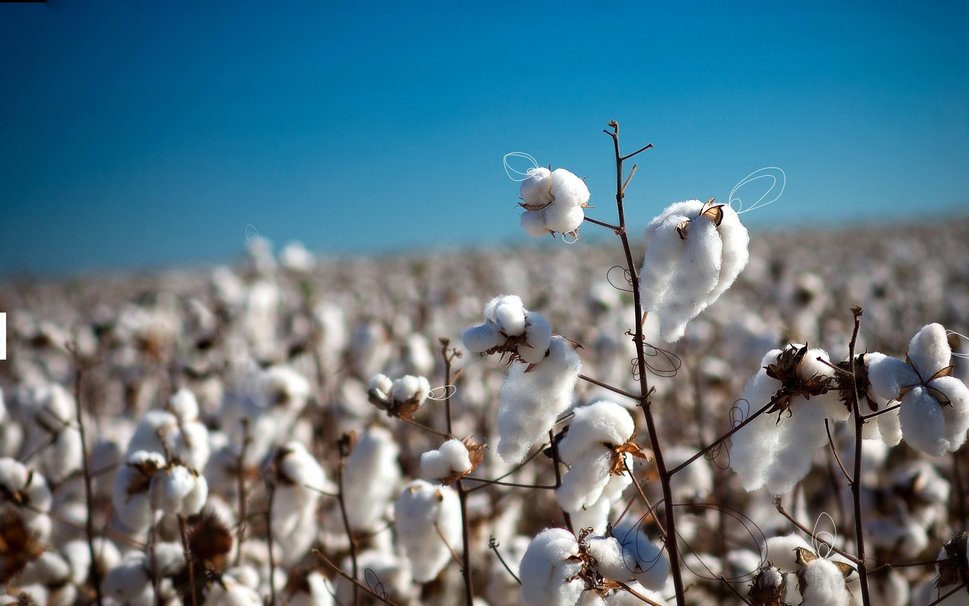
After a delay of some months, the administration has prepared a detailed report on the damage caused by whitefly and hailstorm to the cotton crop in the district. The reports lists that the crop was damaged due to whitefly in 1.75 lakh acres while hailstorm damaged around 2,500 acres and the damage was between 51-75 per cent. Following directions from the CM, special teams had been formed comprising agriculture development officials, patwaris and gram secretaries. “In total, 70 per cent cotton crop was damaged by whitefly and hailstorm. We have sent the report to Divisional Commissioner for further action,” said DRO Mahinder Singh. In Jind block, cotton in 1,690 acres was damaged by whitefly to the extent of 33- 50 per cent, 14,761 acres between 51-75 per cent, 7,287 acres between 76-100 per cent. Similarly, in Uchana block cotton in 532 acres suffered damage between 51-75 per cent, 61,000 acres between 76-100 per cent, in Narwana block 1,292 acres suffered damage between 33-50 per cent, 8,184 acres between 51-75 per cent, 39,245 acres between 76-100 per cent, in Aleva block crop on 83 acres was damaged between 51-75 per cent and on 18,900 acres between 76-100 per cent. The figures for Julana block show that crop on 3, 942 acres have suffered damage between 25-32 per cent, 4, 812 acres between 33 to 50 per cent whle 13,225 were damaged between 51 to 75 per cent. Similarly, in Safidon block 10 acres were damaged between 33 to 50 per cent and 16 acres between 51 to 75 per cent. As many as 1.26 lakh acres of cotton have suffered losses between 76 to 100 per cent, 36,700 between 51-75 per cent, 7,800 acres between 33 to 50 per cent while 3, 000 acres have suffered losses between 25-32 per cent. “We are hopeful that the compensation would be released in the coming days and we disburse it to the affected farmers immediately,” the DRO said. Cotton farmers feel dejected due to low yield, falling prices, delay in compensation Sirsa: Cotton farmers in the state are dejected due to low yield and falling prices of the crop this year and are also worried over the inordinate delay by the government in giving announcing compensation for the losses due to the whitefly attack.  Farmers’ organisations have demanded Rs 25,000 per acre as relief for those whose cotton, guar, bajra and other crops have been damaged due to whitefly. State Congress president Ashok Tanwar has also castigated the BJP government of running away from giving compensation due to political reasons. “Last year, my cotton yield was 10 - 11 quintals per acres. However, it is down to only 4 - 5 quintals this year. With the prices falling to Rs 4,200 per quintal, cotton has proved to be a losing proposition this year,” said Gurdial Mehta, a farmer from Panjuana village. Gurpreet Singh Nagpal, partner of ginning unit Royal Cotgin and general secretary of Sirsa Cotton Ginners Association, said the prices of cotton have fallen from Rs 4,650 to Rs 4,200 per quintal in the past some days.  Prahlad Singh Bharukhera, state president of Haryana Kisan Manch, demanded that the government should immediately release a relief of Rs 25,000 per acre as the special girdawari had already been completed. “Farmers have already invested Rs 15,000 to Rs 20,000 on inputs and some of them have even taken land by paying Rs 25,000 per acre as lease amount,” he alleged. Haryana Kisan Union has also demanded immediate payment of compensation. Meanwhile, Tanwar has accused the government of delaying giving relief of Rs 5, 000 crore due to political bias against certain areas.  Since these crops are primarily grown in the semi- arid lands in Sirsa, Fatehabad, Hisar, Bhiwani and Jind districts, the entire loss is concentrated in these districts. “In Sirsa alone, which is the biggest producer of cotton and guar in the state, farmers have suffered 50 to 100 per cent losses on over 6 lakh acres making the loss to over Rs 1,500 crore,” he alleged. Source - http://www.tribuneindia.com
26.11.2015

Australia - Farmers, country towns bear the brunt of deadly SA fires

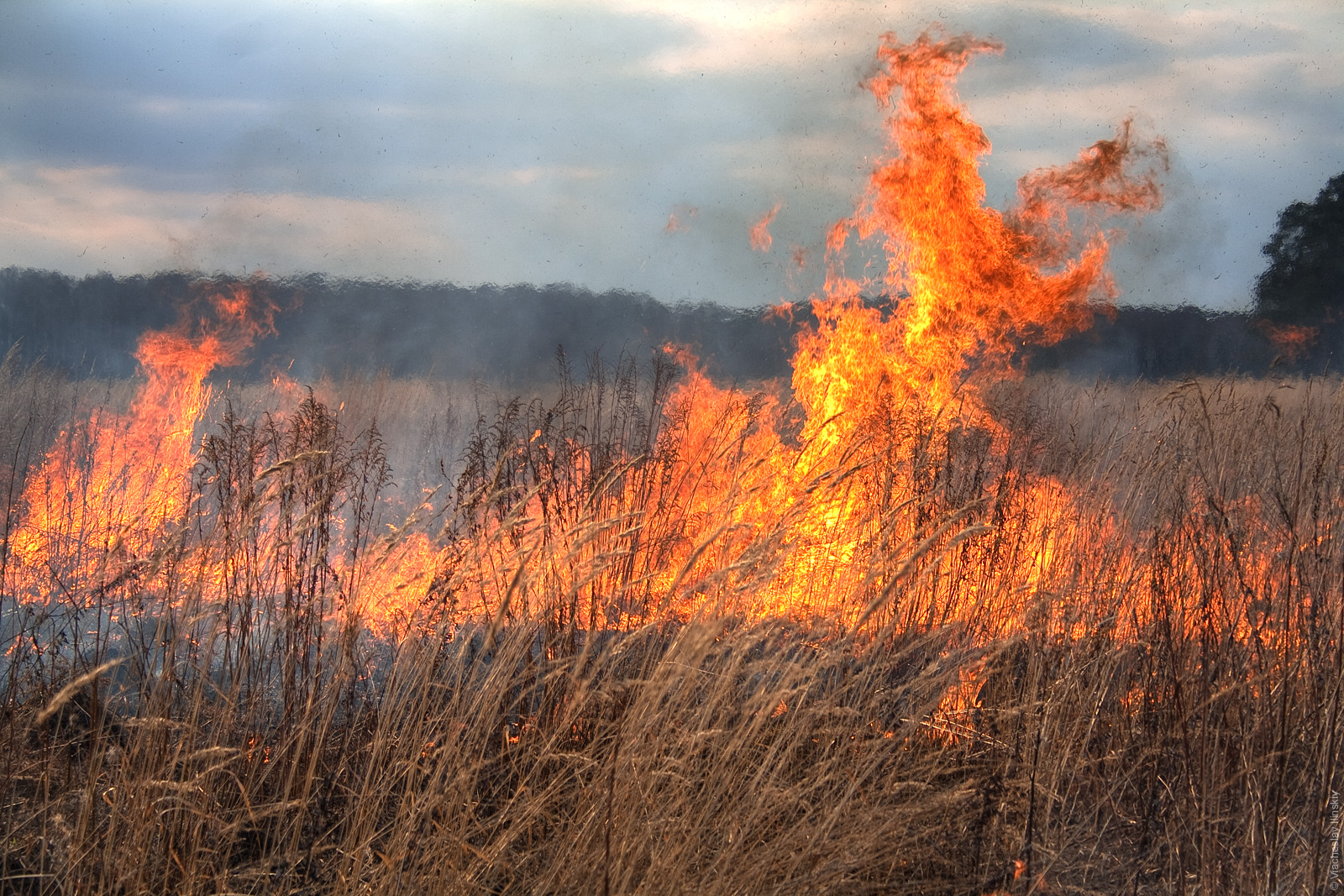
South Australian farmers have been devastated by deadly fires sweeping through the state's mid-north, with reports of significant crop, machinery and livestock losses. Around 90,000 hectares of land has been burnt, including significant tracts of cropping country and at least one large piggery, where 300 growers were lost. Mallala grain farmer Peter March said the fast-moving fire had devastated his community. "There's nothing left, it's absolutely devastation," Mr March said. "I've seen the odd stock wandering around that are alive, but in general, I don't think too many stock are going to survive this, it is just so hot. "This is my 59th harvest and I've never seen anything like it before. "It was unstoppable, the CFS unit reckon they were travelling at 65 kilometres per hour and they couldn't keep up to it." Grain harvest halted, fears 60,000 hectares of crops destroyed The state's grain industry has been heavily impacted by the fires, with many farmers reporting significant crop losses. Darren Arney from Grain Producers SA said while it was too soon to estimate the damage bill, it was likely up to 60,000 hectares of crop had been lost. "There's extensive damage through the lower north cropping region," he said. "It's still early days, but harvest in that area would be maybe 50 per cent completed. "So it's been catastrophic the affect that it's had, it's taken out people's homes, their sheds, machinery, crops, livelihoods. It's horrific. "There's the ability to have crop insurance, which most farmers have to cover loss of crops. "The machinery is insured, the houses are insured, but you cannot replace life. "Hopefully people are well, but this is a very large fire which is going to affect a lot of people." Piggery staff 'risked lives' to save animals Livestock owners have also been heavily impacted by the fires, with several hundred pigs lost when outdoor shelters caught alight at a piggery, near Wasleys. Emily Mackintosh, from Australian Pork Limited, told ABC Rural while the loss was devastating, the quick action of piggery workers had saved thousands of animals. "Understandably the staff are shaken, at one point they had to run for their lives," she said. "But they have just been amazing, they risked their lives to save thousands of animals. "Sadly they have lost 300 of what we call growers, because as I understand the straw on which they were based as a group caught fire. "But they were able to get a lot of animals out of buildings before they caught fire. "So consequently they have a lot of animals running around paddocks at the moment, but safe and alive." Livestock officials gained access to the southern and western sides of the fire ground this morning, with teams now assessing injured animals. South Australia's chief vet, Roger Paskin, said at least one large intensive chicken operation had also suffered significant losses in the area. "We don't know how many chickens, its going to be in the thousands, possibly tens of thousands," he said. "There's also unconfirmed reports of one or two hundred sheep that might have been burnt. "So it's a matter of getting out into those areas and doing the investigations, seeing what we can do to assist." Lameroo haystack fire declared 'safe' A large blaze which started under catastrophic fire conditions near the southern Mallee town of Lameroo yesterday has been declared 'safe' by the Country Fire Service. Around 1,950 hectares of cropping land, two hay sheds and a shearing shed were destroyed on properties near Coonalpyn and Airport Roads, after the fire started in a haystack around 1.30pm. Water bombers and strike teams from the South-East and Murraylands attended the blaze, with around 25 appliances bringing the fire under control at 6.00pm last night. Marty Taylor from the CFS said the fire burnt out of control for several hours in crop stubble. "Fortunately the farmer had already taken all of the crop off," he said. "Where it started was in a hay stack, and we believe at the moment it was spontaneous combustion. "And the property where it started, around 90 per cent stayed on his property, so he's absolutely devastated at the moment." Source - http://www.abc.net.au

26.11.2015

India - Tea board to cover small tea growers under crop insurance

Tea Board of India will soon start crop insurance for small tea growers (stgs). The board is in talks with insurance companies for initiating the scheme. There are over 80,000 small tea growers in Assam. Deputy Director of Tea development Tea Board told ET, " We are in talks with insurance companies for the crop insurance scheme for the small tea growers. A portion of premium amount will be paid by the government and growers." Chairman of North Eastern Tea association (NETA), Bidyananda Barkakoty said, " The government must cover the small growers under the crop insurance.Tea as crop is dependent on weather and other climatic condition." He added that the price of tea of small tea growers dependent upon finished products manufactured by tea factories. " The loss of production due to climatic condition is beyond the control of the small growers. There is a need for insurance scheme for production related risks and price volatility." Source - http://economictimes.indiatimes.com

26.11.2015

USA - Pistachio Crop Insurance Due Dec.31

Due to the warm winter weather this year, many California Pistachio growers’ crop yields were only slightly more than half of what was expected.  And despite having an existing risk management insurance program, which helped a lot of growers, others who did not have pistachio crop insurance will have to shoulder all their losses. James Otto, a senior risk specialist with the USDA Risk Management Agency at the Davis Regional Office, commented, “A lot of growers did not take it due to risk management reasons, they were unaware of it, or their agents did not inform them of the availability of pistachio crop insurance.” And for growers considering purchasing insurance for next season, Otto urges them to be aware of the upcoming December 31, 2015 deadline. “Growers have to sign up for the insurance by that date,” he said. “Signing up can be complicated in that growers must agree to take insurance for two consecutive years, and they also must agree to what coverage level and price percentage to take. Growers are locked in for a two-year policy, but each year stands on its own.” Payments are based on average yields and the coverage the grower elects. Otto said, “There are some fundamental basics. You have to determine what your average yield is; if it is 2,000 pounds per acre, growers have to select a coverage level (50%, 65%, 70%…),” which is used to adjust the insurance premium rates. Given their chosen coverage level, if their production for the year drops below this level, growers would be compensated for the shortfall by the insurance policy. “So, for example,” he said, if a grower’s average yield is 3,000 lbs., and he has taken a 65% coverage level—which is roughly 2,000 pounds, if his average yield for this year is 1200 lbs., the result is an 800-pound shortage. The grower gets paid an indemnity of 800 pounds, times an established price.” Richard Matoian, director, American Pistachio Growers based in Fresno, said pistachio growers should definitely consider risk management insurance, “We think all growers should consider crop insurance, even at the most minimal level—which is what they call “cat” or “catastrophic”—as a risk management tool for operations. In a year like this year in which we had historically low yields on a per-acre basis, crop insurance for many growers is going to be their savior to keep them going.” Interestingly, Otto explained, Nick Jerkovich, an insurance broker with All Crop Insurance Services, in the Fresno County town of Kerman, Calif., came up with the idea. Otto said, “Back in 2009, Nick mentioned there were a lot of pistachio trees in the ground that did not have a crop insurance program.” It was recommended to Nick to get a petition signed by multiple growers and gather acreage data. “So Nick, on his own dime, calculated roughly 75-80% of the acreage in the value, submitted that to an administrator, and got the ball rolling.” Otto said Jerkovich’s proaction suggested, “Hey, there is interest! There is interest from the grassroots.” Otto continued, “Based on that initial letter, Risk Management Agency contracted out to have the program developed. It is interesting to see what one individual person achieve!” Source - http://californiaagtoday.com/

26.11.2015

USA - Threats to federal crop insurance loom

A deal that was expected to save crop insurance programs from $3 billion in cuts may now be in jeopardy. According to the American Farm Bureau Federation (AFBF), Senate Minority Leader Harry Reid of Nevada and House Minority Leader Nancy Pelosi of California have indicated they were not part of the agreement House Ag Committee Chairman Mike Conaway announced at the end of October. That agreement was supposed to save crop insurance from the cuts included in the Bipartisan Budget Act at a later time through an omnibus bill. The deal appears to have been struck with retired Speaker John Boehner rather than current Speaker Paul Ryan. After the announcement of a “deal” to save crop insurance, legislators introduced several bills in both the House and the Senate that would strip up to $24 billion from the crop insurance program. If the bills are passed and crop insurance is cut, farmers and families across the nation will suffer the consequences. “The last farm bill was over a year ago. Agriculture took about $23 billion in cuts. About the only thing we were going to be able to hold onto, they said, was crop insurance,” TFB President Russell W. Boening said in an interview with the TFB Radio Network. “Now, they’re coming back a year or so later and wanting to go into crop insurance—the one thing we had left, really. Congress cannot balance the federal budget on the back of the American farmer.” Without crop insurance in 2011 and 2012, many farmers would have suffered much bigger losses. Some would have been forced out of the business altogether without a safety net. “A blow like that doesn’t just hurt the farmer,” Boening said. “It hurts rural businesses. It hurts industries that depend on agriculture.” Agriculture as a whole wouldn’t collapse immediately without crop insurance. But it would become much more volatile. “Whenever you can’t take out deep losses like when you have a drought, the volatility gets to be much more severe,” Boening said. “You will lose operations. You will lose family farms.” Some experts say that farmers should pay for their crop insurance without government subsidies. Boening explains that would still create market volatility, which would eventually hurt the American economy. “Farmers wouldn’t be able to afford it,” Boening said. “There’s no doubt about it. It’s marginal in some areas and on some crops already. If you had to pay the entire premium, you’d go without it. If you went without it, if you had a bad enough year, it would force you to close the doors.  We would lose production that we desperately need to feed a hungry world.” Losing production in one part of the U.S. would affect American agriculture as a whole-especially in difficult crop years. For example, when the Corn Belt suffers from too much or too little rain, the corn growers in Texas and across the South are very important. Agriculture programs, as a whole, don’t take up much of the federal budget anymore. Proposed cuts to the programs that are left are just additional slashes to an already small piece of the pie. “I try to explain to them what it costs them in tax money. You can get it down to the average taxpayer pays pennies a day for crop insurance,” Boening said. “I think if the average consumer and taxpayer really studied it, at the end of the day, they would agree it’s a good investment for them.” Agriculture groups continue to meet with legislators in Washington, D.C. about the proposed cuts. Source - http://www.porknetwork.com

25.11.2015

India - Rural distress worsens across country

Telangana has declared a drought in parts of the state, becoming the ninth state this year to do so, highlighting the agrarian crisis that could cause a likely fall in the production of rain-fed crops such as pulses, oilseeds and cotton, and result in a further slowing of the rural economy. According to a state government order Tuesday, 231 mandals (sub-districts) spread across seven out of 10 Telangana districts—Mahabubnagar, Medak, Nizamabad, Ranga Reddy, Nalgonda, Warangal and Karimnagar—were declared drought affected. The June-to-September southwest monsoon recorded an average rainfall of 610.8mm, as against the normal rainfall of 713.6 mm—a deficit of 14%, the government order noted. For the entire country, the southwest monsoon recorded a deficit of 14% compared to the normal, the second straight year of sub-par rains after 2014 saw a deficit of 12%. This year, 302 of the 640 districts in India experienced deficit rains, or at least a 20% shortfall compared to the normal. The second consecutive drought year, punctuated by unseasonal rains that damaged India’s winter harvest in March and April, may cause a fall in farm incomes that were already affected by lower prices of key crops such as rice, wheat and cotton. Worryingly, India is staring at a poor winter crop as a lack of soil moisture and a deficient northeast monsoon has affected the planting of wheat and pulses. Data released by the agriculture ministry last week shows that rabi (winter crop) sowing is lagging by more than 18% compared to the normal area, with planting of wheat lower by 28%, that of pulses is down 9% and oilseeds 12% less. A failed winter crop would mean the fourth consecutive crop failure for a majority of Indian farmers. That could also push the agricultural growth rate to negative territory from an already dismal 0.2% seen in 2014-15. The biggest challenge before the centre is to provide some immediate income support to farmers to revive rural demand, said Himanshu, associate professor at Jawaharlal Nehru University, Delhi, and a Mint columnist. “This could take the form of increased spending through the rural roads or the rural employment guarantee schemes. Further, the government should be wary about food inflation as the pulses story is likely to repeat for oilseeds,” said Himanshu. “In addition to the short-term measures, like compensating farmers for crop damage and waiving interest on crop loans, the centre should come up with an effective crop insurance scheme. Existing schemes cover banks’ loans and not the farmers risk of repeated crop loss.” Distress caused by repeated crop failures is also showing up in rising number of farmer suicides. In Maharashtra alone, 2,234 farmers committed suicide between January and September, revealed a Right To Information (RTI) response from the state revenue department. According to Rythu Swarajya Vedika, an umbrella organization of non-governmental organisations in Telangana that collects data on farm suicides, 1,713 farmers killed themselves from June last year till date. Karnataka reported 516 farm suicides this year (till mid-October), according to data provided by the Congress, the ruling party in the state. About 60% of India’s workforce is dependent on agriculture, a key sector that has seen depressed incomes for the second year in a row. This is evident in sales of tractors and motorcycles that are key indicators of rural demand. For instance, tractor sales declined by 20% during the first half of the current financial year, from 312,116 units in 2014-15 to 248,991 units this year (April-September), according to data from lobby group Tractor Manufacturers Association. Further, motorcycle sales declined 4% year-on-year to 5.36 million units in the six months ended 30 September, according to Society of Indian Automobile Manufacturers (Siam), an industry lobby group. Stressed farm incomes have also led to slump in rural wages, a determining factor of rural demand. Data from the labour ministry shows that growth in rural wages slowed from a high of nearly 18% in August 2013 and 17.5% in August 2014 to a dismal 3.8% this August. Apart from Telangana, eight other states (Karnataka, Odisha, Maharashtra, Madhya Pradesh, Chhattisgarh, Jharkhand, Uttar Pradesh and Andhra Pradesh) have declared drought this year. Of these, the first six states have sought a central assistance totalling Rs.20,000 crore. On Tuesday, after a review meeting with state agriculture commissioners, union farm minister Radha Mohan Singh said his ministry had recommended an assistance of Rs.1,387 crore for Chhattisgarh (the state asked for Rs.6,093 crore in a memorandum submitted to the centre on 5 November). Earlier this month, the centre approved Rs.1,540 crore for Karnataka, nearly two months after the state submitted a memorandum seeking Rs.3,831 crore in central assistance. Memoranda have been received from Uttar Pradesh and Orissa and central teams dispatched immediately, said Singh adding that states such as Andhra Pradesh, Bihar, Telangana and Jharkhand have been asked to submit their memorandum urgently. Uttar Pradesh, in a memorandum submitted this week, asked the centre for Rs.2,057 crore, said Sudhir Panwar, a farmer leader and member of the state planning commission. “Last year the state received only 10% of what it asked for as drought relief,” he said. While the central assistance towards relief for crop damage sounds generous on paper, in reality it barely covers farmers’ costs of production. For instance, Karnataka reported a crop loss of Rs.15,636 crore but received just about a tenth of it to distribute as immediate relief among farmers. Similarly, Madhya Pradesh has asked for Rs.2,390 crore as central relief for crop damage, while the total damage to crops in the state is estimated at Rs.13,846 crore. According to central norms the maximum farmers can receive as compensation is a paltry Rs.2,700 per acre (in rain-fed areas), meaning compensation pays only a fraction of the crop loss. In Telangana, several mandals spread over seven districts saw deficit rainfall along with severe dry spells that have caused withering and drying up of crops that is likely to result in drastic yield reduction of major rain-fed crops (such as pulses, millet and cotton), stated the state government order. After the drought notification, farmers will be able to restructure their loans, said B.R. Meena, Telangana’s disaster management commissioner. Additionally, the government will ensure supply of drinking water, more work through the employment guarantee scheme and fodder for livestock, added Meena. Telangana will seek central assistance after submitting a memorandum to the centre within a week after which farmers will receive compensation for crop damage, he said. Source - http://www.livemint.com

25.11.2015

USA - Crop Insurance In Action

If there’s anything the droughts of 2011 and 2012 taught American farmers, it’s the importance of being prepared for anything. That includes occasional years of dealing with dry conditions trying to grow the Carolinas’ homegrown cotton crop. Michael Quinn, the president and CEO of Carolinas Cotton Growers Cooperative, Inc., has witnessed how both droughts and hurricanes can wreak havoc on farms and cause lost income for farmers. What is important is how such risks are mitigated now that farmer-members have turned to crop insurance coverage for protection. “Crop losses will occur from time to time,” he noted, adding “these losses would be devastating to private underwriting and cost prohibitive without a public/private partnership to underwrite and deliver the appropriate protection.” Source - http://www.cropinsuranceinamerica.org

25.11.2015

USA - Farm income to fall 38 percent in 2015 to 13-year low

U.S. farm incomes are expected to drop 38 percent in 2015, the steepest year-on-year drop since 1983, due to lower crop and livestock prices, the U.S. Department of Agriculture's Economic Research Service (ERS) said on Tuesday. Incomes are forecast to drop for a second straight year to $55.9 billion, which if realized would be the lowest level since 2002, signaling further pressure on sellers of agricultural inputs, equipment and land. The updated forecast was down from an August estimate for $58.3 billion and 55 percent below a record $123.3 billion in 2013 when near record-high crop prices boosted farming profits. "It is apparent that what is happening in global food prices and the global economy is beginning to filter through into the U.S. farm sector," said ERS Economist Jeffrey Hopkins. "Over the past three years we've seen an decrease in the index of food and fiber prices ... Those prices are beginning to impact U.S. farms," he said. Corn futures on the Chicago Board of Trade have fallen by more than half from record highs in 2012 following bumper crops in the United States and South America. Soybean futures hit a 6-1/2-year low on Monday amid ample global supplies. Shares of farm equipment makers such as U.S. market leader Deere & Co have plunged this year in response to declining sales during the farm economy downturn. Seed and agrochemical company Monsanto Co announced in October it was cutting 2,600 jobs and restructuring operations to reduce costs amid slumping commodity markets. Farm income was down mostly due to lower crop and livestock prices, which cut crop receipts at U.S. farms by 8.7 percent to $18.2 billion and livestock receipts by 12 percent to $25.4 billion, the ERS report said. That decrease was only partly offset by a $7.7 billion drop in production expenses, down 2 percent, and a $1 billion increase in government payments to farmers via programs such as crop insurance. The ERS forecast farm debt to increase by 6.8 percent while farm assets such as land and machinery were seen dropping by 2.8 percent, pushing farms' debt-to-asset ratios up for a third straight year. But the measure was still low in historical terms, the agency said. "It still appears that the sector is insulated from default risk, which is what the debt-to-asset ratio is measuring," Hopkins said. Source - http://www.reuters.com

25.11.2015

India - Odisha identifies 7 crops for agri-insurance during Rabi season

Odisha has identified seven crops to be covered under the National Agricultural Insurance Scheme (NAIS) for 2015-16 Rabi farming season after the standing crops were affected in Kharif 2015 due to drought. The crops to be insured under the NAIS include paddy, mustard, potato, groundnut, green gram, black gram and sugar cane. The green gram, black gram and sugarcane are newly included in the list. "Due to wide spread drought, the state government is encouraging cultivation of non paddy crops especially the pulses. Pulses can grow in the moisture remaining in the field after harvesting the paddy. The state level technical committee has finalized the list of crops to be insured which has been approved by the State Level Coordination Committee on Crop Insurance headed by chief secretary. The notification in this regard is likely to come out by next week", said Dasarathi Singh, deputy general manager, Agriculture Insurance Company of India Limited (AICIL). In Odisha, the National Agricultural Insurance Scheme (NAIS) (Rashtriya Krishi Bima Yojana) is being implemented by the AICL. Gram panchayats have been taken as the unit area for insurance of paddy. For rest of the crops, blocks are considered as the unit area for assessment of crop loss. As per reports, 173 blocks in 25 districts have been hit by drought. Around 882,000 hectares of land have sustained crop loss of over 33 per cent. The drought has affected cultivation in 20484 villages, comprising a population of 15.1 million. Over 90 farmers have committed suicides due to the drought. In Rabi 2014-15, as many as 117582 farmers were covered with a sum assured of Rs 480 crore. The state government has given the target to double the number of farmers to be brought under the insurance coverage during the 2015-16 Rabi season taking the total to about 234000 farmers. Maximum emphasis will be given to cover the non loanee farmers, Singh added. Odisha has directed the banks to extend normal agricultural finance for Rabi crops during 2015-16 depending on the irrigation potential. The banks are asked to extend loans to the tune of Rs 4500 crore in the ensuing Rabi season. Source - http://www.business-standard.com/

25.11.2015

USA - Time To Lift The Veil Of Secrecy From The Crop Insurance Program

The head of the crop insurance industry's trade group is objecting to an EWG analysisthat found that crop insurance companies could easily absorb cuts to their taxpayer-guaranteed rate of return. But a study commissioned by his own organization shows just how well crop insurance companies are doing. Under the budget deal signed by President Obama this month, the rate of return – the ratio of company profits over policy premiums -- companies enjoy at the expense of taxpayers would fall from 14.5 percent to 8.9 percent. EWG's analysis showed that the government-guaranteed profits are flowing to some of the largest and most profitable companies in the world. A cut of $300 million a year, spread across 17 companies with net worth ranging from $4.4 billion to $281.1 billion, would hardly be devastating. In an article in The Hagstrom Report, an agricultural news service, Tom Zacharias, president of National Crop Insurance Services, claims that net return is not the same as profit and says crop insurance companies are not making money. Instead, he says that between 2011 and 2014, after counting expenses these companies actually lost money on selling policies. But in June 2015, a study by Grant Thornton LLP, commissioned by National Crop Insurance Services, calculated the rate of return to the crop insurance industry by dividing companies' pretax net income – before taxes, but counting expenses – by the amount of premiums retained by the insurer. Between 2004 and 2013, the average rate of return was more than 14 percent. For the years Zacharias refers to, rates varied: In 2011, the return was 11.9 percent. In 2012, a year of extreme drought, companies paid out about 20 percent more than retained premiums. In 2013, they paid out 0.7 percent more than retained premiums. However, the Department of Agriculture's Risk Management Agency figures for those years – cited by The Hagstrom Report in a February 2015 article - show much healthier rates of return: 18 percent in 2011, a loss of 15 percent in 2012 and a return of 7 percent in 2013. Some crop insurance companies may have fared worse than the industry average in one or more of those years. But we can’t know that because Congress prohibits the USDA from reporting underwriting gains and subsidies paid to individual companies, even though taxpayers plow billions of dollars into the program every year. Zacharias says EWG is not interested in "honest debate and objectivity" – but if he really wants that, the crop insurance industry should join us in telling Congress to lift the veil of secrecy around this heavily subsidized program. Source - http://www.ewg.org/

25.11.2015

India - Saving the field from the sky — Drones for kisans

Drones started life as military technology but are finding evermore civilian uses every day. They are becoming commonplace in shooting shaadis and movies, disaster rescue missions, monitoring wildlife and protected lands and so on. Tomorrow they will be delivering books and diapers and medicines to our doorstep – a service for which the remoter parts of the world will be especially grateful. But what’s striking is that 80% of the commercial market for drones is eventually expected to be in agriculture. Last month the Union government launched a new programme called Kisan, or C(K)rop Insurance using Space Technology and Geoinformatics. Basically it aims at improving the crop insurance programme by gathering better crop data with the help of satellites, smartphones and drones. If assessment of crop damage becomes more accurate and quicker, this will mitigate delays in settling claims. But given the kind of innovative energy and pluck demanded to push tectonic technological shifts, it’s safe to say that it will be a long wait before the government gets Kisan up and running and flying so some kisans are going this way on their own. Plus, Indian startups in this droning space are estimated to have doubled in the past two years. What government really needs to do is sort out the blurry regulations and encourage entrepreneurs and innovation. While it’s pretty expensive right now, the price of drone technology is trending downwards. Bigger farms have been at the forefront of adopting it across the world but farm size here is predominantly smaller, so how much India can benefit from this technology will be determined by local jugaad and enterprise. Basically for centuries farming has been earthbound. But drone-enabled precision agriculture promises deliverance from the sky, dramatically recalibrating the input-output ratios to bump up productivity and profit. Imagine intensely targeted fertilisation and irrigation. Imagine identifying and fixing a nutrient deficiency or pestilence before it spreads. Less wastage will mean less pollution too. Basically we are talking about cutting the chemicals in both our food and environment. And fighting climate change. Source - http://blogs.timesofindia.indiatimes.com

24.11.2015

Canada - Weather derivatives to mitigate weather risk to crops

Agriculture may be the most weather-impacted industry on the planet — by far — but it isn’t the only industry that’s affected by the vagaries of temperature and rain. It’s estimated that a third of the United States’ GDP and 70 per cent of firms in the United Kingdom are also exposed to weather risk. Recently, Canadian farmers have begun exploring the use of weather derivatives to mitigate weather risk, particularly for higher-value crops like seed. It’s a relatively new tool for farmers, but weather derivatives were first introduced as long ago as the 1990s as a way for the energy sector to hedge against temperature-based usage swings. Soon other industries began using them too, such as retail and tourism, for example ski resorts. In the last few years, North American farmers have dabbled in weather derivatives (WD) to hedge against non-catastrophic but yield-impacting weather such as abnormal temperatures or precipitation. “The energy sector has used WD for quite some time, but agriculture is starting to show some interest,” says Sylvain Charlebois, University of Guelph professor and one of the authors of “Weather risk management by Saskatchewan agriculture producers.” A couple of years ago Charlebois, Saqib Khan and Morina Rennie surveyed Saskatchewan farmers and found about 9.3 per cent of the respondents had used weather derivatives and not surprisingly, most had used crop insurance. Of the sample of 397 respondents, 307 used insurance products, 37 used weather derivatives and 32 had used both within the past three years. “Weather derivatives are not widely used,” concludes Charlebois. One of the main reasons weather derivatives aren’t used often in agriculture is lack of awareness and understanding, says Charlebois. In their survey, about half of the respondents who did not use weather derivatives weren’t even aware of this tool and another third felt they didn’t have enough skill in derivatives to utilize them. More on Country Guide: Marketing crops in weather extremes Yet compared to most small businesses, North American farmers in general are more involved in using derivatives, mainly through commodity futures contracts for price-risk management. And there’s growing interest in weather protection. More farmers are looking to mitigate weather risk as they grow higher-value crops and operate on a larger scale. Plus there’s the looming impact of climate change. In the Saskatchewan survey, 78 per cent of the respondents reported their farming business had suffered financial losses within the past three years due to weather-related events. Basically, a WD treats temperature and precipitation as commodities. A derivative is a contract that derives its value from an underlying point, such as an asset, a set interest rate or an index. Although most derivatives are traded off the exchange, standardized weather derivative contracts are now listed on the Chicago Mercantile Exchange (CME), the Intercontinental Exchange (ICE), and the London International Financial Futures and Options Exchange (LIFFE). As trading volumes in these contracts increase, market liquidity and price discovery are improving. “The Chicago Mercantile Exchange has WDs listed that you can buy yourself, or get them through your broker,” says Charlebois. The range of products available today can be structured to cover almost any type of weather variable, including temperature, rainfall, snow, wind speed and humidity, and the terms can be as short as a week to as long as several years. Of the 37 respondents of the Saskatchewan survey who did use weather derivatives, about two-thirds used precipitation-related weather derivatives and half used temperature-related products. In general, temperature-related products are most widely traded. The settlement value of these weather events is determined from a weather index, expressed as values of a weather variable measured at a stated location. For example, in Western Canada, these derivatives are based on the weather stations in Calgary, Edmonton or Winnipeg. This means the weather index may be based on a monitoring station quite far away from the fields. So it brings into question the usefulness of derivatives based on information taken from hundreds of miles away. “Canada has always been behind the U.S. when it comes to data mining. This is something we need to get better at,” says Charlebois. “And because of climate change, we need to get better at collecting data on climate patterns.” As a result, weather derivatives can have greater exposure to basis risk than insurance. Although yields are highly correlated with weather conditions, it’s simply not possible to exactly link only adverse conditions to lower crop yields. Many variables in addition to rain and temperature are at play in growing a crop, with things like timing or soil structure greatly impacting yields. Compared to crop insurance Traditionally, farmers have relied on insurance products to hedge weather-related risks, mostly using government crop insurance programs. Crop insurance claims are settled on the reduction in quantity and quality produced, with payouts calculated according to a base price set at the time the contract is initiated. Programs vary by province and by commodity, but in general coverage is based on the farm’s production averages with the farmer choosing a coverage level of 50, 60, 70, or 80 per cent of these average yields. The crop insurance payouts are based on the difference between the actual yield and quality versus the expected production, weighted by the coverage level, but the link between the event and the loss of yield and quality has to be proven. By contrast, weather derivatives are triggered by a specific weather index rather than whether a specific loss can be attributed to this weather. There is another big difference too. Unlike crop insurance, WDs cover low-risk, high-probability events. They’re designed to hedge against low-severity but high-probability events, like a cooler- or hotter-than-normal summer, or higher- or lower-than-normal precipitation levels. Whether it’s too hot or too cold may not be catastrophic but we’ve all seen the impact of such events on yields and the fallout on the income side of the balance sheet. Although a majority of respondents of the Saskatchewan survey used insurance to hedge against weather-related events, they felt their insurance coverage was not sufficient as a tool to manage weather-related risk. Of the 37 users of WD, 43.2 per cent believed that weather derivatives reduce income volatility and 85 per cent said they were helpful in mitigating weather risk. So what’s stopping the wider use of WD? Some economists have pointed to pricing issues as causing substantial uncertainty for both the farmers and the institution writing the contract. The Saskatchewan survey confirmed this with 35 per cent of WD users finding it too difficult to price these tools. Charlebois says only a few years later after they did the survey the amount of information about WD available to farmers has increased substantially. “Brokers, banks, can provide information on WD,” he says Besides, farmers are always looking for better solutions. It’s our nature. More than double the percentage of respondents of the survey said they’d consider using weather derivatives in the future. “I do expect WD to become more popular in ag as farmers try to find new ways to mitigate risks,” says Charlebois. Source - http://www.country-guide.ca

24.11.2015

EU - Warmer autumn helped winter crops

Winter grain and oilseed crops are generally in good shape in the European Union after unusually warm weather in the past month, with dry areas of Poland and the Baltic also benefiting from rainfall, the EU's crop monitoring unit said on Monday. "Weather conditions in the EU have generally been favorable for the sowing of winter wheat," the MARS service said in a monthly report. "In Poland and parts of the Baltic countries, where germination was poor and uneven due to continued drought and unusually cold conditions, conditions improved substantially and fields were re-sown in the driest areas," it said. However, some yield losses in these areas are likely due to initial sowing difficulties and late re-sowing dates, it added. A swathe of central and eastern EU countries from Austria across to Romania where heavy rain disrupted sowing earlier this autumn had benefited from dry conditions since mid-October, MARS said. The unit noted the arrival of cold weather due across much of Europe from late last week, including sub-zero Celsius lows, but did not comment on potential effects on crops. MARS left almost unchanged its yield estimates for this year's harvests in the EU. For grain maize, harvesting of which is coming to an end, it put the average yield at 6.46 tonnes per hectare (t/ha), down slightly from 6.47 t/ha seen last month and confirming a drop of almost 21 percent compared with last year. It raised marginally its estimate of the EU sugar beet yield to 70.59 t/ha from 70.48 t/ha last month, now down 8.3 percent compared with the 2014 crop. The soft wheat average yield was pegged at 5.84 t/ha against 5.86 t/ha in October and down 4.9 percent from last year. Summer crops like maize and sugar beet suffered particularly from drought and heatwaves this year, while winter grains like wheat were less affected as they were ready for harvesting when the extreme weather struck. Source - http://www.reuters.com

24.11.2015

USA - Gov. Nikki Haley asks feds to rush crop insurance payouts

Gov. Nikki Haley wants to expedite crop insurance payments to farmers who were hit hard by last month’s floods. Agriculture, the state’s largest industry, took a $587 million hit last month when floodwaters ravaged fields at the height of the fall harvest. As a result, state officials are already predicting an increase in farm foreclosures next year. Haley asked U.S. Department of Agriculture Secretary Tom Vilsack on Monday to expedite crop insurance payouts by allowing affected crops, with no market value, to be deemed losses without farmers having to harvest them at their own expense. “Any effort to improve the speed and efficiency of programs and services available to farmers will greatly improve South Carolina’s recovery effort and increase the likelihood that each affected small business will be operating this time next year,” Haley wrote. Farmers were given access to emergency loans through a USDA disaster declaration, but state agriculture officials said last week that many farmers can’t afford additional debt after an already rough growing season before the floods. “Crop insurance, as we are finding out, was not designed for this type of loss, the scope of this loss and across the spectrum of crops that we’ve seen,” Assistant S.C. Agriculture Commissioner Aaron Wood said last week. “Crop insurance is not the savior that some folks think it is.” Under the 2014 farm bill, crop insurance changed from guaranteed direct payments to one underwritten by the USDA Risk Management Agency and sold by private insurers. Now farmers are finding out that if they have crop insurance, those payments won’t cover much of their losses. For example, production costs would be $580 per acre of cotton. Assuming farmers purchased 70 percent insurance coverage, a crop insurance payout would be $330, leaving $250 uncovered — or $53 million if multiplied across the 215,000 acres planted in the state. Additionally, there are two separate commodity programs that can be triggered if price and/or yields fall below rates administered by the Farm Service Agency. Even still, those payments wouldn’t be available until October 2016. “They essentially lost a year’s salary this year and have no way to make next year’s salary,” Wood said. “This is a food and economic security emergency in South Carolina.” Source - http://www.postandcourier.com

24.11.2015

India - No change in agriculture sector in Odisha during last 20 years:

Additional principal secretary of Prime Ministers office (PMO) Dr Pramod Kumar Mishra today said road connectivity, market connectivity and uninterrupted electric supply could only bring the improvement in the financial condition of the farmers in the country. Mr Mishar who inaugurated the much awaited FM radio service here in presence of the senior officers of Prasar Bharati said a study on Crop Insurance was made in the year 1994 and the same problem continues in the state even after 20 years. He said, We have to develop road connectivity, market connectivity and uninterrupted electric supply. Then only there could improvement in the financial condition of the farmers. These development in the infrastructure could also benefit the farmers and it has been tested in the developed state of the country, he said. He further said that the Jharsuguda airport would be fully operational in 2016 or by June of 2017. The member (personnel) of Prasar Bharati Suresh Chandra Panda informed that after FM, initiative is being taken for news bulletins in Sambalpuri language from Sambalpur, Balangir and Rourkela centres. He expressed gratitude to Dr Anup Pujari and Jugal Kishore Mahapatra, two senior IAS officers of the state and now posted in Delhi for their support in materialising the dream of FM radio in Sambalpur. Sambalpur radio centre was established in the year 1963 as the second centre of Odisha after Cuttack. And today a 5 kilowat FM transmitter has been dedicated for the people of this region. Source - http://news.webindia123.com

24.11.2015

USA - Farm Groups Unite to Protect Crop Insurance

National Farmers Union (NFU) joined a broad coalition of 49 groups representing farm interests, equipment manufacturers, banks, insurance companies, credit lenders, and other entities in urging Congressional leadership to keep their promise to American farmers to not cut crop insurance or other farm programs through the omnibus appropriations act. “Cuts to crop insurance translate into further consolidation within the crop insurance sector, providing less choice for family farmers who depend on this cost-effective safety net program,” said NFU President Roger Johnson. “We appreciate the deal struck during the budget negotiations between majority leadership and House and Senate Agriculture Committee leadership. As Congress negotiates an omnibus spending bill, we are urging them to keep their promise to leave the farm bill intact and not make cuts to the federal crop insurance program.” An agreement was struck between U.S. Senate and House of Representatives Republican leadership and the committees of jurisdiction during the recent budget debate to unwind both the policy and the cut to crop insurance made within the budget deal. “The crop insurance provision contained in the budget would gut the private sector delivery of the crop insurance program by cutting the target rate of return by 38%,” notes the coalition’s letter to all members of Congress. “Under the current target rate of return, crop insurance companies have realized negative net returns since 2011. Further reducing the target rate would only drive the industry further into the red.” As previously reported by Agri-Pulse, “the $3 billion in savings that the cut was supposed to produce will be found in some other, non-agricultural area of the federal budget.” “This commitment is very important to our members and to everyone involved in agriculture,” said Johnson. “Just like we opposed this unwarranted cut to crop insurance, our members will also strongly oppose cuts to other important titles of the farm bill, such as additional cuts to conservation, energy and nutrition.” The letter also notes that the agriculture community is strongly committed to the belief that balancing the federal budget is important, which is why the industry supported the passage of a farm bill just last year that saved $16.6 billion. “The farm bill is a careful balance of priorities and should not be reopened before its expiration in 2018,” notes the letter. “Additionally, the crop insurance program has contributed more than $12 billion towards reducing government spending since the 2008 Farm Bill, which well-surpasses the funding added to the program in 2014.” “The crop insurance program is the lynchpin of the farm safety net and is crucial to the economic security of rural America,” says the letter. “As an omnibus spending bill is negotiated, we urge you to uphold the promise to make the crop insurance program whole again without re-opening the farm bill.” Source - http://www.hoosieragtoday.com

908
of 1224