

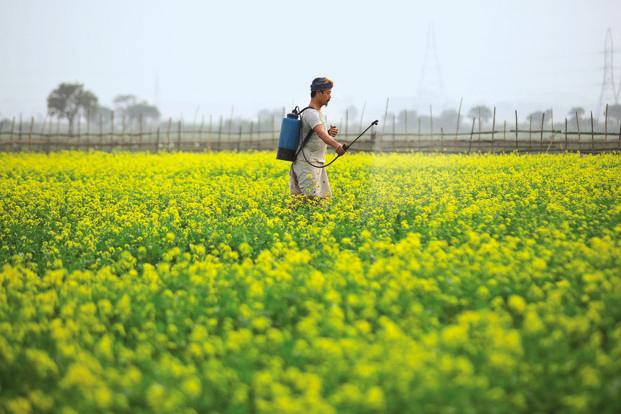
India - Crop insurance or deficiency payments?
21.12.2015 376 views
During the past few months, there has been a highly contested debate on the merits, viability and feasibility of crop insurance in India given the large number of small farmers and the large amount of subsidy involved that is not being effectively used as the coverage of area and farmers remains small.
Some policy analysts have proposed a state-subsidized (both Union and provincial) crop insurance mechanism to achieve economies of scale on the patterns of China and the US, while others have proposed alternatives like a calamity relief fund and deficiency payments to insure farm incomes. Now, there are reports that states like Punjab and Maharashtra are already attempting deficiency payments in some crops that have a minimum support price (MSP) provision. Maharashtra has proposed it in cotton and Punjab in maize.
In this context, it is important to examine the merits of some of the arguments and their implications if deficiency price payments are implemented in India. The recent socio-economic and caste census data show that only 30% of the rural households have farming as the source of their income, while 51% derive their livelihoods from manual casual labour. Another 2.5% are involved in part-time or full-time domestic service, 1.6% in their own non-farm enterprises and the rest 14.6% in other occupations.
In states like Andhra Pradesh and Tamil Nadu, landlessness is as high as 73% each, which means only 27% rural households own land. This is followed by Kerala and West Bengal with 72% and 70% rural households being landless, respectively. Even Punjab, with 65% rural households being landless, ranks fourth in this aspect.
This clearly shows that first, farmers are not the major segment of the rural population anymore and many of them may not depend solely on their farm income. On the other hand, there is a vast majority as mentioned above who are mostly landless and depend on casual labour to earn a livelihood. In this situation, asking for a minimum income insurance for only farmers smacks of lobbying for a dominant rural group at the cost of other stakeholders in the farm economy.
Everyone is aware how the Mahatma Gandhi National Rural Employment Guarantee Act (MGNREGA) was criticized for hurting agriculture supposedly on the ground that it created a labour shortage and led to higher wage costs for farmers. This, despite the fact that a rural household could claim only 100 days of work for one person at minimum wage, and that, in practice, was, on an average, only for about 50 days amounting to a benefit of just Rs.5,000 in a year for a rural landless or marginal land-holding household.
Therefore, now when the more resourceful of the rural population are being projected for their poor plight due to natural and market risks, is it fair and equitable that those who own land should be ensured minimum income while those completely resourceless should not be talked about at all as if they have no stakes in farming?
It is to the credit of the recent agitation by farmers’ and workers’ unions in Punjab that for the first time, while demanding compensation of Rs.40,000 per acre for landowners for cotton crop failure, there are was also a demand for compensation of Rs.20,000 per family for landless farm households who depended on cotton for livelihood. It is important to remind ourselves that even the amended land acquisition law provided for compensation to landless if they suffered a loss of livelihood due to land acquisition in a given area.
Further, it is debatable whether the country can afford such income insurance when even MGNREGA was being targeted for wastage of money despite the fact that some public work was being carried out and millions of rural livelihoods were being supported. What public benefit such an income insurance will bring is difficult to understand other than the damage it will bring to agriculture in that once a farmer is assured of a minimum income, he need not work hard as any deficiency in income from crop farming arising out of below average yields and below average or minimum prices will be met by the state.
Further, when India has been opposing the domestic support subsidies in developed countries and is herself under constant attack for crossing the mandated Aggregate Measure of Support (AMS) levels, how can it go for deficiency payments? It is almost giving farmers cash subsidies or paying them for not producing efficiently. This is a sure way of killing whatever enterprise is left in agriculture.
Besides, there are millions of tribal households in many states who have no land titles, which will make them ineligible to avail of minimum income support if it is implemented. Further, it is known that a large part of the farm lands are leased out or are sharecropped. These real farmers (sharecroppers or leasees) will not get the income insurance if the erstwhile Andhra Pradesh experience of giving licences to such cultivators is any indication. There, it was scuttled by all involved, including landowners and banks. This will lead to further raising income inequalities in India, which have grown during the past decade due to the opening up of markets.
It is proposed by the proponents of income insurance that Agricultural Produce Market Committees (APMCs) can be used by farmers for registering their produce for availing of minimum income, but it is forgotten that the government is already undoing APMCs under agricultural market reforms as it is perceived that there was a monopoly of APMCs in agricultural markets.
First of all, it is a complete lie that a farmer cannot sell outside APMC markets as today there are lakhs of farmers in India who are undertaking contract farming or selling to food supermarkets and other buyers directly without contract, under the amended APMC Acts. If there was an APMC monopoly, how was this possible? Incidentally, Bihar abolished the Act altogether in 2006. In a situation where there are no or a few APMCs, where will the farmer register his produce for minimum income support, especially when much-needed private wholesale markets have not come up anywhere at all?
A farmer will have to submit a copy of the APMC receipt as proof of selling below MSP, his land records, and estimated yield of his farm as a record to avail of the benefit under the deficiency direct payment system. This will certainly exclude sharecroppers and also create rent-seeking in so many other ways for local officials. Further, if a farmer undertakes contract farming or sells directly to a buyer, how would that produce be registered?
Finally, the proposed income insurance does not seem to include allied occupations like dairying, fisheries, non-timber forest produce or poultry as that produce does not come to the APMC market, but they face price and market risk like any other crop farmer and thus, the benefits would reach only a small fraction of the farming community.
Making deficiency payment based on MSP alone is not about income assurance as it would leave out the yield component and, therefore, cannot be a replacement for crop insurance and MSP backed by procurement.
But, the most glaring implication of the proposed deficiency payment mechanism is that it makes the state give up its responsibility of intervening in markets by undertaking procurement at MSP and, therefore, sending signals to other buyers and creating competitive conditions for farmer benefit.
Once the MSP is not backed by procurement, it would leave the market to the private players who may not even buy at MSP, especially in major and high-value crops like cotton.
Therefore, it is better to have multiple mechanisms of agricultural risk management, some of which are already available like MSP (backed by more effective procurement across most MSP crops), Market Intervention Scheme (MIS) in states like Karnataka and Himachal Pradesh, which is implemented by Union-state partnership when demanded/needed in crops that have no MSP, contract farming, warehouse receipts system, and, of course, better implemented crop insurance with some state subsidy for commercial crops that matter for farmer livelihood and can also help achieve desired diversification in cropping pattern.
Source - http://www.livemint.com
EVENTS

ScaleAgData Stakeholder Engagement Event
22.10.2024The ScaleAgData project is pleased to invite you to our second stakeholder event. Building on the discussions and connections formed during our first webinar, this event will focus on fostering collaboration among stakeholders, providing updates on our project’s progress, and outlining future opportunities for engagement.
RISK EVENTS

Moldova - May frosts caused heavy damage to fruit orchards
10.05.2026The first frosty nights of May have significantly worsened estimates of damage to Moldova's fruit sector from spring frosts. According to initial assessments by fruit market operators, between a quarter and a third of the country's total orchard area was seriously affected.
26.05.2026
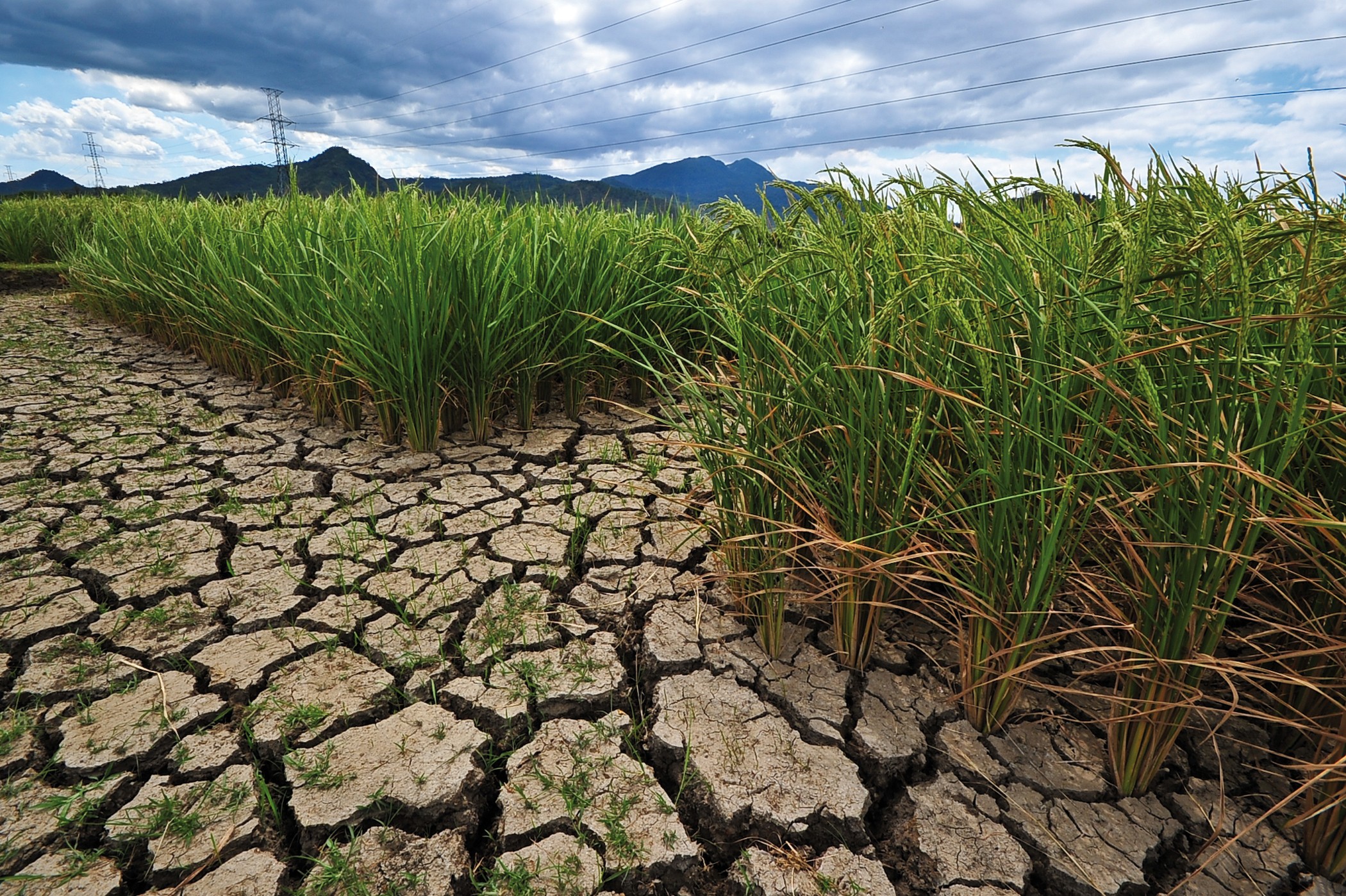
“Timac Agro Ukraine” launches crop insurance against drought
Timac Agro Ukraine, in collaboration with the insurance company PZU, has launched a crop insurance program against drought for farmers in five regions of Ukraine.
26.05.2026
Hansen announces "dialogue with the EIB on new agricultural insurance models"
Integrated European framework for climate resilience 'is on the way'.
26.05.2026
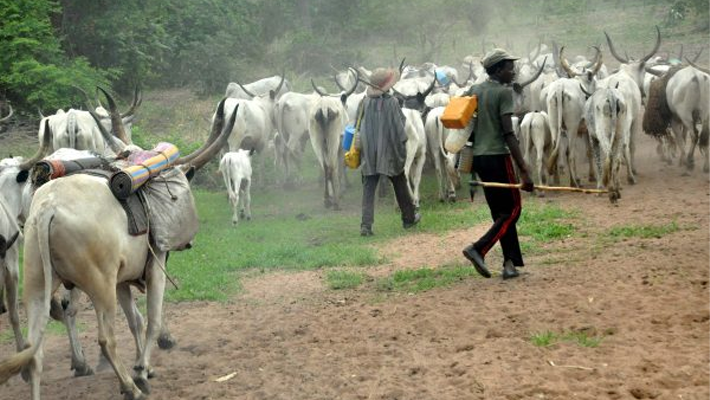
Nigeria - Oyo Steps up Enforcement Against Illegal Livestock Trading, Open Grazing
The Oyo State Government has stepped up enforcement against illegal livestock trading and open grazing, arresting offenders and impounding animals in parts of Ibadan during a fresh compliance operation.
26.05.2026
Philippines - Tacloban braces agri, health mitigation measures amid looming super El Niǹo
The City Government of Tacloban has intensified its preparations and mitigation measures as the threat of a possible Super El Niño continues to loom over several parts of the country, bringing concerns over prolonged dry spells, water shortages, and impacts on agriculture and public health.
26.05.2026
India - Punjab Govt Deploys 500 Teams for Special Girdawari as Rains Damage Wheat
In Punjab, to calculate the damage done to the standing crops in the fields due to the inclement weather for the last many days, the state government has formed teams of 500 officials from the agriculture department to assess losses.
26.05.2026
Brazil - Agricultural insurance plummets in Paraná, putting the sector at risk.
Cevio Alberto Mengarda, a soybean and corn producer in Marechal Cândido Rondon, in the western region of Paraná, followed in his father's footsteps in agriculture and today manages the family property.
25.05.2026
Algeria - CASH Assurances to diversify into agriculture insurance
CASH Assurances will launch agriculture insurance plans in June 2026, as part of its diversification strategy.
25.05.2026

U.S. specialty crop growers push for stronger Farm Bill support
Specialty crop growers in the U.S. are calling for stronger support measures in the 2026 Farm Bill, particularly around risk management, market access, and crop insurance.
