

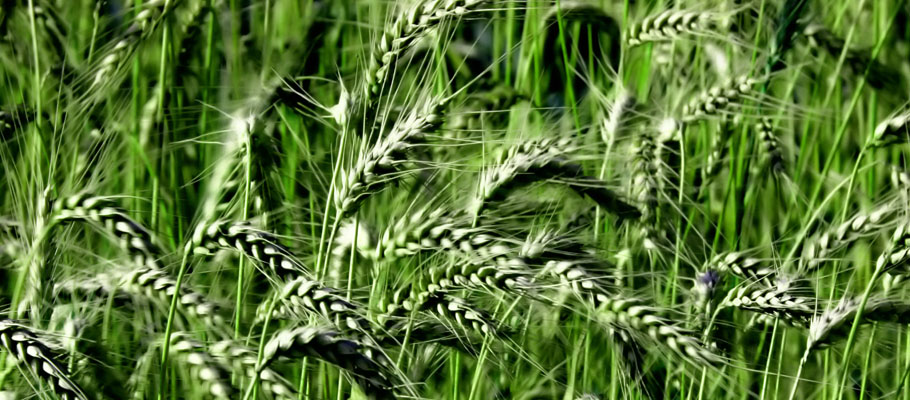
USA - Gov’t sponsored crop insurance less attractive for business
01.02.2016 350 views
A notable feature of today’s insurance business in the U.S. is the large lines of insurance that hang almost entirely on a government mandate or government subsidy. Regardless of whether these subsectors are profitable, unlike traditional life or property and casualty insurance, they are figments of some government policy action. An act of Congress created the business, and another act can destroy it.
Recently, Minnesota-based Cargill, other ag-related businesses such as Monsanto and John Deere and financial giant Wells Fargo have all sold off their crop insurance subsidiaries. Apparently all have decided that such insurance now is an overly competitive, low-margin business that does not fit well with their core activities.
That such large corporations should even be selling crop insurance to farmers would have amazed both farmers and the insurance industry only a few decades ago.
Farming is inherently a risky business. Weather risks such as drought, hail and frost have large effects on yields. Prices oscilate in response to national and global factors. This has been true since agriculture was discovered millennia ago.
Surprisingly, however, insuring agricultural risks never was a large business as long as it was left up to market forces. Yes, farmers bought general property and casualty insurance to cover the risks of a barn blowing away or a combine burning up. And such farm policies also could cover very ag-specific risks like cattle getting killed by lightning. But farmers generally did not insure themselves against the major risks of weather and, other than by using futures contracts, could not insure themselves against adverse price movements.
One exception was hail insurance. Hail could destroy a crop completely in minutes, leaving even less to salvage than drought or early frost. More importantly, hail damage had the degree of randomness necessary for insurance to work. Yes, the frequency of hail did vary from one region to another. So the premiums that would have to be charged could not be the same everywhere. This was not much different than wind damage to barns, which was much more likely in Kansas than in Wisconsin. But as with tornadoes, hail damage to crops varied randomly within a given climate zone. Once one had enough years of loss history to compute some probabilities, hail insurance could follow the same procedures that had evolved in places like Milan and Amsterdam centuries ago.
Policies were small compared to, say, insuring ships, and margins thin. Some big for-profit companies competed, but most policies were written by small nonprofit “township mutuals” that had cropped up when national property and casualty firms had been loath to bother selling fire, wind and liability coverage for small farms.
Local independent agents in small towns sold the coverage or farmers got it through local banks. These had a financial interest in seeing that the specific property, such as machinery, livestock and buildings, that they had financed had at least minimal coverage.
Yes, a given hail storm might occasionally cover such a large geographic area that the loss for a particular “township mutual” might be large relative to its reserves. But these nonprofits knew enough about the insurance business that they soon developed consortia for mutual reinsurance of risks above some threshold. The system worked reasonable well.
Coverage was not available for other weather risks, however. In contrast to hail, frost damage varies greatly with micro-topography. Cold air funnels down to lower elevations and crops may be wiped out on a valley floor while those 50 feet higher may suffer no damage at all. Such a frost on the night of Sept. 2, 1973, is one reason I am an economist rather than a farmer. This would make frost insurance ripe for “adverse selection,” in which farmers like me with vulnerable fields would buy eagerly while those with less risk would abstain, thereby lowering the pool of ratepayers needed to cover the risk.
This is little different than employers offering health coverage with different tiers of coverage — seeing employees with special-needs children or anticipating fertility treatment pile into “Cadillac” plans while healthy twenty-somethings with no assets decide to not pay for any coverage.
Farmers famously were willing to bear the risk of crop failure themselves, but they also became past masters at whining for government aid whenever there was widespread weather damage. Everyone thinks farmers are “good” people, say compared to oil companies or railroads, and no politician has ever paid much of a price for helping out deserving people dealt a blow by Mother Nature.
Farm economists and insightful congressional representatives eventually observed that it would be better to subsidize insurance to cover risks that the private market would not. This would reduce political pressure for Treasury-borne “disaster payments” whenever there were big climatic blows to crop production. This federal all-risk crop insurance was introduced in 1938. It set up a pattern of the government using existing private agents to sell coverage for which farmers had to pay part of the cost through premiums but with enough of the cost picked up by the Treasury so that it was attractive to producers. This is the business from which Cargill, Monsanto, Deere and Wells Fargo are now all bailing.
This program was termed “experimental” for more than 40 years in that it did not cover all crops and all regions of the country. It was expanded and “reformed” in the 1980 farm bill. One problem was that Congress still enacted “disaster relief” appropriations so frequently that many farmers saw little reason to buy coverage. So subsequent legislation made purchasing coverage a mandatory prerequisite to getting other farm subsidies or “disaster payments” when these were given out.
This system basically remains in place. And for 20 years, there has been rhetoric about getting government out of agriculture, starting with the “Freedom to Farm” act of 1995. But the longer any business can nurse at the federal udder, the greater the political pressures to continue largesse. Thus, payments continued each year in various guises.
It is hard to find an agricultural economist who personally believes there is justification for broad federal subsidies to farms. But they accept the continued existence of such payments as a political given. So some search for ways to convey the largesse with as few productivity-distorting mis-incentives to producers as possible. Skeptics also note that farmers and politicians both welcome complicated programs that camouflage the nature and size of subsidies as much as possible.
That led to a new subsidy program introduced for 2015 that offered farmers the option of enrolling in a program that “insured” them against income losses due to poor yield losses or those due to low prices, but not both. In typical fashion, however, this new program is in addition to existing federal insurance, not a substitute for it. But there have been some changes in the compensation to companies, such as that now being divested by Cargill and others, that make the business less lucrative.
In itself, this kerfuffle in government-sponsored but privately administered insurance is just a case study in the Alice’s Wonderland sphere of agricultural policy. But it implies similar dynamics in the wonderland of health insurance, where private firms like UnitedHealthcare and Humana administer government-funded programs like Tricare for military retirees or Medicaid or Medicare. But those are best left to another column.
Source - twincities.com
EVENTS

ScaleAgData Stakeholder Engagement Event
22.10.2024The ScaleAgData project is pleased to invite you to our second stakeholder event. Building on the discussions and connections formed during our first webinar, this event will focus on fostering collaboration among stakeholders, providing updates on our project’s progress, and outlining future opportunities for engagement.
RISK EVENTS

Moldova - May frosts caused heavy damage to fruit orchards
10.05.2026The first frosty nights of May have significantly worsened estimates of damage to Moldova's fruit sector from spring frosts. According to initial assessments by fruit market operators, between a quarter and a third of the country's total orchard area was seriously affected.
26.05.2026
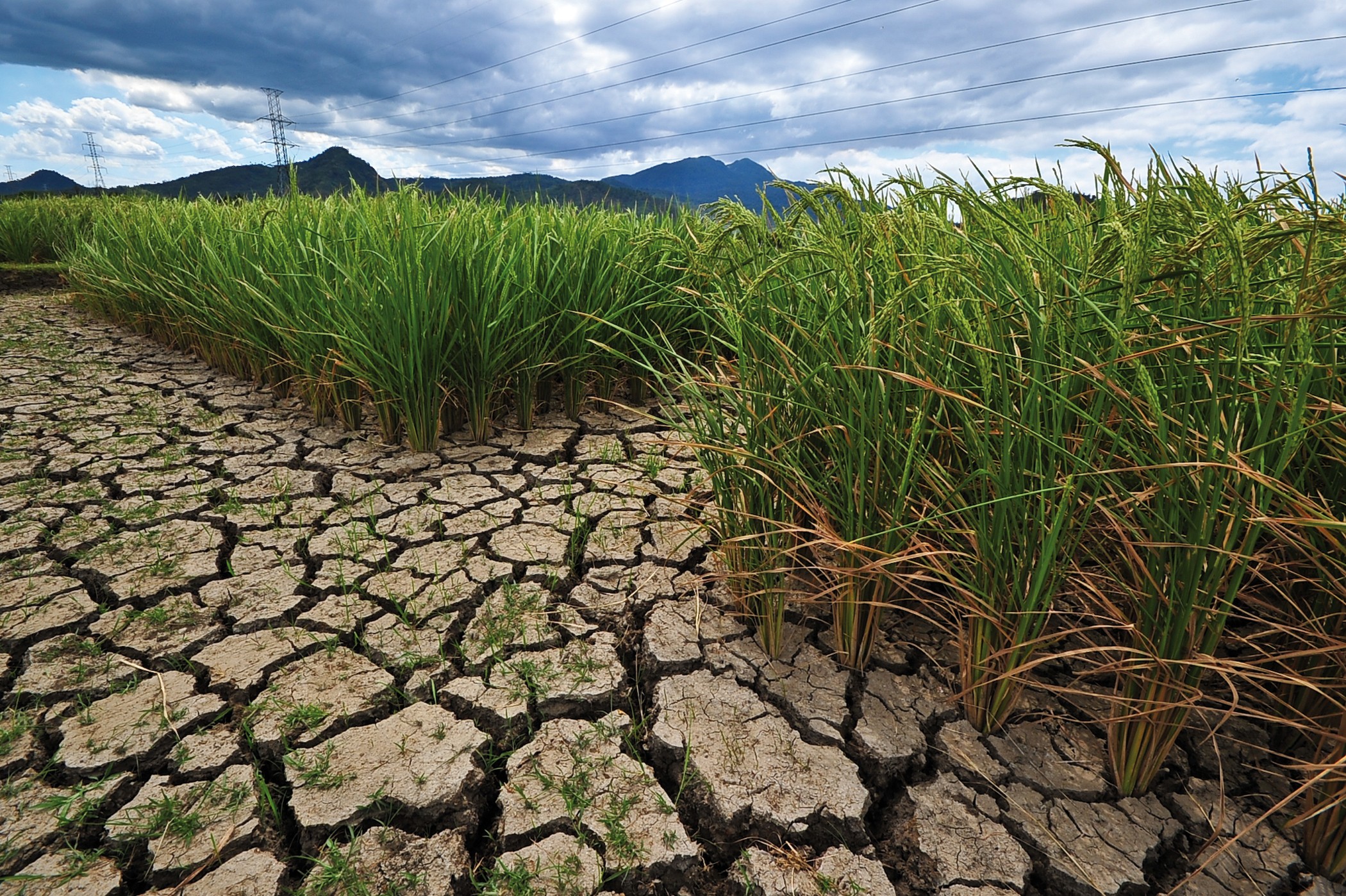
“Timac Agro Ukraine” launches crop insurance against drought
Timac Agro Ukraine, in collaboration with the insurance company PZU, has launched a crop insurance program against drought for farmers in five regions of Ukraine.
26.05.2026
Hansen announces "dialogue with the EIB on new agricultural insurance models"
Integrated European framework for climate resilience 'is on the way'.
26.05.2026
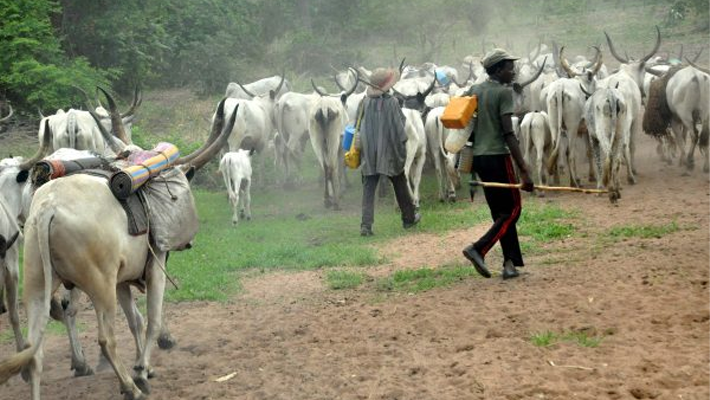
Nigeria - Oyo Steps up Enforcement Against Illegal Livestock Trading, Open Grazing
The Oyo State Government has stepped up enforcement against illegal livestock trading and open grazing, arresting offenders and impounding animals in parts of Ibadan during a fresh compliance operation.
26.05.2026
Philippines - Tacloban braces agri, health mitigation measures amid looming super El Niǹo
The City Government of Tacloban has intensified its preparations and mitigation measures as the threat of a possible Super El Niño continues to loom over several parts of the country, bringing concerns over prolonged dry spells, water shortages, and impacts on agriculture and public health.
26.05.2026
India - Punjab Govt Deploys 500 Teams for Special Girdawari as Rains Damage Wheat
In Punjab, to calculate the damage done to the standing crops in the fields due to the inclement weather for the last many days, the state government has formed teams of 500 officials from the agriculture department to assess losses.
26.05.2026
Brazil - Agricultural insurance plummets in Paraná, putting the sector at risk.
Cevio Alberto Mengarda, a soybean and corn producer in Marechal Cândido Rondon, in the western region of Paraná, followed in his father's footsteps in agriculture and today manages the family property.
25.05.2026
Algeria - CASH Assurances to diversify into agriculture insurance
CASH Assurances will launch agriculture insurance plans in June 2026, as part of its diversification strategy.
25.05.2026
U.S. specialty crop growers push for stronger Farm Bill support
Specialty crop growers in the U.S. are calling for stronger support measures in the 2026 Farm Bill, particularly around risk management, market access, and crop insurance.
