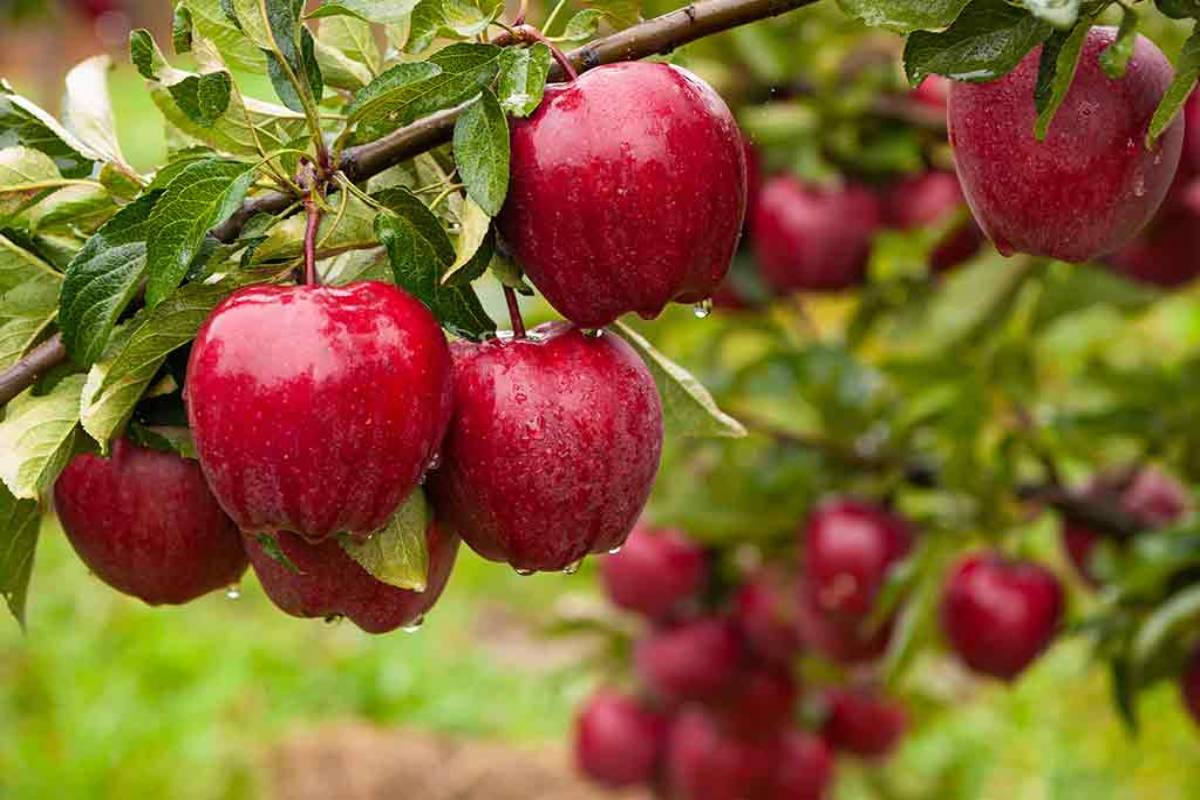
The European harvest of organic apples will be about 15 per cent lower this year, due to frost damage and poor flowering conditions. If demand continues to rise, supply is unlikely to be fully adequate. This emerged at the general meeting of the Europäischen Bioobst Forum (EBF) on 18 June in Ravensburg, Germany. Here, the alarm was also raised about rising production costs for organic apple growers: these have risen by about 25 cents per kilo over the past three years. The picture outlined by the EBF also applies to the Netherlands, according to Prisma Fruit, reports NFO.
The harvest forecast for organic apples for the 2024 season was one of the topics at the meeting. This year's harvest is expected to be about 15 per cent lower, due to frost damage and poor conditions during flowering in certain European region.
In regions where preventive measures were taken to protect crops - for example, in the form of night frost irrigation and hail nets - more stable yields are expected. According to the EBF, protecting crops from weather extremes is an important goal in order to continue to achieve sufficiently high productions in the future. The EBF indicates that public authorities in European fruit regions should finance such investments to the maximum extent possible.
During the meeting, representatives from the various organic fruit regions in Europe also shared the cost of producing organic apples. What stood out was that - viewed from a historical perspective - costs have risen sharply in all regions over the past three years. There were several regional causes for this, such as higher minimum wages, energy prices, mechanisation costs and the planting of new varieties.
Overall, production costs rose by about 25 cents per kilo. When inflation compensation is included in this, organic fruit growers face a turnover drop of almost 30 cents per kilo compared to previous years. As a result, many organic fruit growers are facing serious liquidity problems.
In an emotional discussion, the meeting noted that these cost increases are not being passed on to the market. However, another year without price adjustment is not possible, it was concluded. To cover the increased costs, growers will have to receive higher prices.
David van de Graaf, president of Prisma Fruit, indicated that the situation in the Netherlands corresponds to the picture painted at the EBF meeting. "In our country, too, the harvest of organic apples will probably be about 15 per cent lower this year. On the one hand because there is relatively a lot of hail damage. In addition, companies have also been able to carry out late control against the apple blossom beetle, with all its consequences.
So production is not increasing, while costs are going up considerably. A cost increase of 25 cents per kilo in the past three years is also happening in the Netherlands. That is definitely a matter of concern."
Source - https://www.freshplaza.com