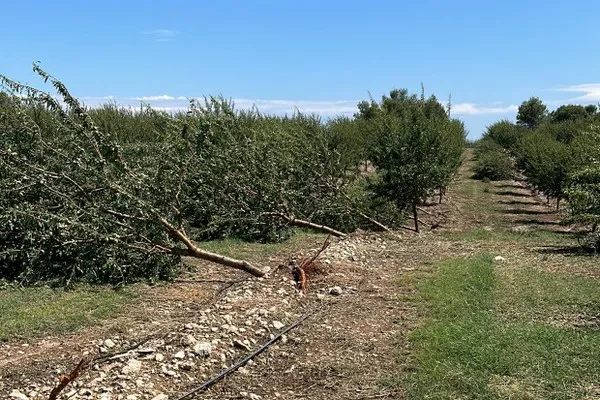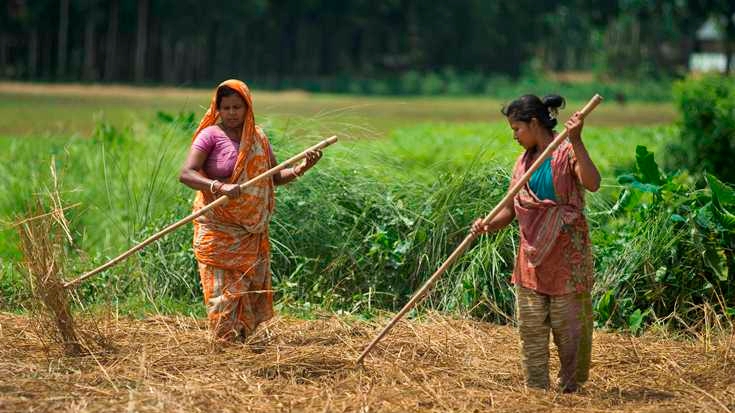
The agriculture minister has recently announced the government’s plan to introduce crop insurance to protect farmers from losses caused by floods, cyclones, and other natural disasters. This long-awaited initiative responds to a pressing need, particularly of the farmers in coastal and flood-prone regions who face recurring climate shocks. This move signals an important step towards strengthening agricultural risk management and supporting rural livelihoods. Many countries adopted such systems years ago.
Agriculture remains the backbone of the national economy and ensuring farmers’ financial security should be a top priority. Crop insurance, combined with other positive initiatives taken by the government such as farmer cards, family cards, and improved access to agricultural credit, is expected to reduce farmers’ vulnerability and provide them with a much-needed safety net.
However, key questions remain about how this initiative will be implemented. There is a valid concern: will crop insurance become a sustainable solution or merely serve as a short-term political commitment? To build trust, the government must clearly communicate the operational details, outlining how farmers will enrol, how claims will be assessed, and how quickly the compensation will be delivered.
It is equally important to consider the realities of the agricultural sector. Most farmers are smallholders with limited financial capacity, making even modest premium payments difficult. This raises a crucial issue: what kind of repayment system will be simple, affordable, and accessible? Without flexibility and adequate subsidies, the programme risks excluding those who need it most. A farmer-friendly design will be essential for broad participation and long-term viability.
Transparency and awareness are also critical. Farmers must understand not only the benefits of insurance but also the processes and their role within the system. Without proper outreach and education, participation may remain limited. Given Bangladesh’s high exposure to floods, cyclones, and salinity intrusion, the insurance model must be practical, inclusive, and sustainable, drawing on proven global experiences.
Bangladesh can draw valuable guidance from a diverse set of international experiences in agricultural insurance. In Australia’s Murray–Darling Basin, crop insurance is closely linked with advanced water management and climate adaptation strategies, helping farmers manage drought, salinity, and water scarcity more effectively.
In the United States, the Federal Crop Insurance Program functions through a strong public–private partnership, where the government subsidises premiums and shares risks with insurers, ensuring broad coverage and timely payouts. Similarly, India’s Pradhan Mantri Fasal Bima Yojana (PMFBY) combines indemnity and index-based approaches, enabling millions of farmers to recover quickly from floods, droughts, and pest attacks while encouraging investment in improved farming practices.
Japan offers a cooperative-based model, where farmers participate in local insurance groups that promote transparency, trust, and efficient claim settlement—an approach that could suit Bangladesh’s rural setting. In Mexico and Kenya, index-based insurance relies on weather and satellite data to trigger automatic payouts, reducing delays and disputes. The Philippines has linked insurance with typhoon monitoring systems, allowing farmers to maintain production despite frequent storms. In Ethiopia, weather-indexed insurance is integrated with social safety nets to include vulnerable farmers, while Spain’s Agroseguro system demonstrates how public–private collaboration can ensure long-term financial sustainability.
Together, these examples show that successful crop insurance systems depend on strong government backing, reliable data systems, integration with broader agricultural policies, and farmer-friendly design. Crop insurance offers several key advantages. It provides financial protection, preventing farmers from falling into debt after crop losses. It encourages investment in improved inputs and technologies, increasing productivity. It also supports climate resilience by promoting adaptive farming practices, including salt-tolerant crops and flood-resistant cultivation.
Additionally, the programme can reduce poverty by stabilising incomes. Pilot projects in Bangladesh’s coastal regions show that index-based insurance enables quick recovery and replanting, minimising long-term losses.
Despite its potential, the initiative many face several obstacles. Affordability remains a major concern, as even subsidised premiums may be difficult for poor farmers. Limited awareness and trust could restrict participation. Administrative challenges, particularly in damage assessment, may delay payouts. Coverage is still limited, often excluding livestock and fisheries. There are also risks of corruption and mismanagement too, which could undermine confidence in the system. Moreover, effective implementation requires reliable weather data and monitoring systems, which demand significant investment. Expanding the programme nationwide is likely to take two to three years.
Introducing crop insurance involves several risks that must be carefully managed. High costs can be addressed through targeted subsidies. Fraud and adverse selection can be minimised by adopting index-based models. Administrative inefficiencies and corruption risks can be reduced by utilising digital platforms, independent audits, and community oversight. Low awareness can be tackled through training and outreach programmes. Finally, environmental risks can be mitigated by integrating insurance with climate-resilient agricultural practices.
According to the World Bank, Bangladesh loses millions of dollars annually due to climate-related crop damage. These losses threaten food security and deepen rural poverty. Indeed, crop insurance can help farmers recover their losses quickly and sustain their livelihoods. For coastal communities, combining insurance with salt-tolerant crops offers a pathway to resilience.
Global experiences show that well-designed insurance systems can transform agriculture by enhancing resilience, reducing poverty, and encouraging investment. For Bangladesh, crop insurance is not just a financial mechanism, it is a vital tool for ensuring sustainable agriculture, food security, and rural stability.
Source - https://www.daily-sun.com