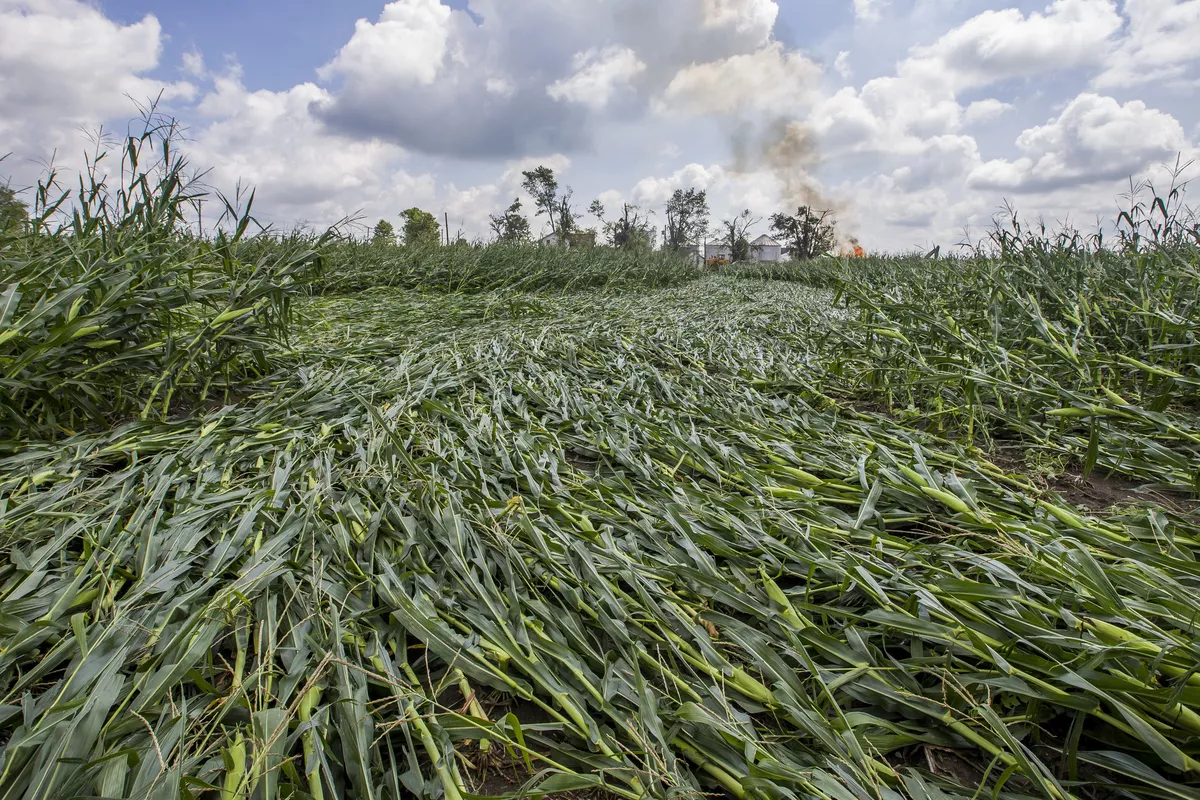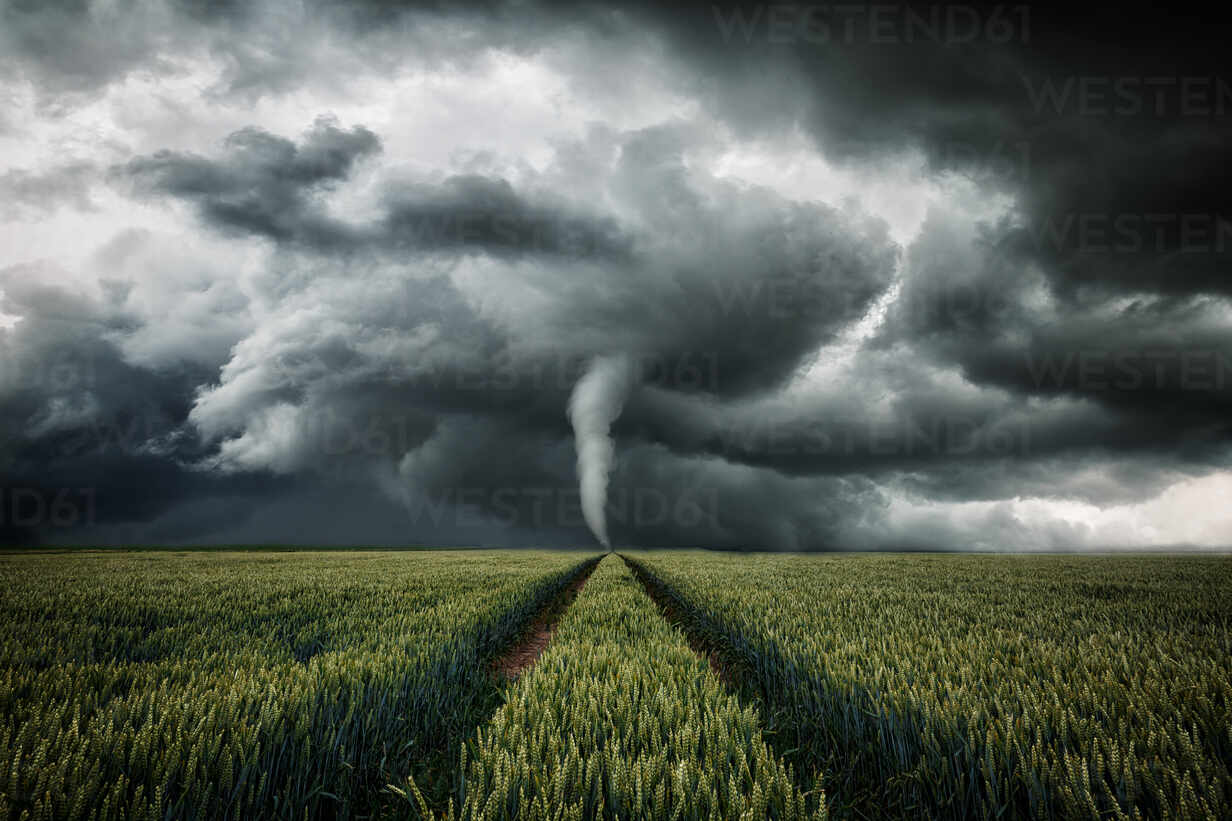
Large portions of Dan Jackson’s 1,600-hectare plot of farmland are littered with chunks of wood, twisted metal and household objects. Farm equipment and silos of grain lay overturned and smashed into the dirt, while walls stand as the only remaining sign of what were once functioning buildings.
The damage was caused by a powerful storm that ripped through southeastern Alberta last week between Medicine Hat and Lethbridge, destroying property and wreaking havoc on farms like Mr. Jackson’s.
“It’s going to be in the millions, I know that for sure,” said Mr. Jackson, referring to the estimated cost of repairs. He lost a series of massive grain barrels meant to contain 100,000 bushels of crop, a large Quonset and an insulated shop, as well as a few smaller buildings and a feedlot. The storm also killed numerous livestock, destroyed an untold amount of beans, corn and canola crop, and ripped Mr. Jackson’s barn off the ground before dropping it, damaging its frame and making it unstable.
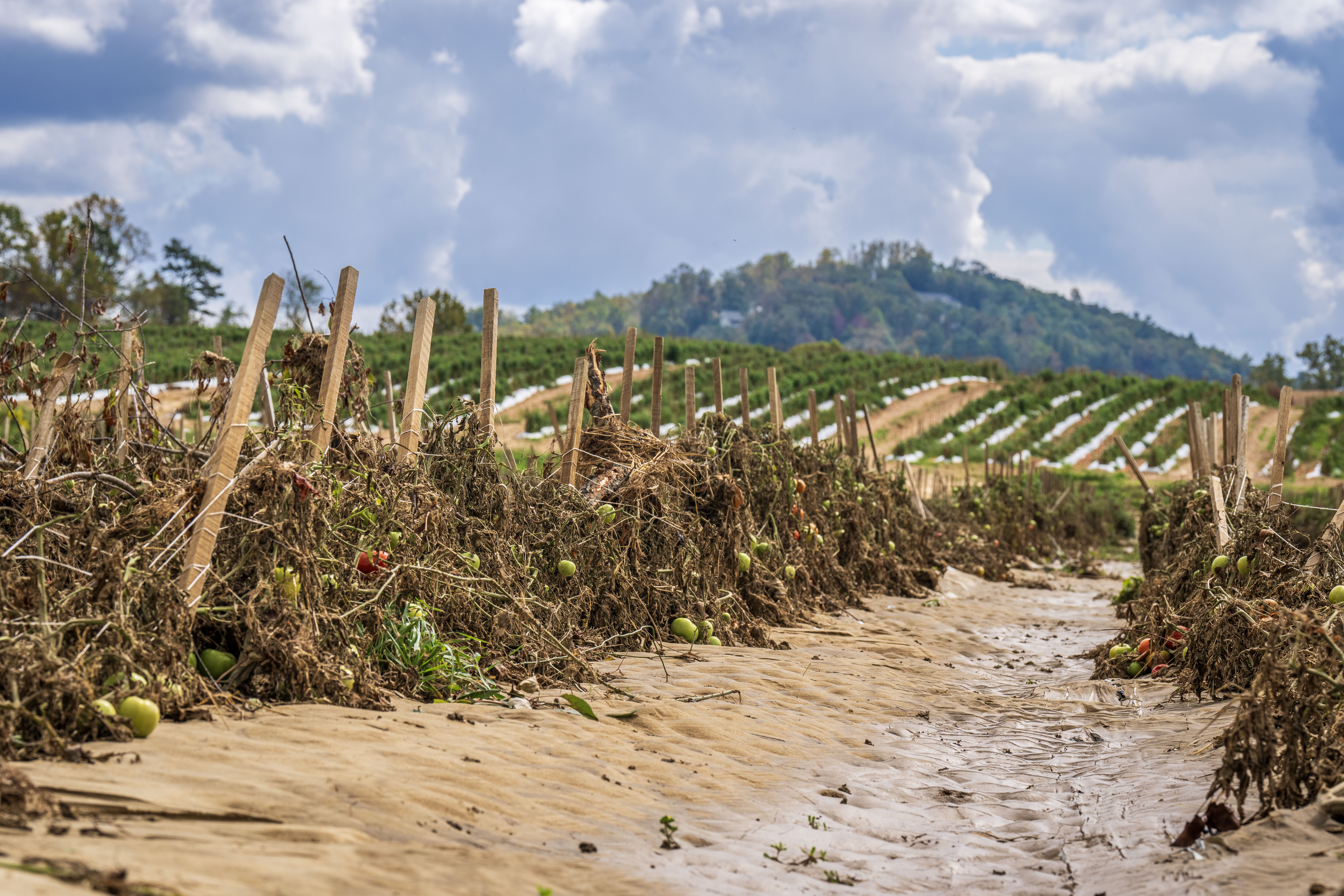
It has already been an unpredictable year for farmers in Alberta. They were under the threat of drought earlier this year, followed by a wet spring that held the promise of a more normal season. Now, a recent bout of extreme weather has left many farmers like Mr. Jackson picking up the pieces of their crops and homes while taking photos for their insurers to cover the losses, adding to pressures related to inflation.
The extent of the damage still isn’t clear but Canadian farmers had already made billions of dollars of crop insurance claims this year even before last week’s storm.
For the Jacksons, perhaps even worse than the property damage is the stress. Just a few days after the storm, the family was back to farming with what equipment they had left, with Mr. Jackson’s sons driving tractors with blown-out windows, trying to recover whatever crop they could. Two days after the storm, Mr. Jackson’s wife had a heart attack and was recovering in the hospital.
“It’s been a really hard situation, to be honest. It has put a lot of strain on all of us,” Mr. Jackson said. He became choked up as he described how members of the community, who found out about what happened through Facebook, came out to help support his family and clean up the devastation.
“There’s been such immense support, it’s overwhelming.”
The strongest part of the Alberta storm hit the areas near Medicine Hat and Cypress County, where the Jacksons’ land is located, but areas as far east as Lethbridge County were also severely damaged. Power for many residents in Medicine Hat and surrounding areas was cut after powerlines were ripped off poles, only returning last Thursday, while some manufacturing plants remained without power as crews worked to replace the electrical infrastructure destroyed in the storm.
The Northern Tornadoes Project and Environment Canada have since confirmed that last week’s storm included a tornado – the second recorded in Alberta in the past two months. Environment Canada previously said that the storm was part of a supercell system that began near the southern border with the United States, travelling around 300 kilometres northeast before reaching the Lethbridge-Medicine Hat area.
Supercell storms, characterized by severe thunderstorms and strong winds maintained by a powerful updraft, facilitate the perfect conditions for a tornado, although the agency has not confirmed whether the event actually qualified as one.
Leighton Kolk, co-founder of Kolk Farms, whose property is just a few kilometres northeast of Lethbridge, said the estimated losses he suffered from the amount of crop destroyed is, like Mr. Jackson’s, also in the millions. Although no damage was caused to any of the farm’s equipment or structures, Mr. Kolk said the storm wiped out half of all of his crops for the year.
“It’s basically just taking one year of income, and tossing it out the window,” he said.
“Imagine if you started your job and worked for six months, and then your employer walks in and asks you to give all the money back that he’s paid you. Also, he won’t be paying you for the next six months. That’s the level of destruction we’re dealing with.”
Mr. Kolk, who said his farm experienced a worse storm in 2019 that wiped out 80 per cent of his crops, explained how the loss hurt more than usual this year because of the increased price of agricultural materials caused by inflation and global supply chain issues. He said he’s thankful to have crop insurance, however, which will cover a large portion of his losses.
Under the Canadian Agricultural Partnership, the federal and provincial governments pick up 60 per cent of all crop insurance costs while 40 per cent is left to be handled by producers. Between 2017 and 2021, crop insurance payments more than tripled to $3.7-billion from $1.2-billion, according to data compiled by Statistics Canada. In the first quarter of 2022 alone, crop insurance payments nearly eclipsed the entire previous year, costing a record $3.4-billion from January to March, according to the data
Almost three-quarters of crop insurance payments in the first quarter went to Alberta ($1.3-billion), Saskatchewan ($926-million), and Manitoba ($241-million), which Statscan said was because of extremely dry weather, as well as the increased cost of goods owing to inflation. Overall production of crops is at its lowest since 2007, according to Statscan.
“While it’s not consistent year-to-year, the costs of weather-related damages have increased over the years,” said Laurie Karson, director of communications for the Canadian Federation of Agriculture. “This reflects increases in extreme weather events and associated damages, but also reflects increases in the value of agricultural products.”
Source - https://www.theglobeandmail.com