New report projects nearly 100% decrease in grape and wine production across B.C.
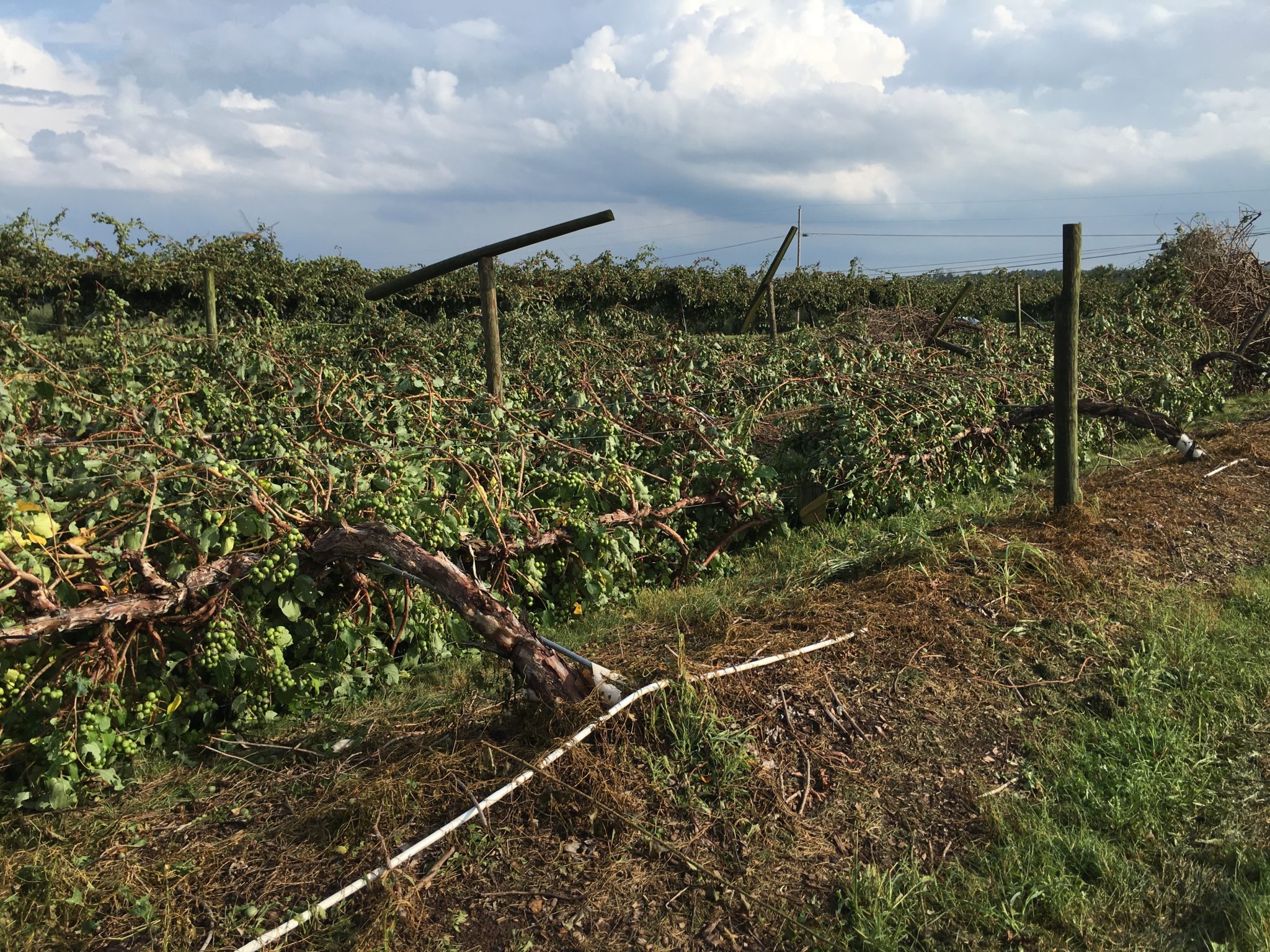
This year's mid-January cold snap has dealt a severe blow to British Columbia's wine industry, causing catastrophic crop losses across the Okanagan Valley.
The latest report from the Wines of British Columbia — a non-profit organization which represents the interests of wineries in the province — and a management consulting firm projects 97 to 99 per cent decrease in grape and wine production across B.C.
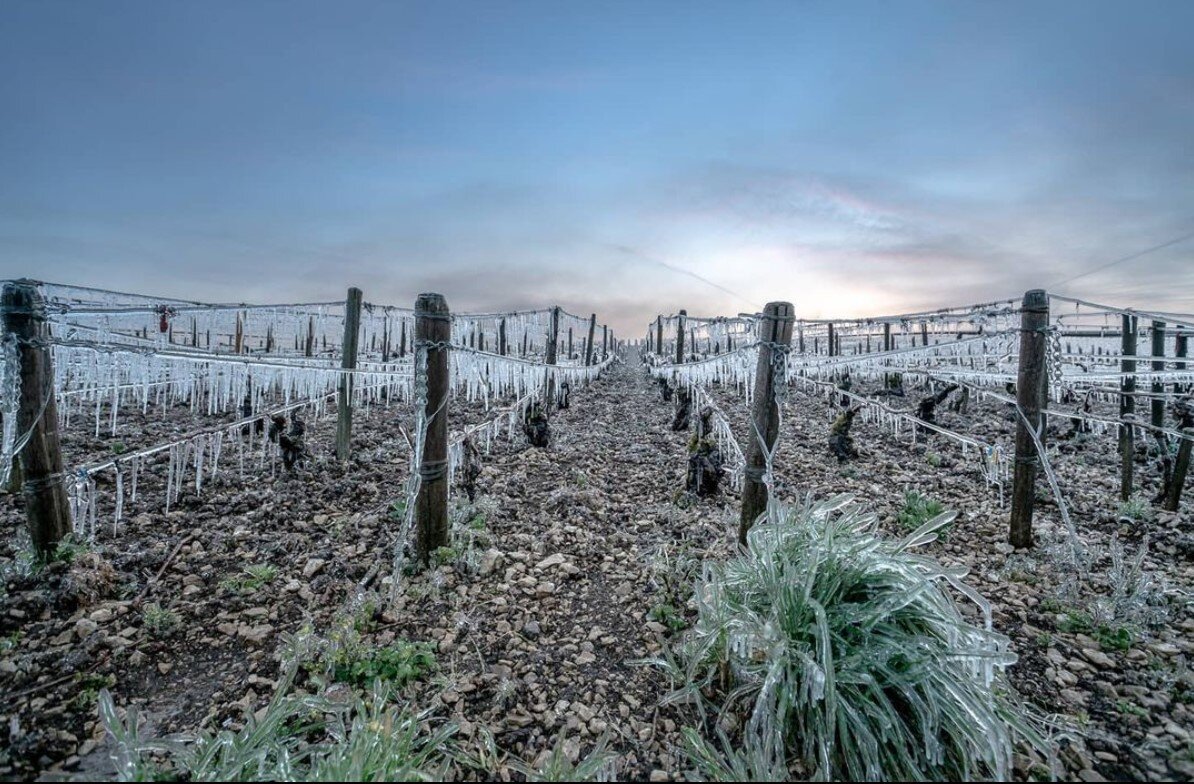
Temperatures plunged well below –20 C between Jan. 11 to 15, killing buds that would have eventually borne fruit, says grapevine physiologist Ben-Ming Chang with Agriculture and Agri-Food Canada.
"The cold temperature [has] basically killed off the buds," he told CBC News.
Chang has dissected many grapevine buds since January. Under magnification, the cell tissue should be green in a healthy plant, but sample after sample have all turned up brown, he says.
Out of the 200 or so samples he has examined, Chang says he hasn't found a single live bud.
"A combination of the lower temperature and the longer exposure time to [temperatures below –20 C] resulted in the devastating damage," he said.
The setback comes on the heels of last winter's cold snap, which decreased wine and grape production by over 50 per cent as a result of a two-day long dip in temperatures below –20 C.
'A perfect storm'
The prolonged cold snaps of the last two winters are part of a trend of extreme weather events impacting grape production in recent years, according to Wine Growers B.C. CEO Miles Prodan.
The organization has been reporting a consistent 30 per cent decline in yields over the past seven to eight years.
"We know mother nature can do this sometimes ... and back-to-back is like a perfect storm," Prodan said. "But the more immediate worry is with the wineries, without grapes to make the wine, there's great fear within the industry."
John Boynton, president of Arterra Wines Canada, says the severity of the damage surpasses anything he has ever experienced in the business.
"We've been short on crops [before but] nothing as catastrophic as this," he said in an interview with CBC News.
Boynton says while he is confident big wineries like his — Arterra owns several estate wineries in B.C. — can withstand the blow, he fears for small-scale wineries.
"You are going to see potentially a lot of ruined business," he said.
The B.C. wine industry estimates a loss of up to $445 million in revenue this year and growers like Boynton are calling on all levels of government to help find solutions.
These include providing allowance for B.C. wineries to import grapes from other regions — something that's currently not allowed for wines carrying the Vintners Quality Alliance (VQA) designation, meaning the wines meet standards with respect to their origin, vintage and varietals, including being made from 100 per cent B.C. grapes.
However, given the small crop expected in the Okanagan this year, wineries are suggesting changes to the VQA so grapes from outside B.C. can be used in production.
"We are looking at options of bringing grapes from Ontario or possibly even from the Washington state," said Prodan.
Cherry growers also reeling
Sukhpaul Bal, president of the B.C. Cherry Association, said the deep freeze was especially destructive because temperatures were mild in the preceding weeks.
Bal said it's too early to say what the impact will be on crops in 2025 and beyond.
"But it is certainly possible that trees in the worst hit areas have suffered long-lasting damage with a recovery that could take years," he said in the statement.
Bal said the effects of the deep freeze are made worse by the fact it came while cherry growers are still recovering from a cold snap in 2020 and a heat dome that shattered temperature records throughout the province in June 2021.
A news release from Agriculture and Agri-Food Canada in 2022 said the growth of the cherry industry has been a "major success story," with cherries becoming the country's second-largest exported fruit crop behind blueberries.
Canada's exports of cherries reached $78 million in 2021, with B.C. farmers producing 95 per cent of that volume, the statement said.
Bal said when cherry growers are struggling with potentially devastating losses, it signals the need for greater support for agricultural producers who have been hit hard by wildfires, flooding, heat waves and drought over the last several years.
Source - https://www.theweathernetwork.com