Canada - Low yield threshold doubled to encourage salvaging crops

11.08.2025 661 views

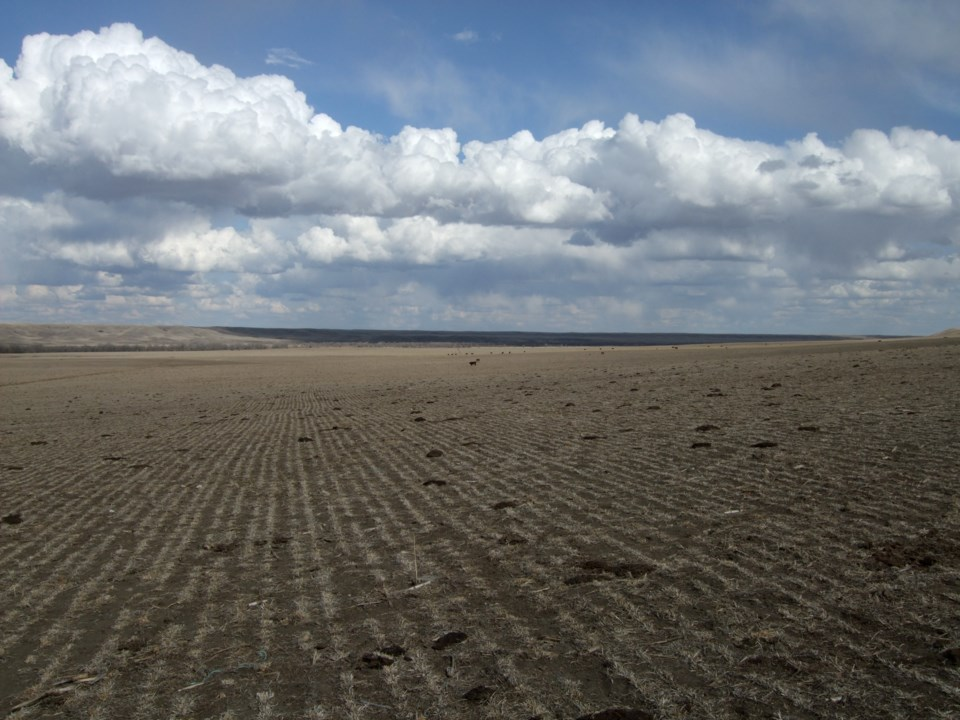
Due to the dry conditions in many parts of Alberta, the low yield threshold has been doubled for 2025.

The low yield allowance is part of crop insurance programs and is meant to encourage farmers to salvage their crops for feed and other uses rather than abandon the acres. AgriInsurance is a cost-shared program between producers, and the federal and provincial governments.

“I’ve spoken with livestock and crop producers in Alberta who are worried about the impact that dry conditions could have this year. Changing the yield threshold will give them some breathing room, so they can make the best decisions for their operations,” said Heath MacDonald, federal Minister of Agriculture and Agri-Food Canada.

According to the Agricultural Service Boards website, as of Aug. 6, 13 municipalities have declared agricultural disasters including the M.D. of Bonnyville, Smoky Lake County, Lac La Biche County and Athabasca County.

“The impact of ongoing dry conditions in some regions of the province is concerning for Alberta’s agricultural community. This adjustment lets producers act swiftly to salvage crops for livestock feed, rather than watch their fields deteriorate further and risk harvesting nothing,” said RJ Sigurdson, Minister of Agriculture and Irrigation.

According to AFSC, the low yield allowance in 2025 for barley, wheat, oats, rye, field peas, corn, triticale and faba beans will be increased to 300 kg per acre. The threshold for dry beans will be 240 kg per acre. The threshold for lentils and Desi chickpeas will be increased to 80 kg per acre, and Kabuli chickpeas will be 50 kg per acre.

Producers need to contact ASFC at least five days before beginning their harvest.

“They will need to provide the crop type, number of acres and estimated yield on the acres that will be put to an alternate use as well as the intended use (e.g. pasturing, silage),” says the AFSC website.


Source - https://www.lakelandtoday.ca

23.08.2026

USA - Pennsylvania Opens $10M Aid Program for Freeze-Hit Growers

Pennsylvania will open a $10 million disaster-relief program Aug. 24 for fruit growers facing an estimated $150 million to $200 million in losses from a spring freeze, Gov. Josh Shapiro reported Thursday during a visit to an Adams County orchard.

23.08.2026

A year of change in Polish agriculture

Minister Krajewski highlights support for farmers and stronger agricultural resilience.

23.08.2026

Nepal - Hunting permits issued to protect crops from wildlife in Arghakhanchi

Amid growing damage to crops and increasing human-wildlife conflict, a system allowing the legal hunting of certain wild animals has been introduced in Arghakhanchi.

23.08.2026

Spain - Barrachina highlights 35.3 million in agricultural insurance for 21,000 professionals in the field

The Generalitat allocates 35.3 million to agricultural insurance in the Valencian Community to support 21,000 farmers and ranchers against increasing risks.

23.08.2026

India - Sodiem locals seek FIR against WRD over paddy crop damage

The Siolim-Sodiem gram sabha on Sunday resolved to initiate criminal action against the Water Resources Department (WRD) over damage to ready-to-harvest paddy crops allegedly caused by leakage and seepage from the Tillari canal.

23.08.2026

India - Bhilwara farmers face crop loss as yellow mosaic virus hits pulses

Farmers in Bhilwara district are in distress due to an outbreak of yellow mosaic, commonly known as yellow disease, affecting their pulse crops. 

20.08.2026

Philippines - Farm damage from ‘habagat’ and serial storms hits ₱1.7B

The agricultural damage caused by the recent typhoons has soared to more than P1.7 billion, affecting over 50,000 farmers and fisherfolk, according to the Department of Agriculture (DA).

20.08.2026

India - Tech Guard For Farms: MIT Muzaffarpur Students Develop AI Device To Protect Crops From Nilgai

For years, farmers in Bihar have relied on scarecrows, fencing and constant vigilance to protect their crops from nilgai, wild animals and birds. But these measures often lose their effectiveness as animals gradually learn to ignore them.