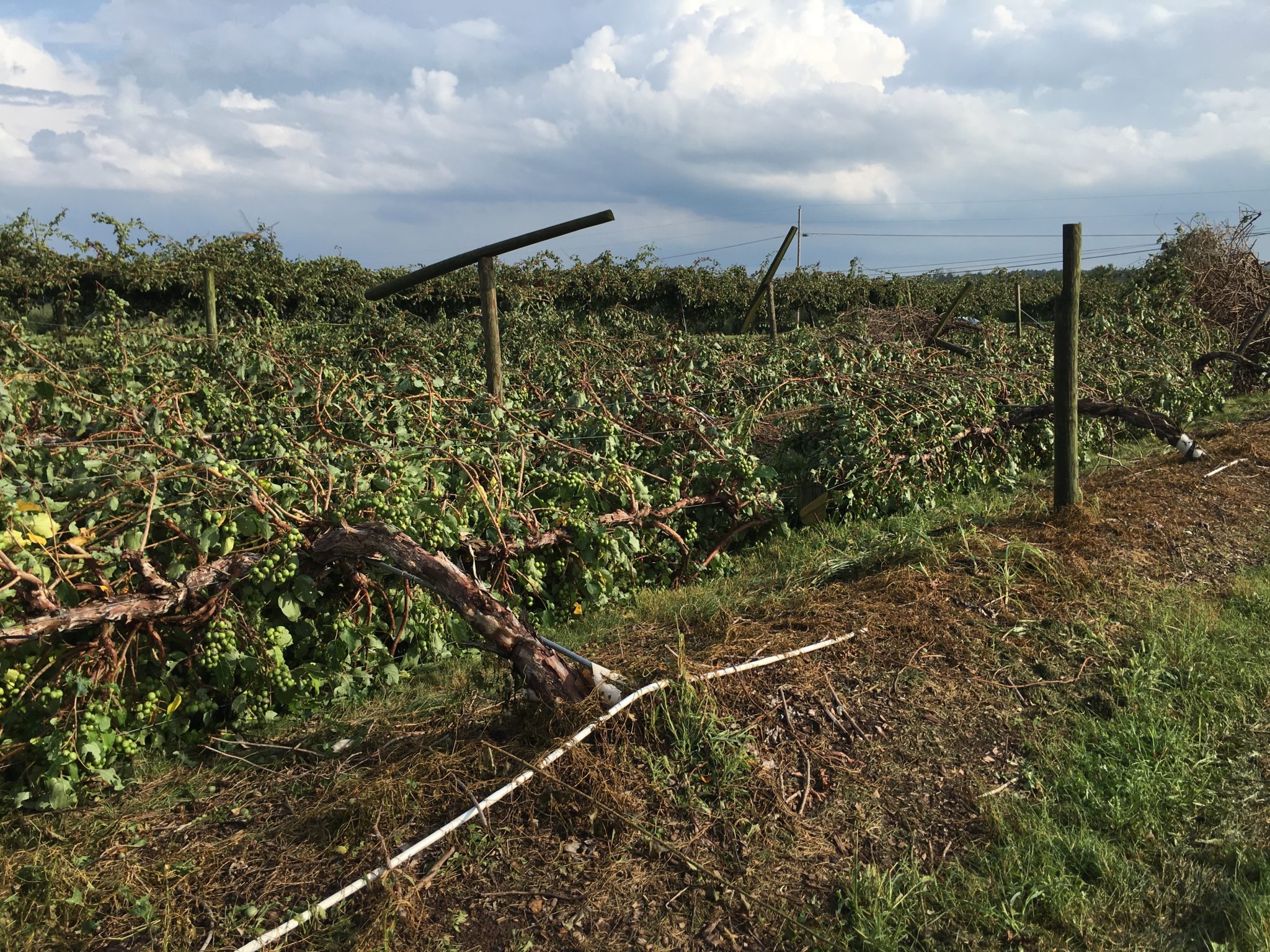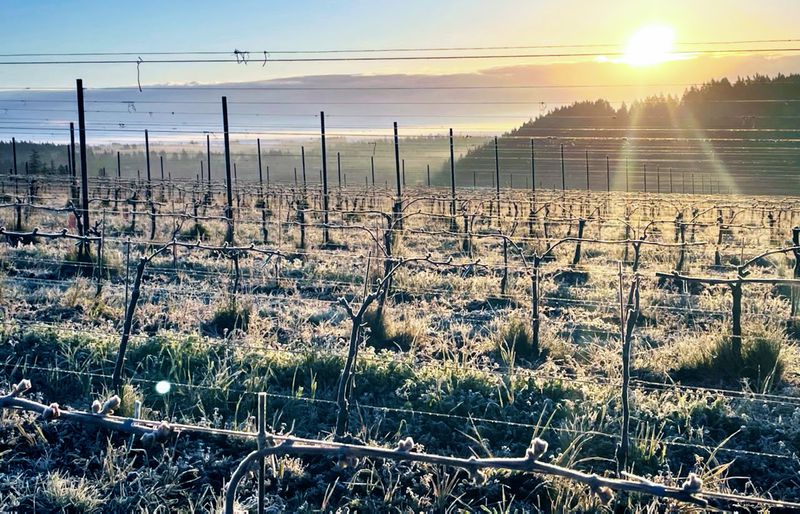
It’s been a rough couple of years for B.C. wineries, but one Shuswap vineyard operator says this winter’s cold snap delivered an unprecedented blow to his crops– wiping out an estimated 99 per cent of his projected yield.
According to Wine Growers of British Columbia, grape growers have seen a steady decline in their crop yields.
“We’ve been seeing it happen for the last five or six years, and we really know it’s about climate change,” said Miles Prodan, president and CEO of Wine Growers British Columbia.
“Whether it’s freeze events like we’ve had the last two winters or atmospheric rivers that we’re subject to, as well as our other producers in the province.”
Jake Ootes has been growing grapes in the North Shuswap for the past 22 years and has never lost as many vines as he did this winter.
“We’ve had frost situations and we’ve had spot damage, but not a total loss of variety,” Ootes said.
“It was days on end, like it was six days of extreme below zero temperatures. I mean they can take a day or so of below zero but not six days in a row.”
The last two winters have impacted grape crops of all varieties, but the majority of dead plants are white grape vines.
“It’s been quite a difficult situation for us, especially on the white variety side and all of B.C.,” Ootes told CFJC News adding that this is the second year in a row of extreme cold temperatures.
He says last year production was down about 52 to 59 per cent. This year he predicts a 99 per cent loss on production.
In the wake of a heat dome, wildfires and harsh winters, Prodan isn’t optimistic about this year’s harvest either.
“The last two winters have been exceptionally tough, and this last July was really catastrophic,” Prodan said.
“We don’t expect to see much– if any– grapes come available for this fall.”
Earlier this month the provincial government announced it would provide $70 million to replant and strengthen fruit orchards and vineyards after two years of weather-related disasters.
But once new vines are planted, it will still be three to five years before fruit is harvestable.
“It’s really about the wineries. Grape growers can replant and take care of those plants and hopefully see a crop in three years,” Prodan said.
“But a winery can’t wait that long, the winery needs grapes to make wine.”
Some wineries are looking to import grapes. However, many smaller operations, like Celista Estates Winery– are classified as land-based wineries by the BC Liquor Distribution Branch, meaning they are only allowed to make wine out of their own grapes.
“We need a change in regulations to allow the importation of grapes from Ontario, which are already there, with people saying ‘we got grapes, you can have them’, we can buy them,” Ootes said.
“From Oregon, Washington State, can that be done? That would be a salvation for a lot of these small operators.”
Source - https://cfjctoday.com