Fusarium oxysporum f. sp. cubense (Foc) poses a significant threat to banana crops as a lethal fungal pathogen. The global spread of Foc underscores the formidable challenges associated with traditional management methods in combating this pathogen. This study, conducted by the Guangxi Academy of Sciences, delves into the hypovirulence-associated mycovirus in Foc.
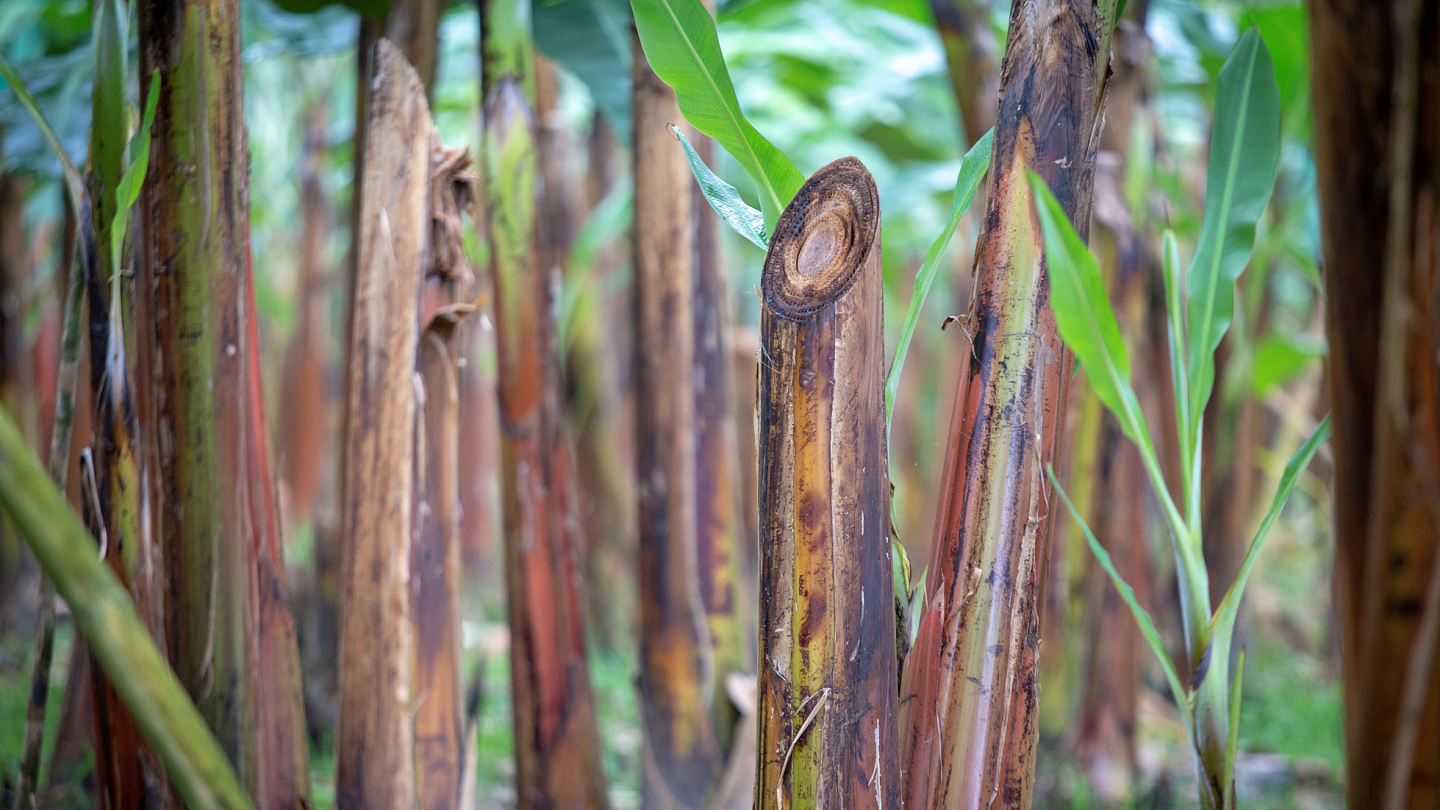
Banana (Musa spp.) is one of the world's most important fruits, with 145 million metric tons produced in over 130 countries in 2011 alone. Fusarium wilt (also known as Panama disease) is one of the most destructive diseases affecting this crop. It devastated the 'Gros Michel'-based export trades before the mid-1900s and now threatens the Cavendish cultivars, which are responsible for approximately 45% of all banana production. Despite substantial research into biological, chemical, or cultural measures, management of Fusarium wilt is largely restricted to excluding F. oxysporum f. sp. cubense from noninfested areas and using resistant cultivars where the pathogen has established. This highlights the need for better resistance and new management strategies.
The focus of mycovirology research has expanded to include various mycovirus-mediated phenotypes, such as hypervirulence, control of endophytic traits, regulation of metabolite production, and drug resistance. Mycovirus infections result in alterations in the host transcriptome profile, which may result in desirable phenotypic traits for the host and, in some cases, for us. Soils support a myriad of organisms hosting highly diverse viromes, and viruses infecting fungi and oomycetes can have persistent intracellular nonlytic lifestyles and be transmitted via spores and/or hyphal contacts. Depending on the virus-host combination, infections can be asymptomatic, beneficial, or detrimental to the host. RNA-based strategies for plant disease management, such as mycoviruses and RNA interference (RNAi), offer attractive alternatives to agrochemical. Mycoviruses can cause hypovirulence in fungal pathogens, reducing their ability to cause disease.
In this study, a novel member of the Hadakaviridae family, named Hadaka virus 1 strain LA6 (HadV1-LA6), was isolated and characterized from the Foc strain LA6. HadV1-LA6 comprises 10 genomic RNA segments, with RNA1 to RNA7 sharing 80.9%-95.0% amino acid sequence identity with known HadV1-7n, while RNA8 to RNA10 display significantly lower identity. HadV1-LA6 demonstrates horizontal transmission capabilities in an all-or-none fashion between different Foc strains via coculturing.
Phenotypic comparisons reveal that HadV1-LA6 significantly reduces the growth rates of its host fungus under cell wall stress and oxidative stress conditions. Importantly, HadV1-LA6 attenuates Foc's virulence in detached leaves and banana plants. This study represents the first introduction of a novel hypovirulence-associated Hadaka virus 1 in Foc.
The findings of this study are significant as they present a promising biocontrol approach to managing Fusarium wilt of banana (FWB). Biocontrol is a safe, ecologically friendly, and cost-effective strategy. The ability of HadV1-LA6 to impede the growth rates of its host fungus under stress conditions and attenuate Foc's virulence in banana plants highlights its potential as a resource for revealing the molecular mechanism of the interaction between Hadaka virus 1 and its host.
In summary, this study introduces a novel hypovirulent mycovirus, HadV1-LA6, which shows significant promise in managing Fusarium wilt of banana. This aligns with the broader research into mycoviruses and their potential in biocontrol strategies. The findings contribute to the ongoing efforts to develop effective and sustainable methods for managing plant diseases, particularly those caused by fungal pathogens like Foc.
Source - https://naturalsciencenews.com