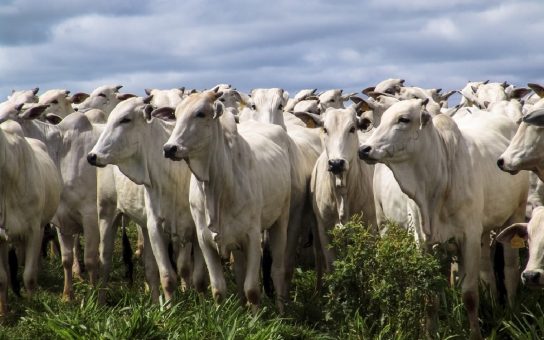
The Cabinet has approved a scheme to pay the wages and social insurance contributions of people working on livestock farms hit by foot-and-mouth disease, at an estimated cost of about 3.5 million euros over 12 months.
The money comes from an 8.6 million euro budget approved by Cabinet decisions on 16 March 2026 and 13 May 2026 to cover lost income due to quarantine and difficulties in restocking. That leaves a maximum of 5.1 million euros for corresponding compensation through the Veterinary Services’ budget.
The preliminary estimate was based on 120 livestock farms with an average of three employees each, an average employer wage of 1,000 euros and an average employee wage of 465 euros.
The scheme, a joint proposal by the Ministry of Agriculture, Rural Development and Environment and the Ministry of Labour and Social Insurance, covers both employees and self-employed workers. It aims to secure their incomes and help affected farms resume operations.
It is open to farmers found eligible for compensation for lost income who declare that they intend to restart. The deadline for expressions of interest to the agriculture ministry is 30 December 2026, and this will be the last time affected farmers are asked to declare their intention.
Support will be paid for each farm’s actual eligibility period. This runs for up to 12 months from the date the farm tested positive for foot-and-mouth disease, or until it has restored at least 30 per cent of its livestock, whichever comes first.
The scheme will cover in full the previous wages of every legally employed worker, based on Social Insurance Fund records, and the corresponding contributions of all parties. Those contributions go to the Social Insurance Fund, the Redundancy Fund, the Human Resource Development Fund, the Health System Fund and the Central Holiday Fund, and include the General Government Contribution. For periods in which the Social Insurance Services paid unemployment benefit, only the difference between the benefit and the previous wage will be paid.
The Labour Department will make the payments, based on data from the agriculture ministry and a solemn declaration from the employer or self-employed worker. Employees will be paid through their employer and self-employed workers directly.
Two payments
Support will be paid in two stages linked to restocking. The first payment, covering the first six months, will be made once the farmer has ordered animals equal to at least 30 per cent of the productive animals the farm had on the date it tested positive.
Before then, the data that employers or self-employed workers have declared to the Social Insurance Fund will be checked, and the agriculture ministry will confirm which farms intend to restart and that the order has been placed.
The second payment will cover the remaining months for which the recipient still meets the eligibility criteria. It will be made once the animals have been delivered and rearing has begun, provided at least two months have passed since the first payment.
If a farm restores at least 30 per cent of its livestock and resumes operations within the first six months, support will be calculated pro rata. The calculation will cover the actual period from the date the farm tested positive to the date it restarted, without exceeding the eligibility period.
Source - https://en.philenews.com