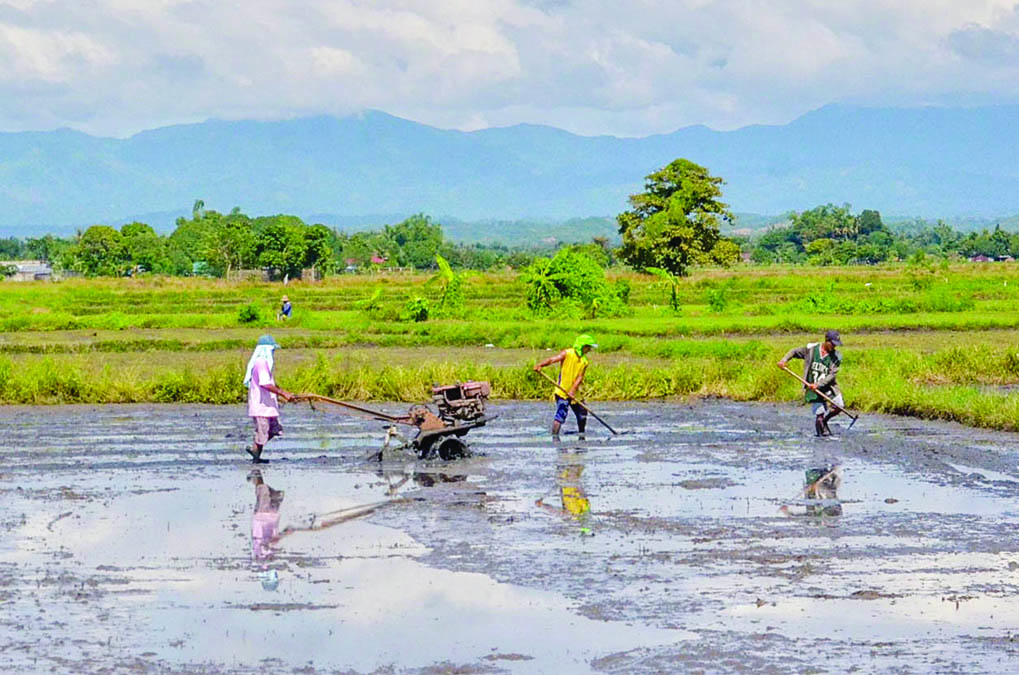
After generations of tilling the land in central Nepal’s mid-hills, 47-year-old Purna Lama’s family is at a daunting crossroads.
Weather patterns, shifting dramatically over the past five to six years, have posed difficulties for farmers like Lama, who supports a family of eight on a plot of land smaller than two acres (0.8 hectares).
“Swathes of farmland in our area are barren because farmers could not depend on weather for agriculture,” Lama told Radio Free Asia.
“Cultivation is completely disrupted due to drought and unseasonal rain. We are deflated.”
The severe threat of climate change to agricultural production, particularly in food-insecure Asia, warming faster than the rest of the world, has harmed farmers’ livelihoods, according to a study last year.
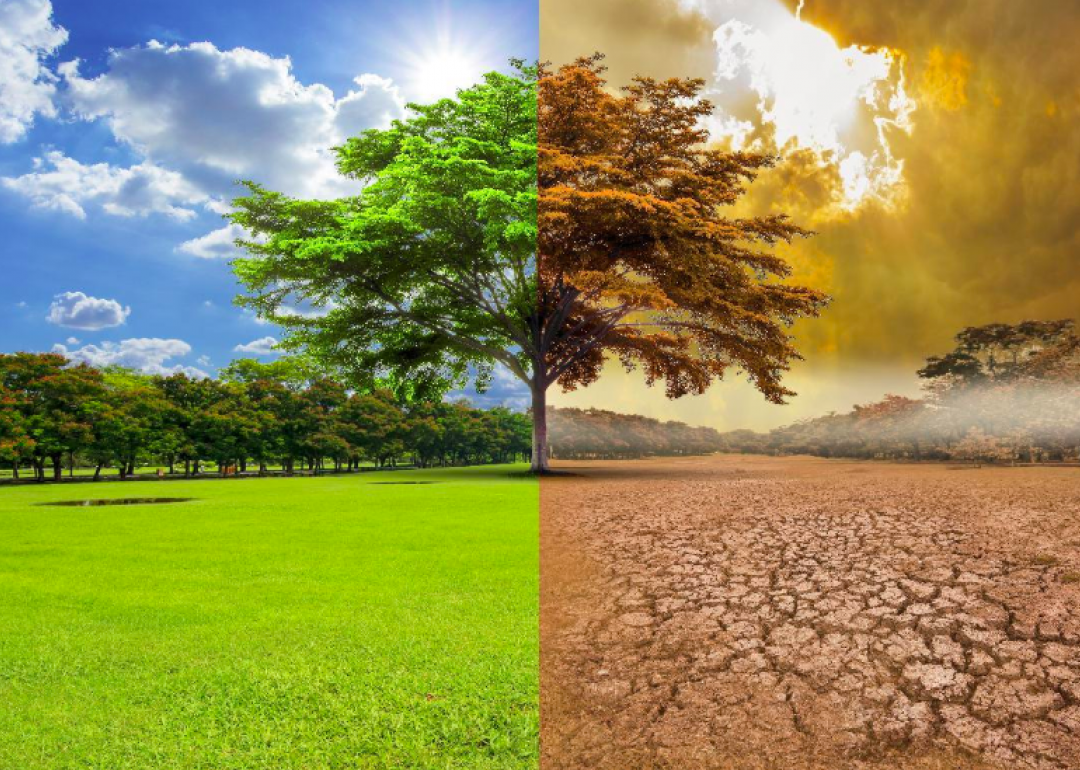
Various climate-driven extreme weather events, like erratic rainfall, prolonged post-monsoon rain periods, unpredictable floods, above-normal winter temperatures, heat waves, dry spells, and emerging pests, are occurring more frequently, threatening crop cultivation and yields.
“It rains when it should not and does not when it should. Drought-like conditions are now an annual affair,” said Lama, who grows staple crops like rice, maize, and millet in Makwanpur district’s Manahari village.
Changing climate patterns have reshaped Nepal’s long-term precipitation, leading to increased unpredictability and a higher risk of flash floods from intense rainfall.
“Our streams have dried; even centuries-old water sources have dried,” Lama lamented, adding the local village council had to transport drinking water from elsewhere the past two summers.
Changes in crops, cultivation, and climate
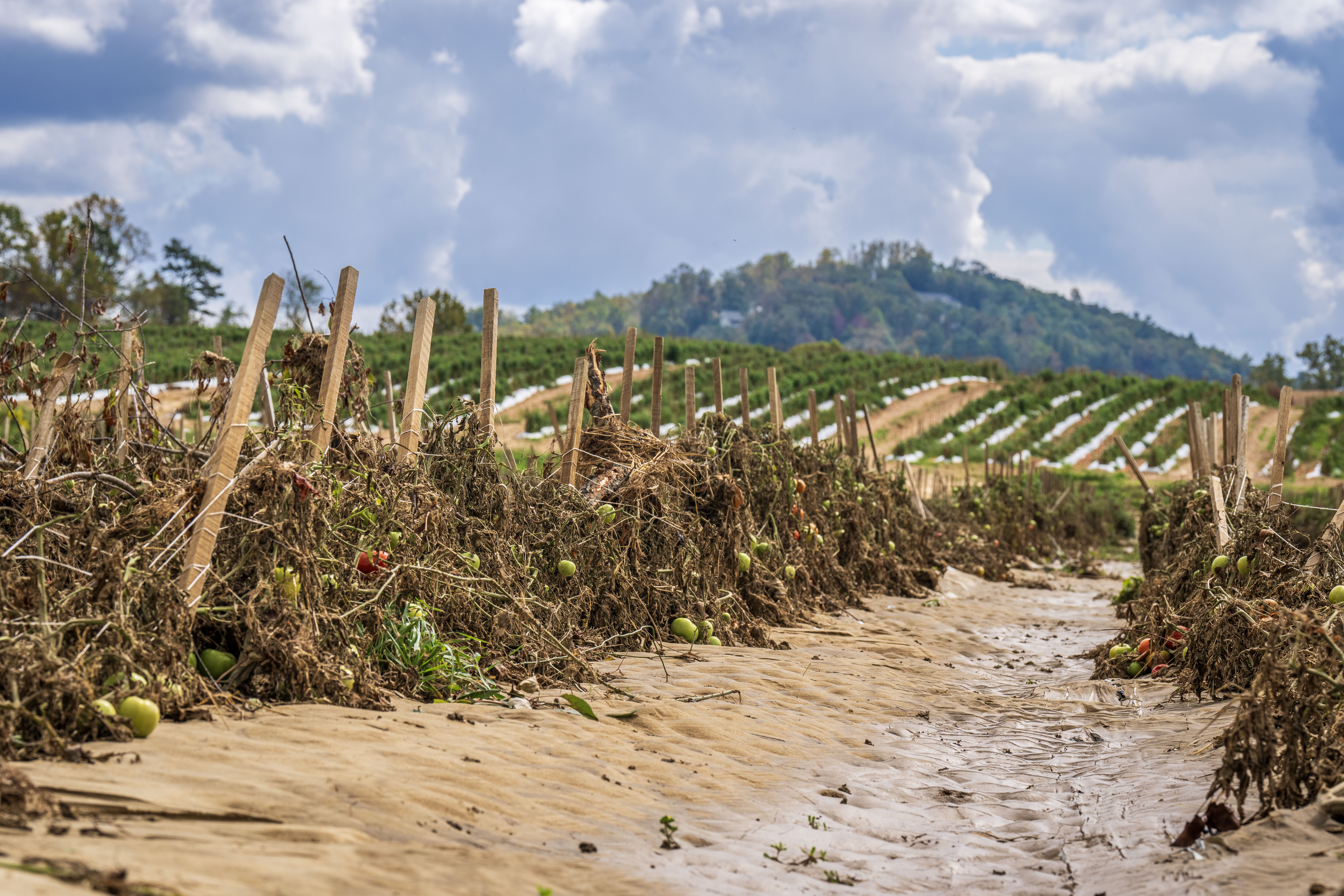
In recent years, erratic rainfall, unreliable monsoons and unseasonal downpours have posed challenges for farmers, leading to floods and soil degradation.
“Weather these days is entirely unpredictable. It can rain at any time,” said Thein Win, a farmer from Bogalay township in Myanmar’s Ayeyarwady delta region.
Farmers lose about 20% of their crops due to rain during harvest, he told RFA Burmese, adding the crop yield – about 60 to 70 buckets of rice per acre – has decreased to about 40 or 50.
Sai Htoo, another farmer from Pinlaung township in Myanmar’s Shan state, said it rained too often in his region.
“Some of the corn that we have grown in the lands where rice can’t grow was destroyed by flood water caused by too much rain this year,” he said, adding farmers could harvest tomatoes only two or three times, down from up to nine times annually.
In Laos, climate change is leading to delayed rainfall, prolonged droughts, and increased insect infestations, an agricultural worker from a Lao civil society organization said.
These changes directly impact food security, with some rural residents even facing the threat of famine.
“It is harvesting time, but we still see heavy rain and the rain damages our rice output,” he told RFA in November.
“The temperature is getting warmer, which causes insect outbreaks and rice-field rat outbreaks. The climate is strange these days.”
Laotian farmers encountered brown planthoppers and Asian rice gall midges in 2023, damaging 51 hectares of rice fields in five villages of Paklay district, Xayabury’s provincial agriculture department said in October.
The problem is the same in Nepal. Crop diseases spread rapidly despite pesticide use, affecting even traditionally hardy crops like millet, while use of pesticides has not helped, Lama said.
El Nino exacerbating climate change impacts
In northern Malaysia, the typical rice planting schedule for the first season starts in April, followed by a second season in October.
“However, this year we fell behind the schedule due to climate change, specifically El-Nino, which lasted for a few months longer this year,” said Hisham Ahmad, 53, from Padang Siding.
El Niño, a naturally occurring weather pattern characterized by hot ocean temperatures in the equatorial Pacific, can lead to heat waves, droughts, floods, and other extreme conditions that impact crop production and food security. It currently takes place within a climate changed by human activities.
Due to delay in the first crop season, which began only in July for many, “we will manage to harvest only once this year,” Ahmad told BenarNews, an RFA-affiliated news outlet.
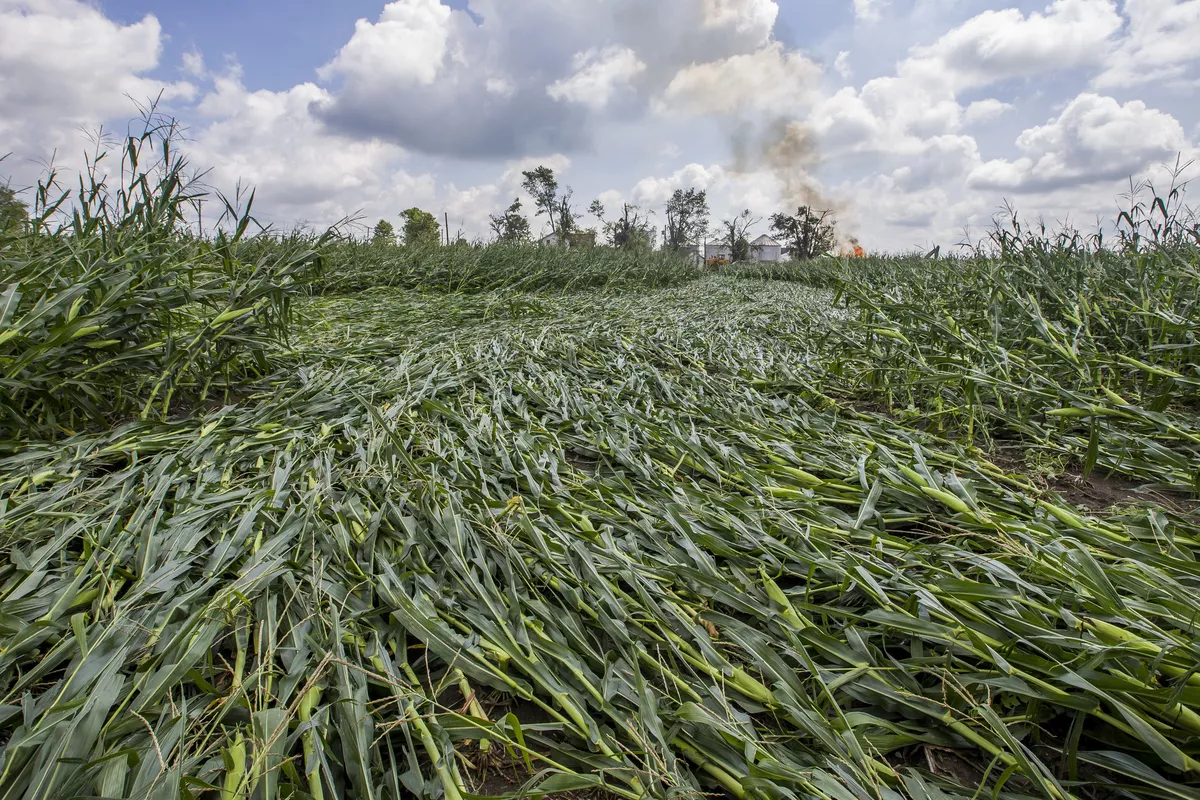
It had also been “raining cats and dogs for the past few months with strong winds,” he added, resulting in padi rebah (fallen paddy), which could reduce crop yield up to 25% this year.
Unusual weather events such as winter-like foggy mornings in August and never-before seen dust storms are further challenging farmers’ livelihoods.
“Maybe it’s the whole world, but it is increasingly difficult for us farmers to rely solely on agriculture for our survival,” Lama from Nepal said.
“Instead of viewing just roads and electricity as development, Nepal should have focused on irrigation as an agricultural country. Farmers would not have faced the brunt of climate change and chaotic modernization,” he said.
Farming in focus at COP28
A 2021 study revealed that despite significant agricultural progress over the past six decades, global farming productivity is currently 21% lower than it could have been without the influence of climate change, equivalent to approximately seven years of lost productivity gains.
“Farmers are all depressed. Those who can and have means have left the country. Those who don’t have anything suffer the most,” Lama explained.
“I think my generation may survive, but not the next generation.”
There are over 570 million farms worldwide, with approximately 84% of them occupying less than 2 hectares and collectively managing around 12% of the world’s farmland, according to a 2016 study.
These small-time farmers, many of whom experience food insecurity and live in highly precarious conditions, contribute minimally to climate change. However, they are at the forefront of its impact and most do not have the resources to tackle the challenges.
The Lao agriculture ministry and the Farmers Network said in October that severe droughts and floods, driven by climate change, are the foremost threats to Lao farmers, who suffered from an extensive and damaging deluge last year and a severe arid spell this year.
A representative from the Lao Farmers Network emphasized the need for international support and funding for Lao farmers at the ongoing COP28 summit in Dubai.
“There should be research on insurance for farmers. Also, in all planning, rule amendments and climate change policy-making processes, farmers should be included at the government and project levels,” he told RFA.
An entire day on Dec. 10 has been dedicated to focusing on food and agriculture for the first time at a COP.
Some 134 countries, including China, signed a declaration on Friday to accelerate efforts to reshape agriculture and food systems, committing to scale-up efforts for farmers’ adaptation and resilience, addressing soil health, food waste and biodiversity loss.
Source - https://www.benarnews.org