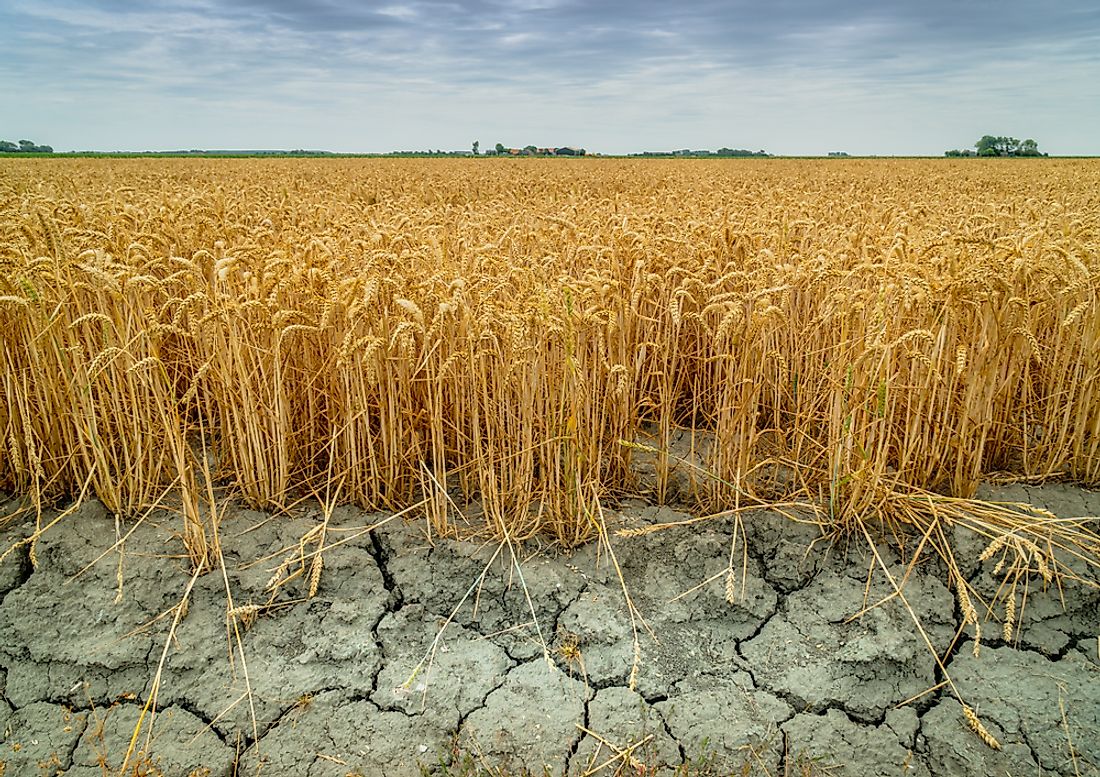
As climate change accelerates and brings more frequent natural disasters and rising temperatures, agriculture worldwide is entering a period of profound transformation. A study published in 2025 estimates that global food production declines by 120 calories per person per day for every 1°C increase in global mean surface temperature.
According to the Ministry of Agriculture, Forestry and Fisheries (MAFF) of Japan, the country recorded a +1.48°C deviation in average annual temperature in 2024, the highest since record keeping began. These conditions have translated into tangible impacts on both crop yields and quality.
In rice production, elevated temperatures combined with heat and low rainfall led to widespread occurrences of chalky grains and cracked kernels, reducing both eating quality and milling yields. In fruit production, high temperatures during flowering resulted in poor fruit set across 60–70% of northern Japan, while apples, citrus, and other fruits suffered from quality deterioration caused by discoloration and sunburn.
Beyond crop performance, climate change is increasing both the economic and physical pressures on farmers. Maintaining production levels in the vegetable, floriculture and livestock sectors now requires additional heat mitigation measures, driving up operating costs. Warmer winters have enabled more pests to survive year round, increasing the frequency and cost of pest control. At the same time, suitable growing areas for certain crops, including lettuce, are shifting toward higher and cooler elevations. For Japan’s ageing farming population, these trends represent a significant structural challenge.
In response, Japan is strengthening efforts to enhance climate resilience in agriculture through closer collaboration among government, industry and farming communities.
Japan: smart agriculture and public-private collaboration
A cornerstone of these efforts is the government led Development and improvement program of strategic smart agricultural technology. The programme integrates data, artificial intelligence and predictive technologies to optimize farm management and strengthen adaptive capacity.
The results are already measurable. In paddy rice cultivation, total labour hours have been reduced by an average of 9%, while yields have increased by a similar margin, with some cases exceeding 10% reductions in labour. The adoption of pesticide-spraying drones has cut working time by 61%, automated water management systems by 80% and straight line assisted rice transplanters by 18%.
These efforts were further institutionalized with the enactment of the Act on the Promotion of Smart Agricultural Technology in October 2024. The legislation establishes certification schemes for the adoption of smart technologies, new production systems and innovation diffusion, while providing financial and tax incentives to certified farmers and agribusinesses. Practical applications range from autonomous transport robots and direct seeding drones to labour saving tree training methods, collectively improving efficiency, reducing physical strain and strengthening farm management.
Industry partnerships also play a critical role. For example, NTT e-Drone Technology has conducted flight trials of drones for citrus cultivation, aiming to reduce labour requirements for pest control while enabling variable rate fertilization based on sensor data to improve efficiency while reducing environmental impacts.
Adapting Japan's crops to a changing climate
Climate change is also reshaping which crops can be viably grown in specific regions. Research by the MAFF indicates that some areas traditionally suited to mandarin orange production may become less viable, while emerging as suitable regions for avocado cultivation within the next decade. Such shifts present new income opportunities, particularly in regions facing land abandonment.
In Makinohara City, Shizuoka Prefecture, farmers began cultivating avocados around a decade ago as both a climate adaptation strategy and a way to utilize abandoned farmland. From 2025, the prefectural government has launched a regional development initiative, in collaboration with research institutions, to establish scaleable cultivation techniques.
Adaptation is also occurring within existing crops. The planted area of heat-tolerant rice varieties has expanded by approximately 2.5 times over the past decade, reaching 206,000 hectares in the 2024 harvest. This figure represents 16.4% of all rice grown for staple consumption. These shifts underscore how targeted crop innovation can support productivity even under increasingly adverse climatic conditions.
From climate risk to opportunity
As climate change becomes a persistent feature of the global landscape, strengthening agricultural resilience is no longer solely a matter of food security. It is also a prerequisite for sustainable economic growth, rural vitality and social stability. Japan’s experience illustrates how the integration of digital technologies, crop adaptation and public–private collaboration can translate climate risk into opportunity.
By aligning technological innovation with on-the-ground knowledge, Japan is building agricultural systems that are more productive, inclusive, and resilient. These lessons extend beyond national borders, offering a practical model for countries seeking to accelerate the transition toward sustainable and resilient global food systems. This transition will increasingly shape economic priorities and policy agendas worldwide.
Source - https://www.weforum.org