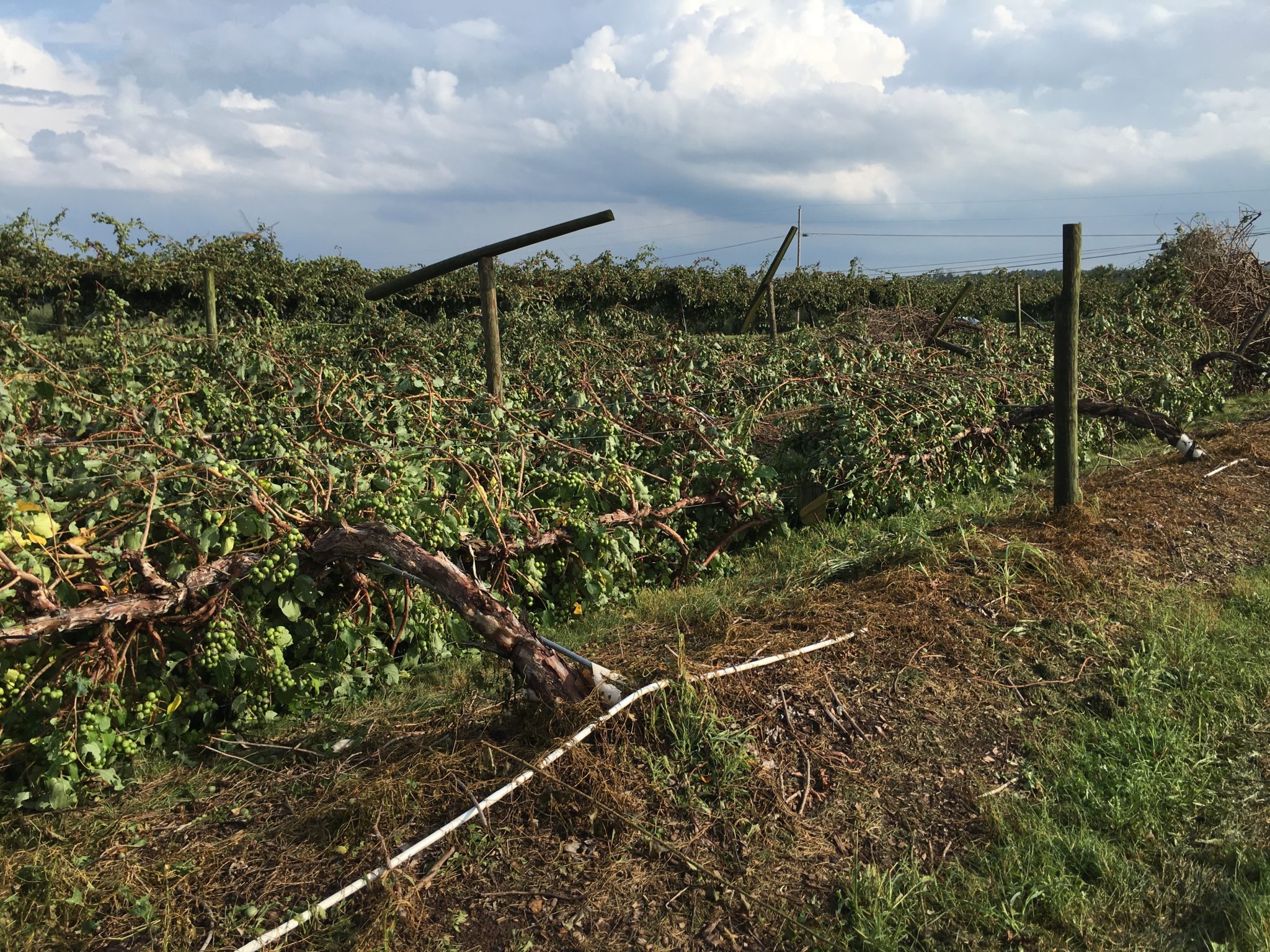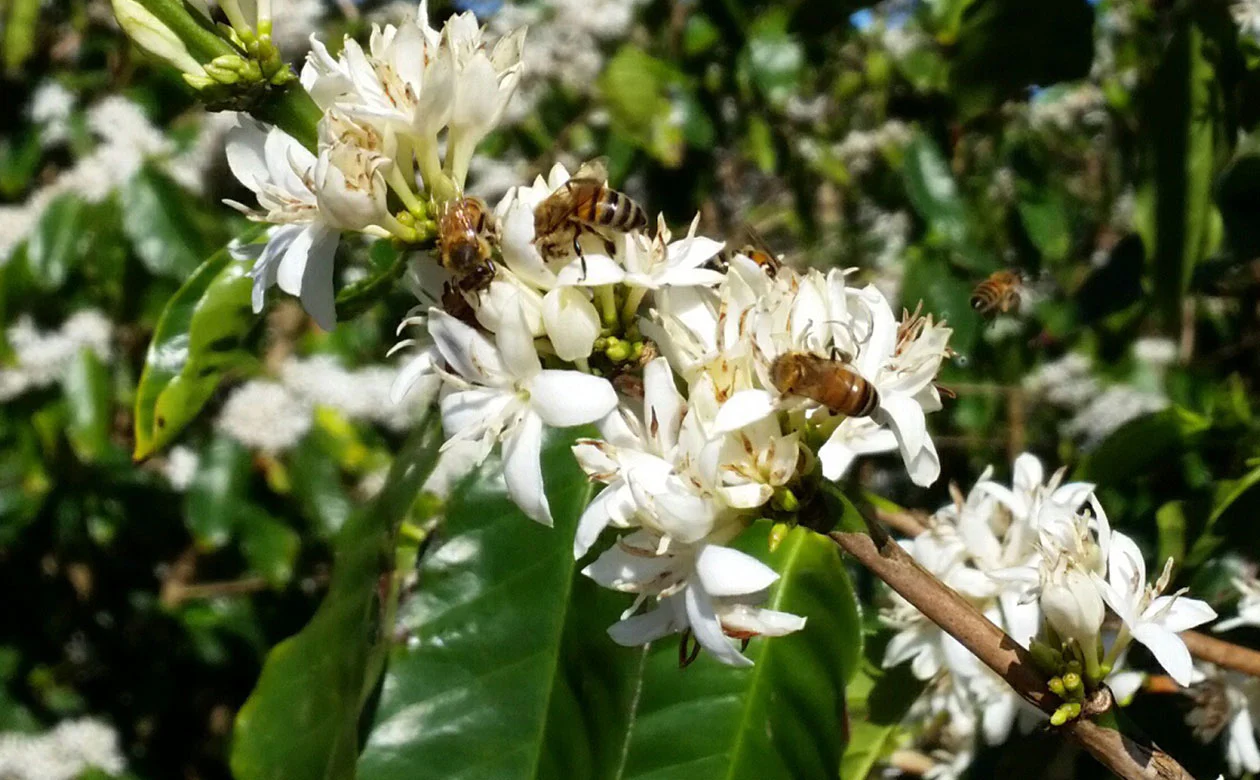
Climate change may be creating an uncertain future for coffee production, but it’s also having a negative impact on biodiversity which has a trickle-down effect.
A study published in Science Advances, led by Postdoctoral Researcher Joe Millard, explores the interplay between climate change, land use change, and their impact on pollinator biodiversity, revealing significant implications for global crop pollination.
“Crops such as coffee are highly dependent on animal pollinators. Coffee is mostly grown in tropical parts of the world which are warming outside of their normal range at a quicker rate, making it highly susceptible to changes in animal pollinators,” says Millard.
The study, which compiled data from 1507 crop growing sites around the world and catalogued 3080 insect pollinator species, exposed a trend — the combined pressures of climate change and agricultural activities have led to substantial declines in both the abundance and richness of insect pollinators.
“Our research indicates that the tropics are likely most at risk when it comes to crop production from pollinator losses, due primarily to the interaction of climate change and land use. While localised risks are highest in regions like sub-Saharan Africa, northern South America, and south-east Asia, the implications of this extend globally via the trade in pollination dependent crops,” says Millard.
“These parts of the world are, and will continue to, experience the greatest increase in temperatures outside their normal range, and are also the areas most dependent on animal pollinated crops relative to all crop production in those locations.”
To look at which regions of the world might be most affected by changing numbers of pollinators, the team made use of the Projecting Responses of Ecological Diversity in Changing Terrestrial Systems database. Natural History Museum researchers have put together a global dataset which is used to understand how biodiversity is changing in response to land use.
By combining this data with information on climate change and crop pollination globally, the team could predict how crop production might be affected in the years to come.
Their results suggest the tropics, which are already likely to have been affected by pollinator loss, will start experiencing more significant changes. This means crops such a coffee, cocoa, mango, and watermelon – which all rely on insect pollination – are at the greatest risk.
These crops play vital roles in local economies and global trade, and their reduction could cause increased income insecurity for millions of small-scale farmers in these regions.
“As insects decline due to being unable to cope with the interacting effects of climate change and land use, so too will the crops that rely on them as pollinators. In some cases, these crops could be pollinated by hand, but this would require more labour and more cost,” says Millard.
“It’s likely coffee producers are already experiencing these negative effects in reduced yields, pricing, and, in turn, their livelihoods.”
Millard states that even countries with low production risk may feel the impact of pollinators losses and the crops that depend on them.
This could occur through disruption to imports, especially as vulnerable crops like coffee and cocoa are valuable export products.
“Large countries such as China and the United States have the highest total import risks. The Netherlands also has unexpectedly high risk given its size, the third largest overall import risk. Import risk per capita highlights the challenges that could be faced by nations with limited agricultural production capacity, such as many island countries like The Cayman Islands and Singapore, or countries with unfavourable environmental conditions for agriculture like Mongolia,” he says.
“Total import risk per capita tends to be high also in northern and high-income countries, particularly continental western Europe, which has large processing industries for crops such as coffee and cocoa. High income and unfavourable environment for agriculture could also account for high import risk per capita for some countries in the Middle East.”
Millard continues that predictions of import risk are based on trade patterns in the present day, meaning it does not account for changes in trade flows that will likely occur in the future.
“Our approach also assumes all crop production produced in a given country is exported. In other words, we used our trade pattern data to determine how production at risk within a given country should be split among its importers, but did not have a value for the proportion of production staying in that country,” he says.
According to the study, by 2050 crop production in some of the world’s most populated countries, including India and Brazil, will be at the greatest risk of pollinator losses.
This will likely significantly affect crops such as coffee, and as these plants are common in small, family-run farms across the tropics, the loss of income could push many into poverty.
On the bright side
One way to mitigate the issue, Millard says, may be to allow patches of natural habitat to grow among cropland.
This can provide a refuge for pollinating insects and maintain a more suitable microclimate.
“There are also other solutions that can help. It may be possible to breed varieties of these plants that can reproduce without pollinators, as has already been seen in some crops,” he says.
“Other technological solutions, like pollination by hand or through artificial means, are already used on a large scale for crops like vanilla. To buffer against pollinator declines, it might become more common in crops, but this will increase the production cost.”
Ultimately, Millard says the main way to reduce these risks is to tackle them at the source.
“Significantly reducing greenhouse gas emissions by 2030 will help to limit the worst effects of climate change, while preserving and restoring habitats will help pollinators to recover,” he says.
“We’re not saying coffee is going to be extinct by 2050. However, we want to highlight that it might become harder to grow coffee in certain parts of the world in the near future.
Source - https://www.gcrmag.com