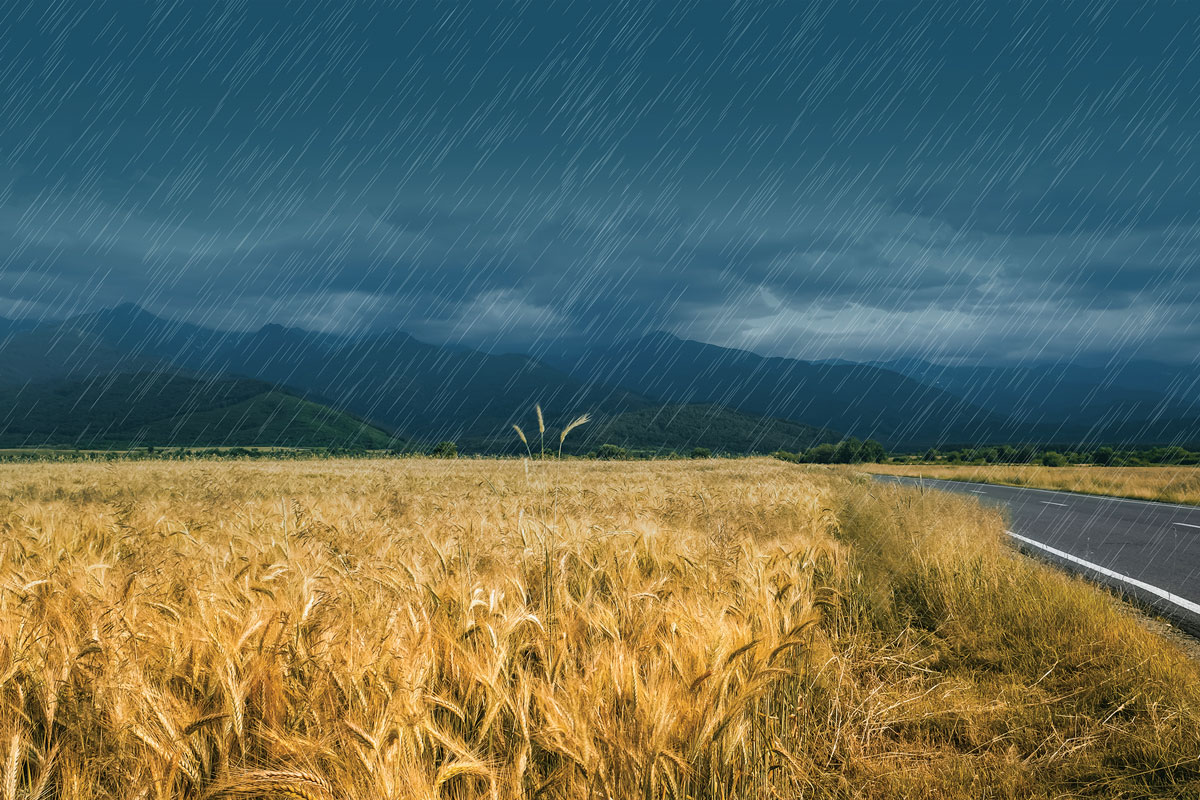
Unseasonal rain and hailstorm in the past few days have damaged winter crops in parts of at least six states across central, north and western India.
So far, damage to rabi crops like wheat, mustard and chickpea has been reported from Punjab, Haryana, Rajasthan, Uttar Pradesh, Madhya Pradesh and Maharashtra.
It may not be over yet, either. The met department on Monday predicted more hailstorms and rain in parts of Punjab, Haryana and Chandigarh towards the end of this week.
The extent of damage is unclear as state governments are yet to collate data on crop loss and send it to the centre, an official with the agriculture ministry said, requesting anonymity.
Admitting that the wheat crop was flattened in some districts of Punjab and Haryana, agriculture secretary Shobhana K. Pattanayak told the Press Trust of India that there are no reports of damage to mustard or pulses.
In Punjab, the early sown wheat crop was dislodged in some areas of Patiala, Sangrur, Bhatinda, Mansa, Gurdaspur and Amritsar and crop loss could be between 10% and 25%, said Jagmohan Singh, a farmer leader from Patiala.
“It did not rain in January and early February when it is good for the crops; instead, the rains now have wreaked heavy damage in some places,” said Singh.
Punjab Agriculture director Gurdial Singh said that the revenue department will do a special survey to estimate losses in the next 2-3 days. “Losses are limited to individual farmers and are not across wide areas except in Amritsar and Muktsar,” he added.
According to Yudhvir Singh, convenor of Bhartiya Kisan Union, strong wind and hailstorm damaged crops in Rajasthan’s Alwar, Bharatpur and Jaipur districts. In Haryana, damage to wheat was reported from Hisar, Sirsa, Bhiwani, Sonipat and outer Delhi areas, he said.
In Rajasthan’s Ganganagar district, about 60% of the early sown mustard could have been damaged due to hailstorm, said R.N. Goswami, a former director of the Rajasthan Agriculture University. While the wheat crop was dislodged in districts including Hanumangarh and Bikaner, loss to the chickpea crop could be substantial, he said.
In Maharashtra, an earlier spell of rain around 3-4 March, damaged crops in Nagpur, Wardha, Akola, Yavatmal, Amaravati districts, said Vijay Jawandhia, a farmer leader from Shetkari Sanghatana.
Other than field crops like wheat and chana (chickpea), fruit crops like oranges and mangoes also suffered some damage, he added.
Even as the centre estimates the loss to this year’s rabi crop, the damage is likely to be lower than in 2015.
Farmers in 15 states bore the brunt of unseasonal rain in March and April last year—just ahead of the winter harvest—which led to a 7% drop in wheat production in 2014-15 (compared to the previous year) and damaged the pulses crop, whose production fell by nearly 2 million tonnes.
Freak rain in 2015 was preceded by a drought in 2014, when the June to September southwest monsoon recorded a deficit of 12%. This was followed by a second drought in 2015, which saw a 14% deficit in rainfall and as many as 10 states declaring drought.
Weather woes led to plummeting growth rates—consecutive crop failures resulted in a 0.2% contraction in agricultural output in 2014-15. In 2015-16, the sector is expected to clock 1.1% growth, but the recent round of unseasonal rains could dampen this further, if the damage is widespread.
But this year, even without the unseasonal rains, wheat output is a cause of concern due to an unusually dry and warm winter. Also, sowing of wheat was lower by 3%, compared with the normal sowing area and 4.4% lower compared with 2014-15.
But the farm ministry is expecting a robust output, even before the unseasonal rains set in. According to the second advance estimates from the agriculture ministry released last month, India’s wheat output is expected at 93.82 mt, 7.3 mt more than last year and 2.3 mt higher than the past five-year average.
At 86.53 mt, India’s wheat crop in 2015 was the lowest in five years after freak rains caused heavy damage just ahead of harvesting.
Source - https://www.livemint.com