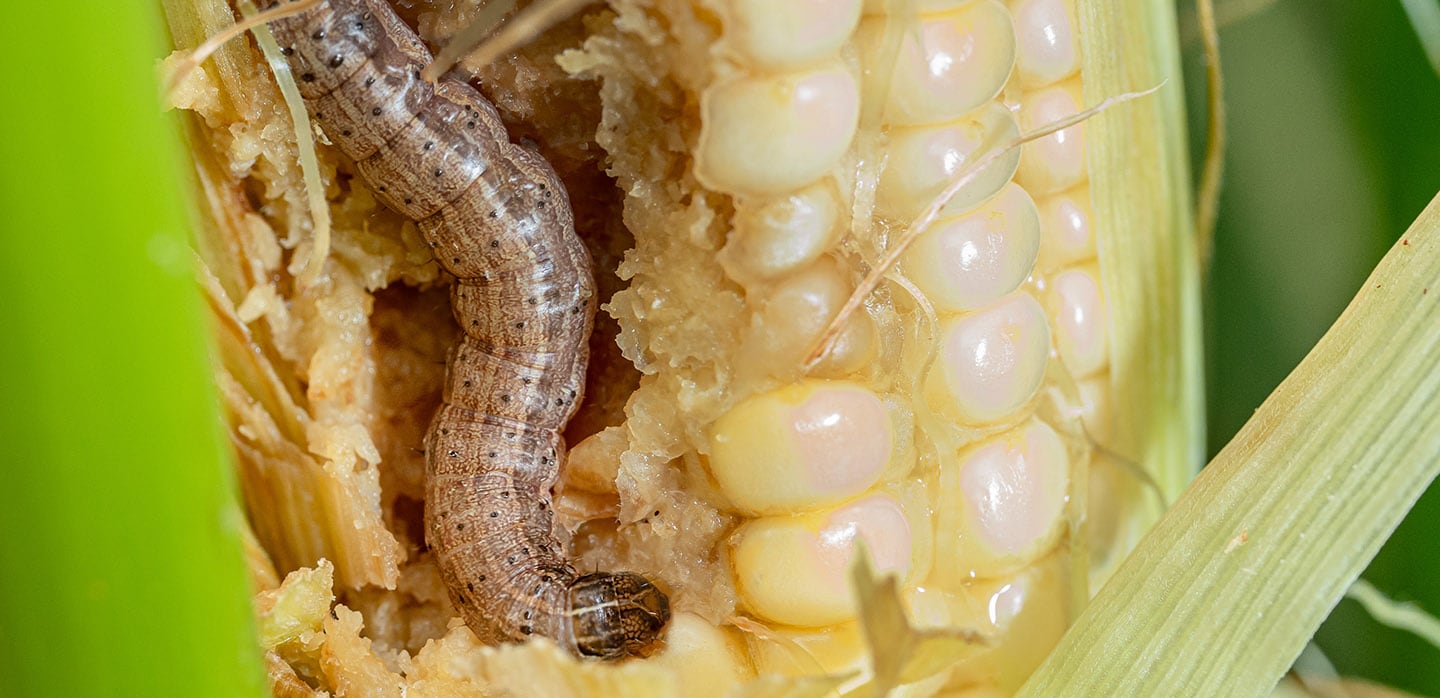
For fourth year in a row, the fall armyworm has hit the maize crop in Solan district, with 4,750 hectare area coming under attack.
Maize growers fear a 15 to 20 per cent crop loss. Elongated papery windows spreading all over leaves on a plant appear when the pest attacks the maize crop. This symptom is caused by the larvae of the worm.
Originally a native of South America, the fall armyworm entered Karnataka via African countries a few years ago. After reaching the north-eastern states from the southern state, it has now hit the northern states as well.
Agriculture experts blame the spread of worm on climate change and indiscriminate use of fertilisers. “Due to excessive use of nitrogen, the immunity of plants to fight diseases and pests is lost. Following this, various type of diseases and insects damage the crop,” said Seema Kansal, Deputy Director, Agriculture, Solan.
Experts in the Agriculture Department stated that the low-lying areas of Solan district had been affected more compared to other parts.
“So far, on 4,750 hectares of maize crop, 10 to 15 per cent plants have been found pest-infested in the form of local patches in the middle of the field,” said Kansal.
Officials have directed farmers to undertake a slew of measures like surveying the crop regularly. If more than 5 per cent of the plants in the field are found to be affected by the fall armyworm, control measures should be initiated.
The experts suggest that first of all, fill the uppermost leaves/middle rings of the affected plants with field soil/sand/ash. If it does not rain after that, fill the field with water. This will kill the caterpillars. They also recommend installation of light and pheromone traps in the field, besides using organic pesticides like BT (2 gm per litre of water), Neem-based pesticides (2 ml per litre of water) and fungicides.
The experts also suggest biological measures to control the pest. In order to increase the number of parasites like Trichogramma, Cotesia, Telenomus, etc in the maize crop, release eggs of parasites prepared in laboratory into the fields, they add.
The experts say if the incidence of the fall armyworm does not come down despite these measures, as a last resort, use chemicals like spinosad (0.3 ml per litre of water), chlorotraniliprole (0.3 ml per litre of water), amabactin benzoate (0.4 gm per litre of water), thiodicarb (2 gm per litre of water), flubendamide (0.3 ml per litre of water) or thiomethac.
They also recommend against leaving the remains of the affected plants in the field, otherwise the next generation will harm other crops. The insect damages more than 80 crops and hence all safeguards should be taken to discourage its re-breeding.
Adopting mixed cropping by planting pulses like urad, cowpea, etc along with the maize crop, is also recommended. The mixed cropping cuts down the incidence of the fall armyworm and the maize crop gets free nitrogen from the pulses.
Besides these measures, planting of three-four lines of Napier grass around the maize crop as a trap crop 10 days before the main crop has also been recommended to prevent the presence of the fall armyworm.
Maize is grown over 23,600 hectares in various parts of Solan district, which fetches a yield of 58,750 metric tonnes.
Source - https://www.tribuneindia.com