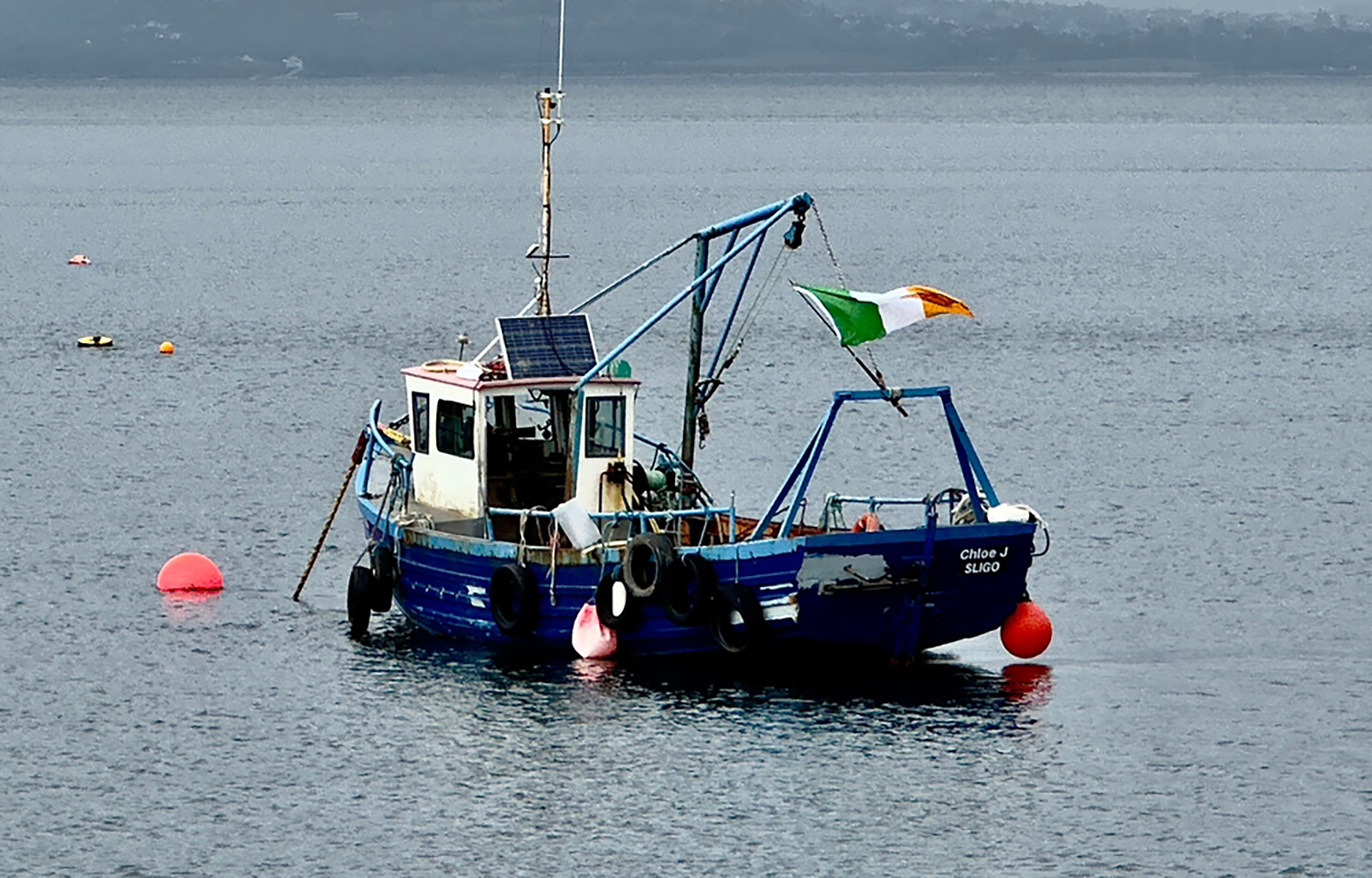
The Irish fishing industry wants the country’s government to sue the E.U. over recent sharp cuts to Ireland’s fishing quotas for 2026.
After it was recently decided by E.U. officials that Ireland’s quotas for 2026 would drop 57,000 metric tons year over year, Irish fishing groups are “already taking legal advice” on how its government may be able to sue the E.U.
More specifically, the Irish fishing industry is seeking a challenge taken via the Hague Preferences, which is a mechanism in the E.U.’s Common Fisheries Policy created to compensate Ireland for giving access to its waters to other nations with fleets much larger than its own.
The industry also wants a cash rescue package from the Irish government to help the fleet survive, Dominic Rihan, the CEO of the Killybegs Fishermen’s Organisation (KFO) told SeafoodSource.
While he acknowledged that the action by the E.U. was “not unexpected” and was prompted by reduced quotas for all member nations for 2026, Rihan said he believes the Irish government needs to take the case to boost the morale of the national fleet and to “show the fishing industry that it has our backs.”
Additionally, a cash support package would help “keep liquidity in the system,” he said.
The Irish fishing industry wants the country’s government to sue the E.U. over recent sharp cuts to Ireland’s fishing quotas for 2026.
After it was recently decided by E.U. officials that Ireland’s quotas for 2026 would drop 57,000 metric tons year over year, Irish fishing groups are “already taking legal advice” on how its government may be able to sue the E.U.
More specifically, the Irish fishing industry is seeking a challenge taken via the Hague Preferences, which is a mechanism in the E.U.’s Common Fisheries Policy created to compensate Ireland for giving access to its waters to other nations with fleets much larger than its own.
The industry also wants a cash rescue package from the Irish government to help the fleet survive, Dominic Rihan, the CEO of the Killybegs Fishermen’s Organisation (KFO) told SeafoodSource.
While he acknowledged that the action by the E.U. was “not unexpected” and was prompted by reduced quotas for all member nations for 2026, Rihan said he believes the Irish government needs to take the case to boost the morale of the national fleet and to “show the fishing industry that it has our backs.”
Additionally, a cash support package would help “keep liquidity in the system,” he said.
However, others in the E.U. see the predicament as not a uniquely Irish problem.
“The whole fishing industry in the E.U. is suffering from severe quota reductions resulting from natural causes and, for species such as mackerel, non-E.U. countries’ unacceptable behavior,” said Tim Heddema, the vice president of Europêche, a lobbying group for the E.U. fishing sector. “The pain is real and is felt in equal measure across all coastal communities; it is not a problem unique to any particular E.U. country.”
Heddema said that pain is likely to intensify due to the challenges of climate change and the management of stocks shared with non-E.U. states.
“Climate change is already affecting fish stocks through warmer waters, changing migration patterns, and lower productivity in some areas,” he said. “That adds uncertainty and makes stock recovery more complex. Combined with overfishing by non-E.U. countries on shared stocks, this means the entire European fishing sector will continue to face extremely difficult trade-offs in the years ahead.”
Heddema said instead of an individual country like Ireland taking action, he wants the E.U. to act together to take “concrete action” against the setting of “excessive, artificially increased unilateral quotas” by nations like Norway, such as trade measures.
Besides lowered quotas in the Atlantic Ocean, as well as the North, Mediterranean, and Black seas, the E.U. was also recently left out of a mackerel sharing deal agreed upon by Norway, the U.K., the Faroe Islands, and Iceland.
Source - https://www.seafoodsource.com