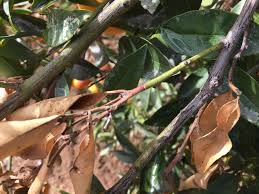
Italy - Drought remains the main concern for Sicilian citrus growers

27.06.2024 407 views

"The 2023/24 campaign for citrus fruit intended for processing ended with high quotations. It was a season characterized by the presence of a considerable quantity of fruit of extremely small size, to the extent that traders did not consider buying lots where more than 50% of the oranges were small. More often, they offered prices so low that the farmers could not cover their production costs," says Salvatore Imbesi, manager of Ortogel, a Sicilian company specializing in citrus, pomegranate and summer fruit processing.

"In a context marked by climate change," continues Salvatore Imbesi, "which has led to high production costs due to drought (there has been little rain in Sicily this winter and up to the present day), farms with reservoirs or wells had to incur significant additional costs to bring water to the surface. The industry's recall of citrus fruit at an average price of 0.30 €/kg was a breath of fresh air for farmers. Without this intervention, an even greater quantity of produce would have remained unsold compared to that which remained on the trees, further aggravating the financial situation of the producers."

"We have currently sold approximately 60 % of the citrus juice production pressed from this year's harvest. This is in the face of zero stock reserves, which has prevented us from meeting scheduled contracts for the past four years. We are still somehow managing to ensure continuity of supply, in a context where scarcity is resulting in a high price. This is the result of a series of factors, also determined by an international context in which the world quantities (from the USA, Mexico and Brazil) of blonde orange juice are 60% lower than usual."

"On the commercial side, the foreign market is at a standstill, many companies have planned vacations and reduced production schedules. In Sicily, forecasts for the next citrus campaign show volumes in the normal range, consistent with the age and condition of the plants, which are known to be productive if renewed with more resistant varieties."

"The main concern of growers for the next citrus campaign is first and foremost the drought. The hope is to draw water from the Lentini dam, which has 90 million cubic meters and was not used during the last campaign, apparently due to mechanical defects in the structure," concludes Imbesi.

Source - https://www.freshplaza.com

12.01.2026

South Africa - Farmers demand access to vaccines as foot-and-mouth disease devastates KZN

KwaZulu-Natal farmers and agricultural organisations are escalating pressure on the state over the uncontrolled spread of foot-and-mouth disease (FMD), warning that vaccine shortages and bureaucratic delays have left the province on the brink.

12.01.2026

Nepal - Ilam farmers hit by insurance gap

Although the government has prioritised agricultural insurance, there is virtually no crop insurance in Ilam. 

12.01.2026

Vietnam - Farmers devastated after harsh weather decimates crucial crops

Hundreds of farmers in the Quỳnh Thắng area of Nghệ An, Vietnam, have lost numerous pineapple crops due to prolonged rain and humidity. 

12.01.2026

Rwanda - Demand first, production second: How Afri Foods builds export-ready supply chains

Operating through a network of more than 500 smallholder farmers, Afri Foods is a young Rwandan agrifood exporter positioned at the intersection of gender inclusion and technology-enabled scaling. The company was founded in 2019 by Sakina Usengimana and currently focuses on avocados and chilies.

12.01.2026

Flowers bloom on cocoa trees ahead of Ivory Coast's mid-crop season

Mainly above-average rains last week in most of Ivory Coast’s main cocoa regions augur well for the development of the next April-to-September mid-crop, farmers said on Monday.

12.01.2026

Overlooked decline in grazing livestock brings risks and opportunities

For decades, researchers have focused on the problem of overgrazing, in which expanding herds of cattle and other livestock degrade grasslands, steppes and desert plains. But a new global study reveals that in large regions of the world, livestock numbers are substantially declining, not growing—a process the authors call destocking.

11.01.2026

USA - USDA’s Agricultural Research Service (ARS) helping wheat farmers fight a devastating crop disease

Researchers released a new spring wheat germplasm line with resistance to Fusarium head blight.

11.01.2026

Kenya - Government Mobilises Food and Livestock Relief for Mandera Amid Drought

The Government of Kenya has mobilised food and non-food essentials for urgent delivery to areas affected by food and nutrition shortages caused by adverse weather and low rainfall during the recently ended short rains.