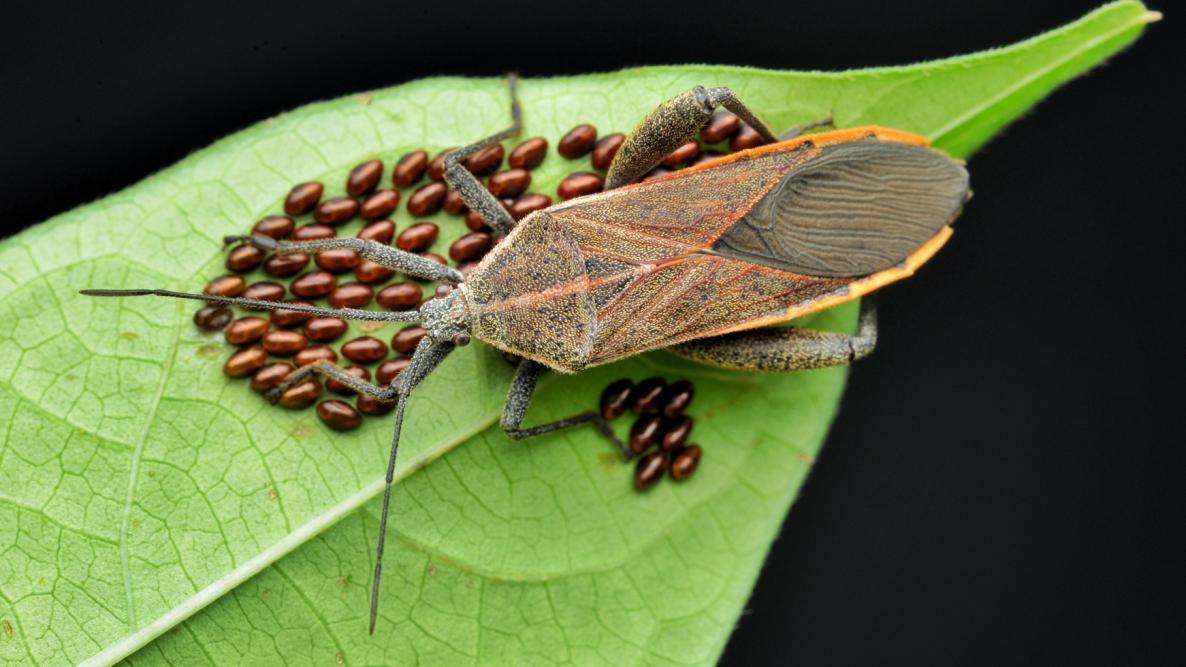
A few weeks ago a friend on Facebook posted a picture of a squash bug or Anasa tritis. Seems he was scouting his garden and found the insects on his squash plants.
Squash bug has a snout it inserts in the circulatory system of the plant and drains the life out of the plant. Damage will appear as a wilting plant with death not far behind, which I have seen in a number of gardens over the years. This is the reason why speed with combating the insect is almost a requirement.
When I took the entomology class at Ohio State, one thing I learned was the insect order called Hemiptera, or in ancient Greek meaning half-winged, have some of the most destructive plant eating habits. They also have a common snout or proboscis. The Hemiptera order is more commonly called true bugs.
One of the ideas that make me feel better about dealing with any insect in a way that won’t harm my garden is the Integrated Pest Management (IPM) concept. The UN defines IPM as “the careful consideration of all available pest control techniques and subsequent integration of appropriate measure that discourage the development of pest populations and keep pesticides and other interventions to levels that are economically justified and reduce or minimize risks to human health and the environment.”
IPM has been around since 1970 for safer pest control. When we are looking at an IPM concept, we also need to look at each part of the issues. The insect, its life cycle, climate and season of the year, and the susceptible plant all have an effect on how to deal with the insect.
Tips for controlling squash bugs
To keep squash bug damage to a minimum, detect them early. The first step in managing them would start in the previous year by getting rid of the squash plant debris. If you had a lawn torch, I would go over the area where you were growing the squash to kill leftover eggs.
Cover rows of squash early in the season with floating row covers, making sure the plants are protected. As the season progresses, remove the row covers so the squash can be pollinated once the flowers are in bloom. Hand-pollination can happen if you choose to leave the row covers on.
Companion plants for squash may repel squash bugs. Studies have shown nasturtiums, marigolds and icicle radishes repel squash bugs. Fragrant herbs like dill, lemon balm, peppermint and parsley can be planted around squash to also repel squash bugs. Ladybugs and tachinid flies feed on squash bugs. Therefore, growing plants these insects are attracted to are sweet clover, cilantro, dill and anise hyssop.
Commercial organic insecticidal soap or liquid Castile soap sprayed on squash bugs will break down their outer shell. Use a mix of 1 teaspoon of soap and 1 quart of water as a foliar spray on the squash plants. Neem oil also is effective at killing squash bugs. Natural Neem oil mix is 2 teaspoons of Neem oil, 1 teaspoon of dish soap and 1 quart of water in a spray bottle, which kills off nymphs and adults.
A female squash bug lays bronze-colored oval eggs on the underside of the leaves of the squash family plants. Each squash bug female can lay as many as 18 eggs near the main vein on the leaf where the "v" forms between the leaf and the vein. Squash bug eggs can hatch after seven to nine days.
As each egg hatches out, it will face five stages of growth or instars before becoming an adult. This development takes from four to six weeks for these nymphs to reach maturity. Adult squash bugs can live for up to four months.
Cleaning vine debris is key
Squash bugs can overwinter under garden debris, mulch, log piles and under dead squash vines. Mulch in is a location where squash bug can hide. Cleaning out old squash vine debris goes a long way in getting rid of the insect permanently. Late tilling of the garden also will get rid of insects hibernating in the soil, which adult squash bugs do. During the rest of the year you’ll find them in mulch, rocks, plant debris and squash vines. One piece of good news is there is just one generation of squash bugs per year.
Squash bugs feed on the whole family of squash plants. There are, however, squash that are less sensitive to damage by the insect. Resistant varieties to squash bug are lemon squash, butternut squash, Zucchino Rampicante squash, early summer crookneck, Royal Acorn, Butternut 23 and Improved Green Hubbard.
Source - https://eu.farmersadvance.com