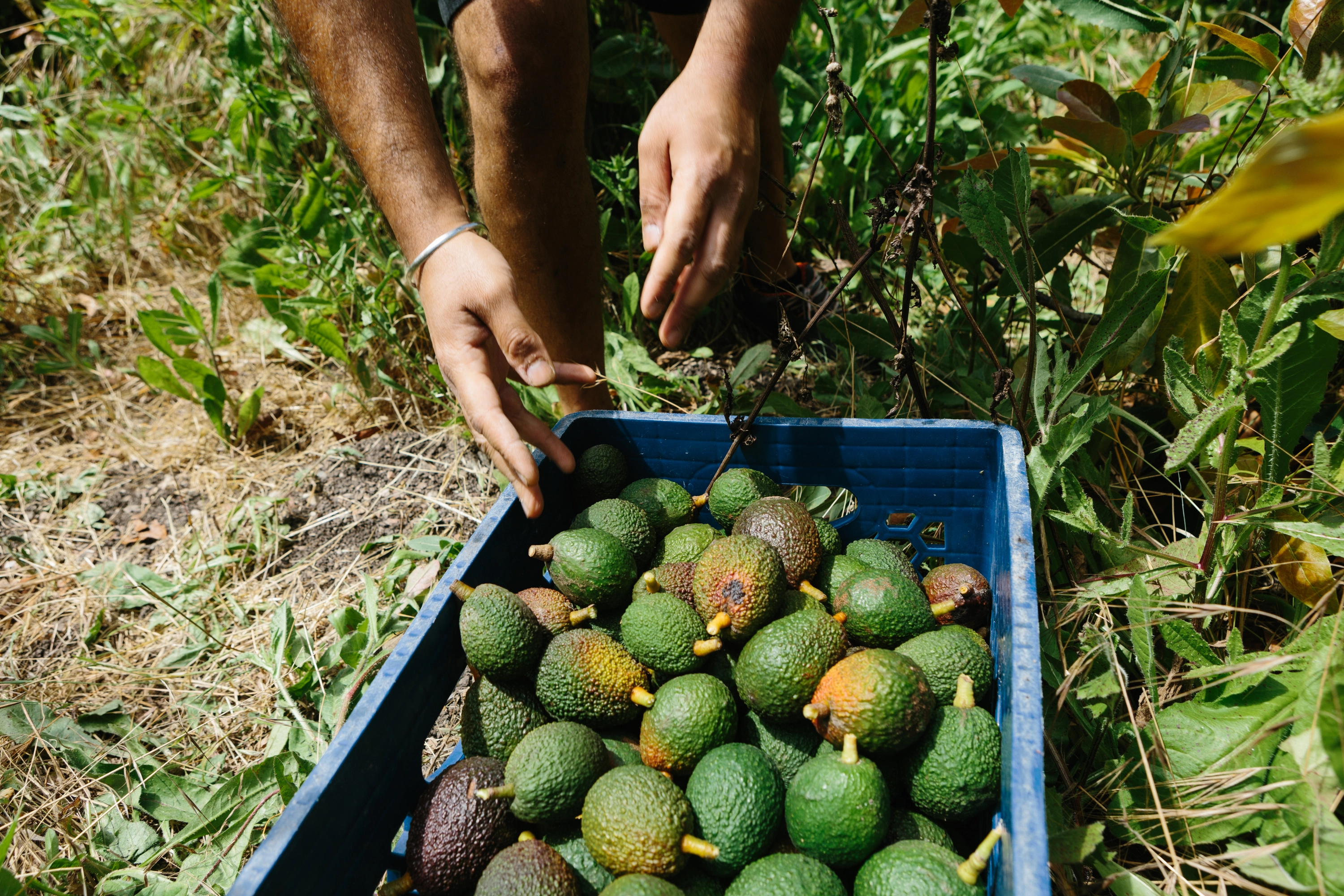
"Although this year we have shipped only half of the containers we did last year, we've had avocados available since March, as well as large sizes. It was hard to believe, but in Pampa Baja we were able to supply the export market in this first part of the season," says commercial executive Micky Luzquinos. Because of the high temperatures and low relative humidity, avocado cultivation on the northern coast of Peru is facing great challenges this year.
Agrícola Pampa Baja SAC has almost 1,000 hectares in the north of Peru, in the district of Olmos, where it grows avocados, and 1,300 hectares in the south, in the region of Arequipa, where it grows grapes from November to February, pomegranates from February to April, avocados from the end of July to September, W. Murcott and Orri mandarins from June to September and peppers from April to August. Its fruit and vegetables are exported to different European, North American, Asian and Latin American markets. The main market for grapes is the United States, while avocados, pomegranates and Orri mandarins are mainly intended for Europe.
Sustainably Grown and Rainforest Alliance
In the Olmos district, the entire acreage is devoted to Hass avocado cultivation, with the pollinator varieties Zutano, Edranol and Ettinger taking 40 hectares. In the south, avocado cultivation takes 250 out of the 1,300 hectares. In the district of Olmos, the avocados, which in a year with normal weather conditions are harvested from February to June, are handled and packed in the facilities of the company Agrovision. In Arequipa, Agrícola Pampa Baja has its own packing plant, for which it has obtained all the necessary certifications for export, including GlobalG.A.P., SMETA and BRC.
"We were the first Peruvian company to obtain the Sustainably Grown certification, which is highly valued in the US market and similar to the Rainforest Alliance. In fact, we have the latter certificate for our production in the north of the country, while in the south we managed to obtain the Sustainably Grown certificate. Furthermore, since avocado production is demanding in terms of water requirements, we have obtained the Alliance for Water Stewardship certificate, which has only been awarded to a small number of Peruvian growers," says the sales executive.
High minimum temperatures and low relative humidity
In the first half of the year, both minimum and maximum temperatures have been higher than normal in the north of Peru. "Moreover, the relative humidity did not always reach 60%, which is the minimum required for good avocado growth. Because of the stress suffered by the plants, which have not had enough rest, the trees have a much lower fruit load, with big differences between plots and even between plants. Harvest projections changed from week to week, making it impossible for companies to draw out work plans, and the abundance of small sizes, from 26 to 32, has been a common issue for all growing companies," says Micky Luzquinos.
"In a normal year, it takes about six months for the dry matter content to reach an optimum level, but this year the avocados ripened in only five months. On top of that, there has been a higher presence of Lasiodiplodia Laeliocattleyae, an infection of the branches, than in a normal season. ProHass had predicted a 16% drop in Peru's avocado production this year, but given the smaller calibres, many growers believe that we'll probably see a 30% drop in the production," says the commercial executive.
Quality is better than last year
"Never before had temperatures been so high in the months of February, March and April. If this situation continues in the future, we'll have to aim to change the crop management with optimized fertilization and nutrition programs. We are already inviting agronomic experts from other countries to give us a hand. Nevertheless, the quality of the fruit is better than last year, when some of the fruit did not arrive with the desired quality at their destination markets because of the rains brought by cyclone Yaku."
Between March and July last year, Agrícola Pampa Baja shipped 700 containers of avocados to foreign markets. This year, they expect to export only 350 containers. "However, in March, when other companies hardly had any production, we managed to load 60 containers. Furthermore, 70% of the avocados harvested in that month were of calibers 10 to 20. Our main markets for avocados are Spain and the Netherlands, followed by Chile, China, the United Kingdom and Japan. We ship the fruit in 4 kg boxes or in 10 kg plastic crates. The latter is used for those customers who prefer to ripen and repack the fruit on their premises."
Chile is also expected to be an important destination for the avocados.
Between March and April, Agrícola Pampa Baja usually ships its Olmos avocados to the European market, because, according to Micky Luzquinos, large sizes are scarce in this market during that period. From May onwards, Chile also becomes an attractive destination, not only because of the lower transport costs, but also because of its willingness to take second class fruit. "A large part of the avocados that we produce in Arequipa from late July to September are exported to Chile, in this case because our production and that of the neighboring country have similar organoleptic characteristics," says the executive.
While several growers in the north of Peru are expanding their export range with fruits such as pitaya, lime, pineapple or blueberries, Agrícola Pampa Baja prefers to expand its activities in the southern part of the country, in Arequipa, where it plans to have blueberries available from May to December. "In Olmos, we prefer to focus on avocado cultivation. The fact is that blueberry production requires a lot of labor, which is increasingly in demand in the north of the country, where it would be very difficult to compete with some other blueberry producing companies that already control a large part of the market," says Micky Luzquinos.
Source - https://www.freshplaza.com