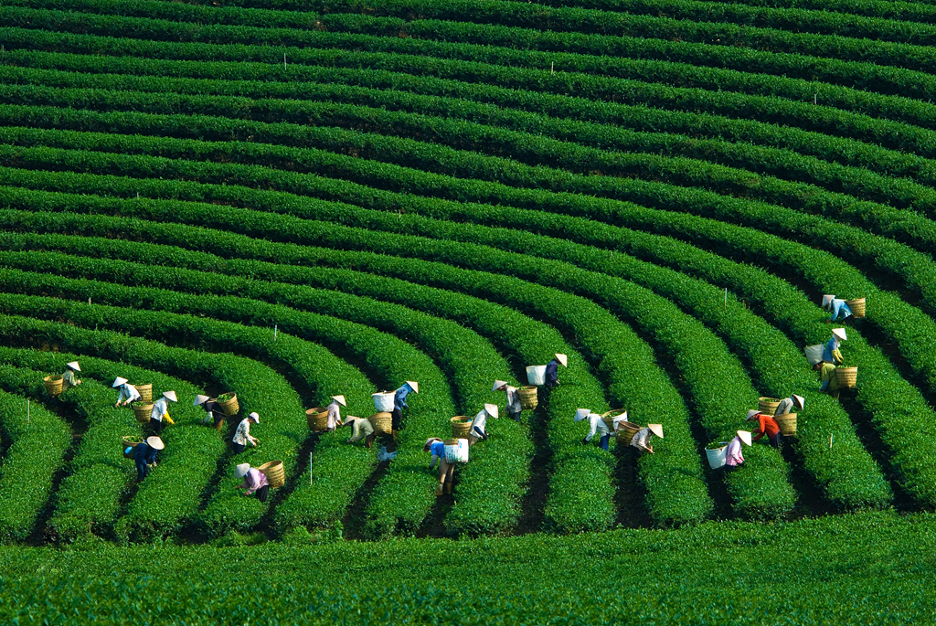
An increasing number of South Korean entrepreneurs are turning their attention to Vietnam, believing in the country's economic growth potential and its goals for green and low-emission agricultural development.
Each year, Vietnam's agricultural sector uses around 10 million tonnes of fertiliser to boost crop productivity, meeting both domestic consumption and export demands. However, many experts have warned that the overuse of chemical fertilisers can lead to serious environmental and soil quality problems, posing risks to the sustainable growth of the agricultural sector.
Excessive use of inorganic fertilisers causes soil degradation and contributes to environmental pollution. As a result, the use of organic fertilisers has become a rising trend and is actively encouraged by regulatory authorities.
According to the Ministry of Agriculture and Rural Development, Vietnam aims to become one of the regional leaders in organic fertiliser usage. The plan targets having 50 per cent of cultivated areas use organic fertilisers, and for 80 per cent of provinces and cities to develop organic fertiliser application models linked to value chains for key and speciality local agricultural products.
In this process, learning from international experience in green agricultural development, particularly in promoting organic fertiliser use, is essential to improve Vietnam's farming practices. Given that South Korea shares many agricultural similarities with Vietnam in crop types, urbanization trends, and a shift towards greener models, Korean organic fertilisers have become a preferred choice among Vietnamese farmers.
Currently, South Korea is the top foreign direct investor in Vietnam, and the trend of cooperation between Vietnamese and South Korean businesses has been growing rapidly. In April, the Haiphong Vietnam-South Korea Business Club, including more than 30 Haiphong enterprises, travelled to South Korea for trade promotion activities. During this trip, Pham Thu Hang, CEO of 5S Media Communications Company, signed an MoU with the Seoul Veterans Association.
Beyond that, many South Korean companies are now visiting various regions of Vietnam to explore real investment and business opportunities. On November 3, Kim Ji Do, CEO of 2WE Company based in Gyeonggi-do, South Korea, held discussions and signed a cooperation agreement with Pham Thu Hang from 5S Media Communications Company, to further strengthen collaboration between the two enterprises.
According to Kim Ji Do, as South Korea's economic growth slows, businesses see promising opportunities in Vietnam's economy, which has been growing at 7-8 per cent per year and could reach double-digit growth, according to government targets.
From the perspective of South Korean enterprises, Vietnam's agricultural sector has achieved remarkable progress. However, farming habits involving excessive use of chemical fertilisers must be adjusted to ensure sustainable agricultural growth enable Vietnamese produce to enter high-standard global markets, and maintain long-term soil health.
Although Vietnam already has hundreds of organic fertiliser factories, South Korean companies believe that with their advanced technology, they can build organic fertiliser plants that do not emit unpleasant odours, cause vibrations, or pollute the environment. Most importantly, organic fertilisers produced by South Korean enterprises have a significantly higher organic content compared to similar products made in Vietnam.
Hang expressed confidence that 5S Media can effectively promote communication efforts to help Vietnamese farmers and enterprises better understand and adopt environmentally friendly products such as organic fertilisers.
Source - https://vir.com.vn