The stone fruit campaign has already kicked off with some extra-early varieties in Murcia, although there won't be significant and consistent volumes until the end of April. By mid-May, Badajoz will start to have a sufficient supply, and by mid-June, the season will also be getting underway in Lleida.
"The winter in Murcia was mild, with little rainfall and enough hours of cold for the nectarines and peaches, which is resulting in an early start to the harvest, if we look at the average of the last 5 years," says Thomas Chevailler, technical director of PSB Producción Vegetal, a renowned company specialized in the breeding of stone fruit varieties and also a fruit producer and marketer.
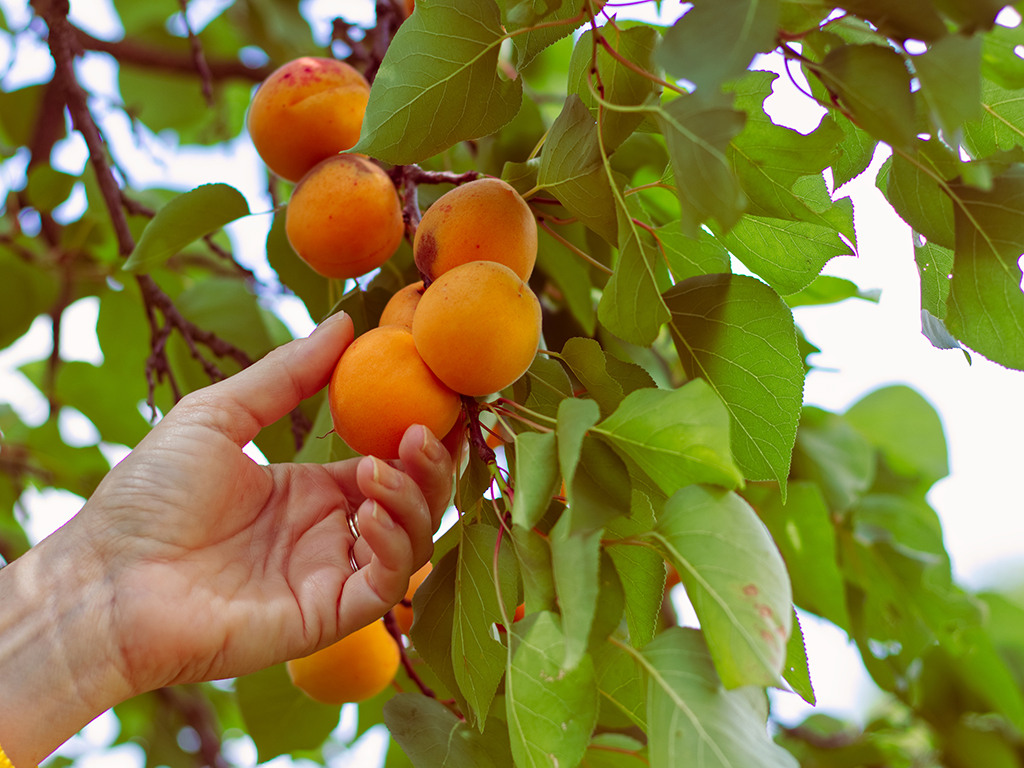
"While the earliest apricot varieties have had enough hours of cold and are arriving on schedule, this has not been the case for the mid-season and late varieties, which had a very irregular flowering due to excessive heat. Thus, for now, good harvests are expected for nectarines, peaches and flat peaches, as well as early apricots, but there will surely be a lower production of later apricots, which will overlap with other producing areas," says Thomas Chevailler.
Apricots are, in fact, the species that has been most affected by climate change, which has caused temperatures to rise in almost all producing areas, according to the technical director of this breeding company. "The average temperature has risen faster than predicted. It's very important to plan the planting together with the breeder, paying attention to the cold hour needs of each variety and being proactive to be ready for predicted changes," says Thomas.
With the start of the harvest, PSB Producción Vegetal has started welcoming visits from producers in its plantations in Murcia to showcase its range of varieties of all fruits, including its new early peaches and nectarines, as well as four new flat peach varieties.
"We started on Thursday, April 11, with the first visits in Murcia to see our earliest apricot variety, the Borsalino, which is especially suited for Murcia's climatic conditions," says Thomas.
"We are receiving many calls from producers looking for early peaches with a good taste to start their campaigns. That's why we are proud to introduce the new Kitty variety, which is the result of three years of cultivation and selections, and for which we have very good prospects," he says.
PSB covers the early yellow nectarine season with its Copacabana, Caracas and Atanais varieties, which are gaining ground in Murcia. This year, they have launched the new early yellow nectarine Nerolis, which arrives before the Copacabana. "It is a subacid nectarine which can start to be harvested at the end of April, so we believe it will be interesting for producers," says the breeder.
As for flat peaches, the second most important species in terms of volume in Murcia, PSB can offer the already consolidated Zodiac, Samantha and Babylon, which are yielding positive results. "They are very reliable flat peach varieties. Everyone who has planted them is really happy," says Thomas.
Regarding platerines, the most delicate crop, which is starting to spread little by little after years of selection and genetic improvement, PSB has just patented a wide range of varieties after their success with the Luisella, which is harvested in mid-May and which they have been planting and monitoring for the last 5 years.
"Now we are presenting the Sekoya, Dooly, Bachata and Tintosa, which we have been studying for between 4 and 5 years since they were planted, so we are familiar with their strengths and weaknesses," says Thomas.
"We will be showcasing our varieties in Murcia until June, and then we will continue in our plantations in Lleida and in the Rhône Valley in France until September, with medium and high chilling varieties that will be the last ones in a 5 month schedule," says Thomas Chevailler.
Source - https://www.freshplaza.com