At this time, Almeria's tomato campaign seems to be reaching its final stages in many farms. "At Caña y Retama, we are specialized in organic tomatoes, with our main specialty being tomatoes on the vine," says Emilio Jesús López. "So far, things have gone quite well with the production, with sizes in line with those of previous years and a similar volume to that of last year, which was not a bad one. We haven't suffered any losses due to diseases like Botrytis, as we haven't had the rain and humidity of other years."
"The demand for organic products has also been quite good, and we have been successfully marketing the production throughout the campaign without any problems. The only issue is that we believe we may have to finish the campaign earlier due to the spread of Tuta absoluta, which is severely limiting the production, even though we had expected to be able to continue producing until the first weeks of June."
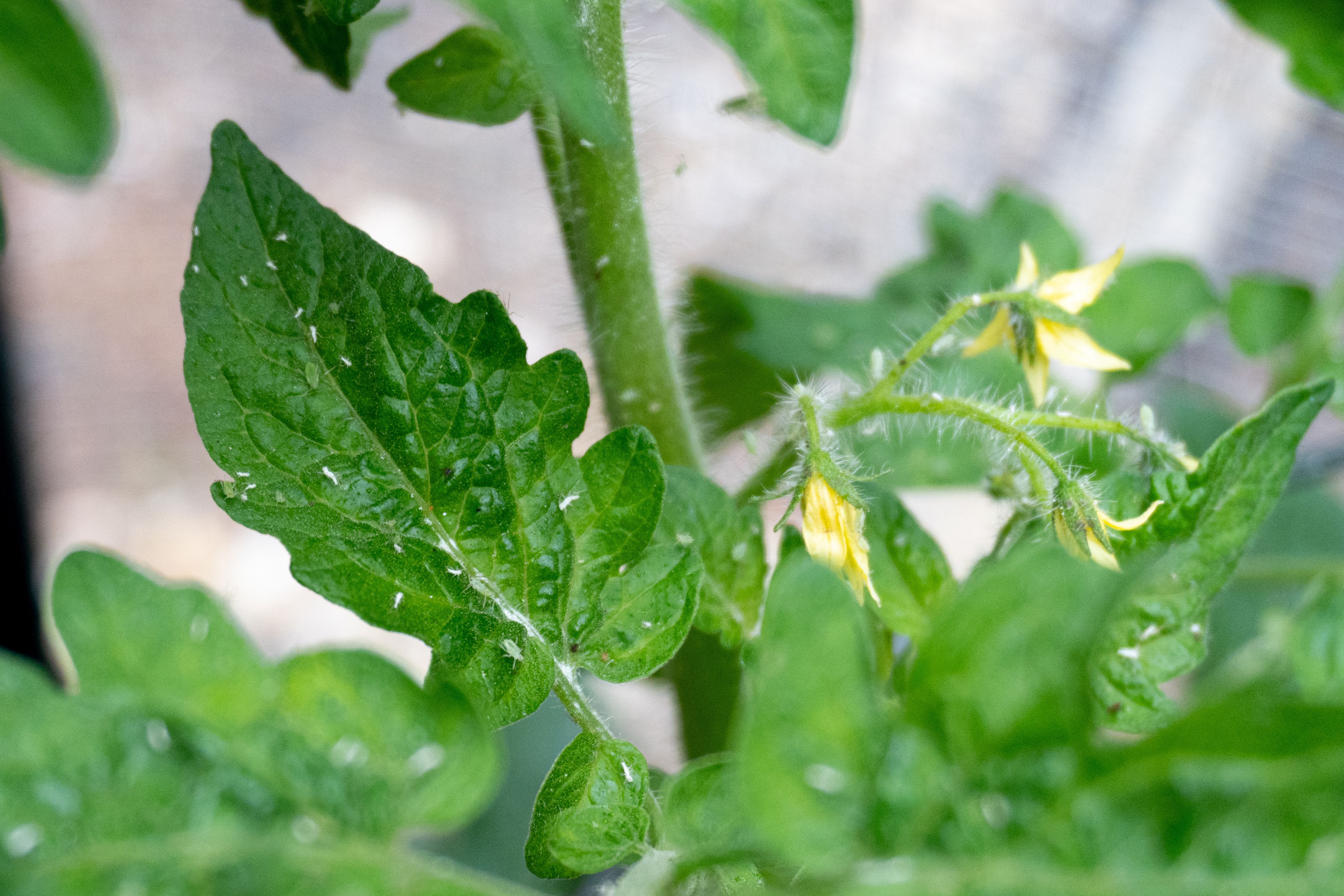
"It is perhaps not the only pest we are facing, but it is indeed the one causing us the most headaches. The winter temperatures have been relatively mild, and it hasn't been cold enough to break the pest's cycle; in fact, we have been seeing signs of Tuta larvae on the tomato leaves throughout the winter, and the pest has been spreading quicker as the temperatures have risen."
"At this time, we are trying to tackle the Tuta with sulfates, auxiliary fauna and traps, but it is a battle that we assume we are going to lose, given how the situation is developing. In this case, we are talking about our own greenhouses, but the auxiliary fauna suppliers have mentioned that they are selling unexpected amounts of products to combat the Tuta, such as Trichogramma, which makes us think that the pest must be quite widespread," says Emilio.
"In organic farming, we don't have many options to deal with the Tuta, but conventional growers don't have many effective tools either, so the extent of the problem in conventional farms may currently be comparable to that of organic ones."
Luckily, with the right combination of biological and mechanical methods, it will still be possible to contain the pest and extend the production period for as long as possible in the final stretch of the campaign. "Fortunately, we have also not had to deal yet with the rugose virus, which is one of the biggest pests and also one of the most feared by Almeria's tomato sector," says Emilio. "The varieties we have been using have performed very well in our facilities, but in the end, we are aware that it's a matter of time before we start to see symptoms. Considering how far along we are already in the current campaign, we should not be affected this time, but who knows what will happen in future campaigns."
The truth is that there is not enough information about the incidence of ToBRFV in the province, not even in the latest official phytosanitary reports specific to tomatoes, such as those from the Red de Alertas e Información Fitosanitaria de Andalucía. "However, I have heard that one of the largest tomato cooperatives in Almeria has about 500 hectares affected," says Emilio.
"The problem is that if the fruit doesn't show signs of being affected by the virus, it can be marketed, and some producers remember the sealing off of fields after the first detections, so they might not report the pest's presence if they have it."
"We have implemented every possible measure to prevent the pest from spreading into our greenhouses, and that is why we have not been affected so far. But we cannot forget that there are many producers in the area, and if those who have the pest don't warn others about the virus being near and do not insist on the implementation of the necessary measures to prevent contagion, in the end, it will spread to an undesired extent."
Source - https://www.freshplaza.com