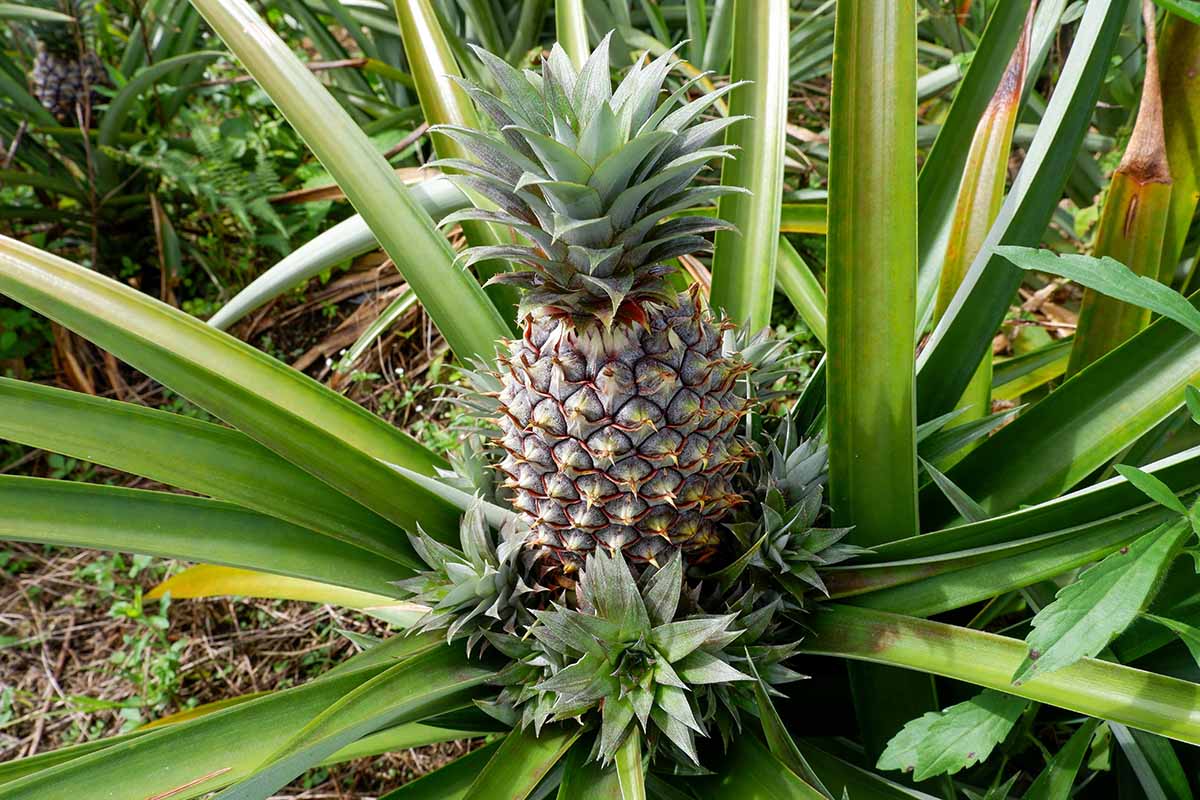
From October to April, the Canary Islands have been having record temperatures. In fact, with the exception of March, which offered a much-needed respite, and December, which was only the fourth warmest December on record, every month has been the warmest since data started to be recorded in 1961, with anomalies of up to 3.6 degrees Celsius above the average. This situation is having a significant impact on the Canary Islands' fruit and vegetable sector, and not only on the banana production, but also on that of tropical pineapples.
"At this moment, the production is down and prices have reached high levels because the heat has prevented us from keeping an uninterrupted production cycle throughout the year," says Fabio Toledo, from the Frontera cooperative, on the island of El Hierro. "The plants' growth process hasn't stopped at any point, and despite the good planning of the planting on the part of the producers, the production has still arrived one to two months earlier. In fact, we are already harvesting the tropical pineapples we expected for June."
"The growers who have managed fruit at this time are getting very good prices for their tropical pineapples, but since most of the harvests arrived much earlier, the rest of the producers will have to wait for the next batch, which is expected for the middle of summer, around the end of July."
This "non-existent" winter on the islands, which is alarming in itself on a climatological level, adds to the challenges that El Hierro's pineapple sector was already facing, and for which effective solutions are gradually being found. "We are still unable to control the mealybug in tropical pineapples, but thanks to the new Council of Agriculture, technical assistance has been provided to us by the Canary Institute of Agricultural Research, and we are looking into different ways to combat the pest. We are also achieving improvements in the tropical pineapple plants themselves, which had been suffering some degree of degeneration because of their propagation system. We have managed to collaborate with some nurseries to produce healthy pineapple plants free from viruses and diseases, which should help boost and improve the cultivation cycles."
However, despite these adversities, Fabio says that "Cooperativa Frontera is still the largest pineapple producer in Spain, and I dare say, in all of Europe, and we are going to keep working to retain that status."
Source - https://www.freshplaza.com