USA - Banana industry's future in the face of challenges

18.04.2024 565 views

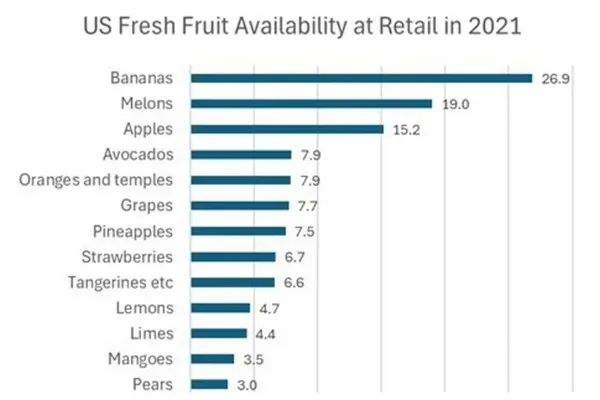
Bananas, a significant source of potassium, are enveloped in their own biodegradable packaging, making them a convenient and widely consumed fruit in the US. They play a crucial role in the American diet, with their consumption exceeding 20% of the total fresh fruit intake, which has expanded from 92 to 136 pounds per person annually over the past 50 years. Despite this diversity and growth in fruit consumption, bananas maintain their position as a prevalent choice.
However, the global banana industry, valued at 12 billion dollars and catering to over 100 countries with dessert bananas, along with the supply of cooking bananas and plantains crucial for the developing world, faces a significant threat from Fusarium Tropical Race 4 (TR-4). This soil-borne fungus strain, capable of rendering fields infertile for banana cultivation, is progressively spreading worldwide, despite containment efforts. This challenge is not unprecedented, as the industry previously encountered a similar threat in the early 20th century with Panama Disease, which similarly devastated banana crops.

The future of bananas presents a scenario where optimism is warranted, with the potential for scientific advancements and rational approaches to prevail in educating consumers and marketing strategies. The current threats facing the banana industry, both locally and globally, might catalyze significant enhancements and encourage diversity within the sector. Developing banana varieties resistant to diseases such as Panama Wilt and Black Sigatoka is a priority for producers. Additionally, introducing a non-browning characteristic could minimize food waste throughout the distribution process and in households.

Source - https://www.freshplaza.com

01.09.2026

South Africa - Grain SA calls for affordable crop insurance as dry weather threatens Swartland wheat

Severe rainfall shortages threatening the Swartland wheat crop have highlighted the need for government support to make crop insurance affordable for dryland producers.

01.09.2026

USA - Florida farms face nation’s highest disaster loss rate

Natural disasters destroy billions of dollars in U.S. agricultural production each year. From drought and wildfires in the West to hail in the Midwest and hurricanes in the Southeast, farms lose an average of $5.1 billion in crops and livestock annually, according to the Federal Emergency Management Agency.

01.09.2026

Luxembourg small farmer struggles with effects of high temperatures on crops

High temperatures over the summer caused an increase of certain pests harmful to vegetables.

01.09.2026

Nearly 8,000 acres of crops damaged due to dry weather in Sri Lanka

Cabinet Spokesman and Minister of Health Dr. Nalinda Jayatissa said that the estimated crop damage caused so far by the prevailing extreme dry weather conditions is nearly 8,000 acres of farmland belonging to around 7,000 farmers.

01.09.2026

Cyprus - Storm damage recorded in 183 homes as crop losses assessed

Damage to 183 homes, mainly in the Nicosia district, has been recorded following the severe weather that hit Cyprus last Saturday, the interior ministry said on Monday.

01.09.2026

USA - New USDA initiative aims to spur cattle herd rebuilding with insurance, conservation program grazing changes

New insurance options, emergency grazing authorities on Grassland Conservation Reserve Program acres, and guaranteed loans for regional meat processors are among the elements of a package unveiled by Agriculture Secretary Brooke Rollins Monday to encourage producers to rebuild the U.S. cattle herd. 

30.08.2026

Serbia's Drought Halves Crop Yields, Few Farms Insured

Drought in July and August 2026 cut yields by more than half in parts of Serbia, but only 15 percent of farmland is insured. A corn policy costs about 4,500 dinars per hectare.

30.08.2026

India - Maharashtra Approves ₹23.33 Crore Aid For 17,245 Farmers Hit By Crop Damage

The Maharashtra government has sanctioned ₹23.33 crore in relief for 17,245 farmers whose crops were damaged by floods, excessive rainfall, cyclones and hailstorms.